Planning · Dallas, Texas
The Best Fence Styles for Park Cities and Preston Hollow Estates
Masonry with iron, capped board-on-board, automated entrances, how the area’s best streets fence, and why it works.
 By Jack Johnson, owner of Park Cities Fence & Deck · 8 min read · 1,606 words
In short
The signature styles on the area’s finest streets are masonry columns or walls paired with ornamental iron at the front, board-on-board cedar with cap and trim on the privacy lines, and an automated gate at the drive. The common thread is cohesion: the fence borrows its materials and proportions from the house itself.
In this guide
- The front line: masonry and iron together
- Matching or contrasting the house masonry
- The privacy lines: board-on-board with cap and trim
- The entrance: automated gates as the centerpiece
- Cohesion: the rule that governs everything
- Living with an estate fence: reviews and maintenance
- Where to start on your property
Need this done? See masonry fencing.
Drive the best streets in Highland Park, University Park or Preston Hollow and you will notice the fences without noticing them. Nothing shouts. Brick columns pick up the house brick, iron pickets echo the balcony rail, cedar reads as furniture rather than lumber. That restraint is the entire secret of estate fencing: the fence behaves like part of the architecture, because it was designed that way.
This guide walks through the styles that define the area’s finest properties, what they are, where each belongs on the lot, and the design decisions that separate a fence that elevates a home from one that merely encloses it.
The front line: masonry and iron together
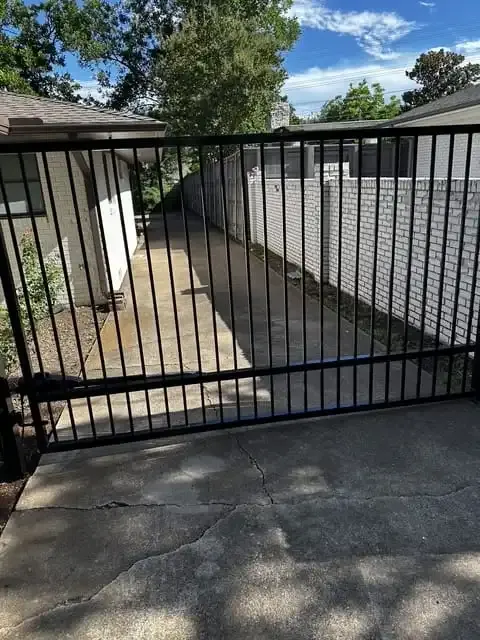
The defining estate combination is masonry and ornamental iron: brick or stone columns on engineered footings, with powder-coated iron panels spanning between them. The masonry gives the frontage permanence and rhythm; the iron keeps the lawn and facade visible, which is exactly what front-yard rules in most cities push toward anyway. It is the style that makes a property line read as landscape architecture.
Proportion is where these succeed or fail. Column height and spacing should take cues from the house, heavier, wider-set columns for a substantial Georgian facade, slimmer profiles for a transitional or modern home. A low masonry knee wall beneath the iron adds visual weight and keeps mulch and drainage inside the line. Our masonry fencing work always starts from the architecture, not from a catalog.
Underground matters as much as it does anywhere in North Texas: columns stand plumb for decades only when their footings are poured below the clay movement zone. A leaning column undoes the entire effect, which is why estate frontage is engineering first and masonry second.
Matching or contrasting the house masonry
Brick matched to the residence makes the fence read as an extension of the architecture, the strongest choice when the house has distinctive brick worth repeating. On older Park Cities homes we source and blend brick to get the match right, because a near-miss reads worse than a deliberate contrast.
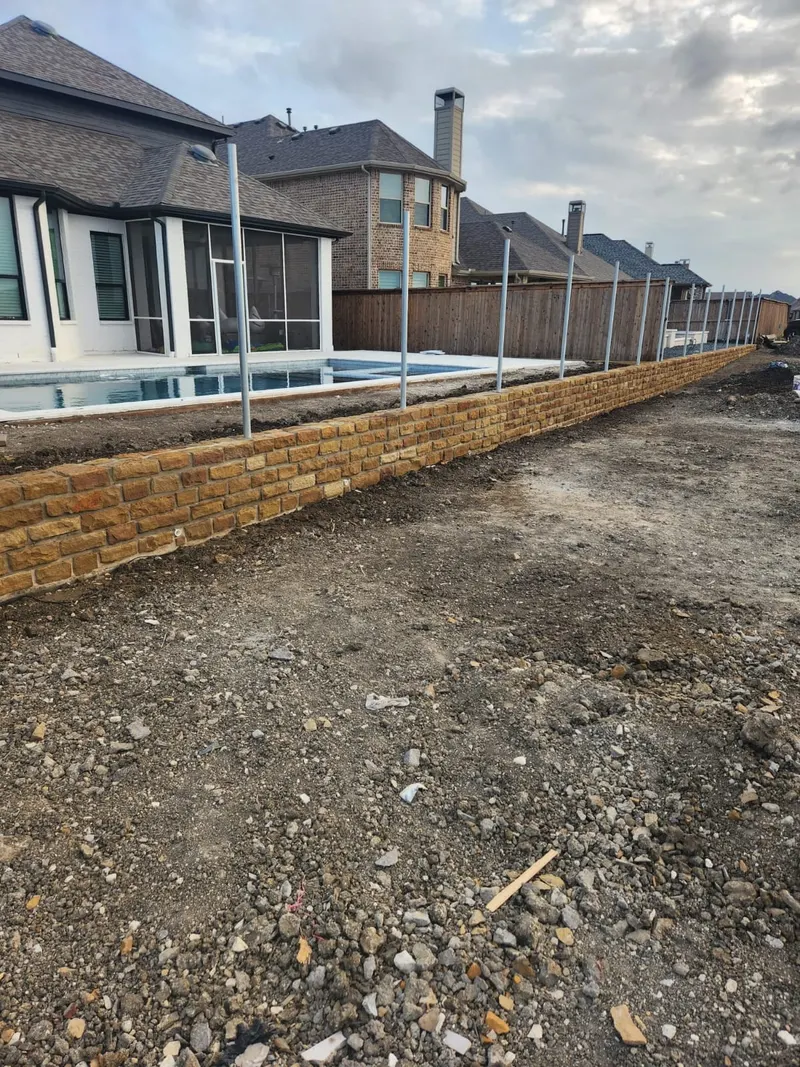
Contrast is the other legitimate answer: a stone fence line against a brick house reads as landscape rather than architecture, and it suits properties with strong gardens or a more relaxed, ranch-inflected style. Cast stone caps, in either approach, are the finishing detail that sheds water off the masonry and draws the long horizontal line the eye follows down the street. We cover footings, matching and lifespan in depth in our brick and stone wall guide, linked below.
The privacy lines: board-on-board with cap and trim
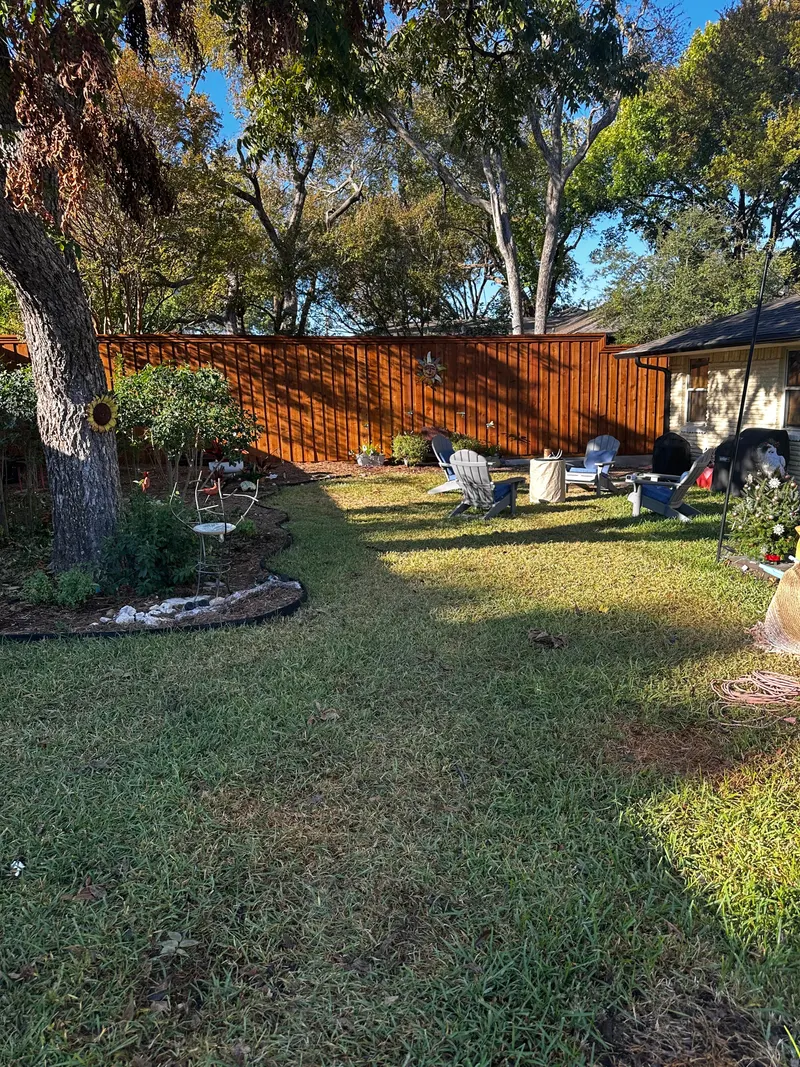
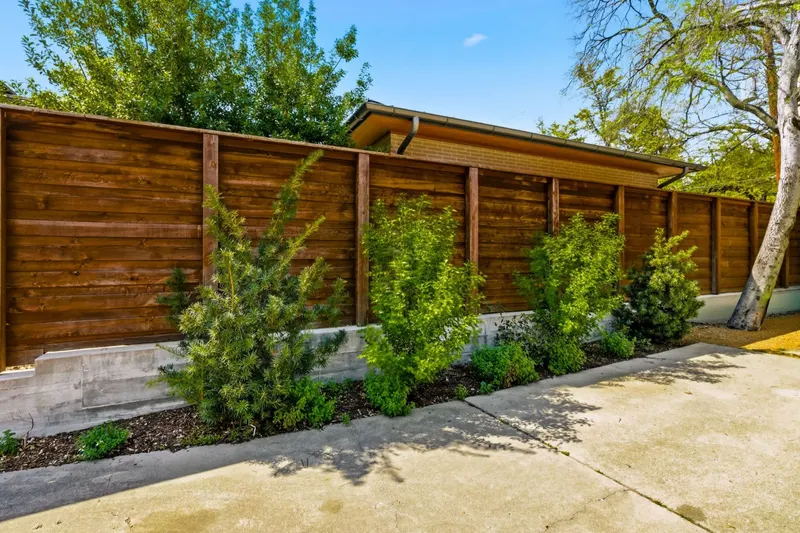
Behind the front plane of the house, the estate standard is board-on-board cedar with a cap and trim rail. Overlapping pickets mean full privacy that survives the wood’s natural drying, no gaps opening in year one, and the cap-and-trim detail turns the top of the fence into a finished architectural line rather than a row of picket ends.
The style is also fully finished on both faces, which matters on shared lines in neighborhoods where every neighbor cares what they look at. Built from kiln-dried cedar on posts set in concrete, stained in a tone drawn from the home’s palette, a capped board-on-board line reads as millwork. On these streets it is not an upgrade; it is the baseline. Details are on our wood fencing page.
- Cap and trim: A horizontal top cap over a trim rail, the detail that makes cedar read as architecture.
- Stain to the palette: Tone the cedar to the home’s trim and roof rather than defaulting to orange-brown.
- Good both sides: Board-on-board shows a finished face to your garden and your neighbor’s alike.
The entrance: automated gates as the centerpiece
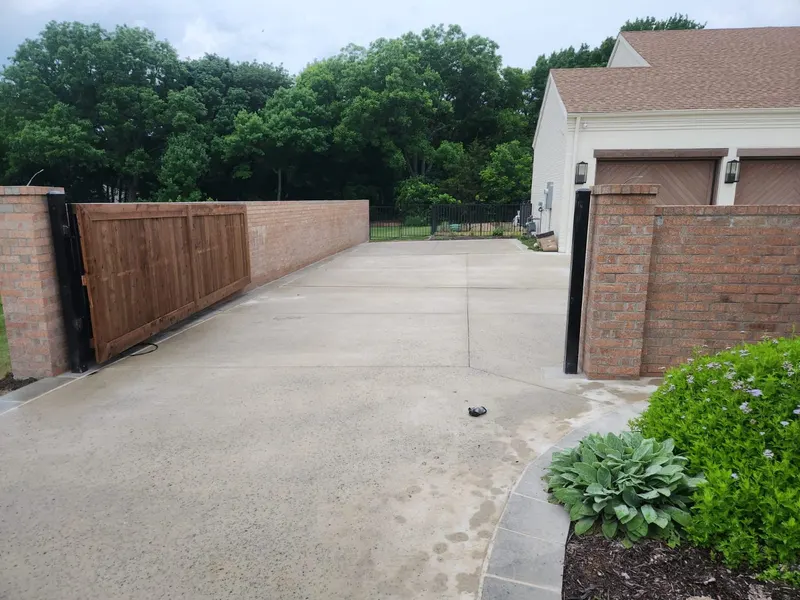
On an estate frontage, the driveway gate is the jewelry, the one element designed to be looked at. Swing gates between masonry columns are the classic Preston Hollow composition; slide gates solve sloped drives and tight frontages without compromising the ironwork. Either way the gate design should converse with the fence line and the house: matching pickets, finials used sparingly, scale that fits the opening rather than overwhelming it.
The automation underneath deserves the same quality as the metalwork above. Motors sized to the gate’s weight with margin, safety photo-eyes, battery backup for outages, and access control that fits how the household actually lives, keypads for family, app control for gates you manage remotely, exit sensors for guests. Our automatic gate installations include the safety package as standard, because an estate gate that strands you in the rain is a failed design.
Lighting completes the entrance. Column-mounted lanterns or low-glare uplights turn the gate composition into the property’s evening signature, and they earn their keep practically, guests find the keypad, and the drive reads clearly at night. Plan the conduit while the footings are open; pulling wire later through finished masonry is the expensive way to learn this order of operations.
Cohesion: the rule that governs everything
Every style above obeys one rule: the fence borrows from the house. Materials repeat, house brick in the columns, trim color in the stain, balcony iron in the pickets. Proportions repeat, with column rhythm answering window rhythm. When that discipline holds, the fence disappears into the property’s overall composition, which is precisely what makes people slow down and look.
The rule also settles arguments cheaply. Unsure between two stain tones? The house trim decides. Unsure about column caps? The window sills and porch details decide. Estate fencing goes wrong when it introduces a new design language at the property line, a style the house never asked for, and it goes right when it commits to the language the architecture already speaks. In Preston Hollow, where lots are larger and styles range from Georgian to starkly modern, this discipline is what keeps a long fence line coherent.
Living with an estate fence: reviews and maintenance
Estate fencing is a long-term composition, and each material ages on its own schedule. Masonry wants the least attention, sound footings and caps do most of the work. Powder-coated iron wants an occasional wash and prompt touch-up of any chip before Texas humidity finds bare steel. Cedar wants its stain cycle every three to four years, which is also what keeps the color story of the whole frontage consistent.
Gate automation benefits from periodic service the way any hard-working machine does, hinges, alignment and safety devices checked so the daily open-and-close stays smooth. None of this is burdensome; it is simply worth planning as part of ownership, the way you plan for the roof and the irrigation. A well-kept estate fence line is effectively permanent.
Where to start on your property
Start from the street. Stand where a visitor first sees the house and decide what the frontage should say, formal masonry rhythm, open iron transparency, or a gated entrance as the focal point. Then work backward along the lot, letting the front-line materials fade into capped cedar where privacy takes over. In Highland Park and University Park, remember that town review will shape street-facing designs, so the drawings need to be right before build day.
This is the kind of project we most enjoy quoting, because the design conversation is the job. Owner Jack walks every finished build personally, and the free quote, usually back within 24 hours, comes with real opinions about what your architecture is asking for. Tell us about the property and we will bring the ideas.
How Park Cities Fence & Deck helps
Jack Johnson comes out himself, looks at your property and gives you a free written estimate with a timeline. Wood, iron and masonry are all built in-house, so the advice fits the property. Related services: masonry fencing, iron / metal fencing, gates & gate motors. We work in Highland Park and Preston Hollow and across Dallas.
Questions people ask next
What is the most popular estate fence style in the Park Cities?
Masonry columns with ornamental iron panels along the front, transitioning to board-on-board cedar with cap and trim on the privacy lines, with an automated gate at the drive. It endures because it satisfies front-yard visibility rules while giving the frontage permanence, and because every element can echo the house’s own materials.
Should fence brick match the house exactly?
Match it or contrast it deliberately, the failure mode is the near-miss. A blended match makes the fence read as part of the architecture; a distinct stone reads as landscape. On older homes we source and blend brick carefully, because original brick runs are hard to match casually and the eye catches a close-but-wrong blend immediately.
Is board-on-board worth it over standard cedar fencing?
For an estate property, yes. Overlapping pickets keep full privacy as the wood dries, the cap-and-trim detail finishes the top line, and both faces look built rather than framed. On streets where the fence is part of the home’s presence, capped board-on-board is the baseline rather than the upgrade.
Swing or slide gate for an estate entrance?
Swing gates between masonry columns are the classic look and suit level drives with room for the arc. Slide gates win on sloped driveways and tight frontages. Both carry the same access options, keypads, remotes, app control, and both should include safety photo-eyes and battery backup as standard equipment.
How much maintenance does a masonry-and-iron fence need?
Less than any other premium style. Masonry on proper footings needs little beyond sound caps; powder-coated iron wants washing and prompt touch-up of chips; and any cedar sections follow the normal stain cycle every 3–4 years. Automated gates benefit from periodic service to keep hinges, alignment and safety devices right.