Service · Dallas and the Park Cities

Pergola installation

Shade, structure and comfort, an outdoor room you can actually use in a Texas summer.

Call (214) 755-8100
5.0 from 18 Google reviews
Material
Kiln-dried cedar
Types
Freestanding or attached
Built for
Texas sun, wind and clay soil
First step
Free on-site visit with Jack

In short

Park Cities Fence & Deck designs and builds custom pergolas in Dallas, Highland Park, University Park and Preston Hollow. Each one is built for Texas weather, freestanding or attached to the house, over a patio, deck or pool area, and finished to suit the home. Owner Jack Johnson, a former custom home builder, attends every consultation and build.

Pergolas add shade, structure and comfort, turning an exposed patio into an outdoor room you can actually use in a Texas summer. The difference between a pergola that cools a space and one that just decorates it comes down to engineering: rafter depth, spacing and orientation matched to where the sun actually is at 6 p.m. in July.

We build stained cedar classics, painted structures matched to your trim, and steel-and-wood hybrids with deeper rafters for real shade. Posts are anchored on proper footings and attached structures are flashed correctly at the house, so the pergola stands square through storm seasons and clay-soil movement alike.

Add a fan, lighting or a canopy and the space works from March through November. If you’re planning a new deck at the same time, we design both as one structure. Start with a free quote, usually within 24 hours, and we’ll orient the design around your patio’s sun exposure, not a stock drawing.

What you get

  • Real shade engineering: rafter depth and spacing that beat the heat
  • Cedar, painted & hybrid: styles for traditional and modern homes
  • Fans, lights & canopies: add-ons that extend evening use
  • Attached or freestanding: anchored and flashed correctly either way
  • Kiln-dried cedar beams: straight, stain-ready material that resists checking
  • Footings below the clay: posts that stay plumb through wet springs and dry summers

Find the right one

Which pergola fits your patio?

Pick the one closest to your situation. Jack confirms it on site.

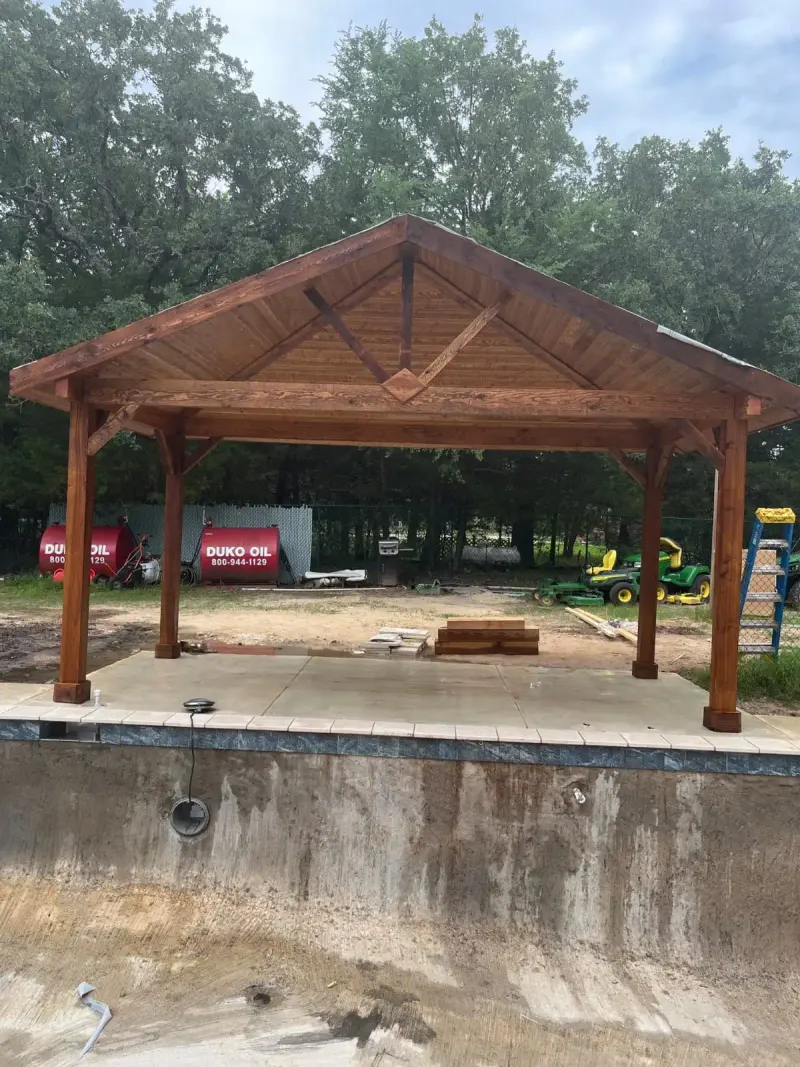
Cedar pergola installation, front view
01

Freestanding cedar pergola

Best for a patio, garden or seating area away from the house

Cedar posts on their own concrete footings, with no connection to the house. It can sit anywhere the yard allows and turn to face the afternoon sun. Know before choosing: every post needs a footing, and 811 utility locates come before any digging.

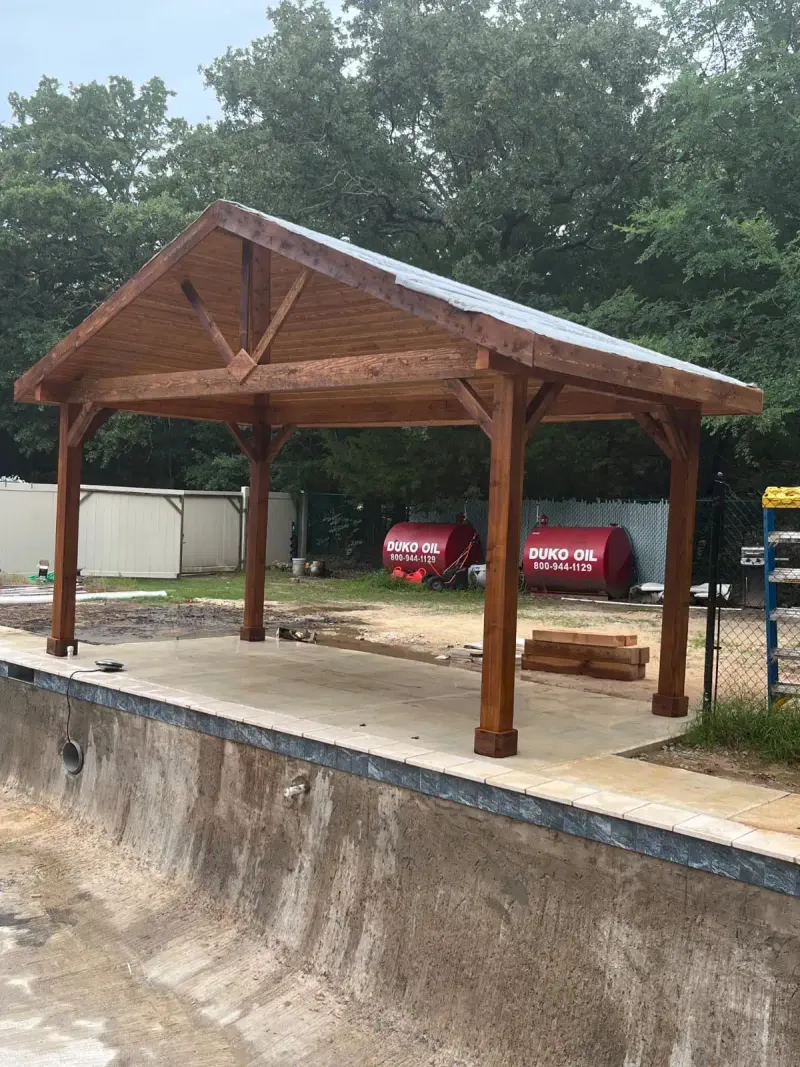
Cedar pergola over a patio
02

Attached patio pergola

Best for a patio right outside the back door

One side fastens to the house and the other rests on posts, so the pergola reads as part of the home and shades the nearby windows. Know before choosing: the house connection must be flashed correctly, and many cities treat attached shade structures as permitted work.

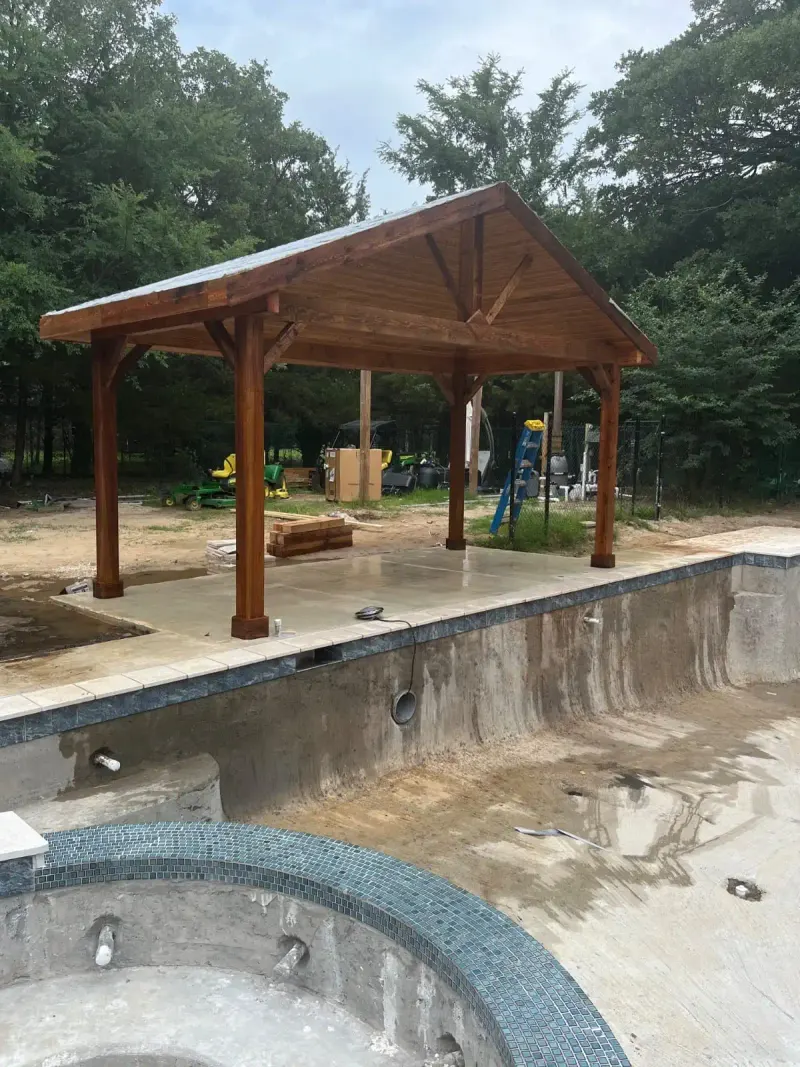
Cedar pergola, side view
03

Pergola over a deck or pool area

Best for a deck or pool surround with no afternoon shade

A pergola placed over the spot where people actually sit: the deck table, the lounge chairs, the grill. Over a new deck, we frame both as one structure. Over an existing deck or slab, Jack first checks what the posts can safely stand on.

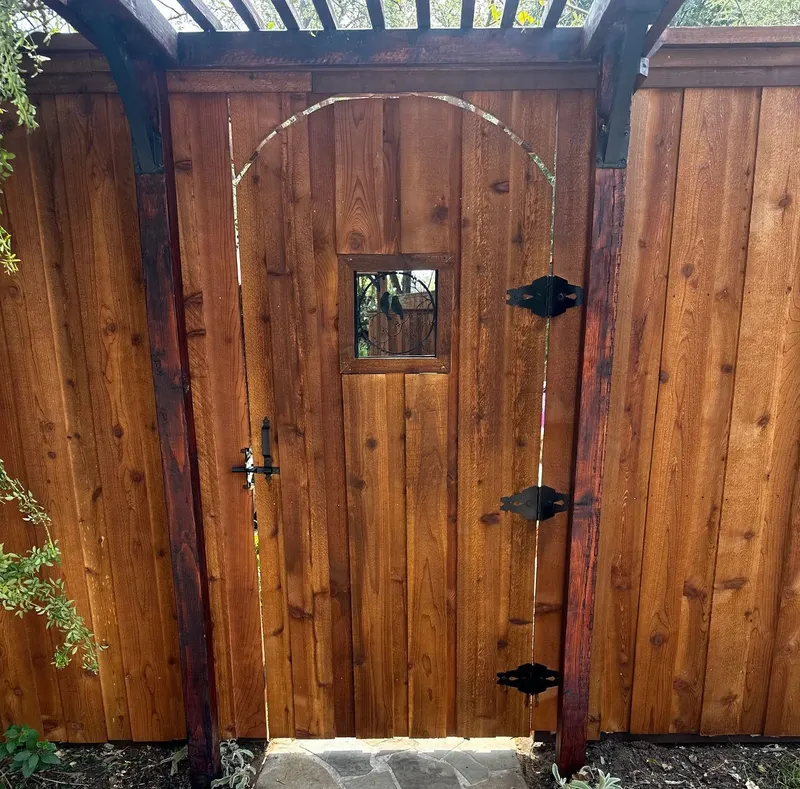
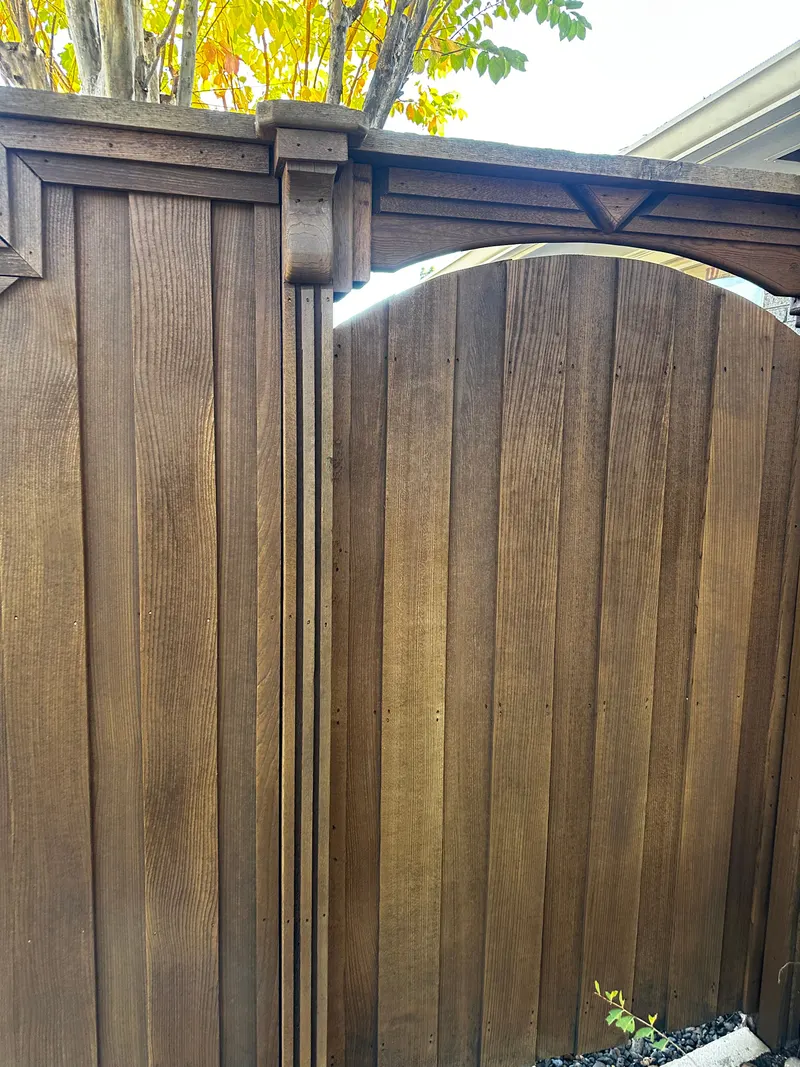
Arched cedar gate with a window and a pergola-style arbor
04

Steel-and-wood hybrid pergola

Best for modern homes and wide patios that need longer spans

Steel carries the load and wood gives the warmth. The steel allows longer spans and deeper rafters with a slimmer outline than all-wood framing, which suits modern architecture. Know before choosing: it is the most involved of the four to design and build.

Pergola options compared

OptionWhere it goesWhat to know firstFinish
Freestanding cedar pergolaAnywhere the yard allowsEach post needs its own footingStained cedar
Attached patio pergolaAgainst the houseFlashing at the house; permit often neededStained cedar or paint to match trim
Pergola over a deck or pool areaOver the seating on a deck or pool surroundPosts need a base that can carry themStained cedar
Steel-and-wood hybrid pergolaModern homes and wide patiosLonger spans, more design workSteel with stained wood

What this means for you: Every pergola is designed on site around your sun exposure. Permit and HOA needs depend on your city and neighborhood.

Cedar pergola, side view

Cedar pergola, side view

How it works

Four steps, one point of contact

  1. Free on-site quoteWe study your patio’s sun exposure and sightlines, then send a design-and-quote, usually within 24 hours.
  2. Design & materialsSize, rafter layout, finish and add-ons are locked in, with HOA drawings handled if your neighborhood requires them.
  3. Build & finishFootings are poured, the frame goes up square and flashed, and stain or paint is applied to seal the structure.
  4. Final walkthroughJack checks every connection, the shade coverage and the finish with you before handing the space over.
“We couldn’t be happier with our new gate! Impressed with the quality and the professionalism. It is just what we wanted!!” Erin Welch, Google review

Before you compare bids

What changes the price of a pergola

No two properties price the same, so we do not publish a per-foot number. These are the things that move it.

The exact figure comes in a free written estimate after Jack has seen the property.

  1. Size and spanA wider, longer pergola needs more posts, larger beams and more rafters, and long spans may call for steel.
  2. Rafter depth and spacingDeeper rafters set closer together give more shade and use more lumber. It is the part of the price that buys comfort.
  3. Freestanding or attachedFreestanding designs need more posts and footings. Attached designs need careful flashing at the house and, in many cities, a permit.
  4. Material and finishStained cedar, painted wood and steel-and-wood hybrids are priced differently, and the finish you pick sets the upkeep for years afterward.
  5. Fans, lights and canopiesWiring for a fan or lighting is planned before the build so it stays hidden. Canopies add shade and add cost.

Our work

Pergola Installation we have built

See all our work
Cedar outdoor living buildNew stained cedar privacy fence across a Dallas backyardStained cedar fence run in warm oak toneDetail of an arched cedar gate with corbels

Common questions

Pergola Installation: what people ask first

Do I need a permit or HOA approval for a pergola in Dallas?

It depends on your city and neighborhood. Many DFW cities treat an attached shade structure as permitted work, and HOAs commonly ask for drawings showing height, setbacks and finish. Park Cities Fence & Deck checks the rules for your address and coordinates the permit, the HOA details and the 811 utility locate before any digging. Our guide to HOA and deed restrictions explains how reviews usually work.

How often does a cedar pergola need to be restained?

Every few years, typically two to four in North Texas, or as soon as water stops beading on the wood. The top faces of the rafters take the hardest sun, so look there first. Most owners have the pergola washed and restained in the same visit as the fence, which keeps the colors matched and the whole yard on one schedule.

Can you build a pergola on my existing patio or deck?

Often, yes, after a check. On a concrete patio the posts need a sound slab or their own footings beside it. On an existing deck, the frame must be able to carry the posts, and many decks were never built for that. Jack looks at both during the free visit and tells you plainly whether to anchor to what is there or set new footings. For a new deck, we frame the two together.

Who builds custom pergolas in Highland Park and Preston Hollow?

Park Cities Fence & Deck builds custom pergolas across Dallas, including Highland Park and Preston Hollow as well as University Park. Owner Jack Johnson built luxury custom homes in Preston Hollow in the early 2000s and attends every consultation and build, so the structure is designed to match the house. The company is insured and gives free written estimates.

Do pergolas actually provide shade?

A properly designed one does. Shade comes from rafter depth, spacing and orientation, deep rafters set close together and run to block the low western sun cast real shade exactly when Texas patios need it. Shallow, widely spaced rafters are decoration. We design for your patio’s actual sun angles, and canopies can push coverage further.

Cedar, painted wood or steel hybrid — which is best?

Stained cedar is the classic that suits most Dallas homes and ages gracefully with a 3–4 year restain cycle. Painted structures match trim on traditional houses but show wear sooner. Steel-and-wood hybrids allow longer spans and deeper rafters with a cleaner modern profile. We’ll recommend based on your home’s style and the spans involved.

Should the pergola attach to the house or stand alone?

Attached pergolas extend the roofline naturally and shade windows as a bonus, but they must be flashed correctly where they meet the house, done wrong, that connection leaks. Freestanding structures give more layout freedom and suit patios away from the house. We build both, anchored and flashed correctly either way.

Will a pergola survive North Texas storms?

Built correctly, yes. The keys are footings sized for our clay soil, hardware-connected joints rather than nails alone, and posts anchored to resist uplift in spring winds. Those are standard on our builds. Fabric canopies are the one element we recommend retracting or removing ahead of severe weather.

Can you add a fan or lighting?

Yes, a fan changes what a pergola does in August, moving air through the space and keeping mosquitoes honest, and low-voltage or string lighting extends evenings well past sunset. The time to plan wiring is before the build, so conduit hides inside posts and beams instead of running along them.

Shade engineering: why rafter design decides everything

Most pergolas fail at their one job because they were designed on paper north-up instead of sun-down. In Dallas the brutal hours are late afternoon, when the sun drops west and slides under shallow rafters entirely. Real shade comes from three decisions: rafter depth (a deeper board blocks more low-angle sun), spacing (closer rafters cast overlapping shadows), and orientation (rafters run to intercept the western sun, not parallel to it). A slatted top can double its effective shade with the same lumber simply by getting these three right, which is why our design visits start with a compass, not a catalog.

Material matters for longevity in our climate. We build with kiln-dried cedar because it starts straight and stays straighter through the swings between humid springs and 105-degree summers, and we seal it immediately, the same UV that grays a fence checks and fades an unsealed pergola. A restain every 3–4 years keeps the structure rich-toned and protected, and can be scheduled together with a fence wash and restain in one visit.

Pergolas, patios and approvals in Dallas neighborhoods

Structurally, a pergola is a small building: its posts carry real loads and its footings sit in the same expansive clay that moves every fence and slab in North Texas. We pour footings below the clay movement zone so posts stay plumb, and where a pergola pairs with a deck we engineer the two as one frame with shared load paths, far cleaner than bolting a pergola onto a deck that was never designed for it. On patios, post bases are anchored to resist both uplift and the slow creep of a moving slab.

Many DFW cities treat attached shade structures as permitted work, and HOAs in the Park Cities, Plano and Frisco commonly ask for drawings showing height, setbacks and finish. We handle those submittals and the 811 locates before digging. If you’re still shaping the idea, our guide to pergola designs that beat Texas heat shows the design moves that make a patio genuinely usable in summer.

Popular in: PlanoFriscoDallas

Related services: Deck InstallationCustom Gates

Get a free quote for pergola installation

Jack comes out himself and you get a written estimate with a timeline.

Call (214) 755-8100
Call