Planning · Dallas, Texas
How Can I Get More Backyard Privacy When My Fence Can Only Be So Tall?
When the fence cannot go higher, privacy comes from blocking sightlines where you sit, not from the property line alone.
 By Jack Johnson, owner of Park Cities Fence & Deck · 9 min read · 1,831 words
In short
Build the tallest solid fence your city and HOA allow, then block the remaining sightlines closer to where you sit. A pergola, a screen wall beside the patio or a row of evergreens covers an upstairs window far better than extra fence height can. The closer the screen is to you, the more it hides.
In this guide
- How tall can a fence legally be, and who decides?
- How do I block the view from a neighbor's two-story house?
- Can I add a lattice or an extension to make my existing fence taller?
- What is the best fence for total privacy?
- Which trees or hedges make the best privacy screen along a fence in Dallas?
- Can a pergola, a screen wall or a trellis add privacy where a fence cannot?
- How do I get privacy on a corner lot or beside an alley?
Need this done? See wood fencing.
Every fence has a ceiling. The city sets one, the HOA often sets a lower one, and corner lots and front yards have tighter limits again. A neighbor's second-story window looks over any of them.
Privacy is geometry. A fence blocks a view only when it sits between the viewer's eye and the place you want hidden. Once you think in sightlines instead of feet of height, more options open up, and most of them look better than a taller wall would.
How tall can a fence legally be, and who decides?
The city sets the maximum, and your HOA or deed restrictions can set a lower one. Whichever is stricter controls.
As one example, the City of Dallas permit checklist says a fence permit is required for fences over 4 feet in a front yard or over 6 feet anywhere else, and that the maximum allowable fence height is 9 feet. Height in a side or rear yard is measured from the top of the fence to the ground on the inside. Other cities use different numbers, and conservation and historic districts add their own review.
Rather than repeat every city's limits here, we keep them in dedicated guides: fence height rules in Dallas and the Park Cities, plus the Plano, Frisco and Fort Worth guides linked from them. We confirm the current rule with the city before every build, because codes change.
How do I block the view from a neighbor's two-story house?
Put the screen near you, not near them. A line from an upstairs window to your patio passes high over the back fence and comes down steeply near the house, so a modest structure at the patio blocks what a tall fence at the lot line cannot.
Stand where you actually sit, look up at the window and note where that line crosses your yard. Three things can interrupt it: an overhead structure such as a pergola, a vertical screen beside the seating area, or the canopy of a tree planted between the two points.
Do the same check from the places that matter most: the dining table, the spa, the kitchen window, the pool steps. You will usually find that only one or two sightlines bother you, and that each has a short, specific fix. Screening those is cheaper and better looking than trying to wall off the whole yard.
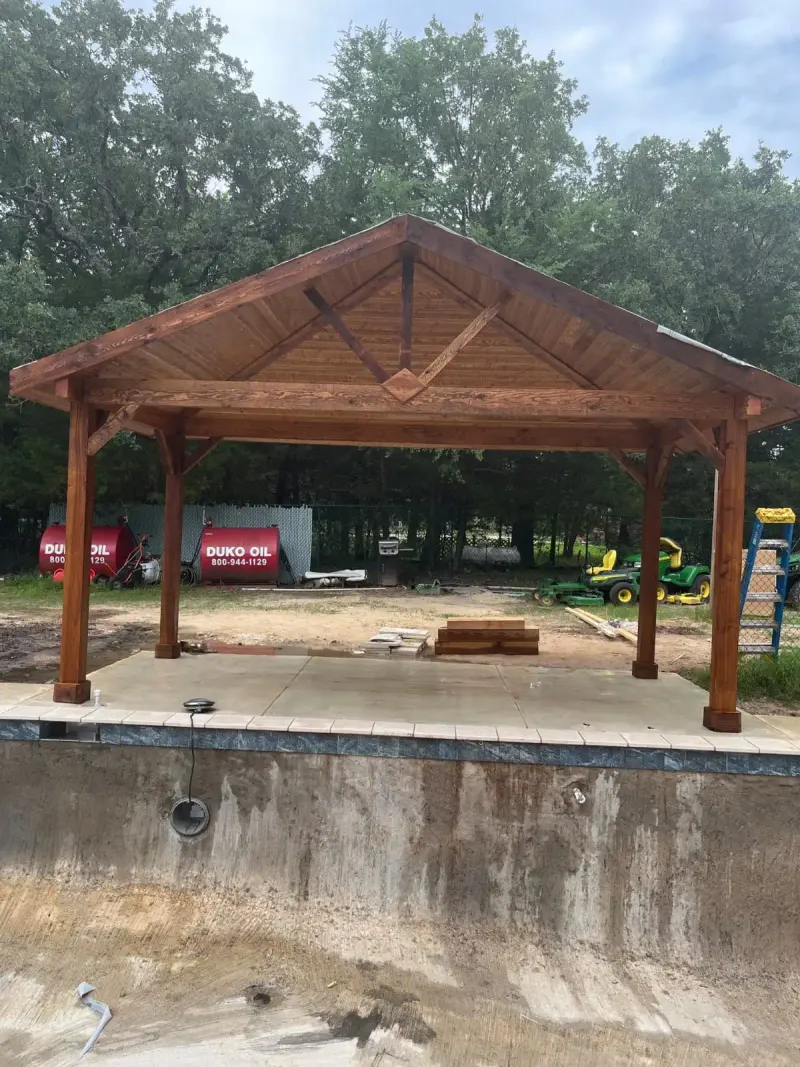
This is why a cedar pergola is often the most effective privacy purchase for a two-story neighbor. Rafters and purlins break up the downward view while leaving the sky visible from below. Our guide to pergola designs for Texas shade explains rafter spacing, which controls both shade and screening.
Can I add a lattice or an extension to make my existing fence taller?
Only if the total height stays within the limit and the posts can carry it. A lattice topper counts as part of the fence, so a fence at the legal maximum cannot gain a topper on top.
Structure is the second test. Extra height adds wind load, and North Texas storms test every fence. Posts that were sized and set for the original height may lean once more surface is added above them. Bolt-on extensions attached to aging wood posts are a common reason a fence that stood for years goes over in one spring. Read wind and hail resistant fences in North Texas before adding any sail area.
If the existing posts are steel, sound and deep enough, a rebuilt top section with a lattice or horizontal slat topper can work well and looks deliberate. If they are not, replacing the run with a taller fence designed as one piece is the honest answer.
What is the best fence for total privacy?
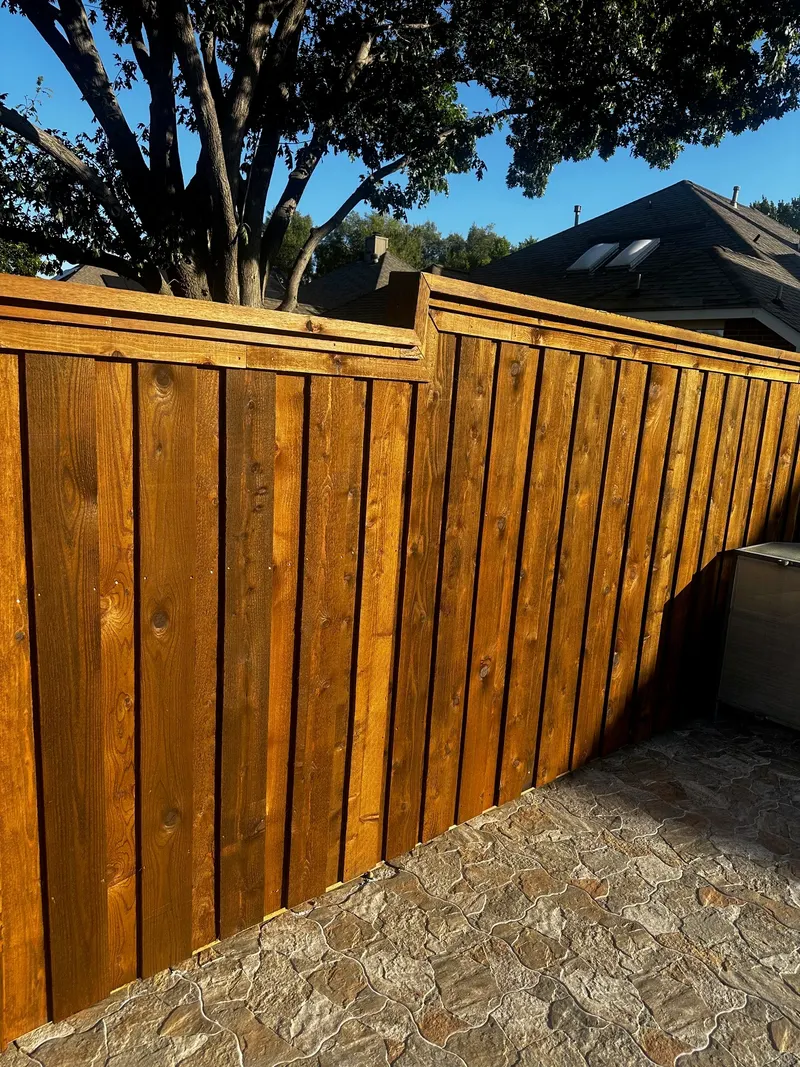
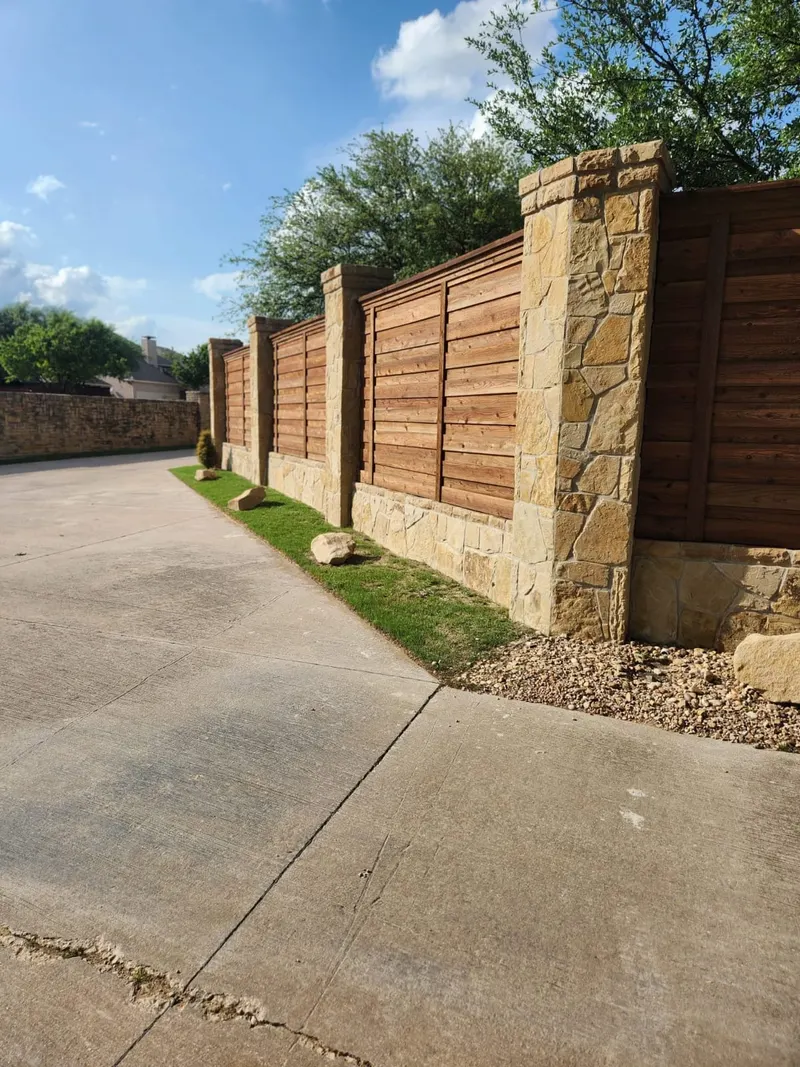
Board-on-board cedar with a cap and trim. Overlapping pickets leave no line of sight even after the wood dries and shrinks, which is where ordinary side-by-side fences open up.
Side-by-side pickets are installed tight and develop gaps within a season. A shadowbox fence looks good from both sides but can be seen through at an angle. Board-and-batten and tightly built horizontal fences are also fully private when detailed correctly. Our comparison of board-on-board vs. side-by-side shows the difference, and wood fence styles explained covers the rest.
Masonry is the other route to complete privacy, and it adds mass that helps with sound. See our guide to fences for traffic noise if a busy street is part of the problem. If you already own an iron fence and want to keep it, there are ways to add privacy to an iron fence without replacing it.
Ways to add privacy when fence height is capped
| Option | Blocks best | Watch for |
|---|---|---|
| Board-on-board cedar at the legal maximum | Ground-level views from next door and the alley | Height limits and HOA style rules |
| Lattice or slat topper | The last foot or two of a standing view | Counts toward total height; adds wind load |
| Pergola over the seating area | Downward views from second-story windows | Setbacks, permits and HOA approval |
| Freestanding screen wall by the patio | One specific sightline at close range | May be regulated as a fence or structure |
| Evergreen trees or hedge | High views, once grown | Years to fill in; water, roots and pruning |
What this means for you: Most yards need two of these working together: a solid fence for the ground level and one closer screen for the high view.
Which trees or hedges make the best privacy screen along a fence in Dallas?
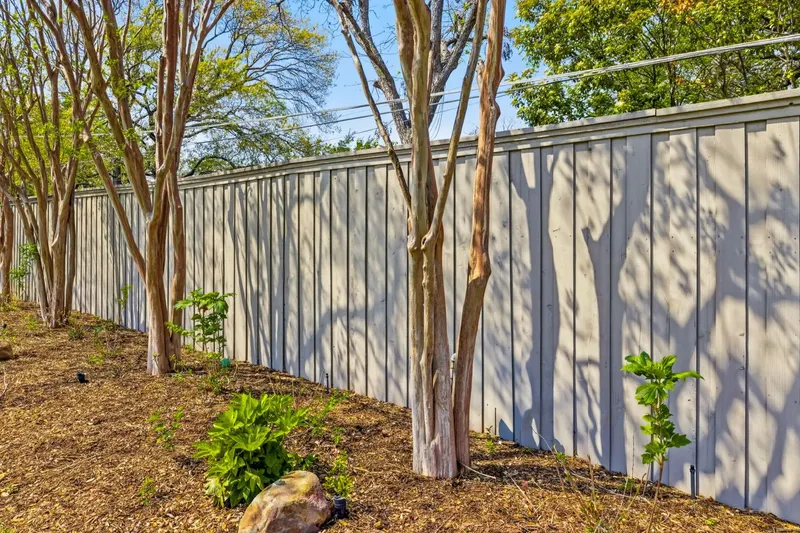
Evergreens that tolerate North Texas heat, alkaline clay and the occasional hard freeze. Planting is the one screen that can legally rise above the fence in most places, which is why it pairs so well with a height limit. Check your HOA rules, since some regulate hedges too.
Upright hollies, wax myrtle, cherry laurel, eastern red cedar and compact magnolias are widely planted as screens in this region. Your nursery or the county extension office can match a species to your sun, soil and space. Choose by mature width as much as height: a plant that wants to be twelve feet wide will push on a fence set three feet away.
Give plants room. Leave a gap between the hedge and the fence for air, for maintenance and so the fence can be restained. Keep irrigation from spraying the boards, because constant wetting shortens the life of cedar. Plants take years to fill in, so the usual plan is a solid fence now and a green layer growing in behind it.
- Height and width at maturity: Read the tag, then believe the larger number.
- Distance from the fence: Far enough to walk behind and to keep branches off the boards.
- Roots and utilities: Check easements and have lines located before digging planting holes.
- Running bamboo: It spreads under fences into neighboring yards. Avoid it or contain it properly.
Can a pergola, a screen wall or a trellis add privacy where a fence cannot?
Yes, and often more effectively, because these sit inside the yard where the sightline is low. A structure is governed by different rules than a boundary fence, though it is still governed: setbacks, permits and HOA review can all apply.
A pergola screens from above. A slatted cedar wall on one side of a patio screens a single direction completely. A trellis with an evergreen vine does the same with a lighter look. On a deck, a privacy wall built into the railing line hides seating from the yard next door. We build cedar and composite decks and pergolas in-house, so the screen can match the fence in species and stain.
Before you design one, read the neighborhood documents. Our guide to HOA and deed restrictions on fence and gate design explains what review boards usually look at.
How do I get privacy on a corner lot or beside an alley?
Expect tighter rules and plan in layers. On a corner lot, the yard along the side street may be treated like a front yard, with a lower height limit, and solid fencing is restricted near intersections, driveways and alleys so drivers can see.
Dallas, for example, asks for visibility triangles to be shown on a fence permit site plan, and its code keeps mostly solid fence panels in single family districts at least five feet back from the front lot line. Setting a solid fence back and planting the strip in front of it is often the answer: you gain a green edge on the street and a legal fence behind it.
Alleys bring trash carts, headlights and foot traffic. A board-on-board fence with a cap handles all three, and easement rules decide exactly where it can stand. See fences on utility easements and alleys. For a walk of your lot and a written estimate, contact us. We work across Dallas and nearby cities.
How Park Cities Fence & Deck helps
Jack Johnson comes out himself, looks at your property and gives you a free written estimate with a timeline. Wood, iron and masonry are all built in-house, so the advice fits the property. Related services: wood fencing, pergola installation. We work in Dallas and across Dallas.
Questions people ask next
Can I get a variance for a taller fence?
Sometimes. In Dallas, the city's fence checklist says fences over 9 feet need approval from the Board of Adjustment, a building permit and plans sealed by a licensed professional engineer, and the code lets the board grant a special exception when it will not adversely affect neighboring property. Approval is never guaranteed, it takes time, and your HOA limit still applies separately.
What is a shadowbox fence, and is it really private?
A shadowbox fence alternates pickets on both sides of the rails, so it looks the same from either yard and lets air through. Viewed straight on it appears solid. Viewed at an angle you can see between the boards. It is a good-neighbor design with partial privacy. For complete privacy choose board-on-board.
Is a living hedge or bamboo a cheaper alternative to a fence?
A hedge can cost less to plant, but it is not a substitute. It takes years to close, needs water and pruning for life, and does not contain a dog or meet a pool barrier requirement. Running bamboo is a specific risk because it spreads underground into neighboring yards. A hedge works best as a second layer behind a real fence.
Is a lattice-top fence a good idea in Texas?
It can be. A lattice or slat topper adds height that feels lighter than solid boards and lets some wind through. The trade-offs are that thin lattice weathers faster than pickets, needs stain like the rest of the fence, and counts toward the total legal height. A framed topper built into a new fence lasts far longer than lattice added later.
Is an 8-foot fence much more expensive than a 6-foot fence?
It costs more than the extra two feet of pickets suggests. A taller fence needs longer and heavier posts set deeper, more rails, more concrete and more labor, and in many cities it triggers a permit. The difference shows clearly on a written estimate, so ask for both heights priced on the same specification and compare them side by side.
Sources and further reading
- City of Dallas Planning & Development: Fence Permit, Pool Barrier and Retaining Wall Checklist
- City of Dallas Ordinance No. 30198, amending Section 51A-4.602 (fence standards)
General information, not legal advice. Rules change: we confirm the current requirements with your city or HOA before we build.