Iron & Masonry · Dallas, Texas
How Can I Add Privacy to an Existing Iron Fence Without Ruining the Look?
An iron fence is meant to be seen through. Here is how to screen it properly without clip-on slats or tarps.
 By Jack Johnson, owner of Park Cities Fence & Deck · 9 min read · 1,739 words
In short
The best-looking way to add privacy to an iron fence is an evergreen hedge planted just inside it. For immediate privacy, add a stained cedar screen behind the iron, fit custom powder-coated metal panels, or rebuild sections with masonry. Avoid clip-on slats, mesh and fabric. Solid infill adds wind load, so the posts must be checked first.
In this guide
- What are the options for adding privacy to an iron fence?
- Is a hedge the best-looking way to do it?
- Can cedar be added behind an iron fence?
- What about metal privacy panels or louvers?
- When does it make sense to add masonry instead?
- What should I avoid?
- Do height limits, HOA rules or the fence’s condition change the plan?
Need this done? See iron / metal fencing.
An iron fence gives a house presence and keeps the garden in view. It gives no privacy at all. Owners find this out when a neighbor builds a second story, a pool goes in, or the street gets busier.
You do not have to choose between the iron and your privacy. There are five sound ways to screen an existing fence, and several quick fixes that will make an expensive fence look cheap. We install and modify iron and ornamental steel fencing across Dallas and the Park Cities, and this is how we advise homeowners.
What are the options for adding privacy to an iron fence?
They fall into two groups. Planting keeps the fence exactly as it is and adds a green wall behind it. Built screens change the fence itself, either by adding material to it or by replacing sections. The table compares the five we recommend.
Five ways to add privacy to an existing iron fence
| Option | Privacy | Effect on the look | Main thing to check |
|---|---|---|---|
| Evergreen hedge inside the fence | Full once grown | Iron stays visible against green | Room to plant and time to grow |
| Cedar screen behind the iron | Full, immediate | Iron reads as a frame over warm wood | Separate posts and wind load |
| Custom metal privacy panels | Full or partial, immediate | Clean and modern, one material | City material rules and post strength |
| Masonry base or solid bays | Full where built | Most substantial, estate character | Footings, permit and engineering |
| Second fence set inside the yard | Full where needed | Street view of the iron unchanged | Space and how the two lines relate |
What this means for you: If you can wait for plants to grow, plant; if you need privacy this season, build a screen that stands on its own posts.
Is a hedge the best-looking way to do it?
In most cases, yes. Black iron in front of dense evergreen foliage is the classic estate boundary, and you will see it on some of the finest streets in Highland Park and Preston Hollow. The fence keeps its lightness and the hedge does the screening.
Plant choice decides whether it works. As one example, Texas SmartScape, the regional plant guide for North Central Texas, lists Nellie R. Stevens holly as an evergreen suited to hedges that grows 15 to 25 feet tall and as wide, in full sun or partial shade, with medium water demand. A plant of that size needs to be set well back from the fence so it does not grow through the pickets.
Leave a maintenance gap between the hedge and the iron. Foliage pressed against metal holds moisture on the finish and hides rust until it is advanced. A landscape designer should choose the plants. We coordinate with them, and our guide to protecting landscaping during fence work explains how the two trades share a site.
Can cedar be added behind an iron fence?
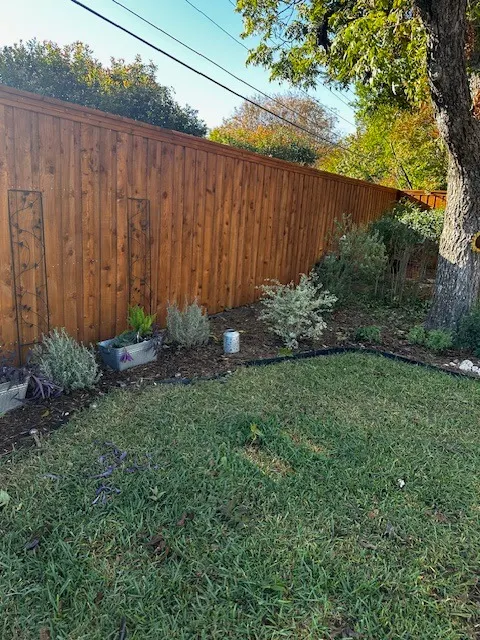
Yes, and done properly it is one of the handsomest combinations we build. A stained cedar screen stands a few inches behind the iron on its own posts. From the street you see black ironwork against warm wood. From the yard you see a finished cedar fence.
The cedar should be built as its own fence, with posts set in concrete, not screwed or wired to the iron. Fastening boards directly to pickets traps water against the steel, damages the powder coat at every screw, and loads the iron posts in a way they were never designed for.
Board-on-board or tight horizontal boards give full privacy. Keep the cedar at or just below the height of the iron so the top rail and finials stay visible, and stain it a color that suits the house. Plan on restaining every few years, typically two to four depending on sun exposure. For a wider look at materials, see cedar, hardwood and composite privacy fences.
What about metal privacy panels or louvers?
For a modern house, custom steel or aluminum panels can be fabricated to fit each bay and powder coated to match the fence. Options include solid panels, laser-cut patterns that give partial screening, and fixed louvers that block the view at eye level and still let air through.
Check the rules before choosing this route. The City of Dallas fence checklist lists sheet metal and corrugated metal among prohibited fence materials, along with fiberglass panels, plywood and most plastic materials. Whether a purpose-made architectural panel is acceptable is a question for the city and your HOA, and we ask it before fabrication. This is general information, not legal advice.
Finish quality matters as much as design. Panels should be coated on every face and edge before installation and fixed with brackets that do not break the coating on the existing fence. The reasons are set out in powder coating vs paint for iron fences.
When does it make sense to add masonry instead?
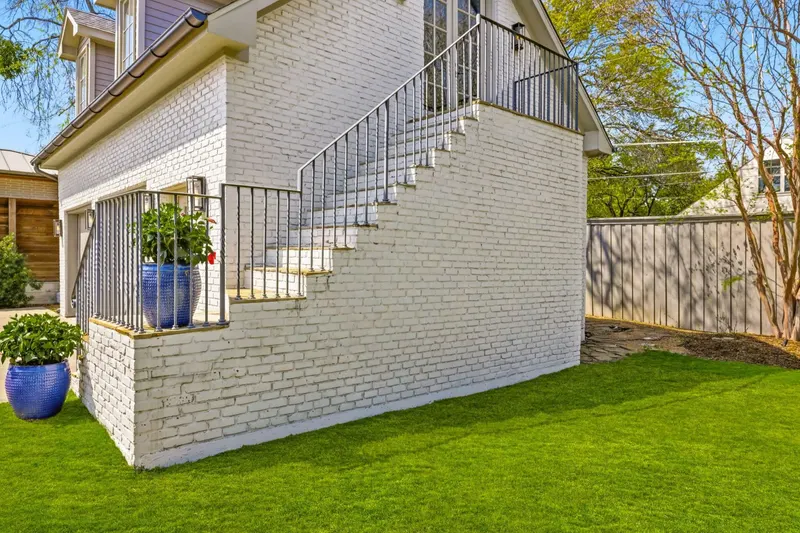
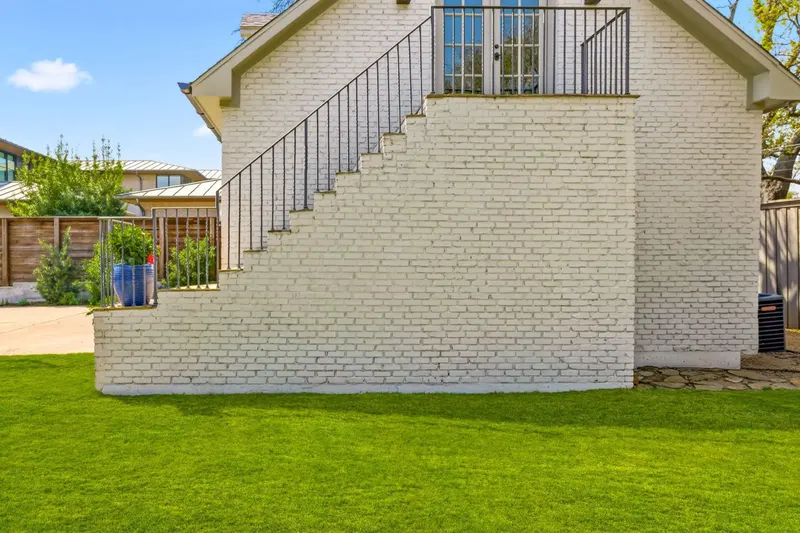
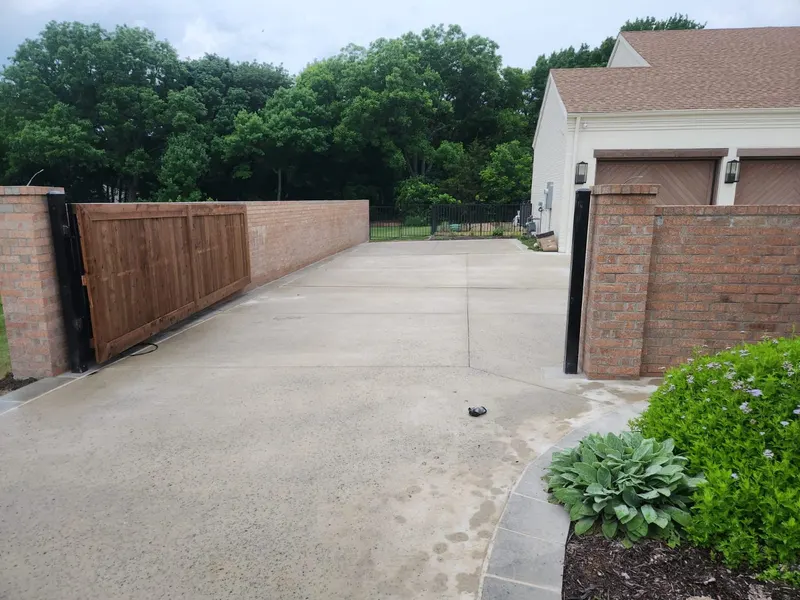
When the privacy problem is permanent and at a fixed spot, such as a pool terrace, an outdoor dining area or a bedroom window facing the street. Replacing a few iron bays with solid brick or stone wall, or adding a masonry base with shorter iron above, gives complete screening and reduces noise in a way no plant or panel can.
It is the largest change on this list. Walls need engineered footings and usually a permit, and the brick or stone has to suit the house. We cover the matching process in matching brick and limestone for new columns and the sound question in fences for traffic noise.
A combination wall often gives the best balance: solid where you sit, open iron where the garden should be seen. The removed iron panels can sometimes be reused elsewhere on the property.
The fifth option in the table is the simplest of the built ones: leave the iron alone and put a second, shorter run of cedar or masonry inside the yard, close to the area you want to screen. A screen wall beside a patio only has to block one sight line, so it can be shorter and lighter than a boundary fence.
What should I avoid?
Anything sold as a quick privacy fix for metal fences. These products solve the problem for a season and create three new ones: they look temporary, they hold water against the steel, and they catch wind.
Wind is the serious one. An iron fence is designed as an open structure that air passes through. Cover it and each bay becomes a sail in a spring storm, pushing on posts and footings sized for open pickets. That is how a sound iron fence ends up out of plumb. Our fence repair team can check and reset leaning posts.
- Mesh, tarps and fabric screens: They fade, sag and tear, and they put the full force of the wind on the fence.
- Clip-on plastic slats and artificial ivy: They look out of place on a custom fence, and Dallas lists most plastic materials as prohibited fence material.
- Boards fastened to the pickets: Screws and wire break the coating and trap water, which starts rust at every fixing.
- Vines grown through the ironwork: Woody stems wrap the pickets, hold moisture and make repainting almost impossible.
Do height limits, HOA rules or the fence’s condition change the plan?
All three can. A screen taller than the iron may exceed a height limit, and a solid fence in a front yard is often treated differently from an open one. The Dallas checklist asks permit applicants to show the openness of the fence on the drawing, and the Town of Highland Park’s packet lists a final inspection to verify that height does not exceed eight feet measured above the non-owner’s side. Deed restrictions can be stricter still.
We confirm the rules with your city and HOA before building, as described in HOA and deed restrictions for fence and gate design. A related article, elegant privacy fences for Preston Hollow estates, covers the options when you are starting from nothing.
Finally, look at the iron itself. If the existing fence is rusting at the base or leaning, fix that first. A screen hides the fence from you as well as from the neighbors. Jack will inspect it at the consultation and tell you plainly whether it is worth building around. Request a free written estimate or call (214) 755-8100.
How Park Cities Fence & Deck helps
Jack Johnson comes out himself, looks at your property and gives you a free written estimate with a timeline. Wood, iron and masonry are all built in-house, so the advice fits the property. Related services: iron / metal fencing, wood fencing, masonry fencing. We work in Preston Hollow and Highland Park and across Dallas.
Questions people ask next
Can I just attach privacy slats or screening to my iron fence?
You can, and we advise against it on a custom fence. Clip-on slats and fabric look temporary, hold moisture against the finish and add wind load the posts were not sized for. Some cities also restrict plastic fence materials. A hedge or a freestanding cedar screen behind the iron costs more effort and protects the fence and the look.
How far from the fence should a privacy hedge be planted?
It depends on the mature width of the plant, which is why the species should be chosen first. A large holly that spreads many feet needs far more room than a narrow upright variety. As a principle, leave a clear gap between mature foliage and the iron for airflow and maintenance. A landscape designer can set the exact spacing.
Will adding a solid screen damage my iron fence?
It can if the screen is fixed to the iron. Solid material catches wind, and that force goes into posts and footings designed for an open fence. Fasteners also break the powder coat. A screen built on its own posts a few inches behind the fence avoids both problems and leaves the iron untouched.
Do I need a permit or HOA approval to add privacy to an existing fence?
Possibly. Planting usually needs no permit, though some HOAs have landscape rules. A built screen may count as a new fence, and height, material and front yard rules can apply. Requirements vary by city and neighborhood. We check with your city and HOA before work starts and prepare any drawings they ask for.
Can you add privacy to only part of the fence?
Yes, and that is often the best design. Most privacy problems are at one or two spots: a pool, a patio or a window. Screening only those bays keeps the open character of the fence along the rest of the property. We walk the yard with you, mark the sight lines and screen what needs it.
Sources and further reading
- City of Dallas: Fence Permit, Pool Barrier and Retaining Wall Checklist
- Texas SmartScape: Nellie R. Stevens Holly
- Town of Highland Park: Fence Permit Packet
General information, not legal advice. Rules change: we confirm the current requirements with your city or HOA before we build.