Iron & Masonry · Dallas, Texas
Can a Rusted Iron Fence or a Leaning Brick Column Be Repaired Instead of Replaced?
Most iron and masonry fence damage is repairable. The footing and the depth of the rust decide the rest.
 By Jack Johnson, owner of Park Cities Fence & Deck · 8 min read · 1,840 words
In short
Usually, yes. Broken welds, bent pickets, surface rust, cracked mortar and loose stones are routine repairs. Replacement makes sense when rust has eaten through the metal at the base of the posts, or when a brick column leans because its footing has failed. In that case the column is rebuilt on a new footing.
In this guide
- Can a broken weld on an iron fence or gate be fixed on site?
- Can a bent iron fence panel be straightened after a car or a tree hits it?
- Can a leaning brick fence column be straightened, or must it be rebuilt?
- How do you repair cracked mortar or loose stones on a fence wall?
- Can one damaged brick column be rebuilt to match the others?
- What causes the white powder on a brick fence, and how is it removed?
- How do repair and replacement compare for iron and masonry?
Need this done? See iron / metal fencing.
Iron and masonry are the two fence materials that most reward repair. The steel in a good iron fence and the brick in a good column can outlast several wood fences, so replacing a whole line because of one cracked weld or one leaning column is rarely the right call. The useful question is where the damage stops.
We build and repair wrought iron, ornamental steel and aluminum fencing and brick and stone fences and columns across Dallas, and both trades are in-house. This guide explains what can be fixed on site, what has to be rebuilt, and how to tell the difference before you collect bids.
Can a broken weld on an iron fence or gate be fixed on site?
Yes. A broken weld is one of the simplest iron repairs, and it is normally done where the fence stands. The old weld is ground back to clean metal, the joint is welded again, the bead is ground smooth, and the bare steel is primed and painted to match.
The finish step matters more than the weld. Welding burns off the coating around the joint, and bare steel in North Texas humidity starts to rust within days. A repair that is welded and left gray will fail at the same spot. We prime and coat every repaired joint the same day, and our guide to keeping an iron fence rust-free explains how to check the rest of the line while you are at it.
Gates break welds more often than fence panels because they move. If a hinge weld on a gate cracks twice, the real problem is usually a sagging post or a gate that is too heavy for its hinges, and re-welding alone will not hold. Ask the repair crew to check post plumb and hinge alignment before they strike an arc.
Can a bent iron fence panel be straightened after a car or a tree hits it?
Sometimes. A panel with a few bent pickets or a gently bowed rail can often be straightened or have the damaged pieces cut out and replaced. A panel that is kinked, twisted or torn from its posts is usually faster and cleaner to replace with a new matching section.
Steel that has been bent sharply and bent back is weaker at the crease and the coating there is cracked, so we judge each piece on its own. Three things decide it.
- How the metal bent: A smooth bow can be pulled straight. A sharp kink in a rail or a hollow picket that has collapsed should be cut out and replaced.
- Whether the posts moved: A hit that shifts a post in its concrete means the footing has to be reset, or the new panel will not sit level.
- Whether the pattern can be matched: Picket size, spacing, rail profile and finial style all have to match. Custom shop work can copy an older pattern that is no longer sold.
Can a leaning brick fence column be straightened, or must it be rebuilt?
In most cases a leaning column has to be taken down and rebuilt, because the lean starts below ground. Brick does not bend. When a column tilts, the footing under it has rotated or settled, and pushing the brick back upright does nothing to the footing.
North Texas clay swells when it is wet and shrinks when it dries. A shallow footing rides that movement every season. Add a tree root, a leaking sprinkler head or a downspout that soaks one side, and the column begins to lean a little more each year. Our article on post depth and footings in clay soil covers why depth is the cure.
The rebuild is not as wasteful as it sounds. Sound brick and the cap can often be cleaned and reused, so the new column matches the old ones. The footing is dug deeper and wider, steel is set in it, and the column goes back up plumb. A very slight lean on a column that has not moved in years can simply be watched. Mark it, photograph it against a level, and check again after a wet season.
How do you repair cracked mortar or loose stones on a fence wall?
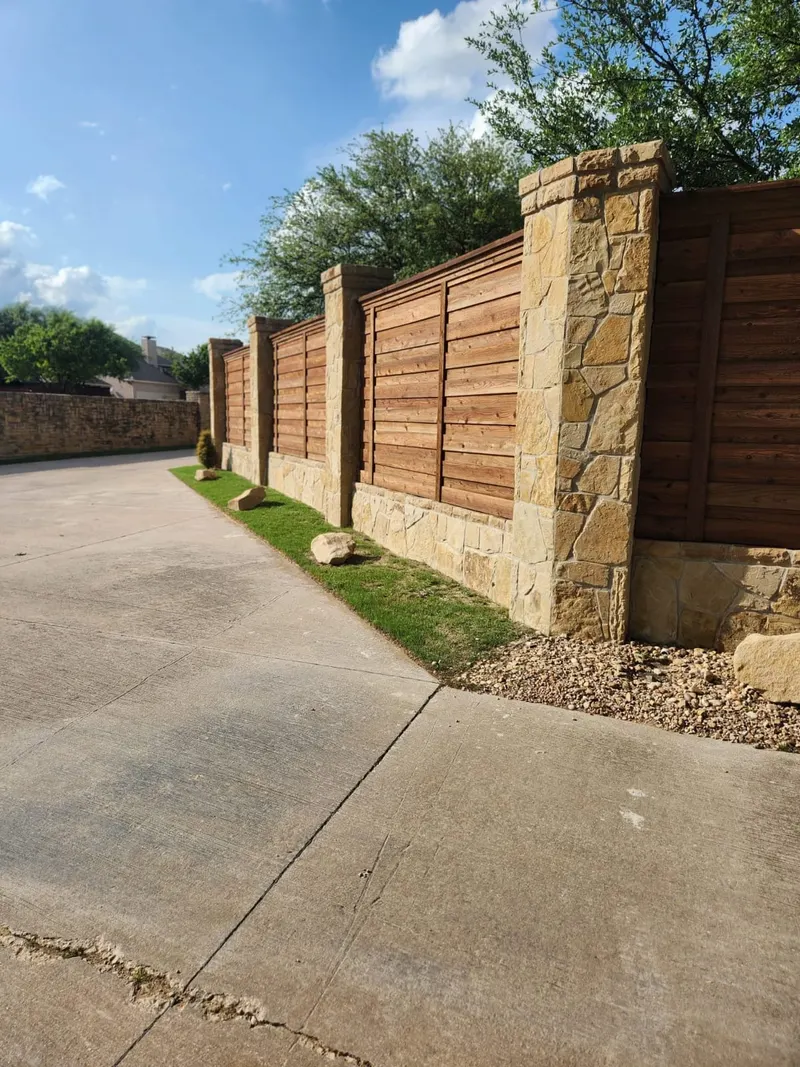
Cracked or crumbling mortar is repaired by repointing: the failed mortar is cut out to a set depth and new mortar is packed in and tooled to match the old joint. Loose stones or bricks are lifted out, the bed is cleaned, and they are set again in fresh mortar.
Color and joint profile decide whether the repair disappears. New gray mortar against forty-year-old weathered joints looks like a patch from the street. We match sand color and joint shape and repoint a logical section, such as a full panel between columns, so the eye does not stop at the repair. The same matching work applies to brick and limestone, covered in our guide to matching existing brick or limestone.
Read the crack before fixing it. Hairline cracks in the joints are normal aging. A stair-step crack that widens toward the top, or a crack that runs through the bricks themselves, is a sign the footing is moving, and repointing will crack again until the cause is dealt with.
Can one damaged brick column be rebuilt to match the others?
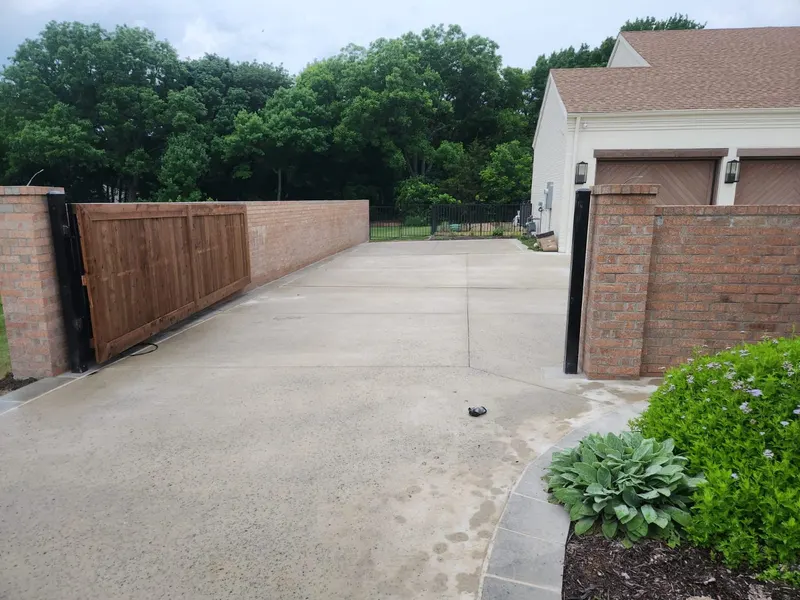
Yes. A single column hit by a vehicle or pushed over by a root can be rebuilt on its own, and with the right brick it will read as part of the original line.
The first choice is to reuse the brick from the damaged column. When too many are broken, we look for the same brick by size, color range and texture, and blend salvaged and new units through the column so no band of new brick shows. Cap stones, mortar color and coursing are copied from the neighbors. If iron panels attach to the column, the brackets or embedded plates are set at the same heights so the rails line up.
Expect a new column to look slightly cleaner for the first seasons. Weather evens it out. A full description of how walls and columns are designed is in our guide to planning a brick or stone fence wall.
What causes the white powder on a brick fence, and how is it removed?
The white powder is efflorescence: salts left on the surface after water moves through the masonry and evaporates. The Brick Industry Association describes it as usually not harmful to the brick, and says the salts most often come from materials touching the brick, such as mortar, concrete or soil.
Timing tells you what to do. The association calls deposits on brickwork less than a year old "new building bloom" and notes that it generally fades as the wall dries and rain washes it. Powder that appears on an older wall points to water getting in: a cracked cap, sprinklers hitting the wall, soil piled against the brick or poor drainage at the base.
So the order is to fix the water first and clean second. Dry brushing removes light deposits. Heavier cleaning should use a method suited to the brick, never a strong acid splashed on by guesswork. The association also cautions that coatings should not be the only treatment for efflorescence.
How do repair and replacement compare for iron and masonry?
Repair wins when the damage is local and the structure under it is sound. Replacement wins when the same failure repeats along the line. The table gives the usual call for the problems we are asked about most.
If the fence is older and you are weighing a larger project, our repair or replace decision guide and the breakdown of what drives fence repair cost go further. For a firm answer on your fence, ask for a free written estimate. Owner Jack Johnson attends every consultation and will tell you plainly when a repair is enough.
Common iron and masonry fence problems and the usual fix
| Problem | Usually repairable? | What the repair involves | When to replace instead |
|---|---|---|---|
| Broken weld | Yes | Grind, re-weld, prime and coat | The joint keeps failing because a post has moved |
| Bent pickets or rail | Often | Straighten or cut out and weld in new pieces | Panel is kinked, twisted or torn loose |
| Rust at post bases | If caught early | Remove rust, treat, prime and recoat | Metal is thin or holed at the ground line |
| Leaning brick column | Rarely as it stands | Take down, new footing, rebuild with salvaged brick | Footing has failed, which is the usual cause |
| Cracked mortar joints | Yes | Cut out and repoint in matching mortar | Cracks run through the brick and keep widening |
| White powder on brick | Yes | Stop the water source, then clean | Not a reason to replace on its own |
What this means for you: A general guide. The condition of the footing and the depth of the rust are confirmed on site before any recommendation.
How Park Cities Fence & Deck helps
Jack Johnson comes out himself, looks at your property and gives you a free written estimate with a timeline. Wood, iron and masonry are all built in-house, so the advice fits the property. Related services: iron / metal fencing, masonry fencing, fence rehab / repair.
Questions people ask next
Should a brick fence be sealed or pressure washed?
Wash gently and seal with caution. High pressure can erode mortar joints and the face of soft brick, so we use low pressure and the right cleaner. A breathable water repellent can help in some cases, but the Brick Industry Association advises against relying on a coating alone to control efflorescence. Fix cracked caps and drainage first.
A car hit my fence. Whose insurance pays?
Generally the at-fault driver's auto liability coverage. The Texas Department of Insurance explains that liability coverage pays to repair or replace the other driver's car or other damaged property. Get the police report number and the driver's insurer, photograph the damage, and ask us for a written repair estimate. If the driver is unknown or uninsured, talk to your own agent. This is general information, not advice.
Does hail damage wood, iron or aluminum fences?
It can mark all three. Hail splinters and dents cedar pickets and knocks stain off in spots. On iron and steel it chips the coating, which lets rust start. Aluminum will not rust but thinner sections can dent. After a storm, walk the line and touch up chipped coating promptly. Our storm damage checklist explains what to photograph for a claim.
Is a hollow tube iron fence as strong as solid bar?
For a residential fence, well-made tube steel is strong enough, and it is what most ornamental fences are built from today. Strength comes from wall thickness, picket and rail size, and weld quality. Solid bar is heavier and resists impact better, which suits gates and traditional designs. Tube needs sealed ends so water cannot sit inside.
Are iron fence panels welded on site or bolted together, and does it matter?
Both methods work. Welded connections are rigid, clean looking and let a fence follow grade exactly, but each field weld must be primed and coated. Bolted or bracketed panels keep the factory finish intact and are easier to swap after damage. What matters is that the posts are set in concrete and the connection suits the design.
Sources and further reading
- Brick Industry Association: Technical Note 23A, Efflorescence, Causes and Prevention
- Texas Department of Insurance: Auto insurance guide
- Texas Department of Insurance: Home insurance guide
General information, not legal advice. Rules change: we confirm the current requirements with your city or HOA before we build.