Iron & Masonry · Dallas, Texas
Can a Fence Company Match My Existing Brick or Limestone for New Columns?
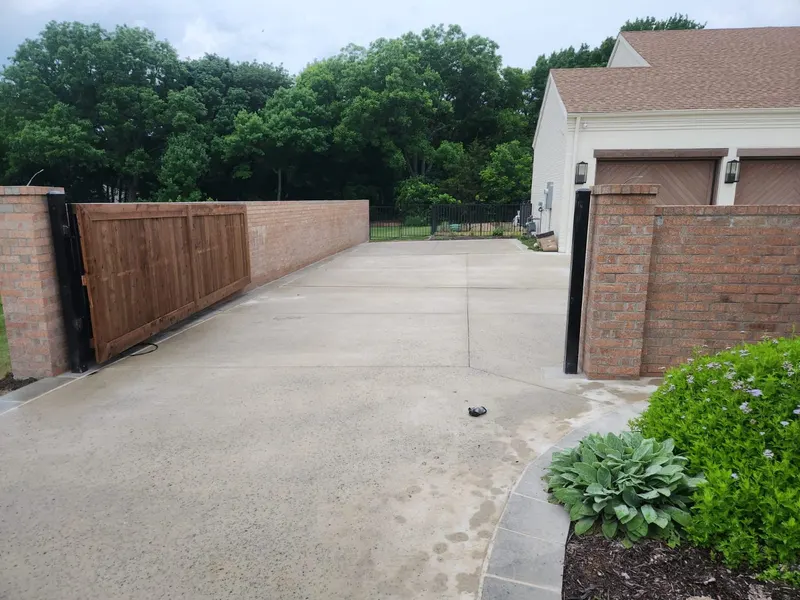
New columns can match the house. The brick is half the job. The mortar and the sample panel are the other half.
 By Jack Johnson, owner of Park Cities Fence & Deck · 9 min read · 1,718 words
In short
Yes. A fence company with real masonry experience can match existing brick or limestone closely by matching four things: unit size, color range, surface texture and mortar. The match is proven with a sample panel built beside the house before the columns go up. An exact match on older, weathered brick is not always possible, and a good mason will say so.
In this guide
- What has to match for new columns to look original?
- How is existing brick matched?
- How is limestone matched?
- Why does mortar matter so much?
- What is a sample panel, and should I ask for one?
- What if an exact match is not possible?
- What goes on below ground and on paper?
Need this done? See masonry fencing.
New columns that almost match are worse than columns that deliberately contrast. The eye forgives a different material. It does not forgive a brick that is one shade off and a mortar joint that is too white.
Matching is a process, not a lucky find at the brickyard. This guide explains how we approach it for brick and stone fences and columns, where the limits are, and what you can do to help before the first visit.
What has to match for new columns to look original?
Four things, and most people think of only one. Color is the obvious one. Size, texture and mortar matter just as much, and mortar is the one that most often gives a new column away.
The Brick Industry Association, the trade body for brick manufacturers, defines matching brick as units with similar color, texture and size to the existing work, and it notes that slight changes in mortar color can make a dramatic difference in how brickwork looks. That agrees with what we see on site. The table sets out each item and how we check it.
What a masonry match depends on
| What to match | Why it matters | How we check it |
|---|---|---|
| Unit size | Course heights must line up with the house | Measure face dimensions of several existing units |
| Color range | Most walls are a blend, not one color | Compare samples against a cleaned area in daylight |
| Surface texture | Smooth, sanded and tumbled faces catch light differently | View samples at a low angle beside the wall |
| Mortar color and joint | Mortar is a large share of what the eye sees | Test mixes, let them cure, and match the joint tooling |
| Bond pattern and caps | Pattern and cap profile set the character | Record the coursing, corners and cap detail on the house |
What this means for you: If any one of the five is wrong, the column reads as an addition, so we check all five before ordering material.
How is existing brick matched?
We start by identifying the brick. If you have the builder’s selection sheet or a few leftover units in the garage, the search can be short. If not, we photograph and measure the wall and take the details to brick suppliers. Many common brick are still made or have a close current equivalent.
Size is checked first, because a brick of the wrong height throws the courses out of line with the house. The Brick Industry Association points out that the dimensions that matter most are those on the exposed face, and that where the original size is no longer made, a larger matching brick can be cut down with a wet saw. That is practical for a set of columns.
Color is judged as a range. A wall that looks red from the street is usually a blend of several shades, and the new columns need the same proportions. We lay sample units against a cleaned section of the house in daylight, not under showroom lights. Our guide to brick and stone fence walls covers the structural side of the same job.
How is limestone matched?
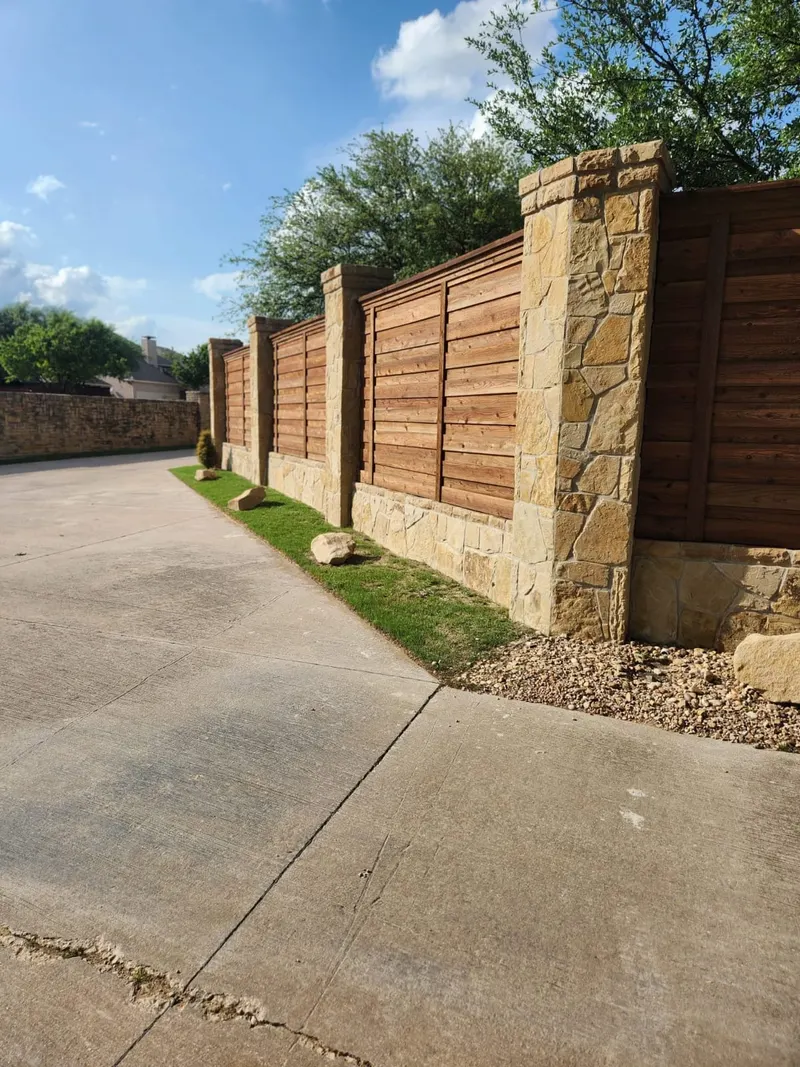
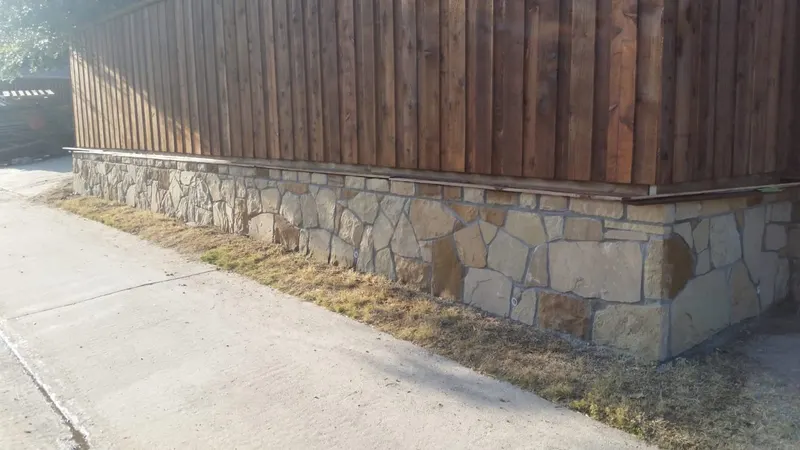
Limestone is a natural material, so no two pieces are identical, and that works in your favor. The task is to find stone of the same general type, color and finish, and then lay it in the same pattern.
Much of the limestone on Dallas homes is Texas stone, and it varies from creamy white to buff and gray. We look at whether the faces are sawn smooth, split, or chopped, and whether the pieces are laid in regular courses or a random pattern. Finish and pattern usually matter more than a small color difference, because stone naturally varies within a single wall.
New limestone looks brighter than stone that has stood outside for years. It tones down with exposure. We explain that honestly at the consultation and do not promise an invisible match on day one. For cast stone or cut caps, we match the profile and thickness of the caps on the house or existing walls.
Why does mortar matter so much?
Mortar is a large share of any brick surface, so its color has more influence than most people expect. A gray mortar and a buff mortar will make the same brick look like two different products. The joint profile matters as well: a raked joint casts a shadow, and a flush or tooled joint does not.
We mix test batches and let them cure before judging them, because wet mortar is darker than cured mortar. Sand has as much effect on the final color as cement or pigment does, so the sand is part of the match.
For freestanding columns, the new mortar does not have to be the same composition as the old, only the same appearance. Repairs bonded into old brickwork are different. The Brick Industry Association warns that the wrong mortar in existing masonry can cause spalling and cracking, and generally recommends a softer, high-lime mortar for repairs to older brickwork. If we are tying into an old wall, we take that seriously.
What is a sample panel, and should I ask for one?
Yes, ask for one. A sample panel is a small section of the proposed brick or stone, laid with the proposed mortar and joint, set up beside the existing masonry. It is the only reliable way to judge a match, and it is standard practice in good masonry work.
The Brick Industry Association advises that a sample panel should represent the full range of colors and textures selected, and that both the original brickwork and the panel should be cleaned before they are compared. Dirt and weathering on the house can hide its true color, so we clean a test area first.
Look at the panel at different times of day and from the street as well as up close. Jack attends every consultation and build, and he will give you his honest opinion as a former home builder. Once you approve the panel, it becomes the standard the finished columns are held to.
What if an exact match is not possible?
Sometimes the brick is discontinued and nothing current is close enough. There are three honest ways forward. The first is reclaimed brick of the same type, where it can be found in sufficient quantity. The second is a deliberate complement: columns in a stone or brick that is plainly different and relates to the trim or the paving, so nobody reads it as a failed match.
The third is to change where the columns sit. Columns standing well away from the house are compared with it less directly than columns that touch it. Masonry stains exist for adjusting brick color, and we treat them as a last resort to be tested on spare units first.
Design can also carry the eye elsewhere. Iron panels, a strong gate and good lighting draw attention from small differences. See why masonry columns elevate a fence line and fence, gate and column lighting.
What goes on below ground and on paper?
A matched column that leans in three years is a failure. North Texas clay moves with moisture, so columns need engineered footings below the zone where the soil swells and shrinks, with steel reinforcement tied into the column. This is not visible when the job is finished, which is why we specify it on the estimate.
Masonry also draws more review than a wood fence. The Town of Highland Park’s fence permit packet states that masonry walls require engineer-stamped plans and that a footing may not cross the property line or sit in a public way or easement. The City of Dallas asks for a scaled site plan and an elevation drawing with a fence permit application. Other cities differ, and we confirm the requirement for your address. This is general information, not legal advice.
Columns usually carry something: iron panels, cedar bays or an automated driveway gate. Gate columns take real loads and are built with a steel core. If the fence is near large trees, read building a fence near mature trees before the footings are laid out. We build matched columns across Preston Hollow, Highland Park and University Park. Request a free written estimate and we will start with the brick.
How Park Cities Fence & Deck helps
Jack Johnson comes out himself, looks at your property and gives you a free written estimate with a timeline. Wood, iron and masonry are all built in-house, so the advice fits the property. Related services: masonry fencing, iron / metal fencing, gates & gate motors. We work in Highland Park and Preston Hollow and across Dallas.
Questions people ask next
Can you match brick on a house built decades ago?
Often, yes. Many older brick have a current equivalent, and reclaimed brick is an option for discontinued types. The match depends on finding the right size, color blend and texture, then matching the mortar. Where no close match exists, we tell you before any work begins and suggest a complementary material instead of a near miss.
Will new brick or stone look brighter than the old?
Usually, at first. Existing masonry carries years of weathering and dirt, and new material is clean. Cleaning the original wall before comparing narrows the gap, and new work tones down with exposure. We choose the match against a cleaned area of the house so the two age toward each other.
What can I do before the consultation to help?
Look for leftover brick or stone in the garage or behind the fence, and for the builder’s selection sheet in your closing documents. Either can identify the product quickly. Clear photos of the house in daylight help too. If you have a survey, have it ready, since column locations are set from the property lines.
Can columns be added to an existing fence?
Yes. Columns can be added along an existing iron or cedar fence line, with the panels refitted between them. Each column needs its own footing, so some excavation is involved, and iron panels may need to be shortened or remade to suit the new spacing. We measure the fence and draw the layout before pricing the work.
Do you build the columns yourselves or subcontract the masonry?
Brick and stone fences, columns and combination walls are part of the work Park Cities Fence & Deck offers, alongside iron, cedar and gates. Jack attends every consultation and build and does the final walkthrough himself, so one person is responsible for how the masonry, the metal and the gate come together.
Sources and further reading
- Brick Industry Association: Brick Brief, Replacement Brick
- Town of Highland Park: Fence Permit Packet
- City of Dallas: Fence Permit, Pool Barrier and Retaining Wall Checklist
General information, not legal advice. Rules change: we confirm the current requirements with your city or HOA before we build.