Maintenance · Dallas, Texas
Repair or Replace? An Honest Decision Guide for Aging Fences
Post condition, picket condition, and how much of the run is hurt, the three questions that honestly settle repair vs. replace.
 By Jack Johnson, owner of Park Cities Fence & Deck · 8 min read · 1,734 words
In short
Three questions decide it: are the posts sound, is the wood itself still healthy, and how much of the run is damaged? Solid posts with tired pickets favor repair; failed posts across much of the line favor replacement. A leaning fence with sound wood can often be rehabilitated for roughly half the cost of replacement.
In this guide
- Question one: what condition are the posts in?
- Question two: is the wood itself still healthy?
- Question three: how much of the run is damaged?
- When repair is clearly the right call
- When replacement is the honest answer
- The middle path: rehabilitation
- How to get an honest verdict
Need this done? See fence rehab / repair.
A fence company makes more money telling you to replace. That is worth saying out loud, because it explains why so many homeowners with a leaning fence get quoted a brand-new one when a repair would have served them for years. The honest answer lives in three questions, and none of them is how the fence looks from the kitchen window.
We run this same framework on every fence repair call in Dallas: check the posts, check the wood, measure how much of the run is actually hurt. Sometimes the answer genuinely is replacement, and we will say so. But you should walk into that conversation knowing how the decision is supposed to be made.
Question one: what condition are the posts in?
Posts are the skeleton, and they are almost always what fails first. A cedar picket can weather twenty North Texas summers; the post holding it lives half its life underground, where moisture and soil contact attack it from the day it is set. When a fence leans, sags in waves, or rocks when you push it, you are looking at post trouble, not picket trouble.
The test is simple. Grab a post and push firmly: it should feel like part of the earth. Movement at the base means the post has broken off below grade, its concrete footing has heaved loose in our expansive clay, or it was never set in concrete at all. Probe the post at ground level with a screwdriver; soft, punky wood that the tip sinks into is rot doing its work out of sight.
Here is why this question comes first: pickets and rails can be replaced piecemeal, cheaply, forever. Posts cannot. Replacing a post means demolishing that section, breaking out old concrete and rebuilding, so the fraction of posts that have failed drives the whole decision more than anything you can see at eye level.
Question two: is the wood itself still healthy?
Separate the fence’s posture from its flesh. A fence can lean badly on failed posts while the pickets and rails are perfectly sound, and a fence can stand straight while its boards are cracked through, cupped and soft. The first fence is a strong repair candidate. The second is quietly telling you it is done.
Gray color means nothing by itself; that is surface oxidation, and a wash and restain reverses it completely. What matters is structure: press a screwdriver into the pickets low on the fence where sprinklers hit. Sound wood resists; rot gives. Look for boards cracked full-length, rails sagging between posts, and fastener heads bleeding rust streaks down the grain.
Age is context for this question. Cedar lasts 15–20 years in North Texas, so a twelve-year-old fence with sound wood has real life left and is worth investing in. Wood that is failing broadly at eight years usually means the fence was built lean, thin pickets, skipped stain cycles, and putting money into it is buying time, not value.
Question three: how much of the run is damaged?
Walk the whole line and count. Fence damage is usually lumpy, one storm-hit stretch flattened, one shaded section rotting, the rest serviceable. The fraction of the total run that actually needs work is the decision’s arithmetic, because repair pricing scales with the damaged footage while replacement prices the entire line.
When a small share of the run is hurt, repair wins easily: a few posts reset, a section re-railed, pickets swapped, and the fence is quietly back in service. When the damage spreads to roughly a third of the line, the math starts tightening. Past the point where half the fence needs rebuilding, you are paying repair prices for replacement work, and the untouched sections are the same age as the ones that just failed.
That last point deserves emphasis. Damage percentage is a leading indicator, not just a tally: if a third of your posts have rotted off at grade, the remaining two-thirds were set the same year, the same way, in the same soil. Repairing into a fence that is failing systemically means paying for the same visit again next spring, one section over.
When repair is clearly the right call
Storm damage on a healthy fence is the classic case: wind snapped two posts and flattened a section, but the fence was sound last month and the wood proves it. Rebuilding that stretch, new posts set in concrete, rails and sound pickets re-hung, restores the line without touching what was never broken.
Isolated failures fit the same pattern. One gate post heaved by clay movement, a rotted stretch where the sprinklers soak, a rail that let go, these are surgical fixes. Done properly, with posts set in concrete and galvanized fasteners rather than a scab of screws and hope, a repair is not a patch; it is that section brought back to standard.
Repair is also the honest bridge. If a full replacement is two or three years away by choice or budget, a modest repair that keeps the fence standing and the dog contained is money well spent, as long as everyone is clear that it is a bridge, and the quote is scoped like one.
When replacement is the honest answer
Widespread post failure ends the debate. When pushing on every third post produces movement, the skeleton is gone, and re-hanging good pickets on failing posts is cosmetic work over structural failure. The same verdict applies when rot has spread through the boards themselves across long stretches, there is no section-swap answer to systemic decay.
Age closes the case from the other side. A fence at eighteen or twenty years that now needs multiple sections rebuilt has simply finished its service life; every dollar of repair buys months instead of years. At that point, a new cedar fence, modern build standards, steel post options, fresh stain cycle, is the better use of the same money.
There is also a threshold worth naming: when repairs would touch most of the line anyway, replacement often costs surprisingly little more and resets everything to year zero, posts, pickets, warranty of workmanship, appearance. Paying almost-replacement money for a repaired twenty-year-old fence is the worst outcome on the menu.
The middle path: rehabilitation
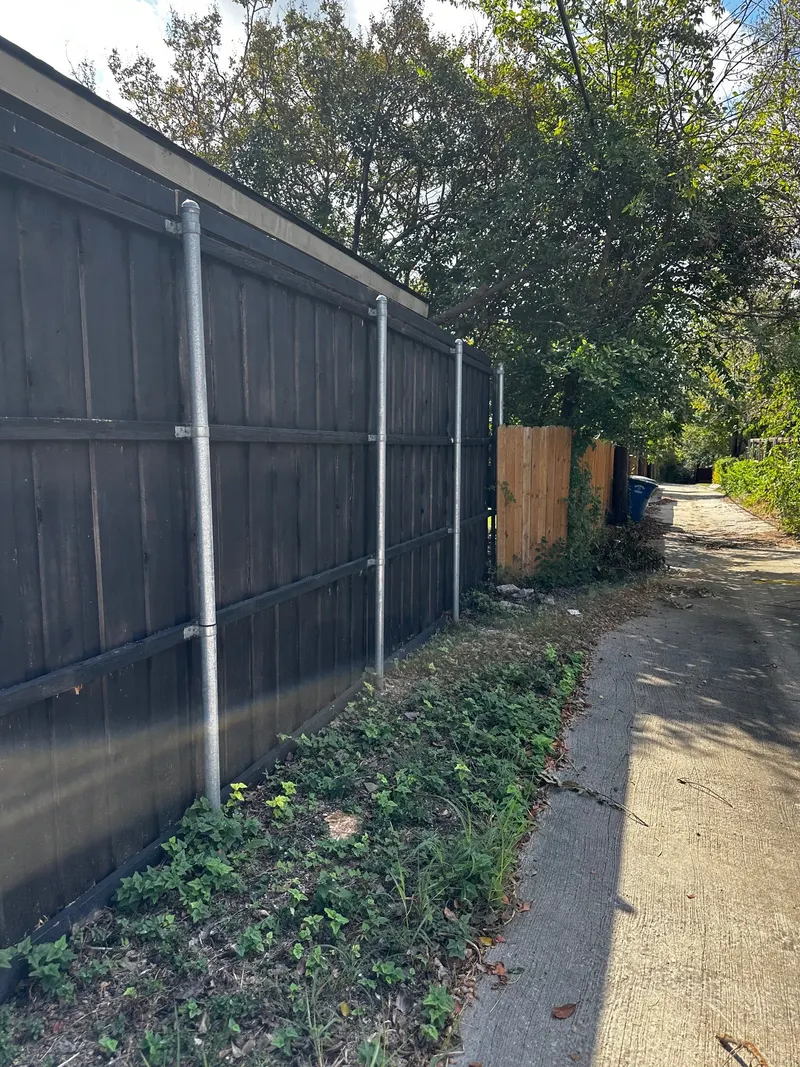
Between patch and rebuild sits the option fewest homeowners hear about: rehabilitation. If your fence is leaning but the wood is sound, we reset the failed posts, re-rail the sections and re-stain the whole line, typically for roughly half the cost of replacement. The fence comes out straight, solid and freshly finished, with years of honest service ahead of it.
Rehabilitation works because it spends money exactly where the failure is. Posts and rails carry the structure; pickets mostly just ride along. When the pickets are healthy, replacing them is paying to throw away good cedar. Resetting the skeleton under them, this time in concrete, with steel post options where the old wood posts failed, fixes the actual problem.
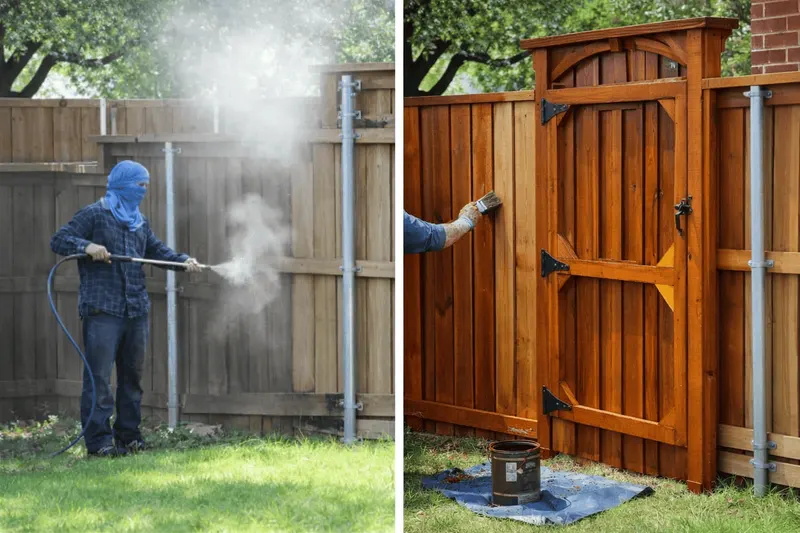
The finish matters to the outcome: a rehabilitated fence that gets washed and stained does not read as repaired. It reads as new, and it buys back real years. It is the single best-value structural service we offer, and the one we quote most often on fences between eight and fifteen years old.
How to get an honest verdict
Ask whoever quotes you to walk the line with you and show their reasoning: which posts moved, where the screwdriver sank, what fraction of the run they are pricing. An honest assessment points at specific failures. A vague gesture at the whole fence followed by a replacement number is a sales call, not an inspection.
Our quotes are free, usually back within 24 hours, and they name the option we would choose on our own house, repair, rehabilitation or replacement, with the reasoning attached. And whichever way it goes, Jack walks the finished work with you before we call it done. The fence should be the thing that leans; the advice should not.
How Park Cities Fence & Deck helps
Jack Johnson comes out himself, looks at your property and gives you a free written estimate with a timeline. Wood, iron and masonry are all built in-house, so the advice fits the property. Related services: fence rehab / repair, wood fencing, powerwash & restain. We work in Dallas and Plano and across Dallas.
Questions people ask next
Can a leaning fence be fixed without replacing it?
Usually, yes, lean is a post problem, not a fence problem. If the pickets and rails are sound, resetting the failed posts in concrete and re-railing the affected sections brings the line back straight. That rehabilitation approach typically runs roughly half the cost of replacement and adds years of service.
How do I know if my fence posts are rotten?
Push each post firmly, a sound post feels rigid, while movement at the base means breakage, rot or a heaved footing. Then probe the post at ground level with a screwdriver: if the tip sinks into soft, punky wood, rot has taken hold where the post meets the soil, which is where it almost always starts.
What percentage of damage means I should replace the fence?
As a working rule, repair wins when a small share of the run is hurt and the rest is healthy. Once roughly a third of the line needs structural work, weigh replacement seriously, and past half, replacement is almost always the better spend, because the surviving sections are the same age as the failed ones.
Is it worth repairing a 15-year-old cedar fence?
Sometimes, but the bar rises with age. Cedar lasts 15–20 years here, so a fence at fifteen is spending its final chapters, a small, cheap fix that keeps it serviceable can be sensible, while a large repair bill usually is not. We would rather tell you to bank that money toward replacement than sell you a big repair.
Does a repaired section look different from the rest of the fence?
Fresh cedar stands out against weathered boards at first, and sun alone will slowly blend it. The faster, cleaner fix is finishing the job with a wash and stain of the full line, the whole fence comes back to one uniform color, and the repair disappears into it. That is how a repair ends up reading as a renewal.