Maintenance · Dallas, Texas
After the Storm: Assessing and Fixing Fence Damage in DFW
Safety first, then honest triage: what to check, what to photograph, and why spring storms and clay soil flatten DFW fences.
 By Jack Johnson, owner of Park Cities Fence & Deck · 8 min read · 1,782 words
In short
After a DFW storm: stay clear of any fence touching downed power lines, secure pets and pool access, then walk the line and triage honestly, a leaning fence with sound wood is usually repairable, while snapped posts and shattered sections need rebuilding. Photograph everything before cleanup, and get a free quote fast; ours usually come back within 24 hours.
In this guide
- Safety first, before you touch anything
- Walk the line: an honest triage
- Document everything before you clean up
- Why DFW storms flatten fences: wind meets clay
- Temporary stabilization that does not make things worse
- What a proper storm repair looks like
- After the repair: make the next storm boring
Need this done? See fence rehab / repair.
Spring storm season leaves the same scene across DFW every year: sections of fence flat in the yard, lines leaning at odd angles, and homeowners trying to figure out what is urgent, what is repairable, and who to call first. This checklist walks that morning in the right order, safety, triage, documentation, then the fix.
The good news up front: most storm-hit fences are not destroyed. Wind finds the weakest posts and takes the sections they carried, while the rest of the line often comes through sound. Knowing how to tell a fence that needs repair from one that needs replacement is most of what this guide is for.
Safety first, before you touch anything
Before assessing the fence, assess the hazards. If any power line is down in or near your yard, stay away from the fence entirely and call the utility, a metal fence, wet wood or the chain-link behind your cedar can carry current from a line you cannot even see from where you stand. No fence repair is worth approaching that.
Next, contain what the fence was containing. A downed section is an open gate for dogs and an open door to a pool, if you have either, solve that within the hour, even if the solution is temporary panels, a rope and a ladder across the gap, or the dog staying inside. Pool exposure in particular deserves immediate attention; the barrier was there for a reason.
Then look up before you look down. Broken branches hanging over the fence line, widow-makers, tree crews call them, can drop on the next gust. If the storm left limbs suspended over your work area, deal with the tree hazard before spending time under it studying pickets.
Walk the line: an honest triage
With hazards handled, walk the entire fence line, not just the obvious wreck, and sort what you see into three buckets. First: standing but leaning. Second: down or broken. Third: apparently untouched. Push-test posts as you go, because storms loosen more than they topple; a post that survived visibly may now rock in its socket.
Lean and breakage are different injuries. A leaning section whose posts have tilted but not snapped, with pickets and rails intact, is often a candidate for straightening and resetting, the fence’s wood is fine, its anchoring failed. A section with posts cracked off at grade or rails torn out of the posts has structural breakage; that stretch gets rebuilt, not persuaded upright.
Be honest about what the storm revealed versus what it caused. Wind is an inspector: it finds the posts that were already rotted at the ground line and takes them first. If the broken posts show dark, soft, crumbly wood at the break, the storm finished something rot had started, and the neighboring posts of the same age deserve suspicion. Our repair-or-replace framework applies from here.
Document everything before you clean up
Before moving a single panel, photograph the damage thoroughly: wide shots that show which sections of the line are down, closer shots of each break, and detail shots of snapped posts, torn rails and anything the fence fell on. Capture the cause where visible, the neighbor’s limb across your panels tells the story better than any description.
Keep it organized and time-stamped, and write down the storm date while it is fresh. If you end up filing an insurance claim, your insurer will tell you exactly what they need, coverage and process vary by policy, and that conversation belongs between you and them, but no claim was ever hurt by clear photos taken before cleanup, and many have been hurt by their absence.
Documentation helps even without a claim. Photos of exactly which sections failed, and how, let a fence company quote accurately from the first visit, and they settle any later question about which damage came from this storm versus general age.
Why DFW storms flatten fences: wind meets clay
A solid privacy fence is a sail. Board-on-board cedar, the very thing that makes it private, presents an unbroken face to the wind, and spring storm gusts load hundreds of feet of that sail all at once. Every bit of that force travels down to the posts and into whatever is gripping them.
Here is the North Texas twist: what grips them is expansive clay, and spring is precisely when clay is weakest. The same storms that bring the wind arrive on ground already soaked by days of rain, saturated clay loses its hold, footings loosen in their sockets, and posts that would shrug off a dry-season gust lever over in the softened ground. Wind and soggy clay work as a team, which is why fence damage across DFW clusters so tightly around spring storm season.
This is also why build quality shows up exactly now. Posts set deep in concrete spread wind load into far more ground than dirt-set posts; steel posts do not rot at the ground line where the leverage peaks. The fences that survive a bad spring in Preston Hollow and the ones flat on the ground were often built the same year, just not the same way.
Temporary stabilization that does not make things worse
If a repair is days away, modest stabilization protects what is left. A leaning section can be braced with a couple of angled boards staked into the ground on the lean side; panels that are down can be stood against a sound stretch of fence or laid flat out of the way. The goal is preventing further racking, not achieving straightness.
What not to do: do not winch or shove a leaning fence upright by force, you will tear sound rails out of posts and turn a resetting job into a rebuild. Do not screw fallen panels back onto broken posts; a panel hung on a snapped post is a falling hazard pretending to be a fix. And leave a shared-line dispute for calmer days; storm week is for tarps and bracing, not boundary arguments.
Resist permanent-looking temporary fixes in general. Concrete poured against a broken post, sistered lumber scabbed onto a snapped one, these make the eventual proper repair harder and rarely hold through the next gust anyway.
What a proper storm repair looks like
A storm repair done right is a rebuild of the failed sections to full standard, not a re-leaning of the fence in the opposite direction. Broken posts come out, old concrete is broken free, and new posts go in, set in concrete, with steel post options where wood posts failed at the ground line. Sound rails and pickets are reused where they deserve to be; storm-cracked ones are not.
Expect an honest conversation about scope, because storms often force the repair-versus-replace question on the spot. If the storm took two sections of an otherwise healthy fence, repair is the obvious call. If it took two sections because a third of the posts were rotted through, rebuilding just the fallen stretch schedules the next failure. We would rather show you the difference at the fence line than discover it for you next spring.
Speed matters after a storm, and this is where our process helps: quotes are free and usually back within 24 hours, we are reachable 24/7 at (214) 755-8100, and most wood fence work runs 1–3 days once materials are on site. After a widespread storm, the whole metroplex calls fence companies the same week, being early in the queue with photos in hand genuinely shortens your wait.
After the repair: make the next storm boring
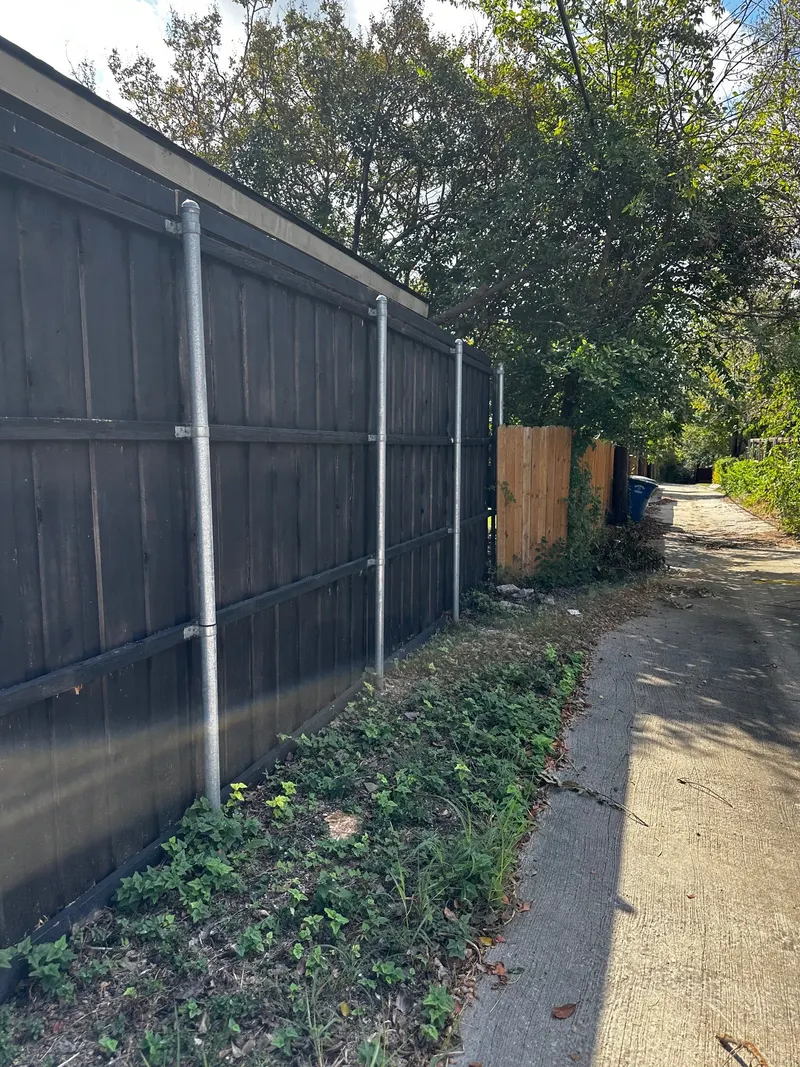
The cheapest storm damage is the kind that never happens, and post condition decides most of it. Keep sprinkler heads from soaking post bases, keep soil and mulch from piling against pickets, and push-test your posts each spring the way wind is about to. Catching one loosening post in March is a small fix; meeting it in a June storm is a flattened section.
Keep the wood itself strong: a fence on its 3–4 year wash-and-stain cycle resists the moisture cycling that softens boards and rusts fasteners. And when limbs overhang the line, trim them on your schedule rather than the storm’s. A sound, maintained cedar fence handles ordinary North Texas weather for 15–20 years, the checklist above is for the days that are not ordinary.
How Park Cities Fence & Deck helps
Jack Johnson comes out himself, looks at your property and gives you a free written estimate with a timeline. Wood, iron and masonry are all built in-house, so the advice fits the property. Related services: fence rehab / repair, wood fencing. We work in Dallas and Fort Worth and across Dallas.
Questions people ask next
My fence is leaning after a storm — can it be saved?
Often, yes. If the posts tilted in rain-softened ground but nothing snapped, and the rails and pickets are sound, the section can usually be reset, posts straightened or replaced and set in concrete, without rebuilding the fence. If posts cracked off at grade or rails tore free, that stretch needs proper rebuilding instead.
Who do I call first about storm damage to my fence?
If power lines are involved, the utility company, and stay clear until they act. Otherwise, photograph everything, check your insurance policy if you may file a claim, and call a fence company for an assessment. We answer 24/7 at (214) 755-8100 and free quotes usually come back within 24 hours.
Why do fences blow over so often in DFW spring storms?
Because two forces team up: a solid privacy fence catches wind like a sail, and spring storms arrive on clay soil already saturated by rain. Wet, expansive clay loses its grip on footings, so posts lever over under gusts they would resist in dry ground. Deep concrete footings and steel posts are the defense.
Will insurance cover my storm-damaged fence?
That depends entirely on your policy, so the honest answer is to ask your insurer, coverage, deductibles and process vary. What helps in every case: thorough photos taken before cleanup, notes on the storm date, and a written repair quote. We provide detailed quotes homeowners can hand directly to their adjuster.
How fast can a storm-damaged fence be repaired?
Assessment is fast, free quotes usually within 24 hours, and we are reachable around the clock. The work itself is quick once scoped and materials are set: most wood fence builds and section rebuilds run 1–3 days. After a major regional storm, demand spikes across DFW, so calling early keeps you near the front of the queue.