Maintenance · Dallas, Texas
How Do I Maintain a Wood Fence in North Texas So It Lasts Longer?
Most fences fail from water at the bottom, not age. This checklist keeps the wood dry and the posts straight.
 By Jack Johnson, owner of Park Cities Fence & Deck · 9 min read · 1,776 words
In short
Keep water and soil off the wood, keep the stain fresh and fix small problems while they are small. Aim sprinklers away from the boards, hold mulch and vines back, check posts, rails and gate hardware each spring, clean off mildew and restain every few years. Those habits decide whether cedar reaches its full life.
In this guide
- How do I maintain a wood fence so it lasts longer?
- Are my sprinklers ruining my fence?
- Do vines or ivy damage a fence?
- How should soil, mulch and flower beds meet the fence?
- How do I trim grass along a fence without damaging it?
- What should I check on my fence every spring?
- How do I clean a fence without a pressure washer?
Need this done? See powerwash & restain.
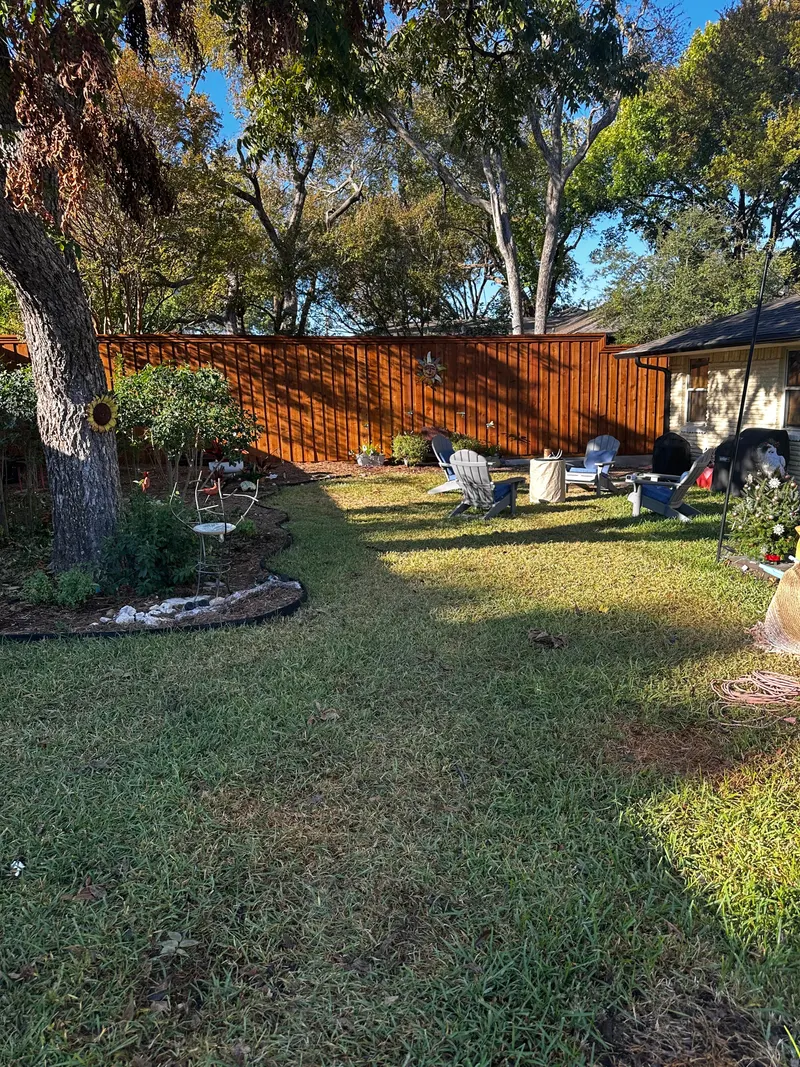
A cedar fence lasts 15 to 20 years in North Texas when it is built well and looked after. The fences we replace early almost always share the same history: wet at the bottom, buried in a flower bed, never restained.
None of this takes special tools. It takes a walk along the fence a few times a year and a willingness to move a sprinkler head. Stain timing is its own subject, covered in when to power wash and restain your fence.
How do I maintain a wood fence so it lasts longer?
Control moisture first, then protect the surface, then keep the structure tight. Wood that dries quickly after rain resists rot. Wood that stays damp does not, no matter the species.
The Forest Products Laboratory puts it bluntly in its guidance on exterior wood: water is one of wood’s worst enemies, causing swelling, shrinking, decay and early failure of the finish. Everything on this checklist is a way to help the fence dry out. The table gives the year in a few short passes.
Construction sets the ceiling. Posts set in concrete, steel post options, galvanized fasteners and kiln-dried cedar give a fence its full potential life, and that is how we build wood fences. Maintenance decides how much of that potential you actually get. A well-built fence that is neglected will still fail early at the bottom edge.
A year-round maintenance calendar for a wood fence in North Texas
| When | What to do | Why it matters |
|---|---|---|
| Early spring | Walk the line, push on posts, check rails, pickets and gates | Finds loose parts before storm season |
| Late spring | Reset sprinkler heads, pull soil and mulch back from the boards | Stops daily wetting as watering ramps up |
| Summer | Trim vines and shrubs off the fence, watch for soil gaps at posts | Lets air move and shows clay shrinkage early |
| Fall | Clean mildew, do the water-bead test, schedule stain if due | Mild, dry days are good for finishing |
| After any big storm | Check for lean, split rails and gate sag | Small storm damage grows if left alone |
What this means for you: Fifteen minutes four times a year is enough for most fences.
Are my sprinklers ruining my fence?
If they hit the boards every morning, yes. Daily spray keeps the lower pickets and rails wet, strips the stain in a clear arc and feeds mildew. It is one of the most common causes of early rot we see.
The signs are easy to read: a dark or green band along the bottom, a fan-shaped pattern where the finish has faded, and hard-water spotting on stained boards. Run the system in daylight and watch each zone. Heads next to the fence should throw away from it. Where beds run along the fence, drip irrigation waters the plants without wetting the wood. Check again after the lawn crew has been through, because heads get kicked and turned all season.
If the bottom of the fence is already soft, a rot board can take that abuse in place of the pickets. See what a rot board does on a wood fence.
Do vines or ivy damage a fence?
Yes, on a wood fence. Vines hold moisture against the boards, block the air that dries them, add weight and wind load, and hide damage until it is advanced.
Woody climbers do the most harm. Stems work between pickets and behind rails and pry them apart as they thicken. Dense growth also makes a fence impossible to stain. If you want green on the fence line, grow it on a separate trellis set a few inches in front of the boards, or choose a material that tolerates it. Vines on powder-coated iron fencing are far less of a problem, because metal does not rot and air moves through it.
Remove vines by cutting them at the base and letting them die before pulling, so they come away without tearing pickets off. Trees are a different matter, covered in building a fence near mature trees.
How should soil, mulch and flower beds meet the fence?
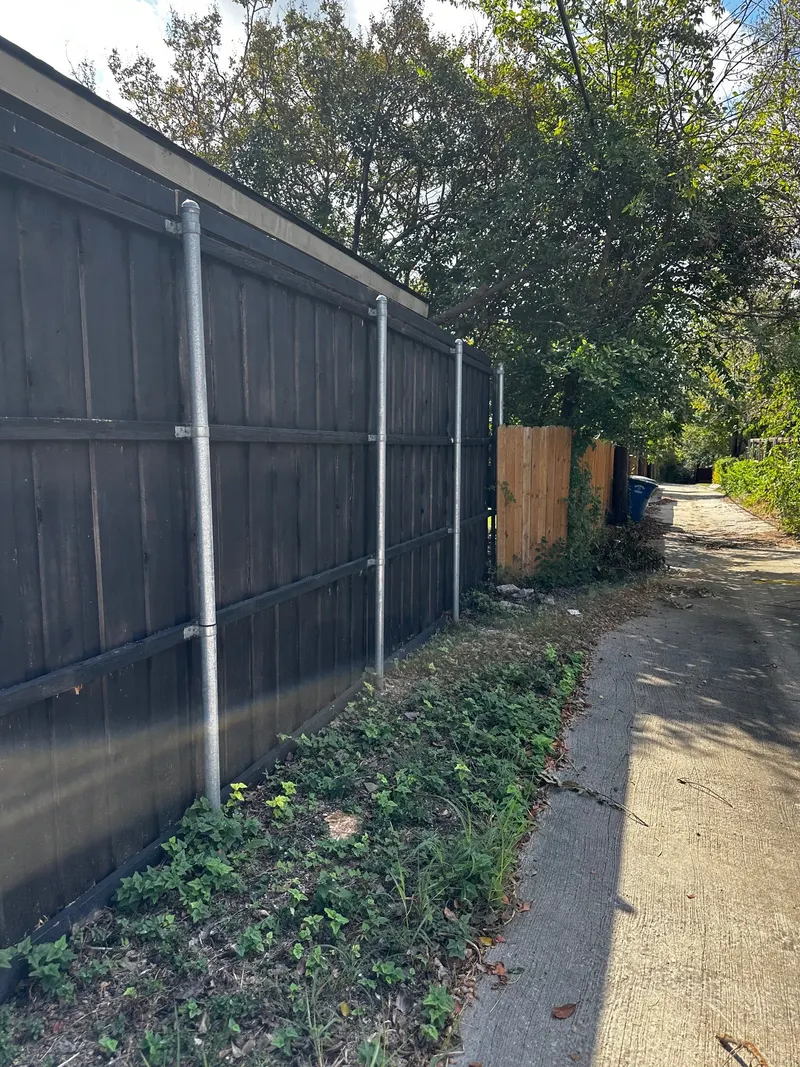
They should stop short of the wood. Pickets are not made for ground contact, and soil or mulch piled against them holds water against the end grain and gives insects a covered path.
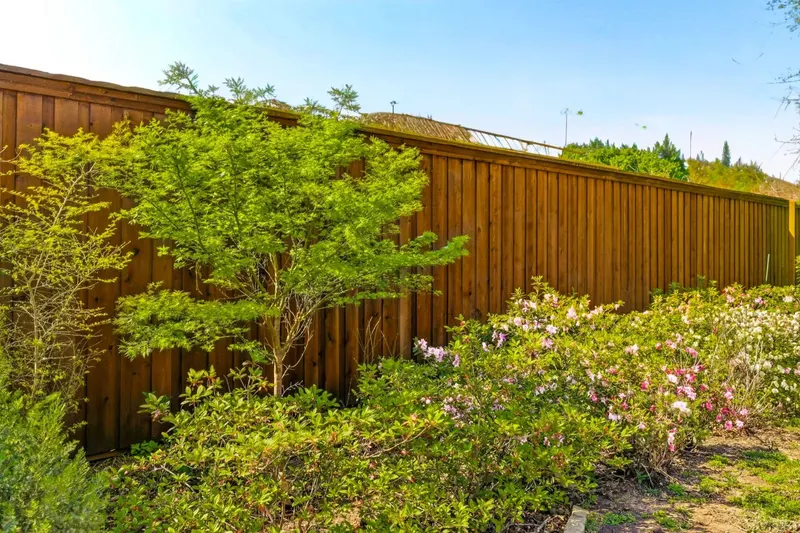
Keep a small gap between the bottom of the pickets and the ground, and keep bed soil and mulch below that line. Raised beds built against a fence are the worst case: they bury the lower boards and push on the fence like a retaining wall, which it is not. Leave a strip of gravel or bare ground between the bed and the fence, or build the bed with its own back wall.
Texas A&M AgriLife Extension’s termite guidance says that wherever wood touches soil there is a high risk of termite infestation, and it lists fences among the earth-to-wood contacts to look for. Drainage matters too. If water stands along the fence after rain, see fences on slopes and drainage.
How do I trim grass along a fence without damaging it?
Keep the trimmer line off the wood. A string trimmer chews a groove into the base of pickets and wooden posts every week, and that groove is exactly where water sits.
The simplest fix is to remove the reason to trim there. A narrow mowing strip of gravel, steel edging or pavers along the fence lets the mower wheel do the work. Where you must trim, tilt the head so the line cuts toward the grass and stops short of the boards. Steel posts shrug off a trimmer. Wood posts and the bottom of cedar pickets do not.
On a fence with a rot board, the board takes the trimmer hits and can be replaced by itself later. That is a large part of why we recommend one.
Mowers do their own damage. A riding mower or a heavy walk-behind that bumps a post every week loosens it in the footing over time, and a deck that clips the pickets splits them at the bottom nail. Leave a hand’s width and finish that strip another way.
What should I check on my fence every spring?
Check that the posts are solid, the rails are attached, the pickets are tight and the gates latch. Spring is the time because storm season follows, and wind finds every loose part.
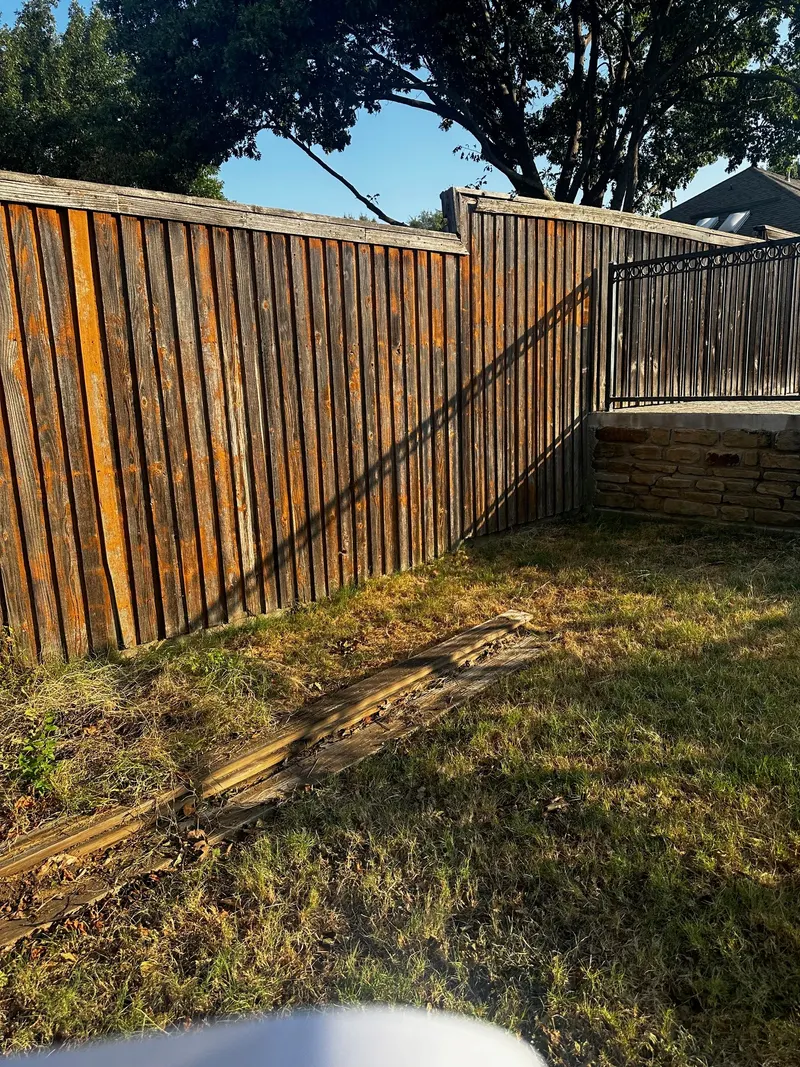
Work from the ground up, because that is the order in which fences fail. Write down what you find and photograph it. A list of three loose pickets and one soft post is a small fence repair in April. The same list ignored until a June storm becomes several panels on the ground. For the common defects and what causes them, see warping, gaps and rot in wood fences.
- Posts: Push each one at shoulder height. Movement at the ground means a failed post or footing.
- Soil at the posts: Look for gaps where clay has shrunk away from the concrete, and for standing water.
- Rails: Look for splits, sag and rusted or pulled fasteners where rails meet posts.
- Pickets: Refasten loose boards and replace cracked ones before wind finishes the job.
- Gates: Check sag, latch alignment and hinge screws. Gates carry the most stress on any fence.
- Finish: Sprinkle water on the boards. If it soaks in and darkens the wood, stain is due.
How do I clean a fence without a pressure washer?
With a cleaner, a soft brush and a garden hose. It is slower than a pressure washer, and it cannot gouge the wood, which a washer in untrained hands does easily.
The Forest Products Laboratory’s mildew formula is one third of a cup of household detergent, one quart of liquid household bleach and three quarts of warm water. The detergent must not contain ammonia, which reacts with bleach to form a poisonous gas. Wet the plants below first, apply the mix, let it work for a few minutes, scrub with the grain and rinse thoroughly. Commercial wood cleaners do the same job with less mixing.
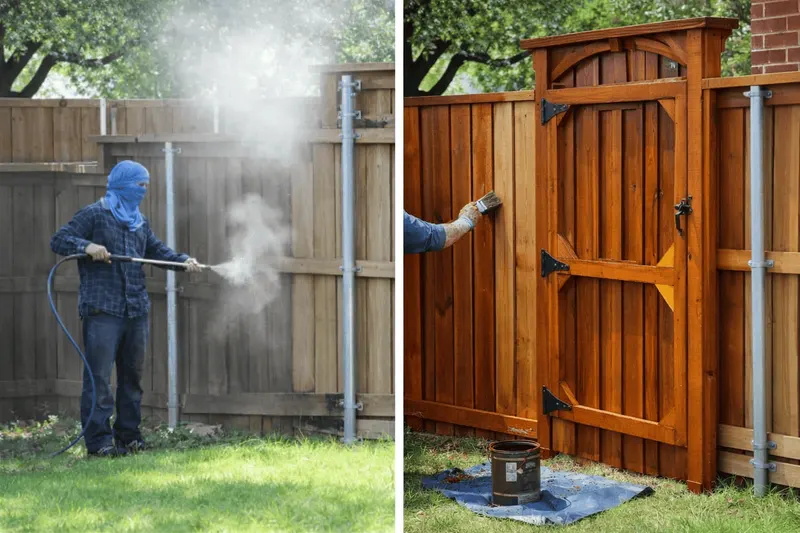
Let the wood dry a day or two before any finish goes on. For large or badly weathered fences, our power wash and restain crews clean at controlled pressure, and DIY vs. professional staining helps you decide who does the finish.
How Park Cities Fence & Deck helps
Jack Johnson comes out himself, looks at your property and gives you a free written estimate with a timeline. Wood, iron and masonry are all built in-house, so the advice fits the property. Related services: powerwash & restain, fence rehab / repair.
Questions people ask next
Why is my fence turning green, and how do I remove algae or mildew?
Green or black growth means the surface stays damp, usually from shade, sprinklers or plants against the boards. Clean it with a wood cleaner or the bleach, detergent and water mix above, scrub gently, rinse and let it dry. Then fix the cause, or it returns within a season. A fresh coat of stain with a mildewcide slows regrowth.
Should I water along my fence line the way I water my foundation?
Not as a separate program. Foundation watering is about the slab. Along a fence, the goal is to avoid extremes: deep drought cracks in clay can open gaps around post footings, while constant wetting rots wood. If you water beds near the fence, use drip or soaker lines aimed at the soil and keep spray off the boards. Our guide to post depth in clay soil explains the movement.
Can I reinforce my existing fence before storm season?
Yes, if the wood is still sound. The useful work is replacing loose or rotted posts, often with steel, refastening rails, replacing split rails and correcting sagging gates. Bracing a fence whose posts have failed at the ground only delays the fall. Our fence repair service starts with the posts, and wind and hail resistant fences covers what holds up.
Can a rot board be added to an existing fence?
Often it can. A rot board is a horizontal board fastened along the bottom between or across the posts. Adding one works when the posts are solid and there is room below the pickets, or when the picket bottoms are trimmed to make room. It will not rescue pickets that are already soft well above the ground. We check that at the estimate.
Do termites or carpenter ants eat cedar fences in Texas?
Termites can. Cedar heartwood resists decay and insects better than pine, but it is not immune, and sapwood has little resistance. Texas A&M AgriLife Extension says wood in contact with soil is at high risk. Carpenter ants do not eat wood. AgriLife explains they hollow out wood that is moist or already damaged to nest, so finding them usually points to a moisture problem.
Sources and further reading
- USDA Forest Service, Forest Products Laboratory: Selection and Application of Exterior Stains for Wood (FPL-GTR-106)
- Texas A&M AgriLife Extension: Subterranean Termites
- Texas A&M AgriLife Extension: Carpenter Ants
General information, not legal advice. Rules change: we confirm the current requirements with your city or HOA before we build.