Wood · Dallas, Texas
What Is a Rot Board on a Fence, and Do I Need One?
A rot board is the cheap board that takes the ground contact so your cedar pickets do not. Here is when you need one.
 By Jack Johnson, owner of Park Cities Fence & Deck · 8 min read · 1,776 words
In short
A rot board, also called a kickboard, is a horizontal pressure-treated board that runs along the bottom of a wood fence. It touches the soil so the cedar pickets do not. In North Texas, where clay holds water and sprinklers run all summer, most privacy fences should have one.
In this guide
- What does a rot board actually do?
- Should a wood fence touch the ground?
- What size and material should a kickboard be?
- Can a rot board be added to an existing fence?
- How much gap should be left under a fence?
- Is a top cap on a fence just for looks, or does it protect the boards?
- Which fence upgrades are not worth paying for?
- How do we build the bottom of a fence?
Need this done? See wood fencing.
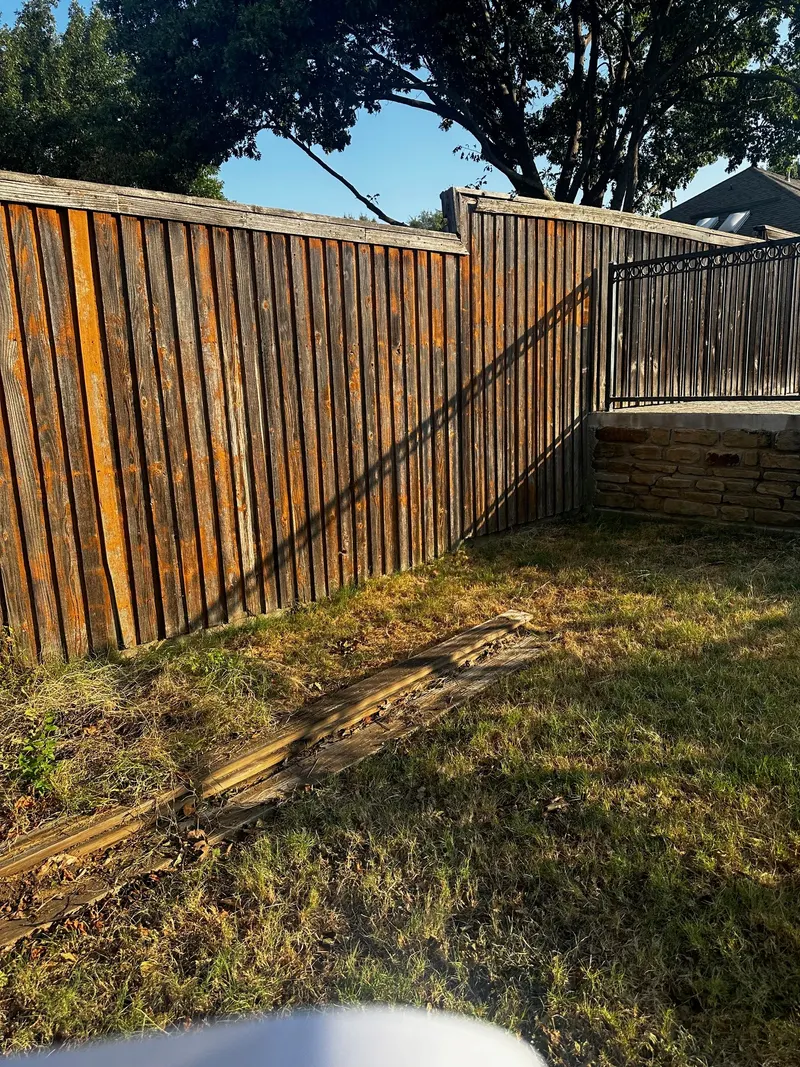
Fence pickets rot from the bottom up. The lowest few inches sit in wet grass, catch sprinkler spray and soak up water through the cut end grain. A rot board takes that punishment instead. It is a treated board rated for ground contact, set on edge under the pickets, and it can be swapped out years later without touching the rest of the fence.
It is one of the least expensive upgrades on a cedar privacy fence and one of the few that changes how long the fence lasts. This guide explains what it does, how it should be built, how much gap to leave, and which other upgrades are worth the money and which are not.
What does a rot board actually do?
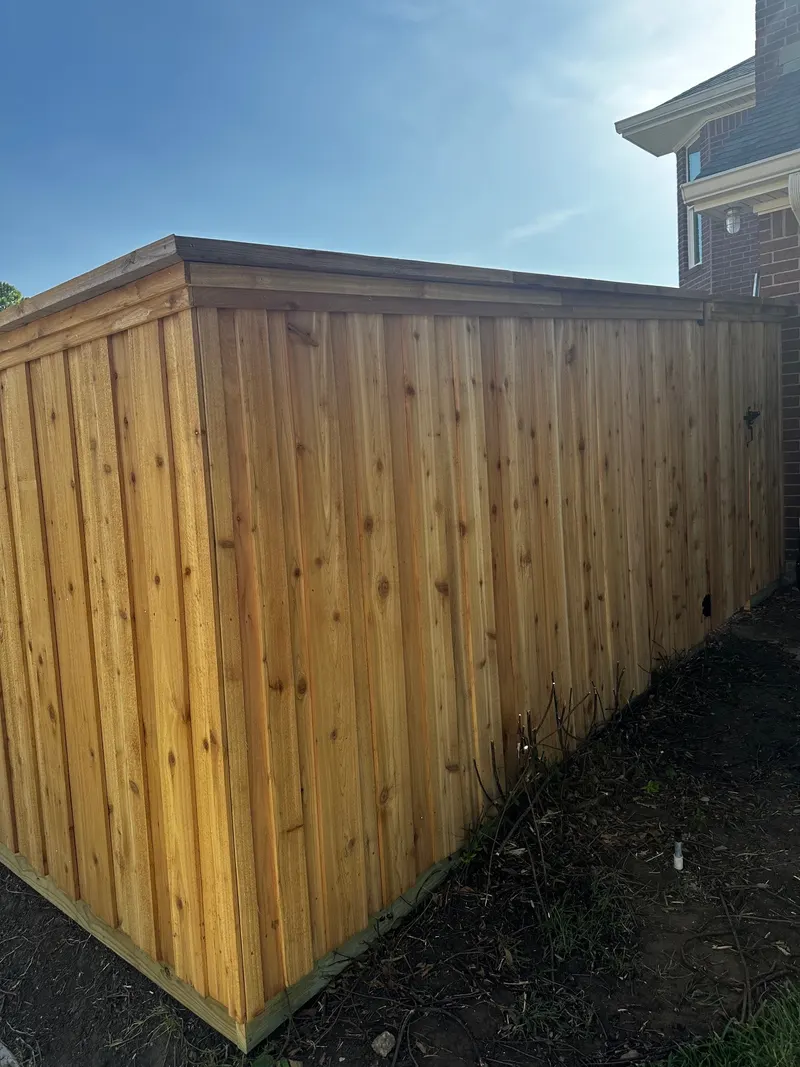
A rot board separates the pickets from the ground. The pickets stop on top of the board, a few inches above the soil, and the board fills the space below them.
That does three jobs at once. It keeps the picket ends out of standing water and wet mulch. It closes the gap under the fence so pets stay in and the yard looks finished. And it gives the string trimmer something sacrificial to hit instead of the bottom of every picket. When the board finally wears out, it is a few screws and one board per bay, not a row of pickets.
It also ties the bottom of each bay together, which helps the fence line stay straight. On a board-on-board fence, where the picket count is higher, protecting those pickets matters even more.
Should a wood fence touch the ground?
No. Cedar pickets should never sit in soil, mulch or turf. Only wood treated for ground contact, or steel, belongs at grade.
Western Red Cedar is naturally resistant to rot, decay and insects, according to the industry association for the species, but resistant is not immune. A picket standing in damp clay stays wet for days after every rain, and constant moisture is what decay needs. Texas A&M entomologists also list wood touching soil as a high-risk entry point for subterranean termites, which need contact with soil or another moisture source to survive.
So the rule is simple: pickets off the ground, posts in concrete or steel, and a treated board doing the dirty work in between. Our guide to how long a cedar fence lasts in North Texas shows how much of that lifespan is decided in the bottom six inches.
What size and material should a kickboard be?
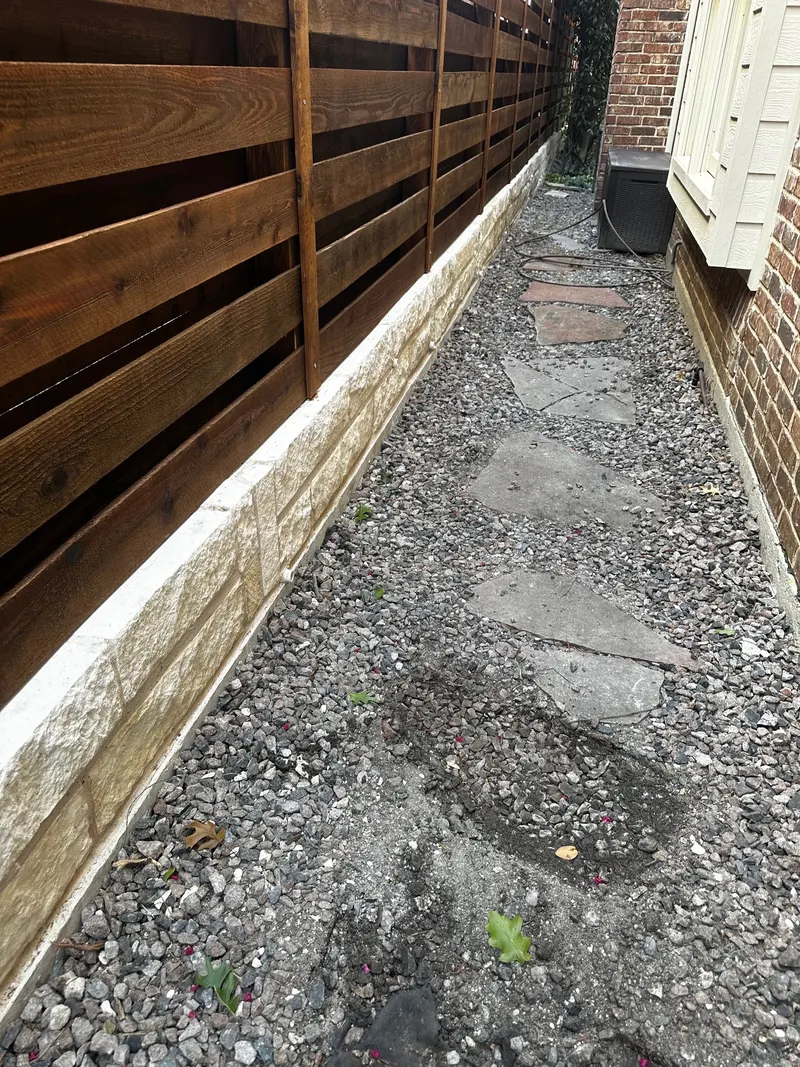
The usual rot board is a two-by-six pressure-treated pine board rated for ground contact, fastened to the posts with galvanized or coated screws. Pressure-treated pine is used here on purpose: it is the right wood for the wet zone, even on an all-cedar fence.
Some builders use a thinner one-by-six. It costs less and looks similar on day one, but it bows between posts and splits sooner. A two-by-six stays straight across the span and stands up to a trimmer. On a tall fence or a sloped lot, two boards stacked can make up extra height at the bottom.
Details worth asking about before you sign:
- Ground-contact rating: The tag on the lumber should say ground contact, not above ground. They are different treatment levels.
- Fasteners: Galvanized or coated screws hold in treated lumber. Plain steel corrodes and leaves black streaks.
- Placement: The board sits under the pickets, not behind them, so water runs off instead of pooling on a ledge.
- Stain: The board is stained with the fence so it blends in. Treated pine takes stain once it has dried.
Can a rot board be added to an existing fence?
Yes, if the posts and rails are still sound. It is a common repair on a fence that is five to ten years old and starting to soften at the bottom.
There are two ways to do it. If the pickets are still healthy, a board can be fastened along the base to close the gap and shield what is left. If the bottoms are already soft, the better repair is to snap a line, trim the damaged ends off cleanly and slide a rot board underneath. The fence keeps its height and loses its rotten edge.
It is not worth doing on a fence with failing posts. Check those first. Our fence repair visits start with the posts for that reason, and the guide to repairing or replacing an aging fence explains how to make that call.
How much gap should be left under a fence?
With a rot board, the board itself can sit at or just above grade and the pickets start above it. Without one, pickets should clear the soil by roughly two inches so they can dry after rain.
The gap is a trade. Too little and the wood wicks water. Too much and a small dog walks out. That is exactly why the rot board exists: it lets the cedar stay high and dry while the bottom of the fence stays closed. Where the yard needs to drain, the board is held up slightly or notched at low points so water can pass. Blocking drainage with a fence is a mistake we cover in the guide to fences on slopes and drainage.
Keep in mind that Dallas clay moves. Soil that touches the board in a wet spring can pull away by August. A gap that changes through the year is normal and is not a sign the fence was built wrong.
Is a top cap on a fence just for looks, or does it protect the boards?
It does both. A cap board covers the cut tops of the pickets, which is where rain soaks in from above, and it gives the fence a finished line.
End grain drinks water like a bundle of straws. On an uncapped fence, the picket tops take the full sun and every rain, so they crack and gray first. A flat two-by-six cap with a trim board below it sheds most of that water and shades the top of the pickets. It also stiffens the fence, because the cap ties the tops together the way the rot board ties the bottoms.
A cap needs care of its own. It is the most exposed board on the fence, so it should be stained on schedule. See our cedar fence stain guide for timing.
Which fence upgrades are not worth paying for?
Pay for the upgrades that protect structure and skip the ones that only decorate a weak fence. Structure means posts, rails, fasteners, the rot board and the cap.
The table sorts the common add-ons. For the full picture of what moves a bid up or down, read what drives the cost of a cedar fence in Dallas and our notes on post spacing, post size and steel gauge.
Common wood fence upgrades and whether they earn their cost
| Upgrade | What it does | Our view |
|---|---|---|
| Rot board | Keeps pickets off wet soil and closes the bottom gap | Worth it on nearly every privacy fence |
| Steel posts | Replaces the part of a wood fence that fails first | Worth it in Dallas clay |
| Cap and trim | Sheds water off picket tops and stiffens the line | Worth it on fences seen from the house or street |
| Thicker pickets | Resists cupping and cracking in summer heat | Worth it; thin pickets are false economy |
| Decorative post caps | Adds a detail at each post | Optional; looks only |
| Premium stain on a weak frame | Makes a fence look better for a while | Skip until the structure is right |
What this means for you: Spend on what holds the fence up and keeps it dry before spending on what dresses it.
How do we build the bottom of a fence?
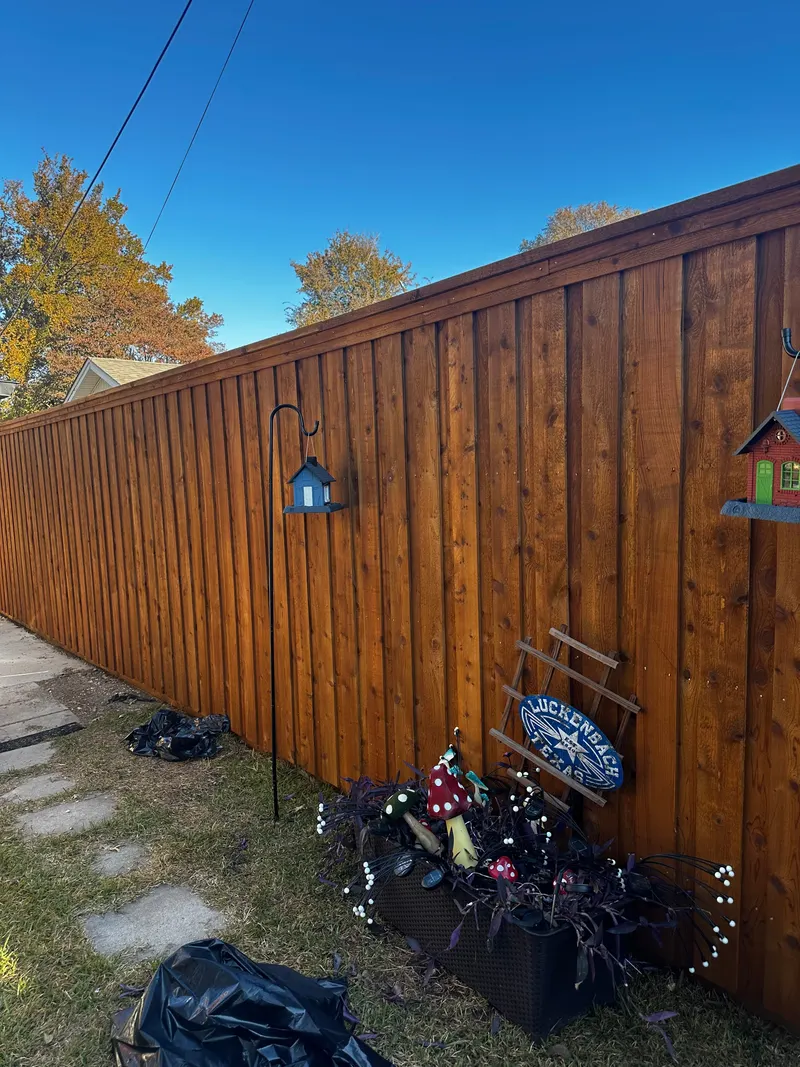
We set posts in concrete, offer steel posts, use galvanized fasteners and kiln-dried cedar, and a treated rot board is an option we discuss on privacy fences in Dallas, Plano and Frisco alike. Owner Jack Johnson attends every consultation and every build, so the question of grade, drainage and gap is settled on your lot, not from a price sheet.
To see the detail on finished work, browse the project gallery, then request a free written estimate or call (214) 755-8100.
How Park Cities Fence & Deck helps
Jack Johnson comes out himself, looks at your property and gives you a free written estimate with a timeline. Wood, iron and masonry are all built in-house, so the advice fits the property. Related services: wood fencing, fence rehab / repair.
Questions people ask next
Will a kickboard keep my dog from digging out?
It helps, but it is not a dig barrier by itself. A kickboard closes the gap a dog would squeeze under and gives you a solid edge at grade. A determined digger needs more: a board set partly below grade, a concrete mow strip, or wire mesh buried along the fence line. Tell us about the dog at the consultation and we will build the bottom of the fence to suit.
How do I stop my wood fence from rotting at the bottom?
Keep the pickets off the soil and let them dry. That means a pressure-treated rot board under the pickets, sprinkler heads aimed away from the fence, mulch and soil pulled back from the wood, and stain renewed every two to four years. Posts should be set in concrete or be steel. If the bottoms are already soft, they can often be trimmed and a rot board added.
How should soil, mulch and flower beds meet the fence?
They should stop short of the cedar. Keep soil and mulch below the top of the rot board and never piled against the pickets, because wet mulch holds moisture against wood for weeks. Leave a few inches between plants and the fence so air can move. If a raised bed must run along the fence, ask for a second treated board or a masonry edge to hold the soil back.
How do you close the gaps under a fence on uneven ground?
The fence is either stepped or racked to follow the grade, and the rot board is scribed to the ground under it. On small dips, a second board fills the low spot. On bigger changes in grade, a short retaining edge or stepped panels work better than forcing the fence to follow every bump. Drainage paths are left open so water does not back up into the yard.
How do I trim grass along a fence without damaging it?
Let the trimmer hit the rot board, not the pickets. That is one of the reasons the board is there. String trimmers chew the bottoms off cedar pickets and strip the stain from posts over a few seasons. A narrow gravel or mulch strip, or a concrete mow strip along the fence line, removes the need to trim against the wood at all.
Sources and further reading
- Western Red Cedar Lumber Association (Real Cedar): Why Real Cedar
- Texas A&M University, Urban and Structural Entomology Program: Native Subterranean Termites
- Purdue University Cooperative Extension Service and USDA Forest Products Laboratory: Selection and Application of Exterior Finishes for Wood (NCR-135)
General information, not legal advice. Rules change: we confirm the current requirements with your city or HOA before we build.