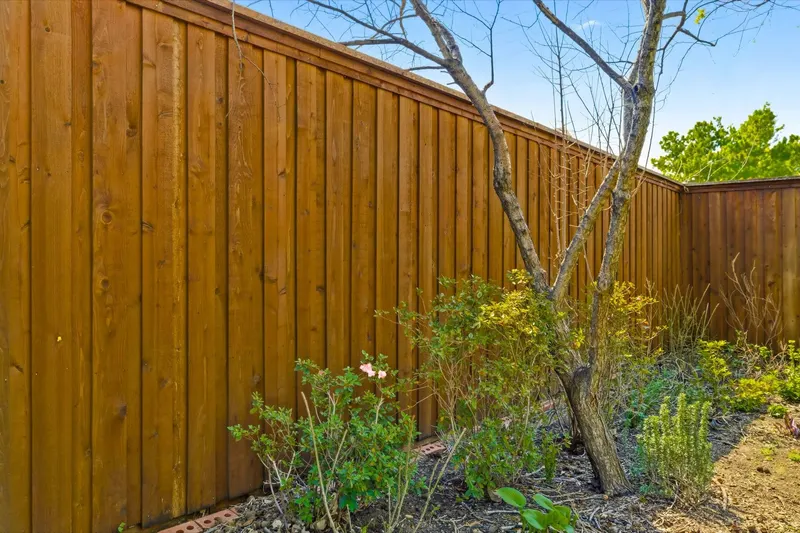
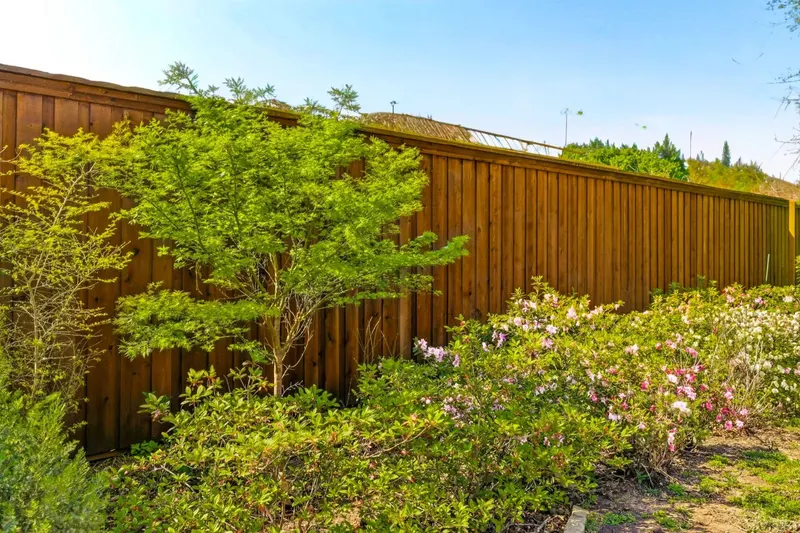
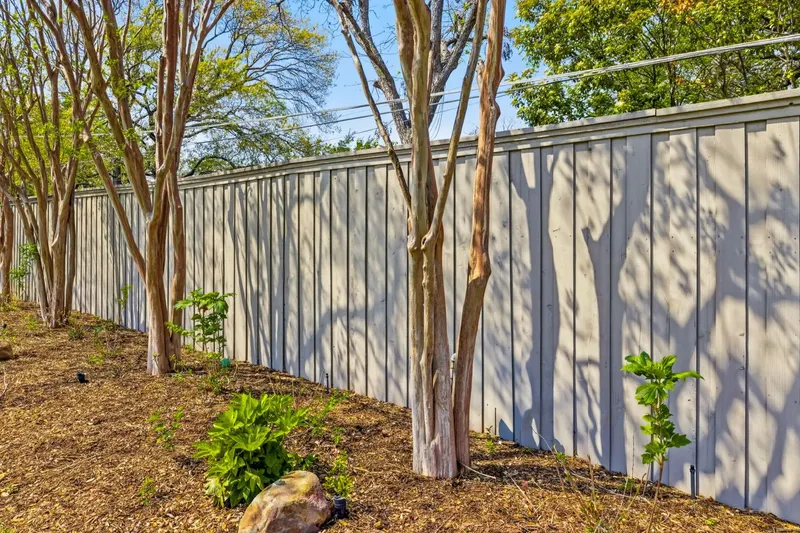
Wood · Dallas, Texas
How Long Does a Cedar Fence Last in North Texas?
Sun, clay soil and storms are hard on wood. Here’s a realistic cedar lifespan in DFW, and how to get the long end of it.
 By Jack Johnson, owner of Park Cities Fence & Deck · 8 min read · 1,611 words
In short
A well-built cedar fence lasts 15–20 years in North Texas. The failure points are almost always posts and fasteners, not the pickets, so concrete-set posts (steel where possible), galvanized hardware and a stain every 3–4 years decide whether you get the short end of that range or the long end.
In this guide
- Why North Texas is a stress test for wood
- What actually fails first (it’s not the pickets)
- The build choices that add years
- The maintenance habit that doubles picket life
- Leaning fence, sound wood: rehab before you replace
- A realistic lifespan timeline
Need this done? See wood fencing.
Homeowners ask us this weekly, usually while looking at a leaning fence the previous owner installed. The honest answer: a properly built cedar fence lasts 15 to 20 years in DFW, and the spread between those numbers is not luck. It’s construction choices made on day one plus a maintenance habit that takes one weekend every few years.
North Texas is genuinely hard on wood, harder than most of the country. Understanding the three forces working against your fence makes every buying decision downstream obvious, so let’s start there.
Why North Texas is a stress test for wood
First, the sun. Dallas summers deliver months of intense UV that breaks down lignin, the natural glue in wood fibers. Unprotected cedar goes gray, then the loosened surface fibers wash away a little more with every rain. UV doesn’t snap a fence in half, it slowly opens the wood’s defenses so moisture can do the real damage.
Second, the soil. Most of the Metroplex sits on expansive clay that swells when wet and shrinks hard in drought. That movement grips and shifts fence posts season after season, which is why so many local fences lean long before the pickets wear out. It’s the same clay that cracks foundations, working on a smaller structure.
Third, the storms. Spring in DFW brings straight-line winds and the occasional hail line, and a solid privacy fence is essentially a sail. Storms rarely destroy a sound fence; what they do is finish off fences whose posts were already rotting or whose rails were already pulling loose. Weather exposes the weakest link, so the game is not having one.
What actually fails first (it’s not the pickets)
Cedar pickets themselves are impressively durable. The species carries natural oils that resist rot and insects, and a maintained picket can stay sound for two decades. When we tear out a failed fence, the pickets are usually the healthiest part of it.
The real failure points are underground and at the joints. Wood posts rot right at the soil line, where moisture, soil contact and oxygen meet, the fence above can be perfect while the post holding it has the structural integrity of a sponge. And cheap fasteners fail even sooner: uncoated staples and nails rust, streak the wood black, and let rails drop off otherwise solid posts.
This is why judging a fence bid by the pickets is backwards. Two fences can look identical the week they’re built and be a decade apart in lifespan, entirely because of what’s buried in the ground and driven into the joints.
Rails deserve a mention too. They carry the pickets between posts, and when they sag or split, whole panels bow even though every board in them is sound. Sturdy rails, properly fastened at each post, are cheap insurance, and one of the first things we inspect when a homeowner asks whether an older fence is worth saving.
The build choices that add years
If you’re buying a new fence, four specifications matter more than anything else on the page. We build to all four as standard on every wood fence installation, and any reputable Dallas builder should be able to speak to each. None of them shows in a photo of the finished fence, which is exactly why cheap bids skip them and why it pays to ask.
- Posts set in concrete, at proper depth: Shallow posts are the number one cause of leaning fences in our clay. Depth and a full concrete collar keep posts plumb through the swell-shrink cycle.
- Steel posts: Galvanized steel can’t rot at the soil line, which removes the most common failure mode entirely. For a modest premium, a steel-post cedar fence will typically outlast the same fence on wood posts by years.
- Galvanized fasteners: Coated ring-shank nails or screws hold through decades of expansion cycles without rusting or staining the cedar. It’s a small line item that prevents an entire category of repairs.
- Kiln-dried cedar: Pre-dried lumber shrinks and warps far less after installation than green boards, so panels stay straight and joints stay tight. It also takes stain sooner and more evenly.
The maintenance habit that doubles picket life
One habit separates 20-year fences from 12-year fences: a quality stain every 3–4 years. Stain is sunscreen and raincoat in one, it blocks the UV that grays and loosens fibers, and it sheds the moisture that feeds rot. Skip two cycles and the wood is drinking water every time it rains, and the graying you can see is matched by fiber damage you can’t.
The test takes five seconds: splash water on a picket. If it beads, you’re protected. If it soaks straight in, the stain is spent and the clock on the wood is running. A professional powerwash and restain resets that clock for a fraction of what replacement costs, it’s the single best-value service we offer, and we say that as a company that builds new fences for a living.
Our full timing guide is in the cedar stain guide, but the short version: don’t wait for gray. By the time a fence looks weathered, damage is already underway.
Leaning fence, sound wood: rehab before you replace
Here’s the scenario we see constantly in Preston Hollow and older Dallas neighborhoods: a fence leaning badly after a storm, owner braced for full replacement, but the pickets are solid. Only the posts have failed. In that case a rehabilitation is often roughly half the cost of replacement: we reset or replace the posts (usually upgrading to steel), re-rail, re-hang the sound pickets, and restain.
The math flips once rot reaches the pickets and rails themselves, or when the fence is old enough that you’d be re-hanging wood with only a few years left in it. A trustworthy fence repair assessment tells you which side of the line you’re on, and if a company only ever recommends full replacement, get a second opinion. We walk through that decision in detail, section by section, in our repair-or-replace guide.
A realistic lifespan timeline
Pulling it together, here’s how a well-built, maintained cedar fence typically ages in North Texas. Years one through three: the cedar mellows from fresh gold toward amber; first restain due around year three or four. Years five through ten: with stain cycles kept up, the fence looks close to new; skipped cycles show up here as graying and the first cupped boards.
Years ten through fifteen: wood-post fences start to show soil-line trouble and lean after storms; steel-post fences typically sail through. Years fifteen through twenty: pickets on a maintained fence are usually still presentable, and the decision to replace often comes down to appearance and the accumulation of small repairs rather than collapse. Neglected fences rarely see this stage, an unstained, wood-post fence in our climate often needs replacement in eight to twelve years.
The difference between those outcomes is a handful of build specifications and a weekend of maintenance every few years. If you’d like an honest read on where your current fence sits, or a quote for one built to last the full twenty, we’re easy to reach, and quotes are free, usually within 24 hours.
How Park Cities Fence & Deck helps
Jack Johnson comes out himself, looks at your property and gives you a free written estimate with a timeline. Wood, iron and masonry are all built in-house, so the advice fits the property. Related services: wood fencing, fence rehab / repair, powerwash & restain. We work in Dallas and Preston Hollow and across Dallas.
Questions people ask next
How long does an unmaintained cedar fence last in DFW?
Typically eight to twelve years for a wood-post fence that never gets stained, sometimes less on exposed, south-facing runs. UV grays and loosens the surface, moisture follows, and posts rot at the soil line. The same fence, stained on a 3–4 year cycle, commonly reaches 15–20 years.
Are steel posts worth it on a cedar fence?
In our clay soil, yes, it’s the highest-value upgrade on the quote. Wood posts fail by rotting at the soil line; steel posts remove that failure mode entirely and hold heavy panels plumb through storm winds and soil movement. The pickets become the lifespan limit, which is exactly what you want.
Does clay soil really affect a fence?
Significantly. North Texas clay swells when wet and shrinks in drought, gripping and shifting posts season after season. Shallow-set posts lean within a few years. Proper depth and a full concrete collar, the same logic as foundation engineering, scaled down, keep the fence plumb through those cycles.
My fence is leaning after a storm. Is it done?
Not necessarily. If the pickets and rails are sound and only the posts have failed, a rehabilitation, resetting posts, re-railing, re-hanging your existing pickets, often runs roughly half the cost of replacement. We’ll tell you honestly which category yours falls into during a free assessment.
When is the best time of year to build a cedar fence in Dallas?
Cedar fences go up year-round here. Fall and winter are underrated: the ground is workable, kiln-dried cedar acclimates gently, and you’re ahead of the spring rush that follows storm season. Most wood fences take one to three days to build, so weather windows are easy to find.
Do certain parts of a yard wear a fence out faster?
Yes. South- and west-facing runs take the most UV and burn through stain first. Sections wetted daily by sprinklers stay damp and age faster, as do panels buried behind dense shrubs where air can’t circulate. Check those runs first each spring, they’re the early-warning system for the whole fence.