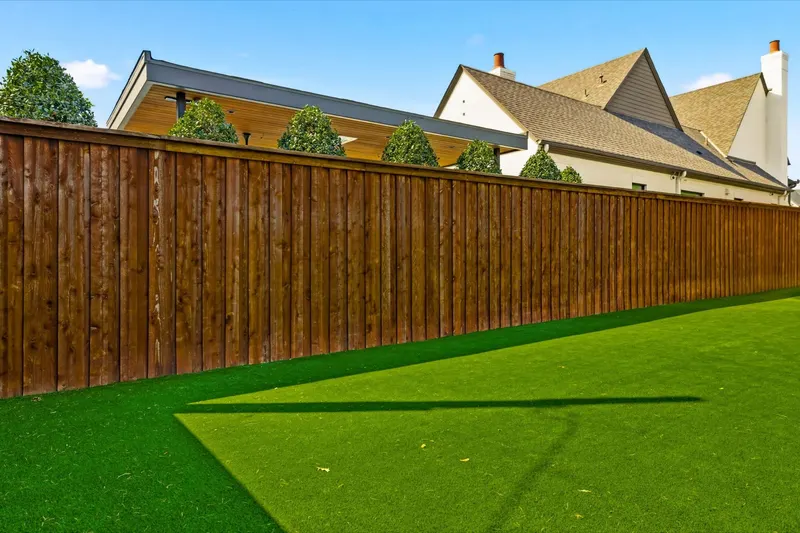
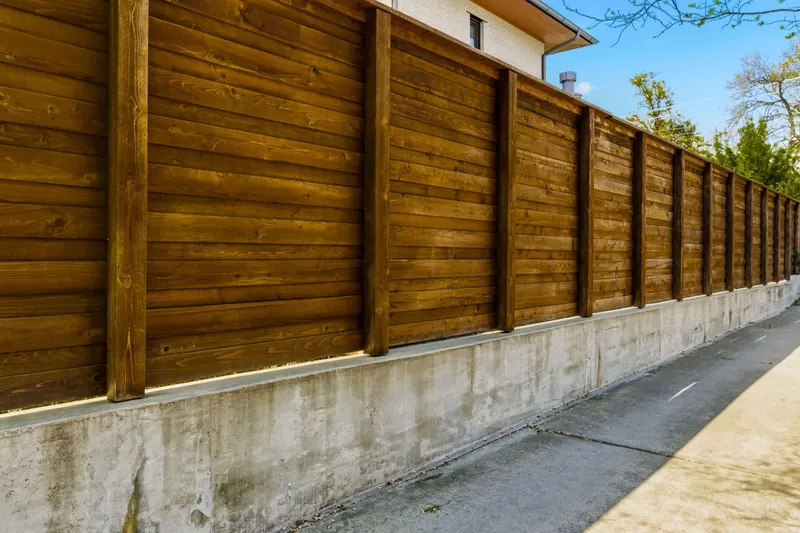
Wood · Dallas, Texas
Cedar, Pressure-Treated Pine or Redwood: Which Fence Wood Is Best in Texas?
Cedar for the boards you see, treated pine at the ground, redwood for its color. Here is how the three compare.
 By Jack Johnson, owner of Park Cities Fence & Deck · 8 min read · 1,741 words
In short
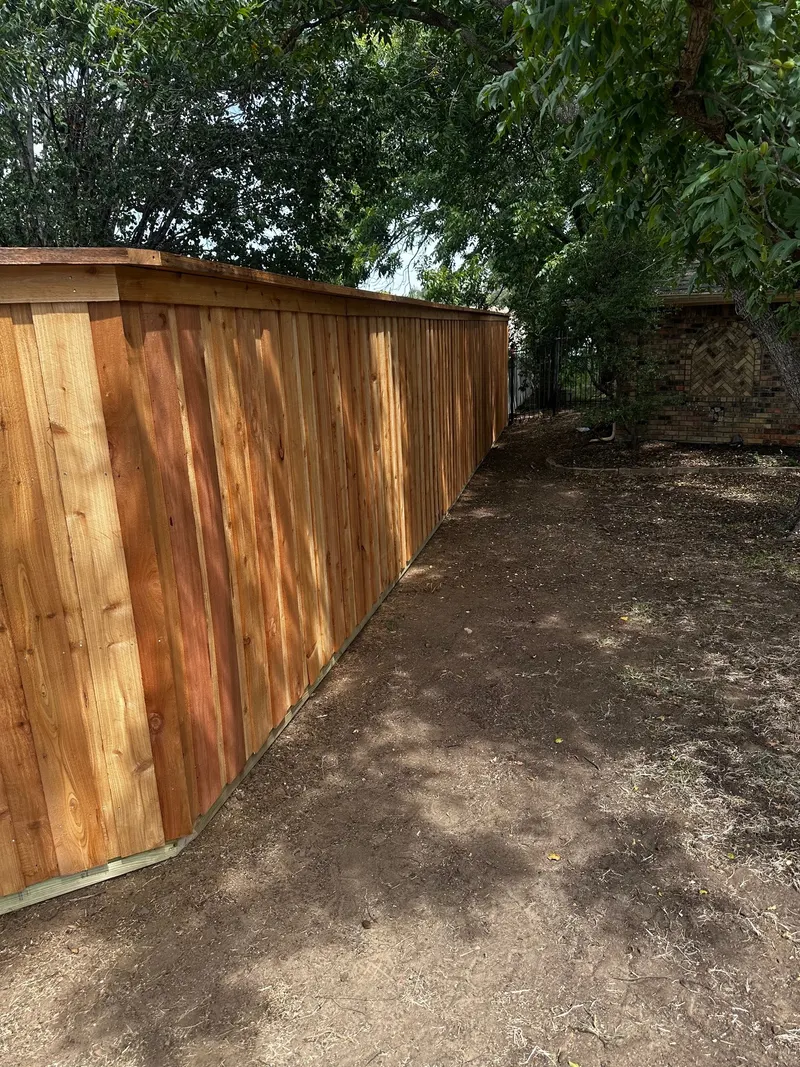
For most North Texas fences, Western Red Cedar is the better wood for pickets and rails: it resists decay naturally, stays straighter than pine and typically lasts 15 to 20 years here. Pressure-treated pine costs less and suits tight budgets. Redwood performs like cedar at a higher price. The posts matter more than the species.
In this guide
- Is cedar or pressure-treated pine better for a fence in Texas?
- What is the difference between Western Red Cedar and Japanese cedar fence pickets?
- How long does a pressure-treated pine fence last in Texas?
- Is redwood worth the extra cost over cedar for a fence?
- What do cedar grades like No. 1, No. 2 and clear mean on a fence quote?
- How thick should fence pickets be?
- Which wood fence lasts the longest?
Need this done? See wood fencing.
Three woods cover nearly every wood fence in Dallas: Western Red Cedar, pressure-treated Southern pine and redwood. They differ in how they resist rot, how much they move as they dry, how they take stain and what they cost.
Park Cities Fence & Deck builds wood fences in all three. We recommend by the job, not by habit, and the species and grade are written on the estimate. Here is how to choose, and how to read the wood line on a quote from any company.
Is cedar or pressure-treated pine better for a fence in Texas?
Cedar is better for the parts you see, and treated pine is acceptable where budget rules. The two age in different ways: cedar slowly weathers, while pine tends to twist, cup and split as it dries in the sun.
Cedar’s advantage is natural. The American Wood Council lists redwood and western cedars as naturally durable species when the lumber is mostly heartwood, and the Western Red Cedar Lumber Association describes the wood as having very low shrinkage and strong resistance to warping, twisting and checking. Pine has little natural decay resistance, so it relies on preservative treatment. Local codes accept either. The Town of Prosper, as one North Texas example, calls for an insect-resistant wood such as cedar or pressure-treated yellow pine. If price is the main question, see the cheapest fence that still lasts in North Texas.
Fence woods compared for North Texas
| Quality | Western Red Cedar | Pressure-treated pine | Redwood |
|---|---|---|---|
| Decay resistance | Natural, in the heartwood | From preservative treatment | Natural, in the heartwood |
| Stability in sun | Stays flatter and straighter | More warping, cupping and splitting | Stable, similar to cedar |
| Appearance | Warm red-brown, stains evenly | Green or yellow cast, can stain unevenly | Deep red, stains well |
| Relative cost | Middle | Lowest | Highest |
| Best use | Pickets, rails, caps and trim | Budget fences, rot boards and buried parts | Premium fences where the color is wanted |
What this means for you: Lifespan depends on posts, ground contact, sprinklers and stain as much as on species. No wood comes with a promise of years.
What is the difference between Western Red Cedar and Japanese cedar fence pickets?
They are different species. Western Red Cedar comes from the Pacific Northwest. Japanese cedar, also sold as sugi, is an imported wood that is usually paler and pinker and typically priced below Western Red Cedar.
Both are sold simply as cedar, and that is where the confusion starts. A quote that says only “cedar pickets” could mean either, and the two do not look or weather the same. Suppliers make differing claims about how Japanese cedar holds up in Texas, and we have not seen independent test data we would quote. What is well documented is Western Red Cedar’s long record in fencing, which is why it is the cedar we build with.
Ask every bidder to name the species in writing. If two bids are far apart on a fence that looks identical on paper, the picket species is one of the first places to look. Our guide to cedar fence cost factors lists the others.
How long does a pressure-treated pine fence last in Texas?
There is no single number. Treated pine resists rot well, especially in ground contact, but pine pickets usually look worn sooner than cedar because the boards move so much as they dry.
Treatment protects against decay and insects. It does not stop a wet board from shrinking, twisting and cracking in a Dallas summer. A pine fence can be structurally sound and still show gaps, cupped boards and popped fasteners within a few seasons. Treatment levels also differ: lumber rated for ground contact carries more preservative than lumber rated for above-ground use, and the tag on the board says which it is.
Where treated pine earns its place is at the ground. The American Wood Council’s deck guide requires lumber in contact with the ground to be preservative-treated wood suitable for ground contact, and the same logic applies to a fence. That makes pine a sound choice for a rot board along the bottom of a cedar fence. For comparison, see how long a cedar fence lasts in North Texas.
Is redwood worth the extra cost over cedar for a fence?
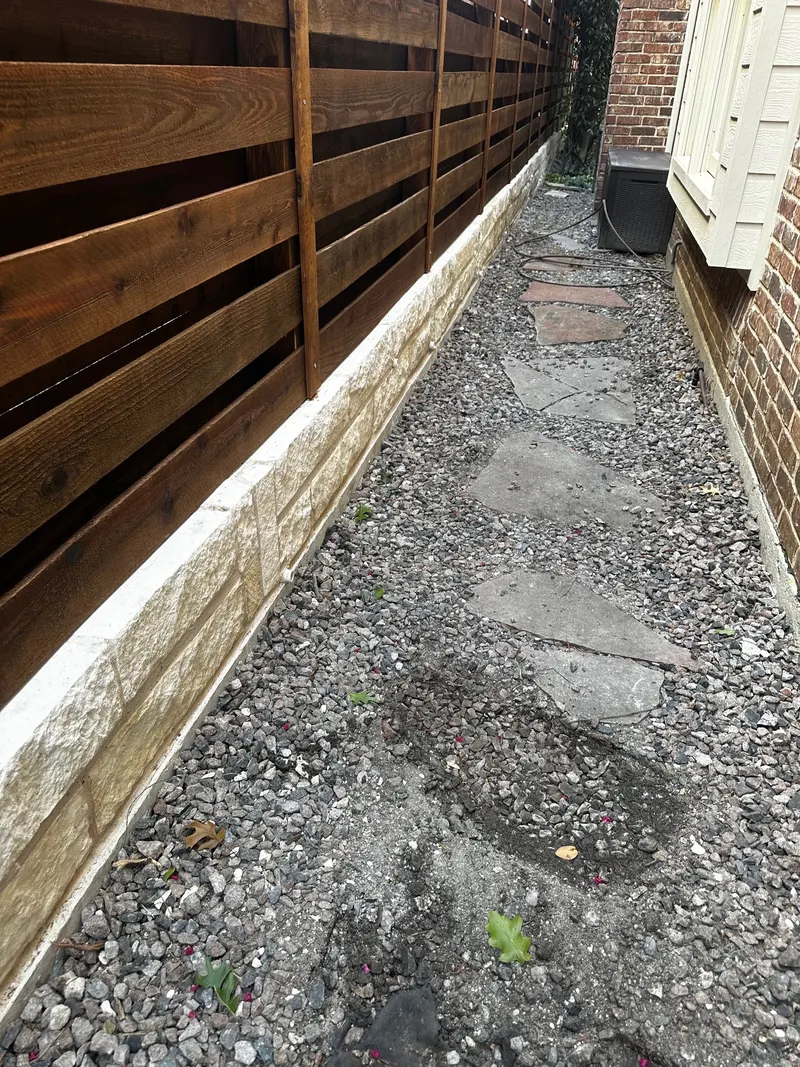
For most Dallas fences, no. Redwood is a beautiful, durable wood, but it performs much like Western Red Cedar here and costs more.
Redwood makes sense when you want its particular deep red color, when it matches existing redwood on the property, or on a showpiece section such as a front courtyard or a gate. Grade matters as much as it does with cedar: the heartwood is the durable part, and boards with a lot of pale sapwood do not last as well.
If the goal is a richer look, the money often goes further on cedar with better construction: board-on-board, a cap and trim, and a quality stain. We compare premium options in cedar, hardwood or composite and the two main picket layouts in board-on-board vs. side-by-side.
What do cedar grades like No. 1, No. 2 and clear mean on a fence quote?
Grades describe appearance and soundness: how many knots a board has, how large and tight they are, and how much other defect is allowed. Clear has few or no knots, and No. 1 has fewer and tighter knots than No. 2.
Grade names are not uniform. They come from different grading rules and mills, and fence pickets are often sold under a supplier’s own label. The Western Red Cedar Lumber Association, for example, describes its fence posts and rails in Clear and Knotty standards. A grade name on a quote tells you something only if you can see the wood it refers to. Grade matters most on horizontal fences, where long boards are on display.
- Ask to see a sample: A board in your hand settles what the grade name means.
- Tight knots are fine: Sound, tight knots are normal in fence cedar. Loose knots and knotholes are what to avoid.
- Check the drying: Kiln-dried boards have already done most of their shrinking. Green boards shrink on your fence.
- Get it in writing: Species, grade and thickness belong on the estimate, not in a conversation.
How thick should fence pickets be?
Thicker is better, within reason. Thin pickets cup and crack sooner, while fuller boards stay flatter and hold fasteners better.
Pickets are sold by nominal size, and the actual thickness is less than the name suggests and varies by mill. That is one reason two cedar bids differ: one may be pricing a noticeably thinner board. Some North Texas towns set a floor. The Town of Prosper, for example, requires pickets at least one-half inch thick. Treat a minimum like that as a floor, not a target.
Ask for the actual thickness in writing and compare it across bids, along with the picket width. Thickness matters most on tall fences, on fences in full western sun, and wherever boards run horizontally. Problems that trace back to thin or wet lumber are covered in why a new wood fence warps or shows gaps.
Which wood fence lasts the longest?
The one with the best posts and the least ground contact, whatever the species. Among the woods, cedar and redwood heartwood keep their appearance longer than pine pickets, and all three depend on how the fence is built and kept.
Decay needs moisture, air and mild temperatures. A fence offers all three at the ground line, which is why wood posts are the first thing to fail and why galvanized steel posts add more years than any upgrade in picket species. See post spacing and steel post sizes for how they are chosen.
After posts, the list is short: keep pickets off the soil, keep sprinklers off the boards, use galvanized fasteners, and stain the fence every few years, typically two to four. Our power wash and restain service handles that cycle. If you want a fence priced in two species side by side, ask for a free written estimate and we will show both.
How Park Cities Fence & Deck helps
Jack Johnson comes out himself, looks at your property and gives you a free written estimate with a timeline. Wood, iron and masonry are all built in-house, so the advice fits the property. Related services: wood fencing.
Questions people ask next
Should fence lumber be kiln-dried before it is installed?
Yes, where possible. Wood shrinks as it dries, so boards installed wet shrink on the fence, opening gaps and pulling at fasteners. Kiln-dried cedar has done most of that movement before it is nailed up, and it accepts stain sooner. We build with kiln-dried cedar. Pressure-treated pine is often delivered wet from treatment, which is one reason it moves more after installation.
Is it cheaper to use pine now and replace the fence sooner?
Rarely, once you count the second tear-out and installation. Labor, posts, concrete and haul-off are a large part of any fence price and are paid again with each replacement, while the saving from pine is only on the boards. Pine makes sense if you expect to sell or rebuild soon. For a fence you will live with, cedar on steel posts usually costs less per year of service.
Why are the nails popping out of my fence boards?
Boards swell when wet and shrink when dry, and that movement works smooth nails loose over the seasons. Wet lumber, thin pickets and nails that are too short make it worse. Ring-shank galvanized nails or exterior screws hold far better. If nails are backing out along a whole run, refastening with the right fasteners is a worthwhile repair before boards start to fall.
Do termites or carpenter ants eat cedar fences in Texas?
Cedar and redwood heartwood are naturally resistant to insects, but resistant is not immune, and sapwood is more vulnerable. Subterranean termites reach wood through soil contact, so buried wood posts and pickets touching the ground are the usual entry points. Carpenter ants do not eat wood. They nest in wood that is already damp and decayed. Steel posts and ground clearance remove most of the risk.
Is a vinyl fence better than a wood fence in Texas heat?
Vinyl does not rot or need stain, which appeals to some owners. Its drawbacks are a manufactured look, expansion and contraction in heat, and repairs that depend on finding a matching panel. Wood can be repaired board by board and built to any design. We build wood, iron, steel, aluminum and masonry fences and do not install vinyl, so we are not the right source for a vinyl price.
Sources and further reading
- American Wood Council: DCA 6, Prescriptive Residential Wood Deck Construction Guide (naturally durable species and ground-contact lumber)
- Western Red Cedar Lumber Association: Characteristics and Properties of Western Red Cedar
- Western Red Cedar Lumber Association: Fence Specifications
- Town of Prosper, Texas: Code of Ordinances Sec. 3.19.001, Fences, General Regulations
General information, not legal advice. Rules change: we confirm the current requirements with your city or HOA before we build.