Wood · Dallas, Texas
Cedar, Hardwood or Composite: Which Gives the Most Premium Look for a Privacy Fence?
How cedar, tropical hardwood and composite compare on looks, aging and upkeep for a high-end privacy fence.
 By Jack Johnson, owner of Park Cities Fence & Deck · 8 min read · 1,704 words
In short
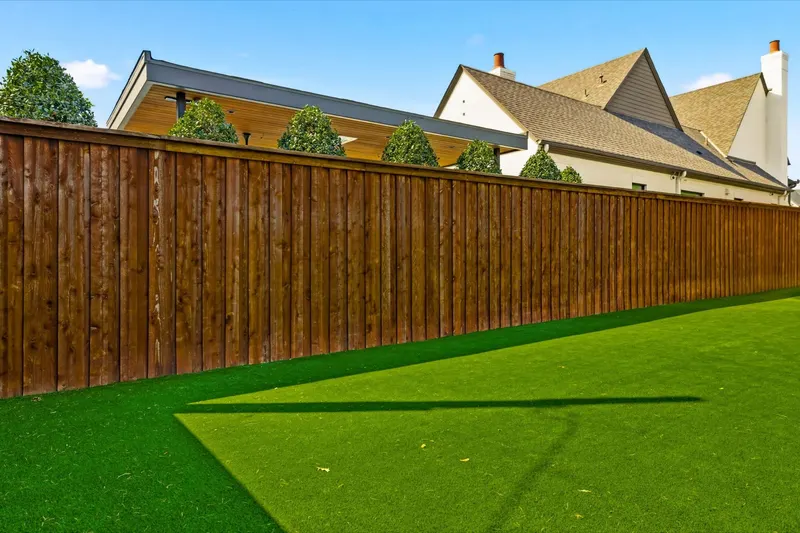
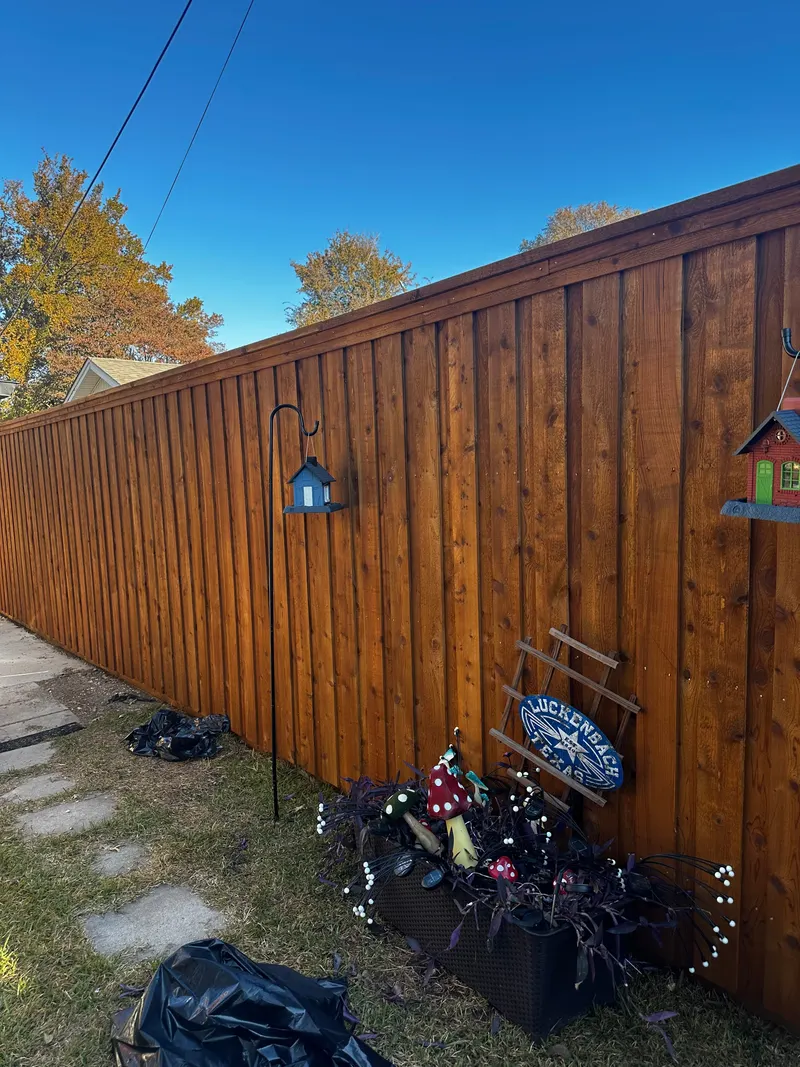
For most Dallas homes, a well-detailed Western Red Cedar fence gives the most premium look: real grain, a warm stain color and trim that can be matched to the house. Tropical hardwood looks richer up close but is heavier, harder to source and harder to keep brown. Composite looks the most uniform and needs the least upkeep, but reads as manufactured.
In this guide
- What actually makes a privacy fence look premium?
- How does Western Red Cedar look, new and aged?
- Where does tropical hardwood fit?
- What about composite fencing?
- How do the three compare side by side?
- Which details lift a cedar fence to estate level?
- How do I decide for my own property?
Need this done? See wood fencing.
A privacy fence is the largest piece of woodwork on most properties. On a typical lot it is longer than every wall of the house combined, and it is the backdrop for the pool, the patio and every photo taken in the yard. So the material question is really a question about what you want to look at for the next fifteen or twenty years.
This guide compares the three materials buyers ask about most. One honest note first: Park Cities Fence & Deck builds wood privacy fences in Western Red Cedar, redwood and pressure-treated pine, and builds decks in cedar or composite. We do not install tropical hardwood or composite fence systems, so read the sections on those as a fair comparison from a wood builder, not a sales pitch for them.
What actually makes a privacy fence look premium?
Less of it is the species than most people expect. A fence looks expensive when the lines are dead straight, the top is level or steps cleanly with the grade, the boards are consistent in color and the details are finished: a cap and trim board, hidden or matched fasteners, posts that disappear and a gate that looks like part of the design.
The second factor is how it fits the house. A warm stained cedar wall suits a brick Tudor or a traditional home under big oaks. A crisp horizontal fence suits a modern build. Our guide to fence styles by architecture covers that pairing in detail.
The third is how it looks in year eight, not on day one. Texas sun, sprinkler overspray and clay soil movement expose weak materials and weak building quickly. A premium fence is one that still looks deliberate after several summers.
How does Western Red Cedar look, new and aged?
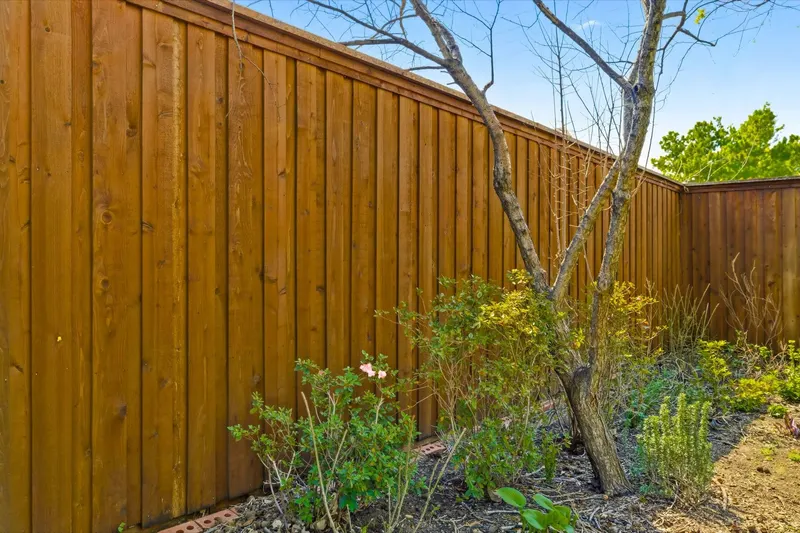
New cedar has a range of honey, amber and reddish tones with visible grain, and it takes stain evenly. The Western Red Cedar Lumber Association describes the wood as naturally resistant to rot, decay and insects, and as free of pitch and resin, which is why it accepts everything from a clear sealer to a dark semi-transparent stain.
Style is where cedar pulls ahead. It can be built board-on-board for full privacy, with a cap and trim, a lattice topper, an arched top or a board-and-batten pattern, and it can be milled and cut on site to follow a slope or wrap a tree. See how the main layouts differ in board-on-board vs. side-by-side.
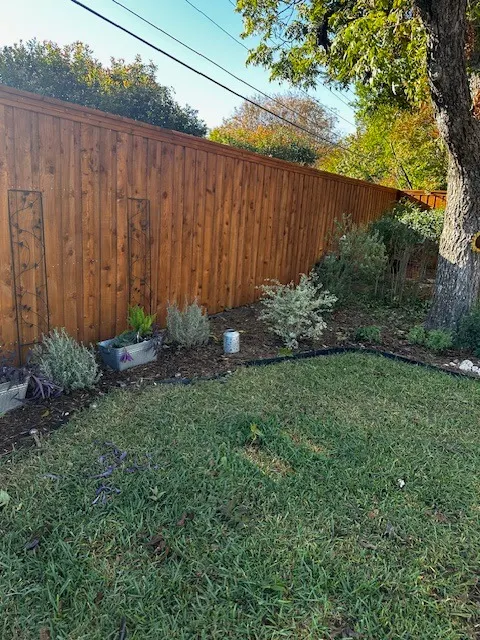
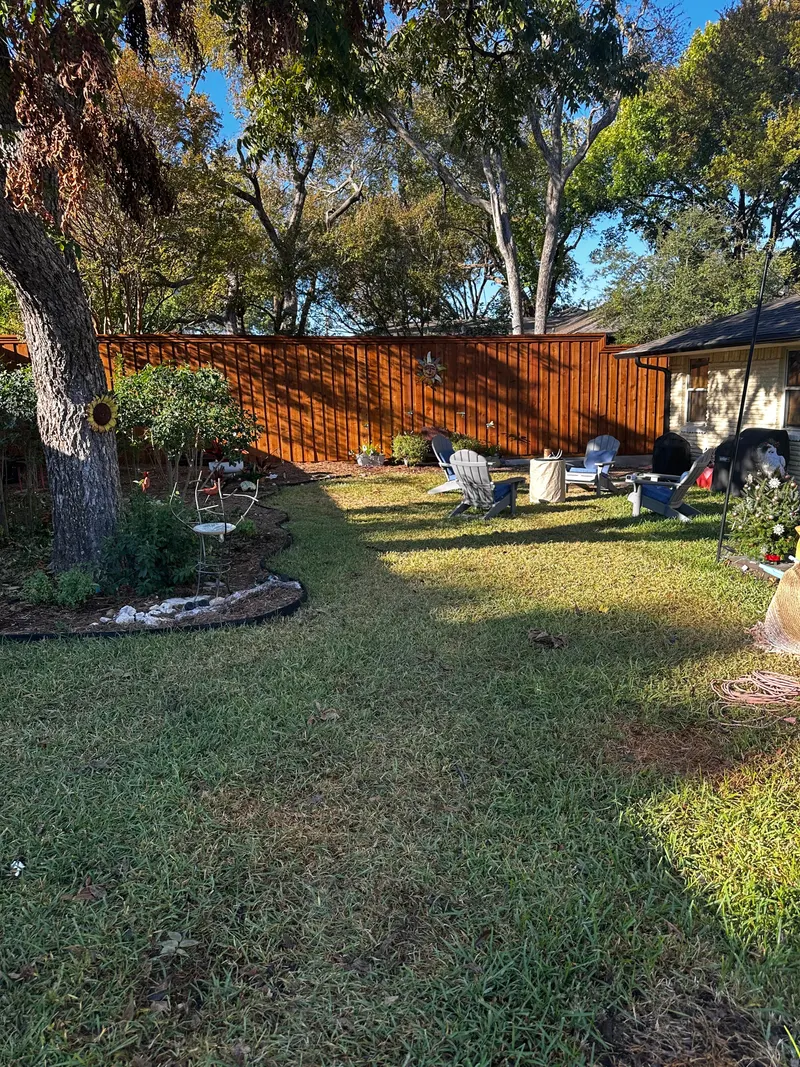
Left bare, cedar weathers to silver gray. Some owners want that. Most of our clients in the Park Cities prefer to hold the warm color, which means a quality stain and a restain every few years, typically two to four depending on sun exposure. With that care, cedar lasts 15 to 20 years in North Texas.
Where does tropical hardwood fit?
Tropical hardwoods such as ipe are dense, fine-grained and deep brown when oiled. On a horizontal fence beside a modern house they can look like furniture. Up close, nothing else in this comparison looks as rich.
The trade-offs are practical. The boards are very heavy, so posts, footings and gate frames have to be designed for the load. The wood is hard enough that every fastener hole is pre-drilled, which adds labor. Supply and board quality vary, and responsible sourcing is worth asking about.
It also does not stay brown on its own. Unoiled hardwood turns silver in the sun just as cedar does, and keeping the dark color takes regular oiling. If you want this look, hire a builder who works with hardwood routinely. It is not a material we install, and we would rather say so than learn on your fence.
What about composite fencing?
Composite fence systems are manufactured panels and posts made from a blend of wood fiber and plastic. Trex, one of the larger manufacturers, describes its fencing as interlocking pickets that give full privacy and look the same on both sides, with no painting or staining required and cleaning done with soap, water and a soft brush.
Visually, composite is the most uniform of the three. Every board matches, the color is consistent and the neighbor gets the same face you do. That uniformity is also its limit. Colors and profiles come from a catalog, the texture is molded, and it is hard to match the trim on a custom home or follow an unusual line.
The manufacturer also notes that color shifts during the first weeks of weathering before it settles. Composite is a reasonable choice for an owner whose first priority is low upkeep. For a deck, where foot traffic and standing water are the issue, the comparison changes; see composite vs. cedar decking.
How do the three compare side by side?
The table below sums up the differences that matter on a privacy fence. It compares looks and upkeep, not price. Cost depends on height, length, access and details, and the cost factors for a cedar fence are covered separately.
Cedar, tropical hardwood and composite on a privacy fence
| What you care about | Western Red Cedar | Tropical hardwood | Composite |
|---|---|---|---|
| Look when new | Warm, natural grain, takes any stain color | Deep brown, fine grain, furniture-like | Uniform color, molded texture |
| Look after years in Texas sun | Holds color with restaining, silver if left bare | Silver unless oiled regularly | Settles to its weathered shade, stays even |
| Design freedom | Highest: caps, lattice, arches, custom gates | Good for clean horizontal and vertical lines | Limited to the system profiles and colors |
| Upkeep | Wash and restain every few years | Oil regularly to keep the brown | Wash with soap and water |
| Repair | Single boards replaced and stained to match | Boards replaced, color match takes time | Depends on the same product still being sold |
| Who builds it | Built by us, in-house | Specialist builders, not us | Certified system installers, not us |
What this means for you: If you want natural warmth and a fence designed around your house, cedar is the strongest choice; choose composite only if near-zero upkeep matters more to you than character.
Which details lift a cedar fence to estate level?
The same cedar can look ordinary or exceptional. The difference is in the build. These are the details we recommend on homes in Highland Park, University Park and Preston Hollow.
For a property where the fence also has to quiet a busy street or screen a second-story view, the layout matters as much as the wood. We cover that in privacy fencing for a Preston Hollow estate.
- Board-on-board with cap and trim: Overlapping boards leave no gaps as the wood dries, and a cap gives the top a finished, furniture-like edge.
- Steel posts set in concrete: Posts stay straight in moving clay and can be hidden behind the boards so only wood shows.
- Kiln-dried cedar and galvanized fasteners: Drier boards move less after the build, and galvanized fasteners do not leave dark streaks down the face.
- A gate designed with the fence: A custom walk gate, arched or square, with a proper frame so it does not sag. See the gallery for examples.
- Masonry columns: Brick or stone columns matched to the house break up a long run and anchor the corners.
- Stain within the first weeks: A quality stain applied early locks in the color before the sun starts to gray the surface.
How do I decide for my own property?
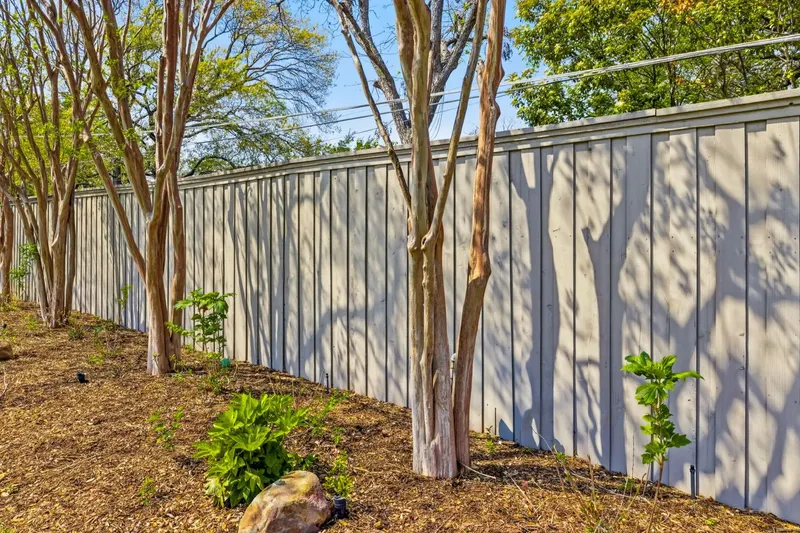
Start with how the fence will be seen. If it is a backdrop to planting beds and a pool, warm stained cedar is hard to beat. If it runs along a modern house with a lot of glass and steel, a horizontal layout in cedar or hardwood suits it. If the fence is mostly out of sight and you never want to think about it, composite deserves a look.
Then be honest about upkeep. Cedar rewards an owner who will have it washed and restained on schedule, and our power wash and restain service exists for exactly that. If that will not happen, plan for the silver look from the start and choose a design that suits it.
Owner Jack Johnson, a former custom home builder, attends every consultation. He will bring samples, look at the house and tell you plainly what he would build there. Estimates are free and written. Call (214) 755-8100 or request a visit.
How Park Cities Fence & Deck helps
Jack Johnson comes out himself, looks at your property and gives you a free written estimate with a timeline. Wood, iron and masonry are all built in-house, so the advice fits the property. Related services: wood fencing, powerwash & restain, masonry fencing. We work in Highland Park and Preston Hollow and across Dallas.
Questions people ask next
Is cedar or redwood better for a privacy fence in Dallas?
Both are naturally durable softwoods with attractive grain, and both take stain well. Western Red Cedar is the more common choice in North Texas, so matching boards for a later repair is simpler. Redwood has a slightly redder tone. We build with both and bring samples to the consultation so you can compare them against your house.
Does Park Cities Fence & Deck install composite fences?
No. We build wood fences in Western Red Cedar, redwood and pressure-treated pine, along with iron and masonry, and we use composite on decks. Composite fence systems are installed by dealers trained on a specific manufacturer product. If composite is your first choice, ask that manufacturer for its local installers.
Will a stained cedar fence fade?
Yes, gradually. Sun breaks down stain pigment over time, fastest on south and west faces. Plan to restain every few years, typically two to four depending on sun exposure. A wash and a fresh coat bring the color back, and keeping to the schedule protects the wood itself.
Is pressure-treated pine a premium option?
Pine is a sound, economical choice and it works well for posts, rails and long utility runs. It has less natural color and more tendency to twist than cedar, so it rarely gives the same finished look on a street-facing or pool-side fence. Many owners use cedar where the fence is seen and pine where it is not.
Can a cedar fence be combined with stone or iron?
Yes, and it is one of the best ways to raise the look of a fence line. Brick or stone columns between cedar sections, or an iron section at the front with cedar along the sides, tie the fence to the house. We build wood, iron and masonry in-house, so one crew coordinates all three.
Sources and further reading
General information, not legal advice. Rules change: we confirm the current requirements with your city or HOA before we build.