Decks & Pergolas · Dallas, Texas
Composite vs. Cedar Decking: An Honest Comparison
Upfront cost, maintenance, Texas heat and the 10-year economics of the two decking favorites, compared without the sales pitch.
 By Jack Johnson, owner of Park Cities Fence & Deck · 8 min read · 1,614 words
In short
Cedar costs less on day one and feels like real wood underfoot, because it is. Composite runs roughly 40–60% more upfront but needs almost no maintenance and will not splinter. Over ten years the total costs converge, so choose cedar for warmth and budget, composite for set-and-forget durability in full sun.
In this guide
- What each material actually is
- Day one: cedar wins on price
- The next ten years: composite wins on maintenance
- Texas sun, heat and bare feet
- Splinters, pets and how each surface ages
- The frame underneath is the same, and it is what fails first
- An honest decision checklist
Need this done? See deck installation.
Every deck consultation we run in Dallas eventually lands on the same question: cedar or composite? Both are good products, both build beautiful decks, and both have a salesperson somewhere insisting the other one is a mistake. The truth is less dramatic. Each material wins in a different column, and the right answer depends on how you use your yard, how much sun the deck takes, and how you feel about maintenance.
This is the comparison we give homeowners at the kitchen table before any deck installation, the same numbers-free, no-pressure version. By the end you should know which column matters most for your house.
What each material actually is
Cedar is solid wood, milled from western red cedar. It carries natural oils that resist rot and insects better than pine, it takes stain beautifully, and it has the grain, scent and warmth that no manufactured product fully imitates. It is the traditional choice for Texas decks and still the most common one we build.
Composite decking is a manufactured board, typically a blend of wood fibers and recycled plastics, wrapped in a durable polymer cap. The cap is what does the work: it blocks moisture, resists staining and fading, and gives the board a consistent color and texture from the first plank to the last.
One thing they share: neither one holds up your deck. The frame underneath, posts, beams, joists, is pressure-treated lumber either way, and that structure matters more to your deck’s lifespan than the surface you walk on.
Day one: cedar wins on price
Board for board, cedar is the more affordable surface. Composite typically runs roughly 40–60% more upfront for the decking itself, and premium composite lines with deeper grain textures and multi-tone streaking push that gap wider. Hidden-fastener systems, matching fascia and composite railing add to it as well.
That premium is real money on a large deck, and it is the honest reason many of our clients choose cedar. A well-built cedar deck is not a compromise, it is the material most of the great backyards in the Park Cities were built with.
What we tell budget-focused homeowners: never fund a composite surface by cutting the frame. A cedar deck on a properly engineered frame will outperform a composite deck on an undersized one, every time.
The next ten years: composite wins on maintenance
Cedar is a living surface, and Texas is hard on it. UV breaks down the surface fibers, moisture cycles open small checks in the grain, and foot traffic wears the finish. To stay beautiful, a cedar deck needs cleaning and resealing every couple of years, more often than a cedar fence, because a deck lies flat and takes sun and standing water on its face.
Composite asks almost nothing. An occasional wash with soap and water handles pollen, dirt and the odd barbecue accident. There is no sanding, no stain schedule, no gray-out if you skip a season. For owners who travel, rent the property or simply do not want another line on the maintenance calendar, that is the entire argument.
If you go cedar and want the maintenance handled rather than avoided, our powerwash and restain service keeps deck surfaces on the same professional cycle we use for fences. Maintained on schedule, cedar stays handsome for decades; neglected, it goes gray and splintery within a few summers.
Texas sun, heat and bare feet
Here is the detail glossy brochures skip: composite gets hot. Dark composite boards in full August sun can be genuinely uncomfortable barefoot, noticeably more so than cedar, which stays cooler to the touch. If your deck faces west with no shade and you have kids who live barefoot all summer, that matters.
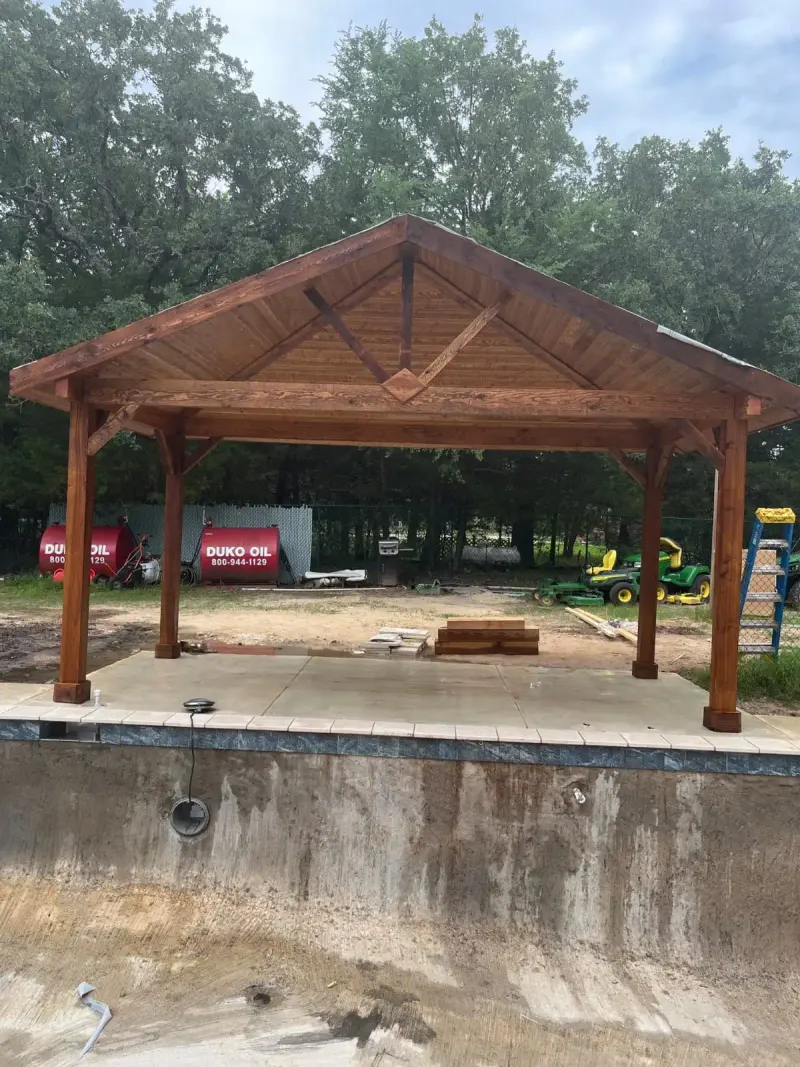
Lighter composite colors and shade structures change the equation. Many of our composite decks are paired with a cedar pergola precisely for this reason, the pergola knocks down the direct sun, the composite handles the weather, and the combination is close to maintenance-free living.
Cedar has its own sun problem: fade. Even good stain gives ground to Texas UV over time, which is why the resealing cycle exists. Composite fades far less, the cap is engineered for it, so a ten-year-old composite deck usually looks closer to its original color than a ten-year-old cedar deck between stainings.
Splinters, pets and how each surface ages
Composite will not splinter. For families with small children and dogs, that is not a small point, it is often the deciding one. Cedar, even well maintained, will eventually raise a splinter somewhere, and a deck that misses its resealing window will raise many.
Aging is where taste comes in. Cedar ages like wood: it moves a little, the grain deepens, and a fresh stain resets it to nearly new. Composite ages like a product: it stays uniform, which some people love and others find flat. Up close, even premium composite reads as manufactured; cedar reads as material.
Scratches split the difference. Cedar scratches can be sanded and re-stained away. A deep gouge in composite is there to stay, though modern capped boards hide wear far better than the first-generation composite that gave the category a bad name fifteen years ago.
The frame underneath is the same, and it is what fails first
Whichever surface you choose, your deck stands or falls on its structure. In North Texas that means footings that account for our expansive clay soil, we pour engineered footings below the clay movement zone, so seasonal swelling and shrinking does not heave the frame. Posts are set in concrete, and every connection uses galvanized fasteners that shrug off our humidity swings.
This is worth stressing because most deck failures we are called to repair are frame failures wearing a surface problem as a disguise. A wavy deck, doors that no longer clear the boards, railings that wiggle, those start below the surface. The decking material gets blamed; the shortcut footings are the culprit.
One structural note specific to composite: it is more flexible than cedar and usually requires tighter joist spacing. Retrofitting composite onto an old cedar-spaced frame without adding joists produces the spongy, bouncy deck that owners then blame on the material.
An honest decision checklist
Strip away the marketing and the choice usually resolves in a few questions. Run through these and one column will pull ahead.
- Choose cedar if: upfront budget is the constraint, you love the look and feel of real wood, the deck gets some shade, and you are willing to maintain it, or have it maintained, every couple of years.
- Choose composite if: you want a set-and-forget surface, the deck bakes in full sun, kids and pets rule the backyard, or you are building a space you plan to enjoy for fifteen-plus years without a maintenance calendar.
- Either way, insist on: engineered footings below the clay movement zone, posts set in concrete, galvanized fasteners and joist spacing matched to the decking you chose.
- Think in decades, not day one: over ten years, cedar’s maintenance spending and composite’s upfront premium converge. Pick the material whose ownership experience you actually want.
How Park Cities Fence & Deck helps
Jack Johnson comes out himself, looks at your property and gives you a free written estimate with a timeline. Wood, iron and masonry are all built in-house, so the advice fits the property. Related services: deck installation, powerwash & restain, pergola installation. We work in Dallas and Plano and across Dallas.
Questions people ask next
Is composite decking worth the extra cost?
For many owners, yes, but not because it is a better product. It is a different bargain: a meaningful upfront premium in exchange for a decade of near-zero maintenance and a splinter-free surface. If you would rather spend weekends on the deck than maintaining it, composite earns its price. If budget rules, cedar remains an excellent deck.
Does composite decking get hotter than cedar?
Yes, noticeably. Dark composite in full Texas sun can be uncomfortable barefoot, while cedar stays cooler to the touch. Lighter composite colors help, and pairing the deck with a pergola or shade structure largely solves the problem. If your deck faces west with no shade, factor heat into the color choice.
How often does a cedar deck need to be resealed?
Plan on cleaning and resealing every couple of years, more frequently than a cedar fence, because the horizontal surface takes direct sun and standing water. The test is simple: when water stops beading on the boards, the finish is done and the wood is absorbing moisture. That is your signal.
Can I put composite boards on my existing deck frame?
Sometimes, but the frame has to be sound and the joist spacing has to match composite’s requirements, which are usually tighter than cedar’s. We inspect the structure first; if posts, beams and footings are healthy, a re-deck can make sense. If the frame is tired, new boards on it waste good material.
Which lasts longer in North Texas, cedar or composite?
A maintained cedar deck and a quality composite deck both deliver long service lives here, the frame beneath them usually sets the real limit. Composite holds its appearance longer with less effort; cedar can be renewed repeatedly with washing and stain. Neglect is the only thing that meaningfully shortens either one.
Can I mix cedar and composite on the same deck?
Yes, and it is often the smartest compromise. A common pairing puts composite on the walking surface, where maintenance and splinters matter most, with cedar rails and a cedar pergola overhead for warmth at eye level and hand height. The frame is pressure-treated lumber either way, so the materials mix cleanly.