Wood · Dallas, Texas
Staining a Cedar Fence: Colors, Timing and Why It Matters
Stain is sunscreen for your fence. When to apply it, which colors age well in Dallas, and the cycle that doubles cedar’s life.
 By Jack Johnson, owner of Park Cities Fence & Deck · 8 min read · 1,622 words
In short
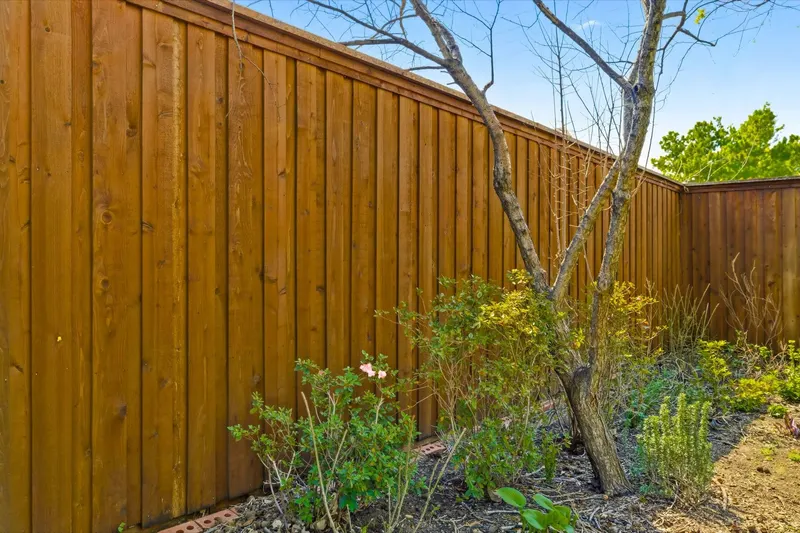
Stain your cedar fence once the wood is dry enough to absorb it, right away for kiln-dried cedar, after a drying period for green lumber, then restain every 3–4 years. Semi-transparent stains suit most Dallas homes: enough pigment to block UV, enough transparency to show grain. When water stops beading on the wood, it’s time.
In this guide
- What stain actually does for cedar in North Texas
- When to stain a brand-new fence
- Choosing a stain type: transparent to solid
- Colors that work here, and the HOA question
- The 3–4 year cycle, and the five-second test
- Doing it right: prep is most of the job
Need this done? See powerwash & restain.
Stain is the difference between a cedar fence that looks rich and even at year twelve and one that’s gray, checked and drinking water at year six. It isn’t cosmetic, it’s sunscreen and a raincoat for wood that faces more UV and harder weather swings than almost anywhere cedar is commonly built.
Yet stain is the most commonly skipped, mistimed or botched part of fence ownership in Dallas. This guide covers the four decisions that matter: when to stain a new fence, what type and color to choose, how to know when it’s time again, and how to do the work right, or have it done right.
What stain actually does for cedar in North Texas
Texas sun is the silent killer of wood fences. UV radiation breaks down lignin, the natural glue holding wood fibers together, which is why unprotected cedar goes gray within a year or two. Gray itself is only cosmetic, but the loosened surface fibers wash away with every rain, and the opened surface starts absorbing water instead of shedding it.
From there the damage compounds: boards cup and check as they cycle wet and dry, fasteners work loose, and rot gets its opening. Pigmented stain blocks the UV; the resins in it seal the surface against moisture. Kept on a proper cycle, that protection is the main reason a cedar fence reaches the 15–20 year lifespan our region allows, the full picture is in our cedar lifespan guide.
There’s a financial frame worth holding onto: stain is the only fence expense that pays for itself. Every cycle you keep defers the far larger cost of replacement, and a fence that’s been maintained on schedule is also the one that survives a hail-and-wind spring with repairs instead of a rebuild.
When to stain a brand-new fence
The old advice, “wait a year before staining a new fence”, is half right and widely misapplied. Stain needs dry wood to absorb properly; applied over wet lumber, it sits on the surface, blotches and peels early. So the real question is how much moisture your new fence is carrying, and that depends on the lumber.
Fences built with kiln-dried cedar, as ours are, can typically be stained shortly after installation, the moisture was removed at the mill, and waiting only gives Texas UV a head start on unprotected wood. Fences built with green, wet lumber genuinely do need a drying period of weeks to a few months, depending on season. The test is the same one used for restaining: sprinkle water on the boards. If it soaks in readily, the wood is ready to take stain; if it beads or sits, wait.
One caution for new-build owners: don’t let “wait until it’s dry” slide into “wait until it’s gray.” Once cedar has visibly grayed, UV damage is already done, and getting back to an even tone means washing or brightening the surface first, extra work a timely first coat avoids entirely.
Choosing a stain type: transparent to solid
Stains run on a spectrum of pigment, and pigment is what blocks UV, so there’s a genuine trade-off between showing off the grain and protecting the wood. Oil-based penetrating stains remain the workhorse for rough-sawn cedar fencing because they soak in rather than film over. Here’s how the pigment levels behave in Dallas conditions.
- Clear sealers: Show cedar at its most natural but carry little UV pigment, so the wood grays anyway and recoats come sooner. Rarely the right call for full Texas sun.
- Semi-transparent: The sweet spot for most Dallas homes, enough pigment for real UV protection, enough transparency that grain and character show through. Ages gracefully rather than peeling.
- Semi-solid: More pigment, longer protection, more uniform color; grain softens to a texture. Good for older fences with mismatched or repaired boards you’d like to even out.
- Solid stain: Essentially an opaque finish, maximum UV block, fully hides the wood, and shows wear by peeling rather than fading. Best reserved for painted-look designs and deliberate color statements.
Colors that work here, and the HOA question
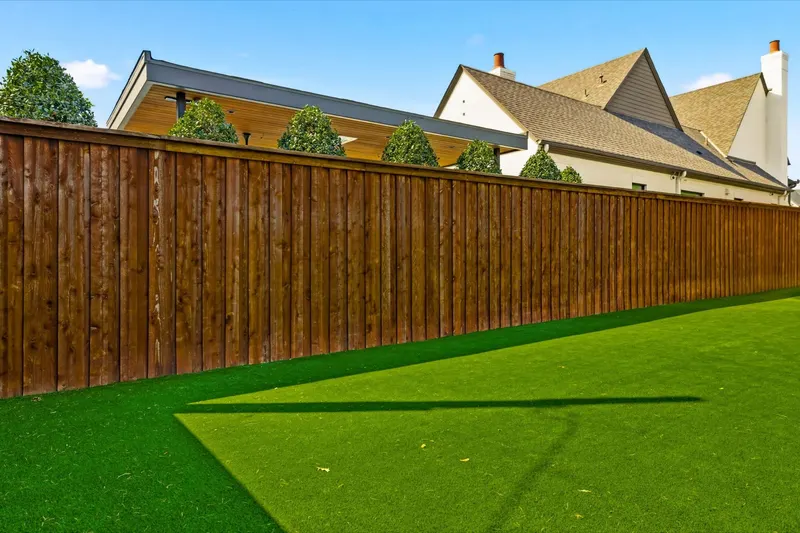
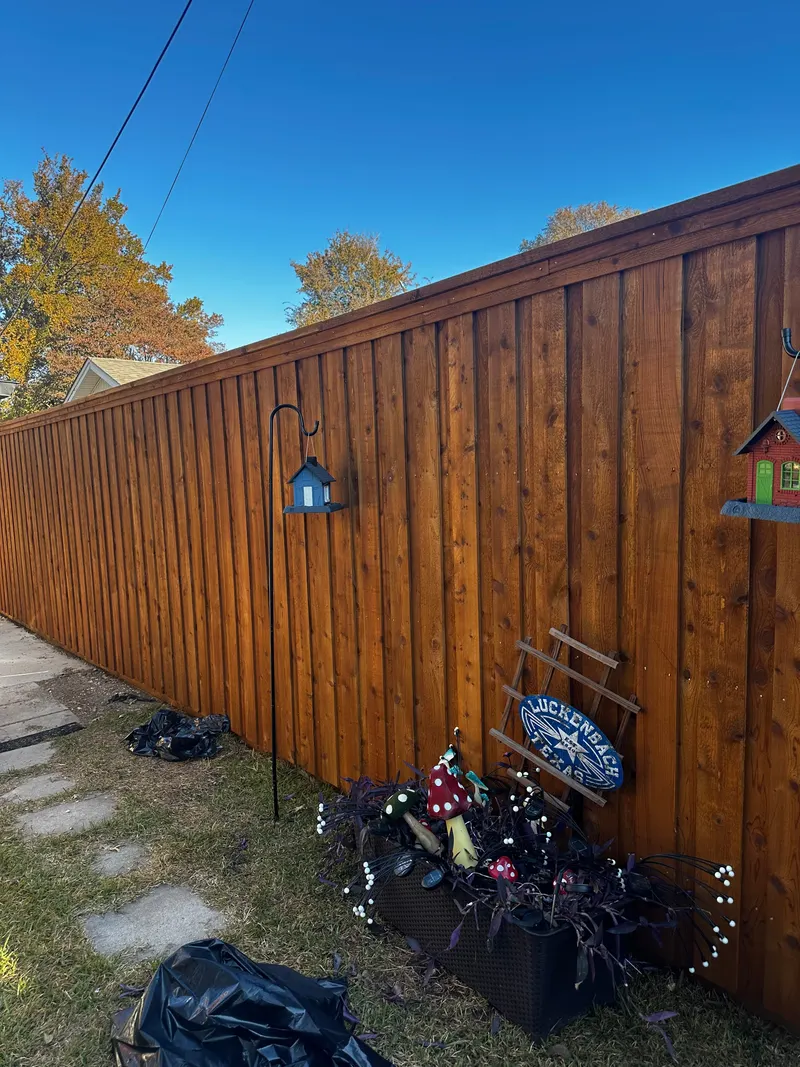
Dallas fence stains cluster in a family of warm browns for a reason: cedar’s natural tannins shift color as pigment goes over them, and warm tones age most gracefully under intense sun. Lighter honey and natural cedar tones keep yards bright and hide dust; medium browns are the neighborhood default and forgive the most wear; darker walnut-and-espresso tones look striking against light brick and modern architecture but show fading soonest and run hot in full sun.
Two practical notes before you commit. First, always sample on your actual fence, stain is translucent, so the same can reads differently over new kiln-dried boards than over ten-year-old wood. Second, check your HOA before the sprayer comes out: many associations in Highland Park, University Park and the newer master-planned communities specify approved stain colors or require approval for a change. We handle those submittals routinely as part of our work.
The 3–4 year cycle, and the five-second test
In North Texas, plan on restaining every 3–4 years. Exposure sets where you fall in that range: a south- or west-facing run taking full afternoon sun burns through stain faster than a shaded north line, and sprinklers that wet the fence daily age it faster still. The fence tells you when it’s ready, you just have to ask.
The five-second test: splash water on a picket. If it beads and rolls off, the stain is still working. If it darkens and soaks in, the seal is spent and the wood is absorbing moisture with every rain, time to schedule. Fading color and gray patches on the sunny runs are the visual confirmation. What you don’t want to do is wait for the fence to look bad from the street; by then you’re restoring rather than maintaining.
Skipping a cycle doesn’t save money, it moves the cost. Two missed cycles typically mean a grayed, thirsty fence that needs brightening and heavier product to bring back, and somewhere in those unprotected years the first boards start cupping. New fence sections stained on schedule also blend far better with the rest of the line after a repair. Our powerwash and restain timing guide goes deeper on reading the signals.
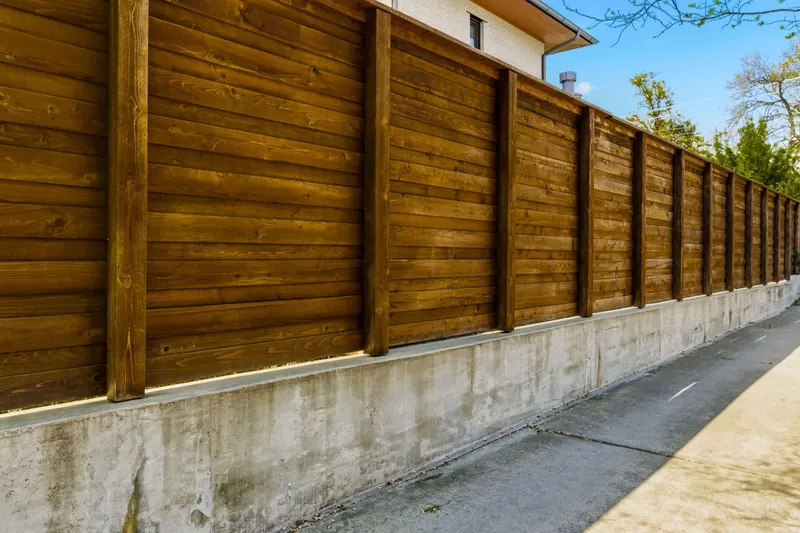
Doing it right: prep is most of the job
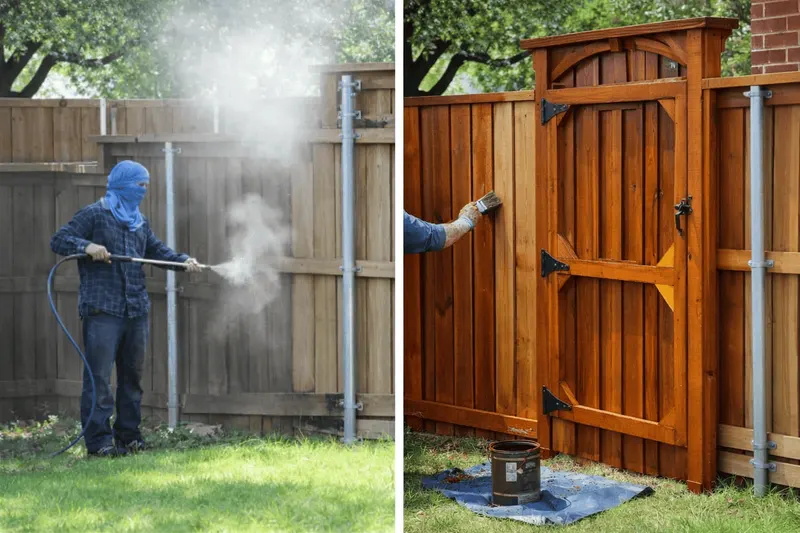
A restain is a two-step job, and the first step decides the result. The fence must be washed, with moderate pressure and the right tips, not a blast that furs the wood surface, to remove gray fiber, dust and any failed finish. Then it must dry completely before stain goes on; sealing moisture into the boards is how peeling happens. Weather matters too: stain wants a dry stretch and moderate temperatures, which in Dallas usually means spring and fall over the peaks of summer.
Application is a sprayer-plus-back-brush job done properly, spray lays the stain on, brushing works it into the grain, with wet edges kept to avoid lap marks and landscaping masked against overspray. It’s absolutely a job a patient homeowner can do; it’s also hot, slow and messier than it looks, which is why our powerwash and restain service stays booked. Either way, the same rule holds: proper wash, full dry, quality stain, every 3–4 years. Do that, and your cedar fence will spend two decades looking like it was built recently, and if yours is due, a quote is free and usually back within 24 hours.
How Park Cities Fence & Deck helps
Jack Johnson comes out himself, looks at your property and gives you a free written estimate with a timeline. Wood, iron and masonry are all built in-house, so the advice fits the property. Related services: powerwash & restain, wood fencing. We work in Highland Park and University Park and across Dallas.
Questions people ask next
How soon can I stain a brand-new cedar fence?
If it’s built with kiln-dried cedar, typically shortly after installation, the moisture is already out, and early stain protects the wood before UV can gray it. Green lumber needs weeks to a few months to dry first. Test by sprinkling water: if it soaks in readily, the wood is ready.
How often should a fence be restained in Dallas?
Every 3–4 years. Full-sun southern and western exposures land at the early end; shaded runs stretch toward the late end. Confirm with the water test, when droplets soak in instead of beading, the seal is spent. Restaining on schedule is the single biggest factor in reaching cedar’s 15–20 year lifespan.
What stain color is most popular for Dallas fences?
Medium warm browns are the neighborhood standard, they flatter cedar’s natural tannins, age evenly under hard sun and suit most brick. Lighter honey tones keep yards bright; dark walnut looks dramatic against light or modern homes but fades faster in full sun. Always sample on your own fence, and check HOA color rules first.
Can I stain over a gray, weathered fence?
Yes, but not directly. The gray layer is loose, dead fiber that will shed and take your stain with it. The fence needs a proper wash, moderate pressure, sometimes a wood brightener, then a complete dry before staining. Done right, even a badly weathered fence with sound boards comes back to a rich, even color.
Is spraying or brushing better for fence stain?
Both, together. Spraying lays stain on quickly and evenly; back-brushing works it into the grain so it penetrates instead of sitting on the surface. Spray-only jobs tend to fail early, especially on rough-sawn cedar. Keep a wet edge to avoid lap marks, and mask nearby stone, brick and plantings against overspray.