Wood · Dallas, Texas
What Drives the Cost of a Cedar Fence in Dallas?
No mystery, no gimmicks: the seven factors that actually move a cedar fence quote up or down in Dallas.
 By Jack Johnson, owner of Park Cities Fence & Deck · 8 min read · 1,618 words
In short
Cedar fence cost in Dallas is driven by seven things: construction style (board-on-board costs more than side-by-side), height, post material, lumber grade, site conditions like tear-out and slope, gates, and finish work such as cap, trim and stain. The style and post decisions move the number most, a written quote turns them into real figures.
In this guide
- Factor 1: Construction style
- Factor 2: Height
- Factor 3: Posts, the spend that pays you back
- Factor 4: Lumber grade and drying
- Factor 5: Your site, the part no price sheet can see
- Factors 6 and 7: Gates and finish work
- How to compare bids without getting burned
Need this done? See wood fencing.
Nobody enjoys asking what a fence costs and hearing “it depends.” But with cedar fencing it genuinely does, we’ve built fences on the same street, at the same length, that differed meaningfully in price for reasons that were obvious once you saw the two yards. Publishing a number without seeing your line would be a guess dressed up as an answer.
What we can do is show you exactly which levers move the number, in rough order of impact, so you can read any bid, ours or a competitor’s, and know precisely what you’re paying for. Numbers themselves come with a free written quote, usually within 24 hours.
Factor 1: Construction style
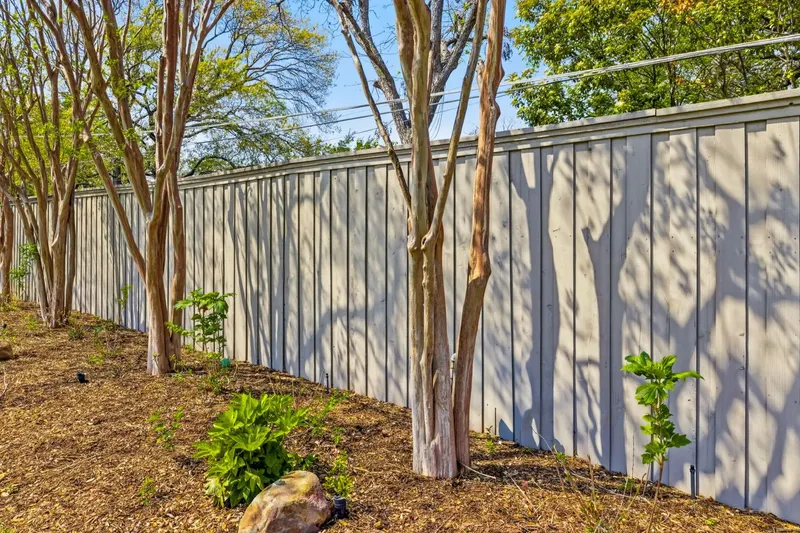
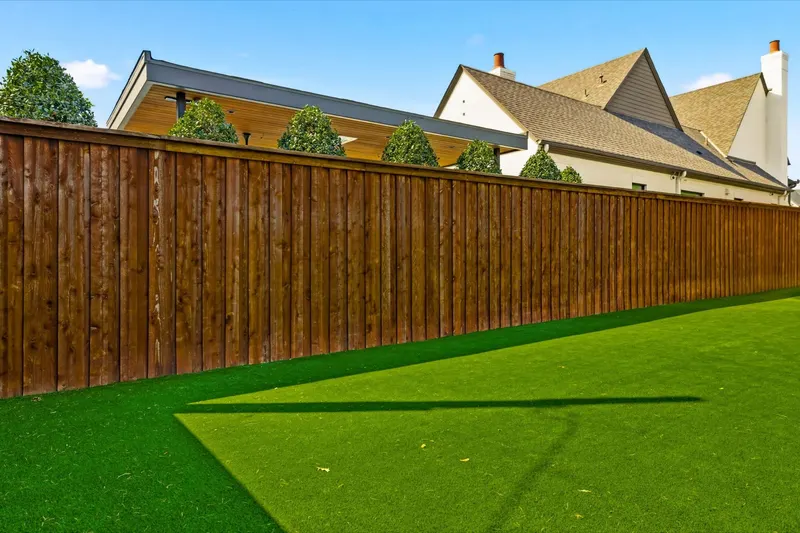
The biggest single lever is how the fence is built. Side-by-side construction, pickets edge to edge on rails, uses the least lumber and labor per foot and anchors the affordable end of cedar fencing. Board-on-board overlaps every picket so privacy survives the wood’s natural shrinkage, and the extra pickets and labor carry a modest premium. Add a top cap and trim package and you’ve stepped up again, into the framed, architectural look the Park Cities are known for.
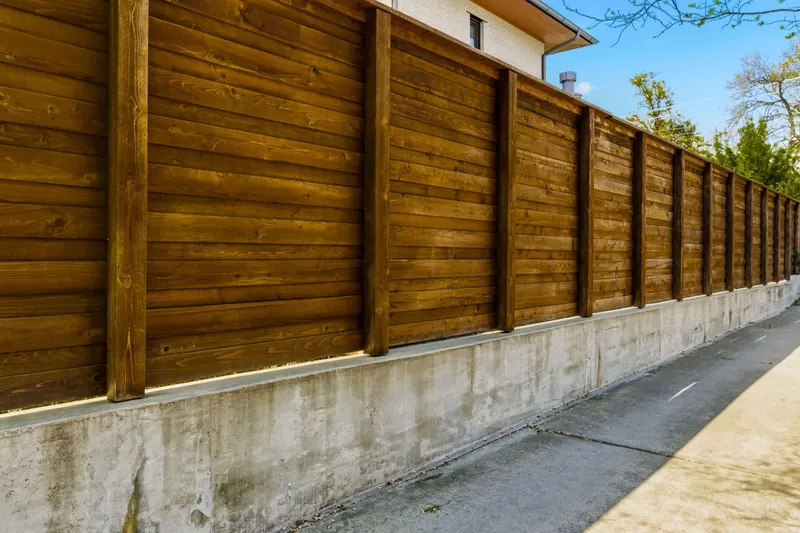
Horizontal designs sit at the premium end too, for structural reasons, tighter post spacing and higher lumber grade, which we unpack in our horizontal fence guide. The full style comparison lives in board-on-board vs. side-by-side; the short version is that you should decide style first, because every other line item scales from it.
Factor 2: Height
Height multiplies material almost linearly, a taller fence means longer pickets, an extra rail, deeper posts and more concrete per hole. Six feet is the DFW standard for backyard privacy. Eight-foot fences are popular where two-story neighbors overlook a patio or pool, and they cost disproportionately more than the extra footage suggests, because taller fences catch more wind and need beefier structure to stay plumb through spring storms.
Height is also where the rules come in. Dallas and the Park Cities regulate fence height differently by zone and by street-facing versus interior lines, and many HOAs add their own limits on top. Going taller than the standard often triggers a permit or variance, paperwork we handle, but a cost and timeline factor worth knowing early. Our guide to fence height rules in Dallas covers the specifics.
Factor 3: Posts, the spend that pays you back
Every post on a quality fence is set in concrete, at a depth that gets below the movement zone of our expansive clay. That’s the baseline; the real decision is post material. Treated wood posts cost less on day one and are the industry default. Galvanized steel posts carry a modest premium and remove the single most common cause of fence death in North Texas: rot at the soil line.
We’re direct with clients about this one: if the budget forces a choice between steel posts and a cosmetic upgrade, take the steel. A leaning fence with beautiful trim is still a leaning fence, and post failure is precisely what shortens the 15–20 year cedar lifespan our region allows. It’s the least visible line on the bid and the most consequential.
Post spacing belongs in this conversation too. Wider spacing means fewer posts and a lower bid, and more load on every rail, more sag over time, and more sway in spring storms. When one quote is mysteriously cheaper than the rest, count the posts.
Factor 4: Lumber grade and drying
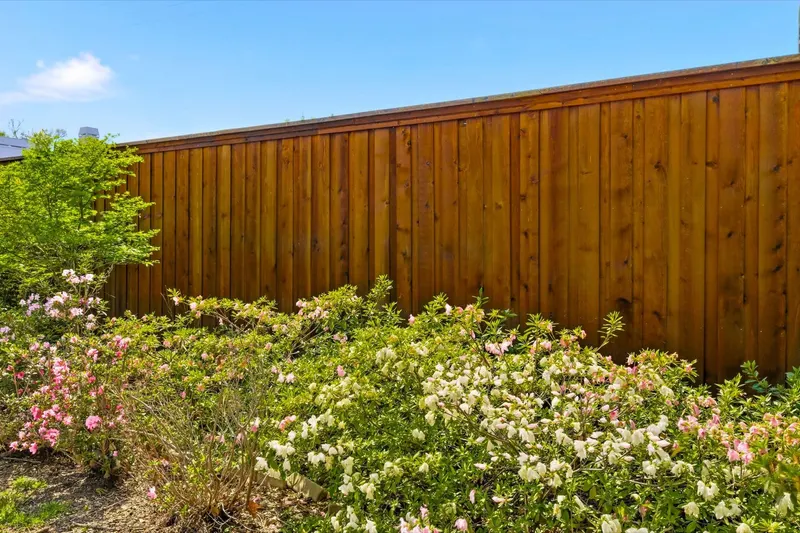
Cedar is not one product. Picket thickness, grade and moisture content vary widely, and they’re where low bids quietly save their money. Thin, green, knotty pickets look fine on install day, then cup, twist and open gaps through their first Texas summer. Thicker pickets in a cleaner grade cost more per board, take stain more evenly, and behave for decades instead of seasons.
Kiln-dried cedar matters most: pre-dried boards have already shrunk before they’re nailed up, so panels stay tight and stain can go on sooner and absorb evenly. When comparing bids, ask each company to state picket dimensions, grade and whether stock is kiln-dried. If a bid can’t answer on paper, that’s your answer.
Factor 5: Your site, the part no price sheet can see
Two identical fence designs can price differently because the yards differ. This is the “it depends” part, and it’s legitimate, each of these consumes real labor, material or disposal cost, and an honest quote itemizes them rather than burying them. When we walk a property, these five site conditions are what we’re actually looking at.
- Tear-out and haul-off: Removing an existing fence, and especially old concrete footings, is real work before the first new post goes in. Fences with steel posts or oversized old footings take longer to pull.
- Slope and grade changes: Sloped yards need stepped or racked panels, extra cuts and careful layout to keep the top line clean. Flat lots build faster.
- Access: A backyard reachable only through a narrow side gate means materials move by hand, not machine. Alley access speeds everything up.
- Corners and jogs: Every corner is an extra post, extra concrete and layout time. A rectangular yard is cheaper per foot than a zigzagging line of the same length.
- Trees and utilities: Roots reroute post holes, and lines flagged in the 811 locate, which we arrange before every dig, can shift the layout.
Factors 6 and 7: Gates and finish work
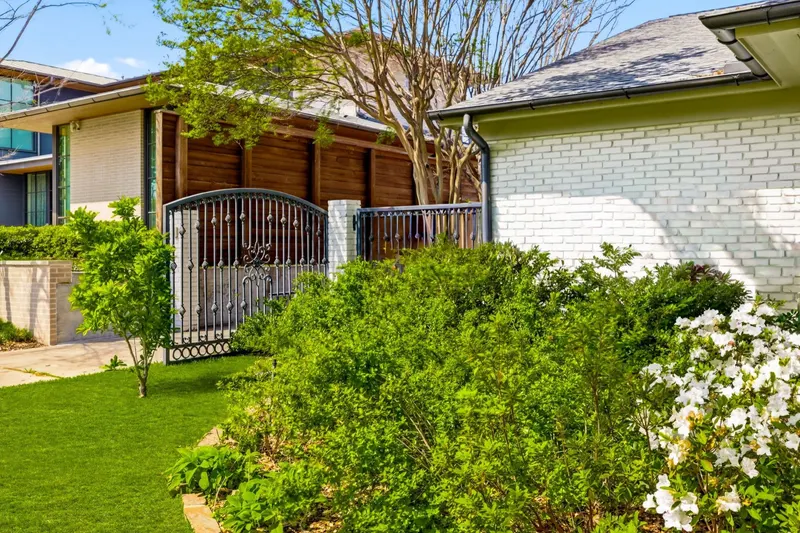
Gates are small fences with hardware and hinges, and they punch above their footage in cost. A standard walk gate is straightforward; wide double gates, arched tops and heavy-duty frames step up from there. Gate quality is worth paying for, a sagging gate is the first complaint on most aging fences, and a welded steel frame prevents it for good. Count your gates before comparing bids, too: one company quoting a single gate against another quoting two is a common source of phantom price differences.
Finish work is the last lever: cap and trim, decorative post caps, and stain. Professional stain applied after the fence is built protects the investment from UV and moisture and, on a 3–4 year cycle, is what stretches cedar toward the 20-year end of its range. Some clients defer stain to a later season for budget reasons, legitimate, as long as it doesn’t become never. Timing and color choices are covered in our stain guide.
How to compare bids without getting burned
When Dallas homeowners show us competing bids, price differences almost always trace to specifications, not margin: one bid has steel posts and kiln-dried pickets spelled out, the other says “6′ cedar privacy fence” and leaves the rest to imagination. Make every bidder commit in writing to style, height, picket dimensions and grade, post material and depth, concrete, fastener type, gate construction and stain. Then you’re comparing fences, not sentences.
Our quotes itemize all of it, they’re free, and they usually reach you within 24 hours of the walk-through, with options priced separately so you can see exactly what each upgrade adds. Most wood fences then take one to three days to build. If you’re budgeting a project in Dallas or anywhere in the surrounding Plano–Frisco corridor, that written number beats any calculator on the internet.
How Park Cities Fence & Deck helps
Jack Johnson comes out himself, looks at your property and gives you a free written estimate with a timeline. Wood, iron and masonry are all built in-house, so the advice fits the property. Related services: wood fencing, fence rehab / repair. We work in Dallas and Plano and across Dallas.
Questions people ask next
Why won’t fence companies publish prices online?
Because the honest number depends on style, height, post material, lumber grade, tear-out, slope, access, corners and gates, factors that can swing two same-length fences far apart. A published rate either pads for the unknowns or gets revised after the visit. A free written quote from a site walk is faster and more accurate.
What’s the cheapest way to build a decent cedar fence?
Side-by-side construction at standard six-foot height, on a straight line with good access, but keep concrete-set posts, galvanized fasteners and kiln-dried pickets. Cut style and ornament, never structure. A plain fence built right outlasts a fancy fence built cheap, and it can be upgraded with stain later.
Which upgrade is most worth the money?
Steel posts, without hesitation. Post rot at the soil line is the most common way North Texas fences die, and steel removes it entirely for a modest premium. Second is professional stain on a 3–4 year cycle, which protects every board you paid for from UV and moisture.
Does a longer fence cost less per foot?
Generally yes, mobilization, tear-out setup and layout are spread over more footage, and long straight runs build efficiently. Corners, gates, slopes and tight access pull the other way. That’s why per-foot rules of thumb mislead, and why we price the actual line, not the length.
How fast can I get a real number?
Quotes are free and usually delivered within 24 hours of seeing the property. We measure the line, note tear-out, slope, access and gates, then itemize style and post options in writing so you can compare configurations. Most wood fences are then built in one to three days.
Do permits or HOA approvals add to the cost?
They add process more than expense, application fees, drawings and time. Standard-height backyard cedar usually sails through; extra height, street-facing lines and corner lots trigger closer review in Dallas and the Park Cities. We prepare the drawings, handle submissions and schedule the 811 utility locate as part of every job.