Planning · Dallas, Texas
How Tall Can Your Fence Be? Height Rules in Dallas and the Park Cities
Back yards, front yards, corner lots and pools all follow different height logic. Here is the pattern, and how to confirm yours.
 By Jack Johnson, owner of Park Cities Fence & Deck · 8 min read · 1,640 words
In short
In most DFW cities, back-yard privacy fences are commonly allowed up to about eight feet, while front-yard fences are typically limited to around four feet or must be open in design. Corner lots add visibility-triangle restrictions, and pool barriers have their own minimums. Exact limits vary by city, always confirm before you build.
In this guide
- The general logic: taller in back, lower and more open in front
- Back-yard fences: where eight feet comes from
- Front yards: low, open, or both
- Corner lots and visibility triangles
- The Park Cities: expect a closer review
- Pool barriers: a separate rulebook
- How to confirm the rules for your address
Need this done? See iron / metal fencing.
Fence height is the single most common code question we hear, and the honest answer is that there is no one number. Every city in DFW writes its own rules, and within a city the limit depends on where the fence sits on your lot. But the underlying logic is remarkably consistent, and once you understand it you can predict what your city will allow before you ever open the ordinance.
This article lays out the typical patterns we see across Dallas, the Park Cities and the northern suburbs, then tells you exactly how to confirm the specifics for your address. Treat every number here as a common pattern, not your city’s law.
The general logic: taller in back, lower and more open in front
Nearly every DFW city follows the same principle: privacy is welcome behind the house, but the street should stay open and visible. That is why back-yard and side-yard fences commonly may run six to eight feet solid, while front-yard fences are typically capped around four feet, or required to be open construction like ornamental iron, so drivers and neighbors can see through them.
The dividing line is usually the front plane of the house. Behind it, privacy rules apply; in front of it, the lower and more transparent standards take over. Where exactly that line falls, and how porches and side entries affect it, differs by city, which is one of several reasons to confirm your specific lot before ordering materials.
Alleys add a third zone in many Dallas neighborhoods. Rear fences along an alley commonly follow back-yard height allowances, but gates opening into the alley and anything that narrows the drivable width get their own scrutiny. If your garage takes access from an alley, mention it when you gather quotes, it changes both the design conversation and, sometimes, the review.
Back-yard fences: where eight feet comes from
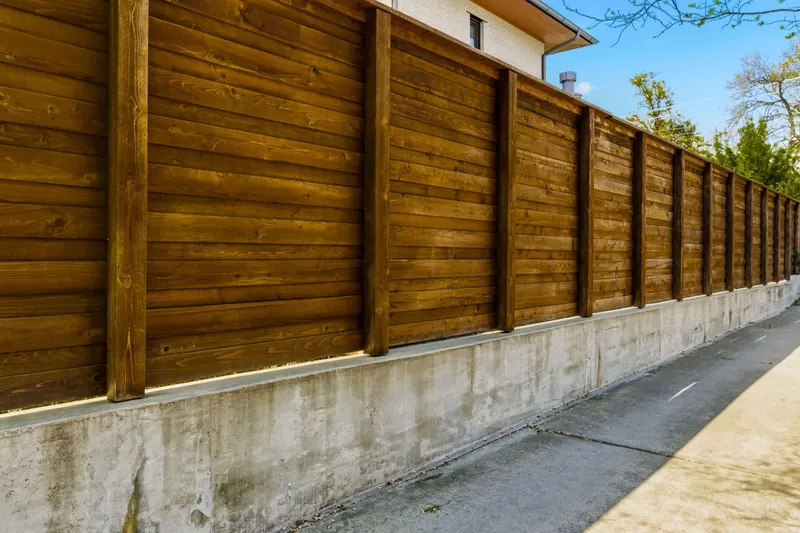
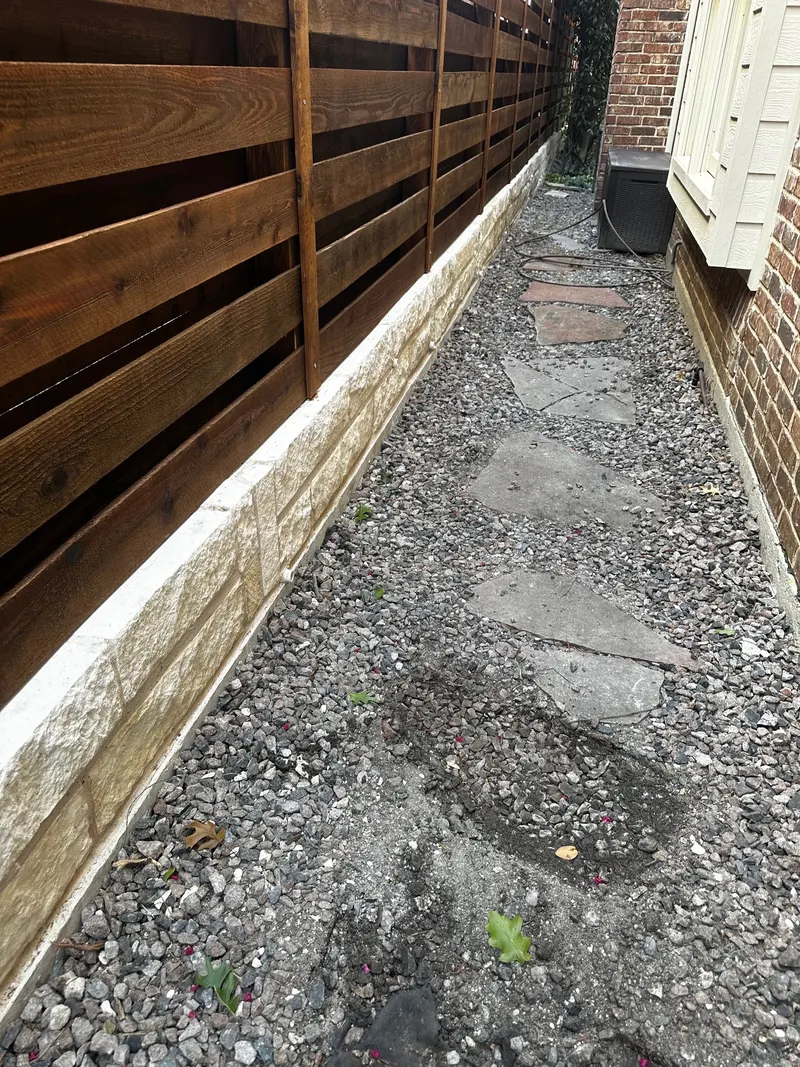
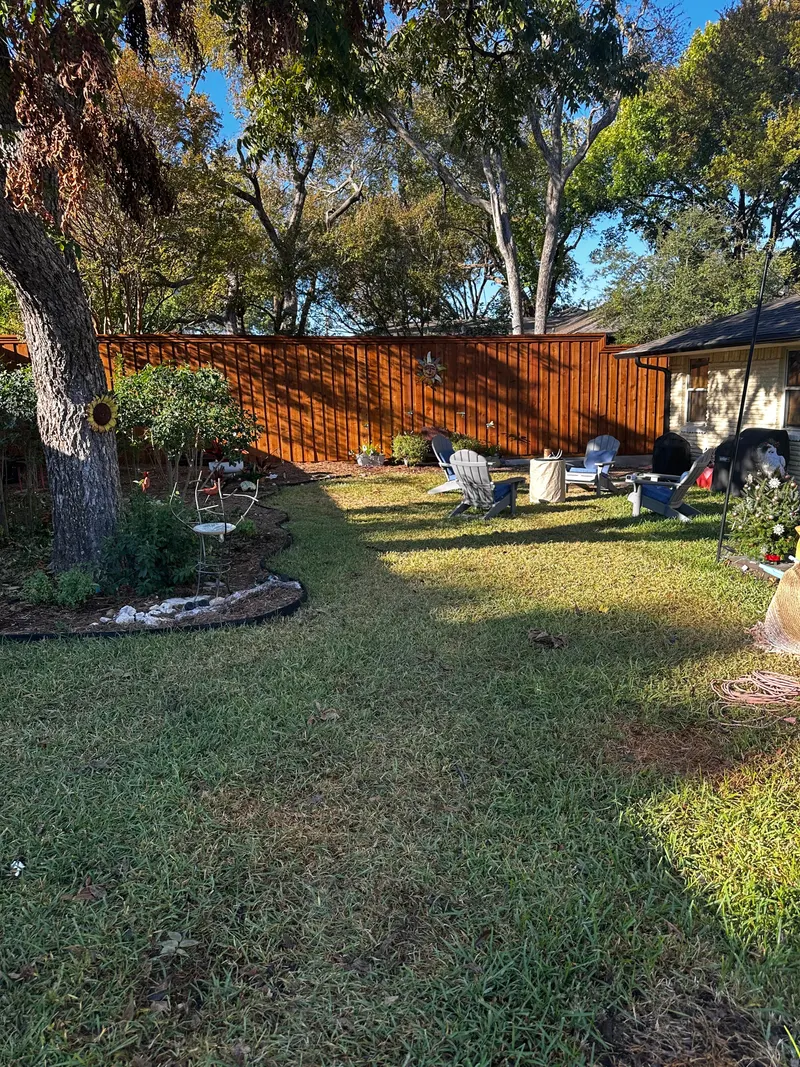
A six-foot cedar privacy fence is the DFW default, and most cities allow it by right in back and side yards. Eight-foot fences are commonly permitted too, though some cities treat the extra height as a special case, requiring a permit where six feet would not, or limiting it to lots that back to busy roads, alleys or commercial property.
Height is usually measured from the natural grade on the side being measured, which matters on sloped lots. If your yard drops toward the back, a fence that is six feet on your side can read taller from the neighbor’s side, and cities differ on which measurement controls. On grade changes we often recommend stepping the fence with the slope, which keeps every panel within its limit and looks far better than a raked top line.
Taller privacy needs, screening a two-story neighbor, for example, are usually better solved with landscaping above a code-compliant fence than by pushing height limits. A fence at the common maximum with ornamental trees behind it typically outperforms a variance application in cost, speed and looks. Our wood fencing crews build to whatever your city approves.
Front yards: low, open, or both
Front-yard fences face the tightest rules. The typical pattern limits them to roughly four feet, and many cities additionally require open designs, pickets or ornamental steel rather than solid boards, so the streetscape stays visible. Some cities prohibit front-yard fences entirely in certain districts.
This is why the classic Park Cities look is a low iron fence or a masonry-and-iron combination at the front, with full-height cedar privacy beginning at the front corner of the house. It is not just taste; it is the shape the rules push toward, and it happens to be beautiful. If you want street presence without a variance, an open iron fence with brick columns is typically the ceiling of what review boards welcome.
Corner lots and visibility triangles
Corner lots carry an extra restriction almost everywhere: the visibility triangle. At the intersection of two streets, and often where a driveway or alley meets the street, cities typically require an area kept clear of tall obstructions so drivers can see cross traffic. Fences inside the triangle are commonly limited to very low heights or open construction.
The size of the triangle and what counts as an obstruction vary by city, and this is the rule most likely to surprise a homeowner mid-project, because the triangle can cut across a corner you assumed was fair game for privacy fencing. If you are on a corner in Dallas, University Park or anywhere else in DFW, have your installer confirm the triangle before the design is finalized. We check it on every corner-lot quote as a matter of routine.
- Street corners: A clear-vision area at the intersection is typical, low or open fencing only inside it.
- Driveways and alleys: Many cities apply smaller triangles where driveways and alleys meet the street.
- Measure first: Triangle dimensions vary by city; confirm before finalizing a corner-lot design.
The Park Cities: expect a closer review
Highland Park and University Park run their own review processes, and both towns typically look harder at fences than surrounding cities do, height, materials, placement and how the fence relates to the streetscape. Corner lots, front yards and fences visible from prominent streets get particular attention.
None of this should scare you off; it simply means the design and paperwork need to be right before build day. We work in University Park and Highland Park constantly, prepare submissions to match what each town expects, and confirm current requirements with the town on every project, because review standards evolve. The reward for the process is the most consistently beautiful fence lines in Texas.
A practical tip for Park Cities projects: decide the full design, height, materials, stain, gate placement, before anything is submitted. Revising a submission midstream restarts clocks, and towns respond noticeably better to a complete, dimensioned drawing than to a sketch with questions attached. It is the same discipline an HOA committee rewards, applied at the town level.
Pool barriers: a separate rulebook
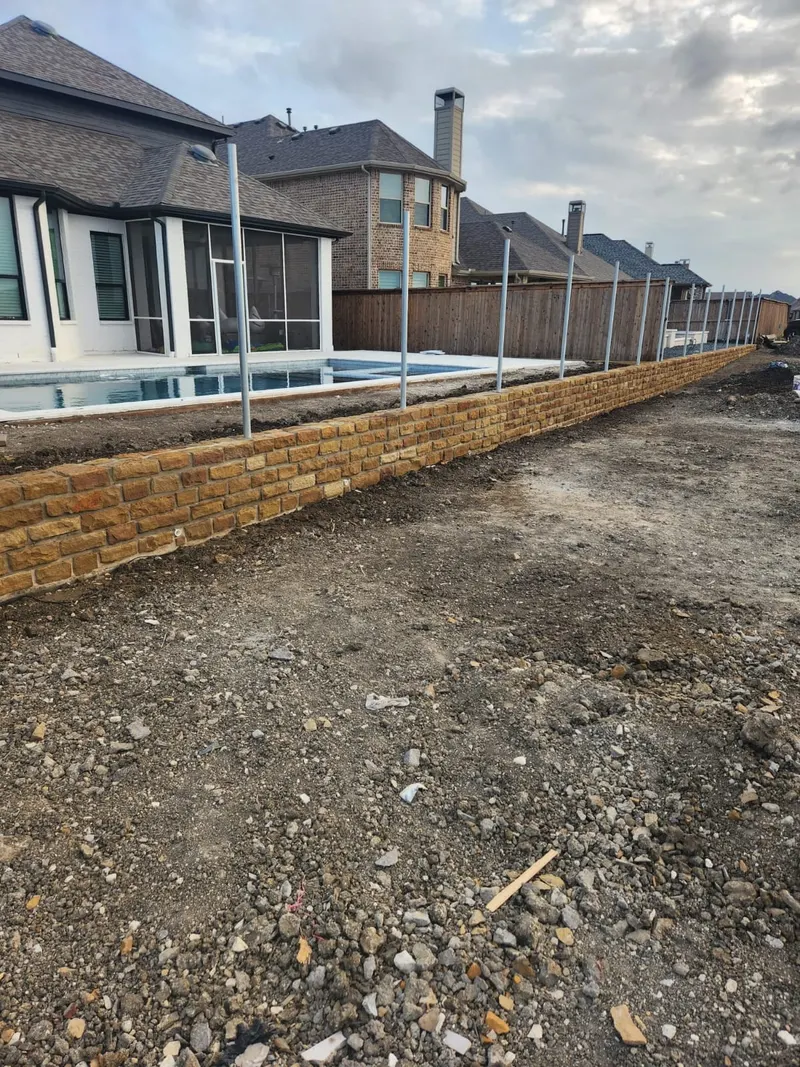
If the fence encloses a pool, height stops being a preference and becomes a safety code. Pool barriers are typically required to be at least 48 inches tall, with limits on gaps and climbable features and with self-closing, self-latching gates. These requirements sit on top of the normal fence rules, not instead of them.
Ornamental iron is the most popular pool-barrier material in our area because it meets barrier requirements while keeping sightlines to the water open. We cover the details, heights, gaps, latch placement and the things inspectors actually check, in our Dallas pool fence code guide.
How to confirm the rules for your address
Every number in this article describes a common pattern, and your city is entitled to differ from all of them. The definitive answer comes from your city’s development services or building department, most publish fence standards online, and a five-minute call resolves edge cases. Your HOA may layer stricter limits on top, so check both.
Or let us do it. Confirming height limits, triangles and permit triggers for your specific lot is part of every Park Cities Fence & Deck quote, and quotes are free, usually back within 24 hours. Tell us about your project and we will tell you exactly what your address allows before you commit to anything.
- City first: Development services or the building department publishes fence standards; a short call settles edge cases.
- HOA second: Covenants often sit stricter than the city, check both before you fall in love with a design.
- Lot type matters: Corner, alley-loaded and sloped lots each trigger rules an interior flat lot never sees.
How Park Cities Fence & Deck helps
Jack Johnson comes out himself, looks at your property and gives you a free written estimate with a timeline. Wood, iron and masonry are all built in-house, so the advice fits the property. Related services: iron / metal fencing, wood fencing. We work in Dallas and University Park and across Dallas.
Questions people ask next
Can I build an 8-foot privacy fence in Dallas?
Commonly yes in back and side yards, though some DFW cities require a permit above six feet or limit eight-foot fences to specific situations, such as lots backing busy roads. The exact trigger height varies by city, so confirm with your city’s building department, or let us confirm it as part of your free quote.
How tall can a front-yard fence be?
Typically around four feet, and many cities also require open construction, iron or pickets rather than solid boards, in front of the house’s front plane. Some districts prohibit front-yard fences altogether. A low ornamental iron fence, with or without masonry columns, is the design most cities and review boards readily approve.
What is a visibility triangle on a corner lot?
It is an area near a street intersection, and often near driveways and alleys, that cities typically require to stay clear of tall obstructions so drivers can see. Fences inside it are commonly limited to low heights or open designs. Dimensions vary by city, so confirm before finalizing a corner-lot fence plan.
How is fence height measured on a sloped yard?
Usually from natural grade, but cities differ on which side of the fence controls when grades differ. On slopes we typically step the fence in level panels so each section stays within the limit and the top line looks intentional. Retaining situations add structural requirements and usually a permit.
Do pool fences follow the same height rules?
No, pool barriers follow their own safety code, typically requiring at least 48 inches of height plus gap, climbability and latch requirements, layered on top of normal fence rules. Self-closing, self-latching gates are standard. We handle barrier compliance as part of every pool fence project.