Iron & Masonry · Dallas, Texas
Dallas Pool Fence Code: Height, Gaps and Latches Explained
Height, gaps, latches and the ladder-effect rule, what inspectors actually check on a Dallas-area pool fence.
 By Jack Johnson, owner of Park Cities Fence & Deck · 9 min read · 1,629 words
In short
Dallas-area codes commonly require pool barriers at least 48 inches high, with no opening that passes a 4-inch sphere, no horizontal members that create a climbable ladder effect on the outside face, and self-closing, self-latching gates with the latch mounted out of a small child’s reach. Requirements vary by city, so confirm the specifics with your municipality before you build.
In this guide
- The height requirement: 48 inches, measured the hard way
- The 4-inch sphere rule
- The ladder effect: why horizontal rails matter
- Gates: self-closing, self-latching, opening outward
- When the house is part of the barrier
- Materials that meet code without looking institutional
Need this done? See iron / metal fencing.
A pool fence is the one fence on your property where the details are not a matter of taste. Barrier rules exist because drowning is the leading cause of accidental death for young children, and the code requirements, height, gap sizes, latch placement, are all engineered around what a curious toddler can climb, squeeze through or reach.
This guide explains the requirements Dallas-area cities commonly enforce, why each rule exists, and the details inspectors actually check. One caveat up front: pool barrier rules are set city by city, and they get amended. Dallas, Plano, Frisco and the Park Cities each administer their own version. Use this article to understand the landscape, then confirm the current specifics with your city before building, something we handle as part of every pool fence project we quote.
The height requirement: 48 inches, measured the hard way
Dallas-area codes commonly require a pool barrier to stand at least 48 inches tall, and some cities go higher. The measurement that matters is taken on the outside of the fence, the approach side a child would climb, from finished grade to the top of the barrier.
That measuring convention catches homeowners out. If the ground outside the fence is higher than inside, or if landscaping, retaining walls or planter beds raise the effective grade, your 48-inch fence may measure shorter where it counts. Inspectors also look for anything stored against the outside of the fence, benches, planters, pool equipment, firewood, that functions as a step. A compliant fence with a bench against it is a non-compliant barrier.
When we lay out a pool fence, we walk the outside face of the entire line checking grade, not just the corners. It is a five-minute check that prevents a failed inspection.
The 4-inch sphere rule
Openings in the barrier commonly may not allow passage of a 4-inch sphere, a stand-in for a small child’s head and torso. In practice this governs three things: the spacing between vertical pickets, the gap under the bottom rail, and any decorative cutouts or openings in the fence design.
The under-fence gap is the one that fails most often. A fence built compliant in spring can drift out of compliance by August, because North Texas clay soil shrinks in drought and the ground literally drops away from the bottom rail. Erosion along the fence line and pet digging do the same work faster. This is why we set pool fence bottom rails conservatively low and check the gap along the entire run, not just at the posts.
Chain link and similar mesh fences face a different version of the rule: mesh openings are commonly limited to sizes small enough to prevent a foothold. For most residential pools, vertical-picket ornamental steel sidesteps the question entirely, pickets set on compliant spacing offer nothing to squeeze through and nothing to climb.
The ladder effect: why horizontal rails matter
Codes commonly restrict horizontal members on the outside face of the barrier. The logic is simple: two horizontal rails close together are a ladder to a four-year-old. Where horizontal rails sit less than 45 inches apart, they are commonly required to be on the pool side of the fence, with the smooth face out.
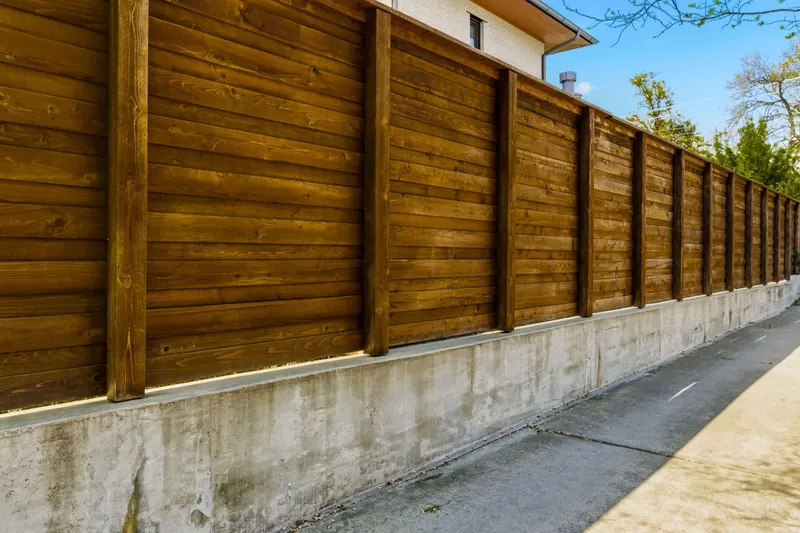
This rule is why the classic pool fence is flat-top ornamental steel: vertical pickets, rails tucked on the inside, nothing on the approach face to grab. It is also why some beautiful fence styles are wrong for pool duty. Horizontal wood designs, decorative lattice, and ornamental patterns with mid-height scrollwork can all create footholds. If your heart is set on a style that conflicts with barrier rules, the usual answer is layering: a compliant barrier close to the pool, and the decorative fence elsewhere on the property.
Remember that the barrier is a layer, not the whole safety plan. Codes describe a minimum, and the families who never have a scare treat the fence as one layer among several: adult eyes on the water, swim lessons early, and door alarms where the house forms part of the enclosure. A fence buys you time and warning, it does not buy supervision.
Gates: self-closing, self-latching, opening outward
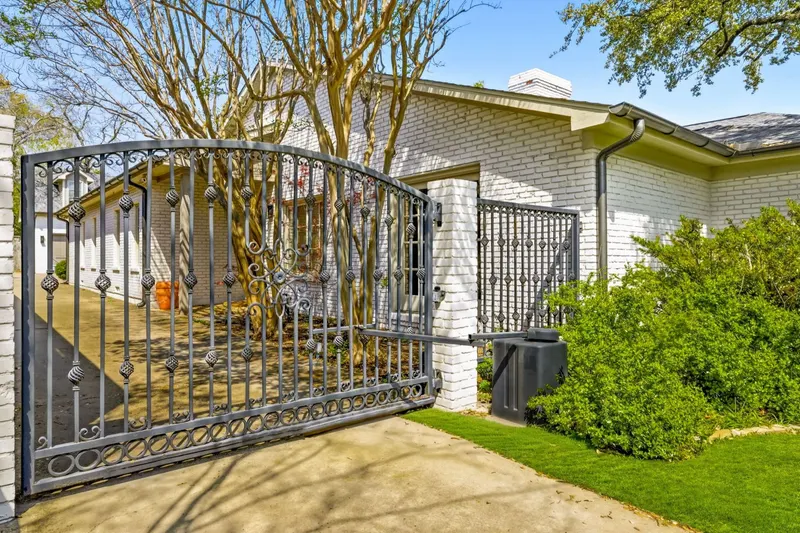
Gates are where inspections are won and lost. Dallas-area codes commonly require pool gates to be self-closing and self-latching, to open outward away from the pool, and to have the latch release mounted high, commonly at least 54 inches above grade, so a small child cannot reach it.
Every element has a job. Self-closing hinges mean a gate left in a hurry still shuts. Outward swing means a child pushing against the gate pushes it closed, not open. The high latch defeats a reaching toddler, and a self-latching mechanism means the gate secures itself without anyone remembering to lock it.
Hardware quality decides whether these features still work in year five. Spring hinges sag and lose tension; cheap latches corrode in a splash zone. We fit magnetic-assist pool latches and adjustable self-closing hinges, both rated for outdoor pool environments, and we adjust closing speed so the gate latches firmly from any open position, the exact test an inspector performs.
- The dropped-open test: Open the gate to any angle and let go. It must swing shut and latch on its own, every time, without a push.
- The reach test: Latch release height is measured from the outside approach; a raised deck or step near the gate can defeat it.
- The lock question: Many owners add a key lock or padlock provision for extended absences, allowed in addition to, never instead of, self-latching.
When the house is part of the barrier
Many Dallas-area yards use the home itself as one side of the pool enclosure. Codes commonly allow this but add requirements to the doors and windows that open into the pool area, typically alarms on doors, or self-closing devices, or other listed safeguards, with the specifics varying more between cities than any other part of pool code.
This is a real design decision, not a footnote. Fencing the pool separately from the house, an interior barrier between the back door and the water, is the more protective layout, especially with toddlers in the house, because it guards the route a child actually takes: out the back door. The full-perimeter approach preserves an open backyard but leans on door hardware and habits. We lay out both options on a site plan so you can see what each costs you in yard space before deciding.
Materials that meet code without looking institutional
Iron-style fencing is popular around Dallas pools for a practical reason: powder-coated ornamental steel meets barrier requirements without blocking sightlines to the water. You can see swimmers from the kitchen window, which is its own layer of safety, and the fence disappears into the landscaping in a way solid fences cannot.
Steel also lives well in a pool environment, galvanized and powder-coated panels shrug off splash and sun, needing only a rinse and occasional inspection where cedar would cup and fasteners would streak. Read our guide on keeping an iron fence rust-free for the maintenance specifics. Glass and mesh removable barriers exist as alternatives, but for a permanent installation with Texas hail and sun, steel remains the durability benchmark.
Whatever the material, compliance is a system: height, gaps, ladder effect and gate hardware all have to pass together. We handle code review, permits and inspection coordination as part of every pool fence quote, including the details inspectors actually check. Call (214) 755-8100 or request a free quote, and we will confirm your city’s current requirements before a single post is set.
How Park Cities Fence & Deck helps
Jack Johnson comes out himself, looks at your property and gives you a free written estimate with a timeline. Wood, iron and masonry are all built in-house, so the advice fits the property. Related services: iron / metal fencing, fence rehab / repair. We work in Dallas and Plano and across Dallas.
Questions people ask next
How tall does a pool fence have to be in Dallas?
Dallas-area codes commonly require at least 48 inches, measured on the outside face from finished grade to the top of the barrier. Some cities require more, and grade changes or objects near the fence can reduce your effective height. Confirm the current figure with your specific city, we do this on every pool project.
What is the 4-inch sphere rule?
A common code test: no opening in the barrier may allow a 4-inch sphere to pass through. It governs picket spacing, gaps under the bottom rail and decorative openings. The under-fence gap fails most often, because clay soil shrinkage and erosion widen it over time.
Do pool gates really have to be self-closing?
Commonly, yes, self-closing and self-latching, opening outward away from the pool, with the latch release mounted high, commonly 54 inches or more above grade. The practical test: open the gate to any position, let go, and it must close and latch on its own.
Can my existing fence count as the pool barrier?
Sometimes. An existing perimeter fence can qualify if it meets the height, gap and climbability rules on the approach side, and every gate in it is upgraded to self-closing, self-latching hardware. We often bring an existing fence into compliance rather than building new, an inspection walk tells us quickly which is smarter.
Do I need a permit for a pool fence?
Most Dallas-area cities require a permit for pool barrier work, and a barrier inspection is part of any new pool project. Rules and processes differ by city. We handle permit drawings, submittals and the 811 utility locate as part of the installation, so the paperwork never lands on you.