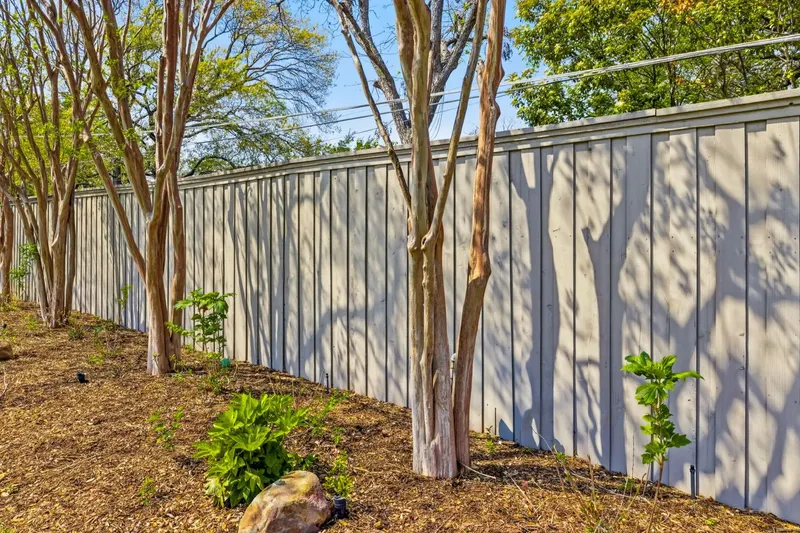
Wood · Dallas, Texas
Horizontal Wood Fences: A Modern Look for Dallas Homes
Clean lines, premium feel, what to know about structure, lumber grade and cost before choosing a horizontal design.
 By Jack Johnson, owner of Park Cities Fence & Deck · 8 min read · 1,616 words
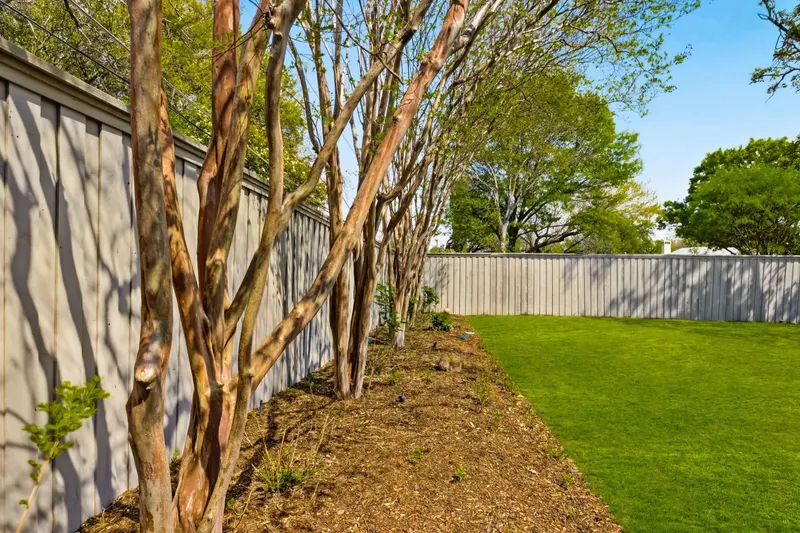
In short
Horizontal cedar fences turn a property line into a design statement, clean modern lines that suit contemporary and transitional homes and make narrow yards feel wider. They demand tighter post spacing and straighter, kiln-dried lumber than vertical fences, so expect a modest premium over vertical cedar, driven by material grade and labor.
In this guide
- Why the horizontal look works
- The structure is different, and it matters
- Lumber grade: the make-or-break detail
- Design variations we build most
- What it costs, honestly (relative to vertical)
- Living with a horizontal fence: aging and upkeep
Need this done? See wood fencing.
Drive the streets near White Rock, the M Streets or new construction in Frisco and you’ll see it: cedar fences with boards running horizontally instead of the traditional vertical picket. The look is clean, architectural and unmistakably current, and it’s the single most requested “modern” upgrade in our wood fencing work across Dallas.
A horizontal fence is not just a vertical fence turned sideways, though. The physics change, the lumber requirements change, and the price follows. Here’s what we tell homeowners before they commit to the look.
Why the horizontal look works
Horizontal lines do something subtle to a property: they draw the eye along the fence rather than up and down it, which makes narrow side yards and small urban lots feel wider than they are. Against the stucco, steel and large glass of contemporary architecture, horizontal cedar reads as intentional design rather than a boundary you had to build.
It flatters transitional homes too. A stained horizontal fence alongside a classic brick facade creates the kind of old-meets-new contrast that architects lean on, which is why we increasingly build the style in established neighborhoods, not just modern builds. Where an HOA or review board governs the street view, check the guidelines early, most Dallas-area associations allow horizontal designs, but some traditional-minded communities in the Park Cities prefer vertical styles on front-facing lines.
The style also photographs and sells well, which matters if a move is anywhere on your horizon. Buyers walking a backyard read a crisp horizontal fence the way they read quartz counters, as a signal the property has been cared for and updated. It’s one of the few fence choices that real estate agents mention unprompted.
The structure is different, and it matters
A vertical fence hangs short pickets on horizontal rails, so each board only spans the distance between rails and gravity pulls along the board’s length. A horizontal fence flips that: every board spans post to post, unsupported in the middle, with gravity pulling across it for its entire length. A board that would be fine in a vertical fence will sag, bow or twist run in a horizontal one.
The fix is tighter post spacing. Where a vertical cedar fence typically runs posts on wide centers, horizontal construction wants posts noticeably closer together, with a mid-span vertical cleat on longer bays to take the bounce out of the boards. More posts means more holes, more concrete and more labor per foot, and it’s the first reason horizontal costs more than vertical.
It’s also where steel posts earn their keep. Horizontal designs are usually chosen for their crisp lines, and nothing ruins crisp lines like a post drifting out of plumb in our expansive clay. Steel posts set in concrete below the clay movement zone keep every course dead level for the life of the fence.
Lumber grade: the make-or-break detail
On a vertical fence, a slightly bowed picket disappears into the crowd. On a horizontal fence, every board is a visible line running the full bay, and a warped one announces itself from across the yard. Material quality matters more here than in any other wood fence style we build.
That means kiln-dried cedar is effectively mandatory, not optional. Green lumber shrinks and twists as Texas heat pulls the moisture out, and on a horizontal fence that movement shows up as wavy courses and opened joints within the first summer. Kiln-dried boards have already done their moving. On top of drying, we select for straighter, cleaner grades, tighter grain, fewer loose knots, because the style puts every face on display.
Board choice is also a design decision. Wide boards read bold and contemporary; narrow boards read refined and Japanese-influenced; mixed widths add rhythm. Small, consistent gaps between courses give a semi-private slat look that’s popular for courtyards, while tight boards deliver full privacy.
Fasteners follow the same logic as the lumber: everything shows. We use galvanized fasteners in clean, consistent lines, because a rust streak that would hide on a busy vertical fence runs like a scar across a horizontal face. Some clients opt for hidden-fastener details on feature walls, where the extra labor buys a completely uninterrupted surface.
Design variations we build most
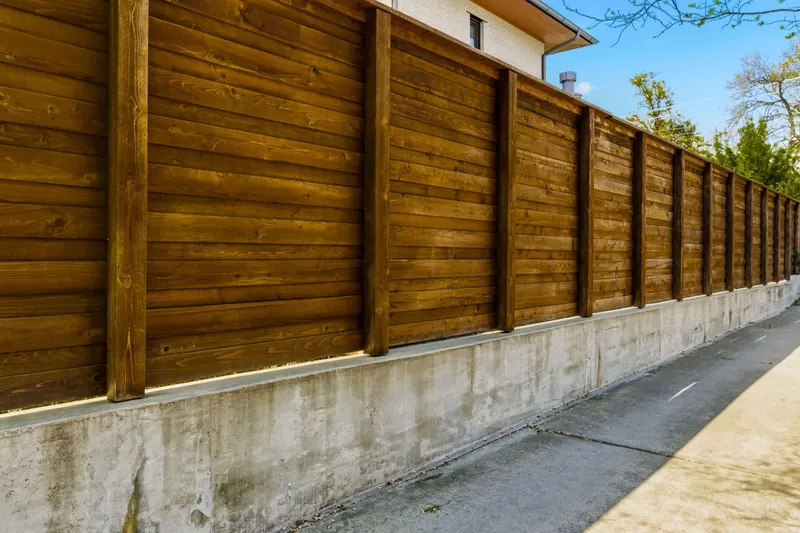
Within the horizontal family, a few directions come up again and again in our Dallas work. Each changes the character of the fence more than you’d expect from photos, so it’s worth seeing samples before committing.
- Full-privacy horizontal: Boards tight together, usually with a flat cap. The modern equivalent of board-on-board for clients who want zero sightline and clean geometry.
- Slat-gap horizontal: A small uniform gap between courses. Lets light and breeze through, excellent for courtyards, pool surrounds and front-yard accent runs where total privacy isn’t required.
- Horizontal with steel frame: Cedar infill inside a powder-coated steel frame. Sharpens the modern look and adds rigidity; pairs naturally with our iron and metal work.
- Mixed with masonry: Horizontal cedar panels between brick or stone columns, a favorite for street-facing runs where a full masonry wall would be heavy. See our masonry fencing for how the columns are footed.
What it costs, honestly (relative to vertical)
Expect a modest premium over an equivalent vertical cedar fence, not a different universe, but a real difference. It comes from three places: tighter post spacing (more posts and concrete per foot), higher lumber grade (kiln-dried, straighter stock, more culling), and slower, more exacting labor, because every course must land level and every joint is visible.
Where the money is well spent: posts, lumber grade and stain. Where clients sometimes overspend: exotic board patterns that read busy from the street. As with all our work, the numbers themselves live in a written quote, free, usually within 24 hours, where we can price your actual line, grade changes and gates rather than a hypothetical. The cost drivers are unpacked further in our cedar cost factors guide.
A budget-friendly middle path many clients take: horizontal construction only where it’s seen. A street-facing or patio-facing horizontal run paired with standard vertical cedar along alleys and hidden side yards captures the design impact for a fraction of the whole-property premium, and a shared stain color makes the transition read as intentional.
Living with a horizontal fence: aging and upkeep
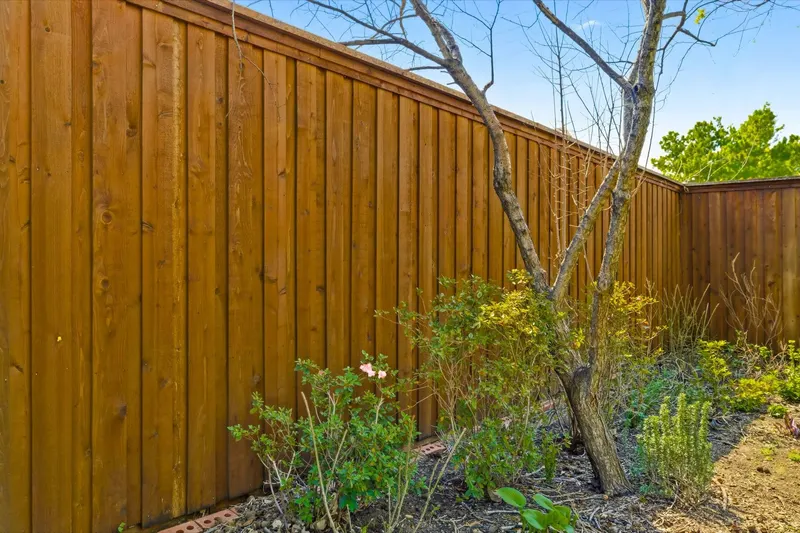
Horizontal cedar ages the same way all cedar does in North Texas, UV grays it, moisture follows, but the style is less forgiving of neglect, because weathering shows unevenly across those long visible faces. Plan on the standard stain cycle every 3–4 years, and consider a slightly more pigmented stain than you would on a vertical fence; it keeps the courses uniform as they weather.
One structural habit worth adopting: once a year, sight down the fence from one end. Any board starting to bow or cup will show immediately from that angle, and swapping a single board early is trivial compared to living with a wave in the line. Built on steel posts, stained on schedule and given that annual glance, a horizontal cedar fence lasts the same 15–20 years as its vertical cousins, and looks better doing it. If the style fits your home, we’d be glad to walk the line with you and show samples of board widths and stains on site.
How Park Cities Fence & Deck helps
Jack Johnson comes out himself, looks at your property and gives you a free written estimate with a timeline. Wood, iron and masonry are all built in-house, so the advice fits the property. Related services: wood fencing, iron / metal fencing. We work in Dallas and Frisco and across Dallas.
Questions people ask next
Do horizontal fences sag over time?
Badly built ones do, it’s the style’s signature failure. Boards span post to post, so wide post spacing and wet lumber guarantee sag and twist. Tighter post centers, a mid-span cleat on longer bays, and kiln-dried, straight-grade cedar prevent it. Built that way, the courses stay level for the life of the fence.
How much more does horizontal cost than vertical?
A modest premium, driven by more posts per foot, higher lumber grade and slower labor rather than any exotic material. The exact difference depends on height, length, gaps versus full privacy, and gates, so we price it in a free written quote, usually back to you within 24 hours.
Is a horizontal fence good for privacy?
It can be either. Tight-boarded horizontal construction gives full privacy comparable to board-on-board, while slat-gap designs deliberately pass light and air for a more open feel. Many clients mix the two, full privacy around patios and pools, slat gaps on front-facing accent runs.
Will an HOA approve a horizontal fence?
Usually, but confirm before you fall in love with the design. Most Dallas-area HOAs allow horizontal styles, though some traditional communities restrict them on street-facing lines or specify stain colors. We prepare HOA drawings and handle the submission as part of every installation, so approval happens before build day.
What wood is best for a horizontal fence in Texas?
Kiln-dried cedar in a straight, tight-grained grade. Cedar’s natural oils resist rot and insects, and kiln drying removes the moisture that would otherwise twist long horizontal boards in their first Texas summer. Combined with steel posts and a 3–4 year stain cycle, it’s a 15–20 year fence.
How long does a horizontal fence take to build?
Comparable to other quality cedar fences, most are built in one to three days once materials are on site. The extra time goes into layout and leveling rather than raw footage, since every course must land dead level between posts. Gates and steel-frame details can add a day on larger projects.