Wood · Dallas, Texas
What Is the Most Elegant Privacy Fence for a Preston Hollow Estate?
Capped board-on-board cedar, often between masonry columns, is the answer for most estates. Why, and when it is not.
 By Jack Johnson, owner of Park Cities Fence & Deck · 9 min read · 1,713 words
In short
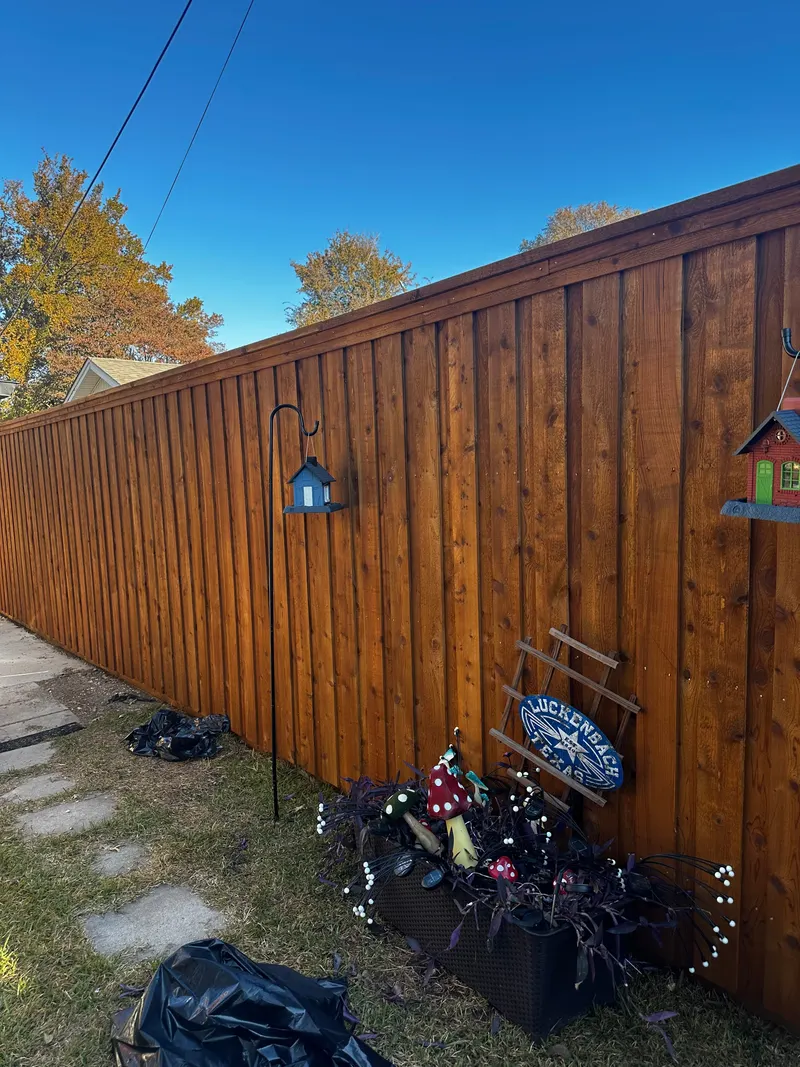
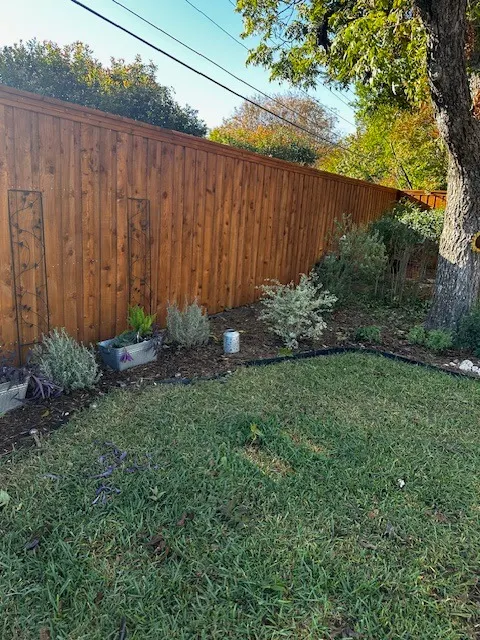
For most Preston Hollow estates, the most elegant privacy fence is a capped board-on-board Western Red Cedar fence with trim, stained a warm tone, often set between brick or stone columns that match the house. It gives complete privacy, looks finished from both sides and sits comfortably beside traditional and modern architecture.
In this guide
- What makes a privacy fence look elegant instead of merely tall?
- Why is capped board-on-board cedar the usual answer?
- What are the alternatives, and when do they suit better?
- Should the fence include brick or stone columns?
- How tall should an estate privacy fence be?
- How do color and finish change the result?
- What about gates, lighting and the trees along the line?
- How do you get from an idea to a finished fence?
Need this done? See wood fencing.
Privacy is easy to build. Any solid fence blocks a view. Elegance is harder, because a tall solid surface running hundreds of feet along an estate lot can look like a barricade if it is not detailed with care.
The fences that work in Preston Hollow share a few traits: honest materials, a strong top line, rhythm along the length, and a finish that suits the house. Below is how we think through the choice with an owner, what the options are, and when cedar is not the right answer. For a wider survey, see the best fence styles for Park Cities and Preston Hollow estates.
What makes a privacy fence look elegant instead of merely tall?
Four things. The first is proportion. A fence should relate to the house and the lot, with height where privacy is needed and restraint where it is not. The second is a finished top. A cap and trim board give the fence a deliberate edge, the way crown molding finishes a room. A raw row of picket tops reads as unfinished.
The third is rhythm. A long run needs something to break it into bays: expressed posts, masonry columns or a change in plane. The fourth is the back. On an estate, both sides of the fence are seen, by you from the garden and by a neighbor or the street from outside. A fence with a good face and an ugly back is half a fence. Jack Johnson built custom homes in this neighborhood before he built fences, and these are the same rules that govern good millwork.
Why is capped board-on-board cedar the usual answer?
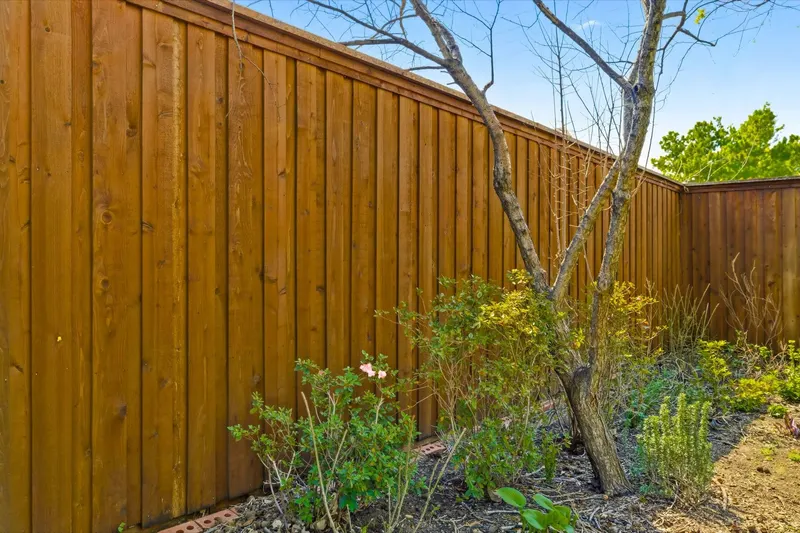
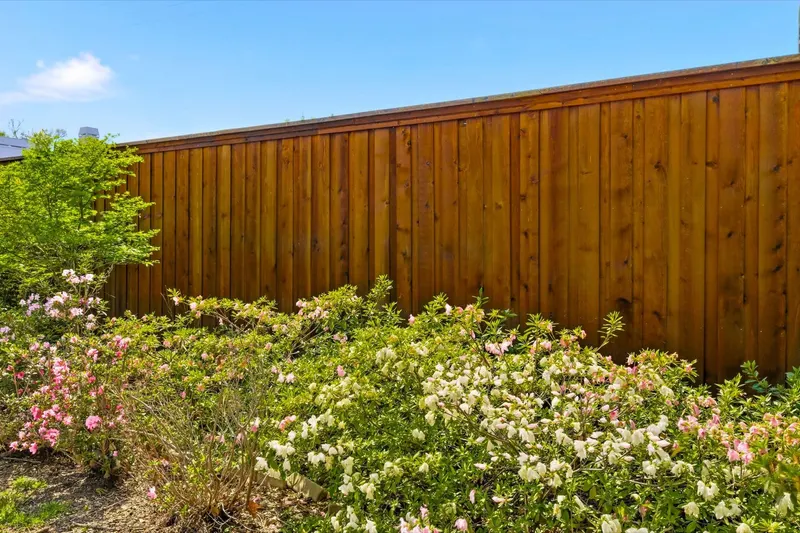
Board-on-board construction overlaps the pickets, so no gaps open as the wood dries and you get full privacy through every season. The overlap also creates a shadow line at each board, which gives the surface depth and texture instead of a flat wall. Add a cap, a top trim board and often a base board, and the fence looks like joinery. We compare the two main constructions in board-on-board vs. side-by-side cedar.
Western Red Cedar is the species we recommend most for this. The Western Red Cedar Lumber Association describes it as naturally resistant to rot, decay and insect attack, and notes that because the wood is free of pitch and resin it accepts and holds a wide range of finishes. In plain terms, it lasts outdoors and it takes stain beautifully. Our wood fencing uses kiln-dried cedar on posts set in concrete, with steel post options that keep the line straight in clay soil.
What are the alternatives, and when do they suit better?
Cedar is not the only refined choice. A horizontal board fence suits a modern house. Board-and-batten gives a more architectural, paneled look. A solid masonry wall is the most permanent and the quietest. A combination wall, with masonry below and wood or iron above, offers privacy with less visual weight. Redwood is an alternative species with a deeper natural color.
Hardwoods and composites have a place too, and we compare them in cedar, hardwood and composite for a premium privacy fence. The table gives a quick read on the main styles.
Privacy fence styles for an estate lot
| Style | Best suited to | What to know |
|---|---|---|
| Capped board-on-board cedar | Traditional, transitional and most estate homes | Full privacy, finished on both sides, needs restaining every few years |
| Horizontal cedar | Modern and mid-century architecture | Clean lines, needs careful framing to stay flat |
| Board-and-batten | Farmhouse, Tudor and craftsman influences | Strong vertical rhythm, solid and substantial |
| Cedar between masonry columns | Long street or alley runs on large lots | Columns add permanence and need engineered footings |
| Solid brick or stone wall | Road frontage and maximum sound control | Most permanent, longest to design and build |
| Iron with layered planting | Lots where openness and views matter | Privacy comes from the landscape and takes time to grow in |
What this means for you: If you want full privacy on day one with the warmest look, capped cedar is the starting point, and columns are what turn it into an estate fence.
Should the fence include brick or stone columns?
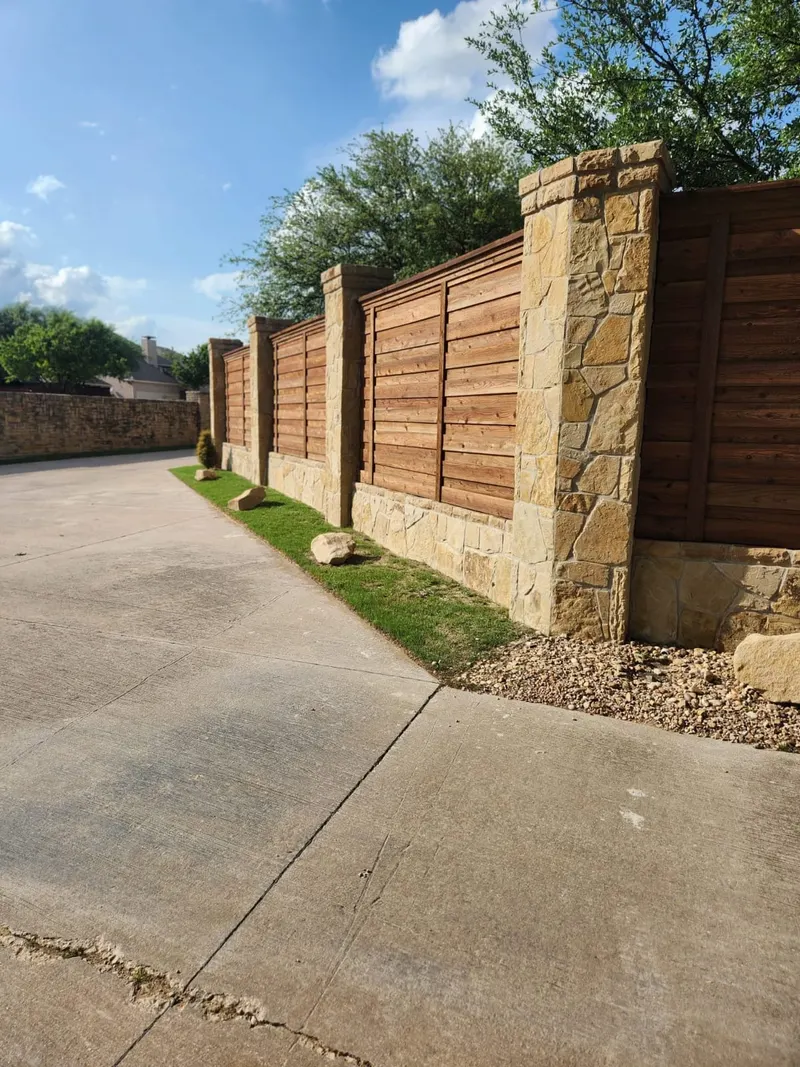
On a large lot, usually yes, at least on the runs people see. Columns break a long fence into bays, tie the fence to the house by repeating its brick or stone, and give gates something solid to hang from. They also outlast the wood between them, so when the cedar is eventually replaced the structure of the fence remains.
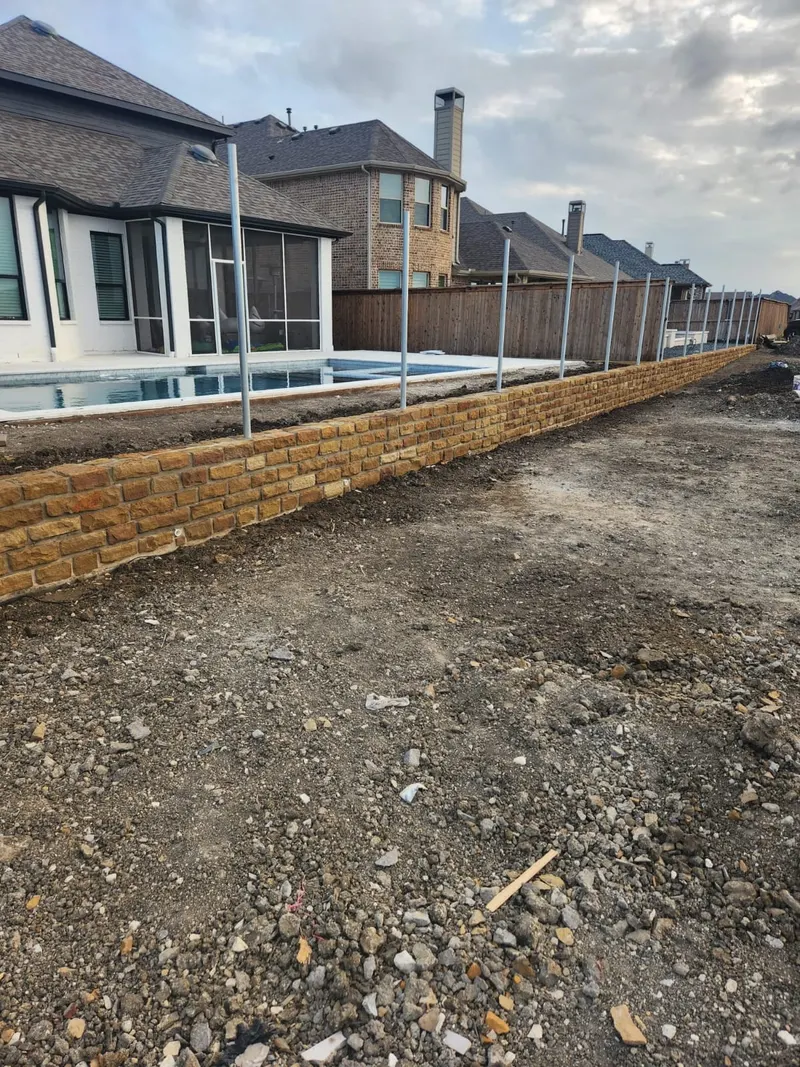
Columns are real construction. Each one needs a reinforced footing sized for North Texas clay, and the masonry has to match the house closely or it will look like an addition. Our masonry fencing crews build the columns and the cedar infill as one project. Read matching brick and limestone fence columns to your home and why masonry columns elevate any fence line for the details.
How tall should an estate privacy fence be?
Tall enough to block the sightline that bothers you, and no taller. Stand where you sit on the terrace and look at what you want to hide. A second-story window next door will not be screened by any legal fence, and trees do that job better. A neighboring patio or an alley usually is.
Preston Hollow is in the City of Dallas. The city’s fence permit checklist says a permit is required for fences over six feet outside the front yard and that the maximum allowable fence height is nine feet. In the required front yard of a single-family lot, Dallas code limits a fence to four feet, and solid panels must sit at least five feet back from the front lot line. Deed restrictions can be tighter. We confirm the rule for your address before designing, and front-yard fence height in Preston Hollow explains the front-yard side.
How do color and finish change the result?
Stain is where an elegant fence is won or lost. Left alone, cedar weathers to gray, unevenly, with darker streaks where sprinklers hit. A quality penetrating stain evens the color, protects against sun and water, and lets you tune the fence to the house: a warm natural cedar tone beside red brick, a deeper brown beside limestone, a dark charcoal behind a modern home so the planting stands out.
Plan to restain every few years, typically two to four depending on sun exposure. South and west faces fade first. Our power wash and restain service brings a fence back before the wood is damaged, and the cedar fence stain guide covers color choice and timing.
Hardware is part of the finish too. Galvanized fasteners do not leave black streaks down the boards the way plain steel nails do, and hinges and latches in a dark, matte finish disappear into a stained fence instead of shining against it. These are small line items on an estimate, and they are the difference between a fence that looks good in its first month and one that still looks good after several Texas summers.
What about gates, lighting and the trees along the line?
A privacy fence is judged at its gates. A walk gate built as a flat panel of pickets looks like a service door. A gate with a framed face, an arched top, a timber header or decorative hardware looks like an entrance. Where the fence meets the driveway, an automatic gate in matching cedar on a steel frame keeps the line continuous.
Low-voltage lighting on columns or washing down the fence face adds depth at night, and it is far easier to run conduit during the build than after. See fence, gate and column lighting. Mature trees deserve the same forethought. Many Preston Hollow lots have large oaks on the property line, and post locations may need to shift to protect roots, as we describe in building a fence near mature trees.
How do you get from an idea to a finished fence?
Start with photographs of your house and of fences you like, and a copy of your survey. At the consultation, Jack walks the property with you, looks at the architecture, the grades, the trees and the views, and talks through style, height, columns, gates and stain. You receive a free written estimate that specifies the materials and construction.
Jack is on site for the build and does the final walkthrough himself. You can see finished cedar, masonry and gate work in our gallery. When you are ready, request a free written estimate or call (214) 755-8100.
How Park Cities Fence & Deck helps
Jack Johnson comes out himself, looks at your property and gives you a free written estimate with a timeline. Wood, iron and masonry are all built in-house, so the advice fits the property. Related services: wood fencing, masonry fencing, powerwash & restain. We work in Preston Hollow and Dallas and across Dallas.
Questions people ask next
Is board-on-board cedar really private?
Yes. The pickets overlap, so when the boards shrink slightly as they dry, no gaps open between them. A side-by-side fence can show slivers of daylight after its first summer. Board-on-board stays visually solid from every angle, which is why it is the standard for privacy on estate lots.
How long does a cedar privacy fence last in North Texas?
A well-built cedar fence typically lasts 15 to 20 years in North Texas, and good stain maintenance, sound posts and proper drainage at the base push it toward the long end. Steel posts and masonry columns usually outlast the pickets, so the wood can be replaced later without rebuilding the structure.
Is a masonry wall more elegant than a cedar fence?
It is more permanent and more formal, not automatically more elegant. A long solid wall can feel heavy on a residential lot. Many owners prefer masonry columns with cedar between them, which gives the permanence and material match of masonry with the warmth of wood.
Can a privacy fence reduce road noise?
A solid, gap-free fence can soften noise, and mass matters, so masonry does more than wood. No residential fence makes a busy road silent. If traffic noise is your main concern, read our guide to fences for traffic noise in Dallas and tell us at the consultation so the design accounts for it.
Do you build custom gates to match the fence?
Yes. We build walk gates and driveway gates to match the fence, including arched cedar gates with timber headers, and we install swing and slide driveway gates with motors, keypads, remotes and safety sensors. The gate is designed with the fence so the two read as one piece of work.
Sources and further reading
- Western Red Cedar Lumber Association: Why Real Cedar
- City of Dallas Planning & Development: Fence Permit Checklist
- City of Dallas Ordinance No. 30198, amending Section 51A-4.602 (fence standards)
General information, not legal advice. Rules change: we confirm the current requirements with your city or HOA before we build.