Wood · Dallas, Texas
Board-on-Board vs. Side-by-Side: Which Cedar Fence Is Right for You?
The two most popular cedar fence styles in Dallas compared, privacy, cost, curb appeal and how each ages.
 By Jack Johnson, owner of Park Cities Fence & Deck · 8 min read · 1,702 words
In short
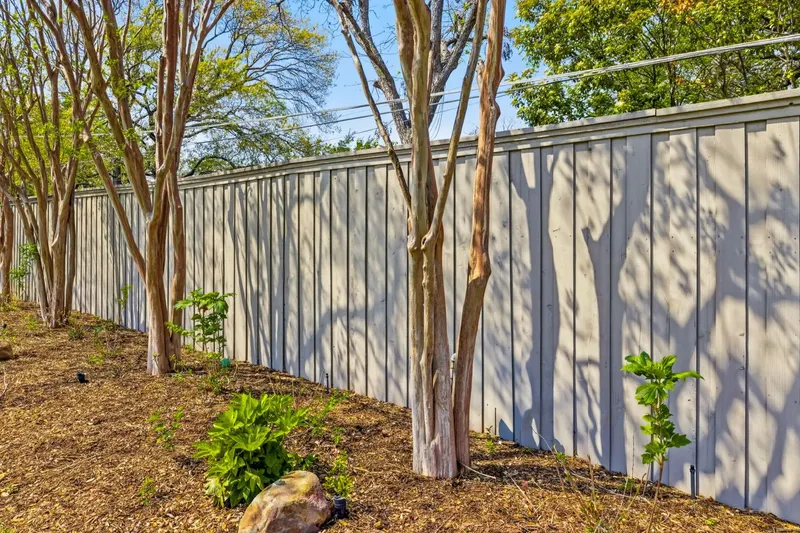
Board-on-board fences overlap each picket, so no gaps appear as cedar dries and shrinks, you keep full privacy for the life of the fence. Side-by-side costs less up front, but small gaps typically open within the first year. Choose side-by-side for budget backyards, board-on-board wherever the fence is part of your home’s street presence.
In this guide
- How the two styles are built
- The privacy question: what happens when cedar dries
- Cost: what you’re actually paying for
- Curb appeal and what Park Cities streets expect
- Durability: is one tougher than the other?
- How to choose: our honest rule of thumb
- What a quote should spell out
Need this done? See wood fencing.
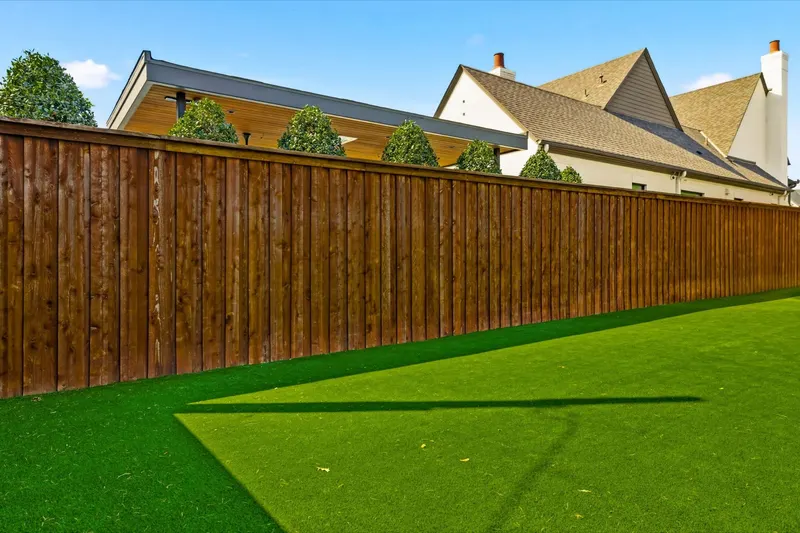
Ask a Dallas fence builder for a cedar privacy fence and you’ll be choosing between two constructions: side-by-side, where pickets butt against each other in a single flat plane, and board-on-board, where each picket overlaps its neighbor by an inch or more. From the curb they can look similar on day one. A year later, they don’t.
The difference comes down to how cedar behaves in North Texas weather, and how much that matters for your particular fence line. Here is the honest comparison we walk homeowners through every week, from University Park front yards to Plano backyards.
How the two styles are built
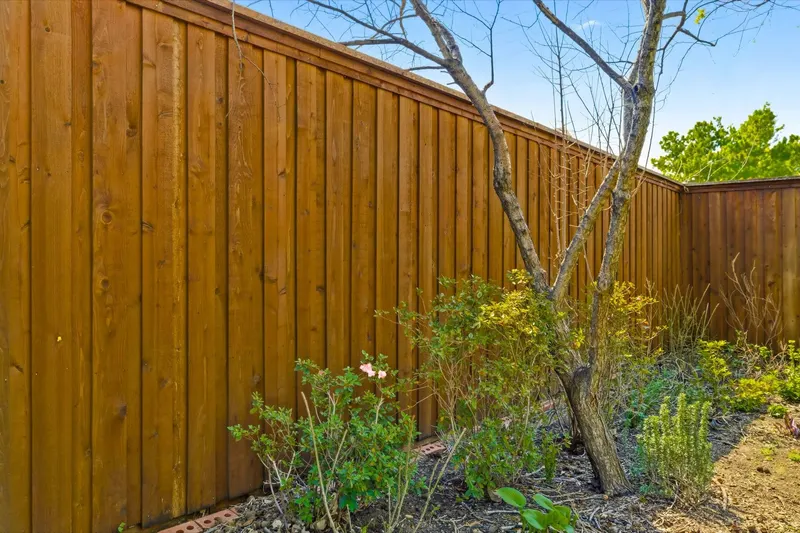
A side-by-side fence (sometimes called stockade or standard privacy) sets pickets edge to edge across two or three horizontal rails. It uses the fewest boards per foot, goes up fast, and it’s the construction most production builders default to. Done well, straight rails, posts set in concrete, galvanized fasteners, it’s a perfectly serviceable fence.
Board-on-board staggers pickets on alternating faces of the rails, or overlaps them on the same face, so every joint is covered by wood. Add a top cap and trim board and you get what most people picture when they think of a premium cedar fence: a finished, framed panel that reads as architecture rather than utility. It uses noticeably more lumber per foot, and the labor is more exacting.
The privacy question: what happens when cedar dries
Cedar leaves the mill with moisture in it, and North Texas takes that moisture out fast. Triple-digit summers and hard sun pull water from the boards, and as they dry, they shrink across their width. On a side-by-side fence, pickets that touched at installation typically open gaps within the first year, often enough to see movement, pets and neighbors through.
Board-on-board is engineered around that shrinkage. Because each picket overlaps the next, the boards can shrink their full expected amount and the fence still shows solid wood from every angle. That’s not a sales line; it’s the reason the style exists. If total, permanent privacy is the goal, pool areas, patios, close-set homes, board-on-board is the only wood construction that actually delivers it long term.
One nuance worth knowing: kiln-dried cedar shrinks far less after installation than green lumber, because most of the moisture is already gone. We build with kiln-dried stock for exactly this reason. It narrows the gap problem on side-by-side fences, but it doesn’t eliminate it, wood keeps responding to Texas humidity swings forever.
Cost: what you’re actually paying for
Board-on-board costs more than side-by-side, full stop, more pickets per foot, more fasteners, more labor, and usually a cap-and-trim package on top. How much more depends on height, length and the finish details you choose, which is why we give exact numbers only in a written quote rather than a blog post.
The better way to think about it: side-by-side is the least expensive way to get a solid cedar fence, and board-on-board is a modest step up that permanently solves the gap problem and upgrades the look. Spread over the 15–20 years a well-built cedar fence lasts here, the difference per year is small. Most of our clients who start out undecided end up choosing board-on-board for any run they can see from the house or street, and we think that instinct is right.
Curb appeal and what Park Cities streets expect
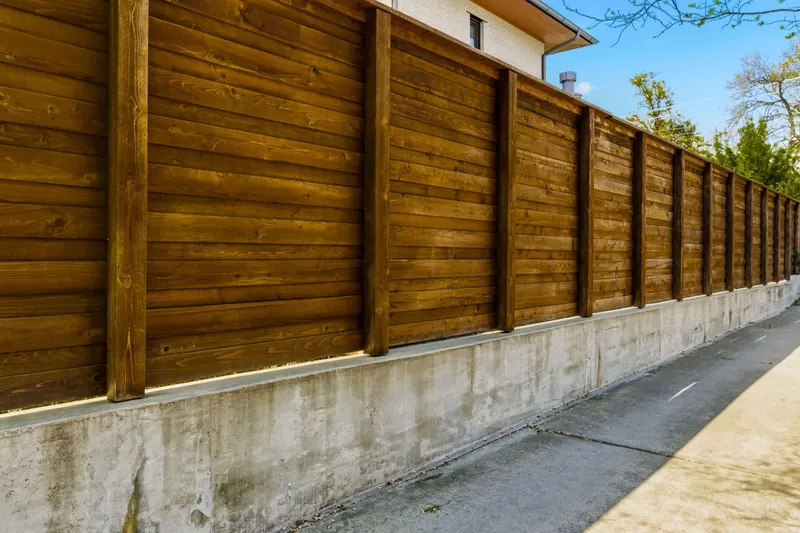
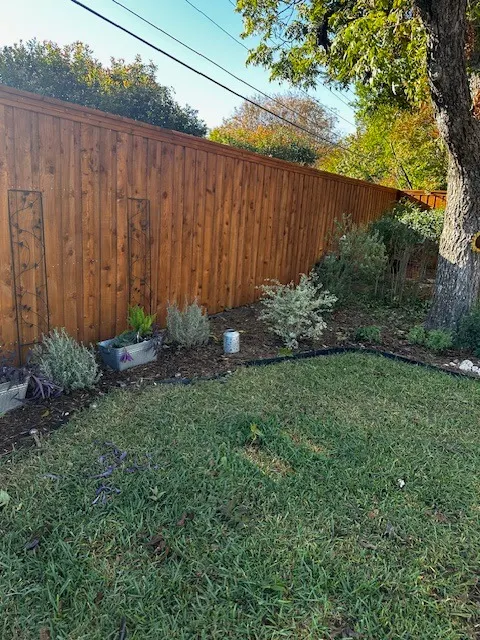
In Highland Park and University Park, board-on-board with a top cap and trim is by far the most requested style we build, to the point that a plain side-by-side fence on a visible line can read as unfinished next to the neighbors. Many HOAs and architectural review boards in the area either require cap-and-trim construction on street-facing runs or strongly prefer it in practice.
The cap does more than look good. It sheds water off the vulnerable end grain of the pickets, the part of the board that drinks moisture fastest, and the trim board stiffens the top of the panel against warping. Stained, the whole assembly pairs beautifully with brick and landscaping, which is why it anchors so many estate fence lines, often between masonry columns.
Durability: is one tougher than the other?
Structurally, the two styles live or die on the same fundamentals: posts set in concrete below the clay movement zone, straight rails, and fasteners that don’t rust out. A board-on-board panel is somewhat heavier and slightly stiffer, and the overlapped pickets brace each other against cupping. The cap-and-trim frame protects end grain. Those are real, if incremental, advantages.
What matters more in DFW is wind. Spring storms push hard on any solid privacy fence, and the panel style matters less than what’s holding it up. This is why we talk to nearly every client about steel posts: they don’t rot at the soil line the way wood posts eventually do, and they hold a heavy board-on-board panel plumb through the kind of gusts that lay over aging fences across the Metroplex every April. If you’re investing in the premium panel, put it on posts that will outlive it.
Maintenance is identical for both styles: a quality stain every 3–4 years to block UV and shed moisture. One small practical difference, the overlapped joints of board-on-board take slightly more care to coat thoroughly, since stain has to reach the shadowed edge of each picket. Either way, a maintained fence of either construction reaches the 15–20 years cedar allows in our climate; the full aging story is in our cedar lifespan guide.
How to choose: our honest rule of thumb
After years of building both across Dallas, our advice is simple: choose side-by-side for budget-driven backyards and shared lines, and board-on-board wherever the fence is part of your home’s street presence or where privacy genuinely matters. Plenty of properties sensibly use both, premium construction on the visible runs, standard construction along the alley.
- Choose side-by-side when: the fence is a background boundary, alley lines, side yards behind a gate, shared rear fences split with a neighbor, and up-front cost is the priority.
- Choose board-on-board when: the fence faces the street, frames a pool or patio, or privacy has to survive the wood’s natural shrinkage. Add cap and trim for the full architectural look.
- Either way, insist on: posts set in concrete (steel where the budget allows), galvanized fasteners, and kiln-dried cedar. Construction quality decides lifespan more than panel style does.
- Check your HOA first: many Park Cities and North Dallas associations specify style, height and stain color. We handle HOA drawings as part of every wood fence installation.
What a quote should spell out
Whichever style you land on, a professional bid should name the construction explicitly, picket size and overlap, rail count, post material and spacing, concrete depth, fastener type, and whether cap and trim are included. Vague line items like “cedar privacy fence” are how a board-on-board price gets compared to a side-by-side price without anyone noticing.
One comparison trap worth naming: a side-by-side bid with premium extras can land near a bare-bones board-on-board bid, and homeowners understandably freeze. Our advice is to fix the structure first, posts, fasteners, lumber grade, and then let the remaining budget pick the panel style. A well-built side-by-side fence beats a poorly built board-on-board fence every time, in both lifespan and looks.
If you’re weighing the two styles for your own property, we’re glad to look at the line with you, talk through sightlines and HOA rules, and price both options in writing. Quotes are free and usually back to you within 24 hours, and most wood fences are built in one to three days, so the distance between deciding and enjoying the finished fence is shorter than most people expect.
How Park Cities Fence & Deck helps
Jack Johnson comes out himself, looks at your property and gives you a free written estimate with a timeline. Wood, iron and masonry are all built in-house, so the advice fits the property. Related services: wood fencing, masonry fencing. We work in University Park and Highland Park and across Dallas.
Questions people ask next
What is cap and trim, and is it worth adding?
A cap is a flat board running along the top of the fence; trim is a facing board just beneath it. Together they frame the panel, stiffen the top edge and shed water off the pickets’ end grain, the fastest place wood absorbs moisture. On visible runs, most Park Cities clients consider it essential.
Does board-on-board really stay gap-free forever?
Yes, that’s the point of the overlap. Each picket covers its neighbor by an inch or more, which is greater than the width cedar loses as it dries. Boards still shrink and move with the seasons, but solid wood always faces the viewer. Side-by-side construction has no such reserve, so drying opens visible gaps.
Is side-by-side a bad fence?
Not at all. Built properly, concrete-set posts, straight rails, galvanized fasteners, kiln-dried pickets, it’s a solid, good-looking fence and the most economical way to enclose a yard in cedar. Its one honest limitation is that small gaps appear as the wood dries, so it’s best where total privacy isn’t critical.
How much more does board-on-board cost?
It’s a modest premium over side-by-side rather than a different category of purchase, more pickets, more labor, and usually cap and trim. The exact difference depends on height, length and finish details, so we price both constructions in a free written quote, typically within 24 hours.
Which style handles Texas storms better?
Panel style matters less than structure. Both styles survive DFW wind when posts are set in concrete below the clay movement zone; both fail when posts rot or heave. Board-on-board’s overlapped pickets and cap add some stiffness, and steel posts are the single best storm upgrade for either style.
Can we mix styles on one property?
Yes, and it’s often the smart play. Many of our Dallas clients run board-on-board with cap and trim on street-facing and pool-side sections, then standard side-by-side along alleys and shared rear lines. The stain color ties everything together, and the budget goes where the fence is actually seen.