Cost & Hiring · Dallas, Texas
What Is the Cheapest Fence That Still Lasts in North Texas: Wood, Vinyl, Chain Link or Metal?
Chain link is cheapest to install, but the cheapest fence to own depends on privacy, upkeep and how long you stay.
 By Jack Johnson, owner of Park Cities Fence & Deck · 9 min read · 1,744 words
In short
Chain link is the cheapest fence to install in North Texas and lasts for decades, but it gives no privacy. For a privacy fence, pressure-treated pine costs least up front and cedar on steel posts costs least per year of service. Powder-coated metal costs more to buy and the least to maintain.
In this guide
- Which fence costs least to install, and which costs least to own?
- Is a vinyl fence better than a wood fence in Texas heat?
- Is chain link cheaper than wood, and where does it make sense?
- Does vinyl fencing warp, crack or yellow in the Texas sun?
- What is the lowest-maintenance fence for a Texas home?
- Which fence material is the best long-term value?
- Is a corrugated metal or steel panel fence a good budget option?
Need this done? See wood fencing.
There are two different questions hiding in “cheapest.” One is the lowest bill this month. The other is the lowest cost over the years you will own the fence. They rarely have the same answer, and the second one matters more.
First, a plain statement so you know where we stand. Park Cities Fence & Deck builds wood, iron, ornamental steel, aluminum and masonry fences. We do not build vinyl or chain link. We compare them honestly below, and if one of them is the right fence for your yard, we will say so and you should hire a company that specializes in it. We do not publish prices; the number for your lot comes from a free written estimate.
Which fence costs least to install, and which costs least to own?
By installed price, the usual order from lowest to highest is chain link, pressure-treated pine, cedar, vinyl and composite, ornamental metal, then masonry. By cost of ownership, the order changes, because some materials need regular upkeep and others need almost none.
Three things decide the long-run number: how many years the fence lasts, what it costs to maintain, and whether it does the job you bought it for. A fence that is cheap but gives no privacy is not a bargain if privacy was the point. Our guide to what to budget for a fence in Dallas walks through the cost drivers without the sales talk.
One rule holds across every material: the posts decide the lifespan. A modest fence on properly set steel posts outlasts an expensive one on shallow wood posts.
Is a vinyl fence better than a wood fence in Texas heat?
Vinyl is lower maintenance than wood, not better in every way. It never needs stain and does not rot, but it costs more up front, is harder to repair and looks like what it is.
Vinyl’s case is simple: wash it and leave it. For a homeowner who will never stain a fence, that is a real advantage. Wood’s case is appearance, flexibility and repair. Cedar can be built to any height and style the city allows, stepped to follow a slope, matched to the house, and fixed one board at a time. A cracked vinyl panel usually means finding the same profile from the same manufacturer.
In established Dallas neighborhoods, wood and metal are the expected materials, and some HOAs restrict vinyl. Check your deed restrictions before pricing it; our guide to HOA and deed restrictions on fence design explains what to look for. We do not install vinyl. Where low upkeep is the goal, the fence we build instead is powder-coated iron, steel or aluminum.
Is chain link cheaper than wood, and where does it make sense?
Yes. Chain link is generally the least expensive fence to install, and galvanized steel lasts a long time. It makes sense where the job is containment or security and looks and privacy do not matter.
The American Galvanizers Association says hot-dip galvanized steel provides maintenance-free service for decades, because the zinc coating corrodes far more slowly than bare steel. That is why chain link is the standard for dog runs, back lots, sports fields, commercial yards and temporary enclosures. Vinyl-coated mesh in black or green looks better and adds another layer of protection.
Its limits are just as clear. It gives no privacy, privacy slats look tired quickly and catch wind, and many cities and HOAs restrict it at residential street fronts. We do not build chain link. For a see-through fence at a home, we build ornamental iron, steel or aluminum, which costs more and looks far better. For commercial sites, see our guide to HOA and commercial perimeter fencing.
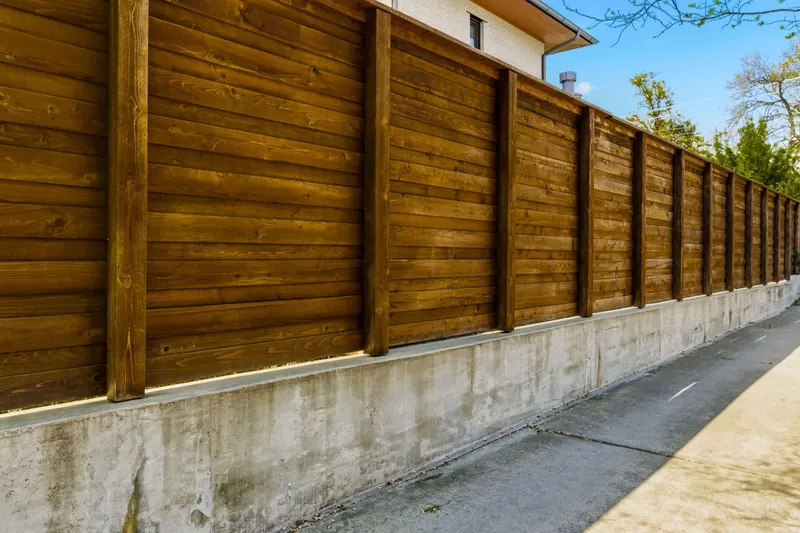
Does vinyl fencing warp, crack or yellow in the Texas sun?
It can, and how much depends on the grade of the product. Thin, low-cost vinyl is the kind that sags between posts, turns chalky and cracks on impact. Heavier profiles with good sun protection hold up much better.
Vinyl is a plastic, so it expands in heat and contracts in cold. A well-designed system leaves room in the rails for that movement; a poorly installed one bows. Sun protection comes from additives in the material, and manufacturers differ, so the warranty wording on fading and discoloration is the thing to read. Dark colors absorb more heat than white.
Impact is the other weakness. A mower, a fallen limb or hail can crack a panel, and vinyl gets more brittle with age. We do not sell or install it, so treat this as general guidance and ask a vinyl specialist for the manufacturer’s written specifications. If storms are your main worry, read wind and hail resistant fences for North Texas.
What is the lowest-maintenance fence for a Texas home?
Masonry and powder-coated metal need the least care. A brick or stone wall wants little more than an occasional wash, and a powder-coated steel or aluminum fence needs a rinse and a look at the finish once a year.
Aluminum does not rust, which makes it the easiest of the metals to own, especially around pools and sprinklers. Steel and iron are stronger and need their coating kept intact; our guide to keeping an iron fence rust-free covers the routine. Vinyl and composite are also low maintenance. One composite manufacturer, Trex, states that its fencing never needs painting or staining and cleans with soap and water.
Wood asks the most. A cedar fence should be stained every two to four years to reach its full life. That is a real cost in time or money, and you should count it. In return you get privacy and warmth that the low-maintenance materials do not match.
- Least upkeep: Masonry walls and aluminum fencing.
- Low upkeep: Powder-coated steel and iron, vinyl, composite, galvanized chain link.
- Regular upkeep: Cedar, redwood and pressure-treated pine: wash and stain on schedule.
Which fence material is the best long-term value?
For privacy, cedar on steel posts is the best value in North Texas: a moderate price, 15 to 20 years of service with care, and a fence that can be repaired board by board. For an open fence, powder-coated steel or aluminum wins, because it costs more once and then very little.
The table compares the common choices without numbers. For the wood decision in detail, see cedar, pine and redwood compared for Texas. Brick and stone cost the most and last the longest; our masonry fencing page covers when a wall or columns are worth it.
Fence materials compared for North Texas: cost to install, upkeep and privacy
| Material | Cost to install | Upkeep | Do we build it? |
|---|---|---|---|
| Galvanized chain link | Lowest | Very low; no privacy | No |
| Pressure-treated pine | Low | Stain on schedule; moves more than cedar | Yes |
| Western Red Cedar | Moderate | Stain every two to four years | Yes |
| Vinyl or composite | Moderate to high | Low; harder to repair | No |
| Powder-coated iron, steel, aluminum | Higher | Low; no privacy without infill | Yes |
| Brick or stone | Highest | Lowest | Yes |
What this means for you: Relative positions only. Your lot, length, height, gates and access set the real number on a written estimate.
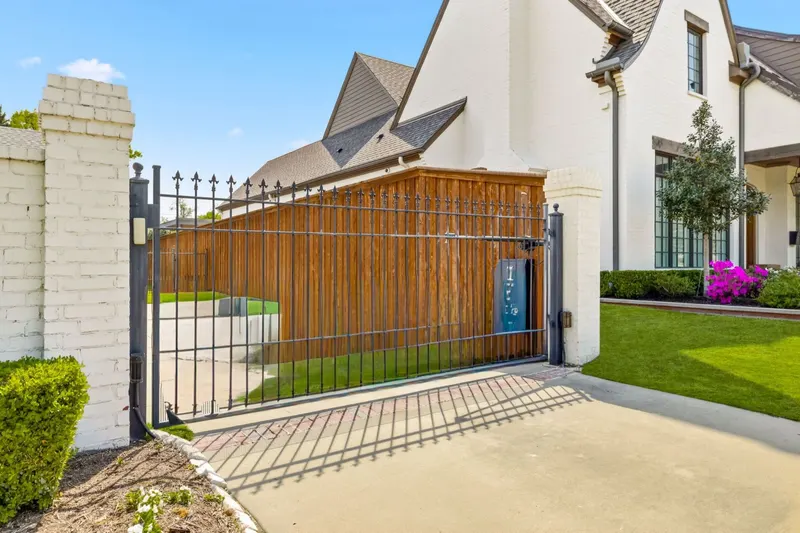
Is a corrugated metal or steel panel fence a good budget option?
It can be an inexpensive way to get solid privacy with a modern, industrial look, but it is not a fit for every neighborhood, and it is not part of what we build. Our steel work is ornamental picket fencing and steel-framed gates.
Corrugated galvanized panels set in a wood or steel frame are durable and need no stain. The trade-offs are real. A solid metal panel catches the full force of the wind, so the posts must be sized for it. Cut edges and scratches can rust. Panels get hot in direct sun, reflect glare and can be loud in wind and rain. Many HOAs and some cities do not permit sheet metal as a fence material, so check first.
If the appeal is a clean, modern line, a horizontal cedar fence gives a similar look in a material every Dallas neighborhood accepts. To talk through options for your yard, call (214) 755-8100 or visit our wood fencing page.
How Park Cities Fence & Deck helps
Jack Johnson comes out himself, looks at your property and gives you a free written estimate with a timeline. Wood, iron and masonry are all built in-house, so the advice fits the property. Related services: wood fencing, iron / metal fencing.
Questions people ask next
Is a living hedge or bamboo a cheaper alternative to a fence?
A hedge can cost less to plant than a fence costs to build, but it is not a like-for-like substitute. It takes years to fill in, needs water and trimming for life, does not reliably contain a dog and does not meet pool barrier rules. Running bamboo spreads aggressively into neighboring yards. Hedges work best planted in front of a fence, not instead of one.
Is it cheaper to use pine now and replace the fence sooner?
It is cheaper on the day you buy it. Pressure-treated pine resists rot well, but it shrinks, twists and cracks more than cedar as it dries, so it tends to look tired sooner. If you plan to sell within a few years, pine can be a reasonable choice. If you are staying, cedar pickets on steel posts usually cost less per year of service.
Which fence type is easiest to repair after a storm?
Wood. A cedar fence is built from standard boards, so damaged pickets, rails and even posts can be replaced individually and stained to blend. Ornamental metal panels can be straightened or swapped by section. Vinyl and composite need a matching panel from the same product line, which may no longer be made. Chain link is also simple to patch. Masonry rarely needs storm repair at all.
Which fence upgrades are not worth paying for?
Skip upgrades that decorate a weak fence. Decorative post caps, ornate trim and premium stain do nothing for a fence on shallow wood posts with thin pickets. Spend first on steel posts, proper post depth, a rot board, full-thickness pickets and galvanized fasteners. Those are the upgrades that add years. Once the structure is right, a cap and trim are worth it for looks and for protection.
Is chain link allowed in Coppell?
We have not been able to confirm Coppell’s current rule from an official source, so we will not guess. Cities in this area often limit chain link in residential front yards, and HOAs commonly go further. Check with the City of Coppell building department and your HOA before buying. Our guide to fence rules in Garland, Irving, Carrollton, Coppell and Addison covers what we have verified.
Sources and further reading
- American Galvanizers Association: How Long Does Hot-Dip Galvanizing Last?
- Trex Company: Trex Fencing
- Western Red Cedar Lumber Association (Real Cedar): Why Real Cedar
General information, not legal advice. Rules change: we confirm the current requirements with your city or HOA before we build.