Cost & Hiring · Dallas, Texas
How Much Does a New Fence Cost in Dallas, and What Should I Budget For?
A fence budget is footage times a rate, plus gates, tear-out, permits and site work. Here is every line to plan for.
 By Jack Johnson, owner of Park Cities Fence & Deck · 9 min read · 1,840 words
In short
A new fence in Dallas is priced by the linear foot, and that rate moves with five things: material, height, style, gates and site conditions such as tear-out, slope and access. Budget for the whole project, not the pickets alone, and take the figure from a written estimate that lists every one of those items.
In this guide
- How much does a fence cost per linear foot in Texas?
- How much does it cost to fence a typical backyard?
- What hidden costs should I expect on a fence project besides the fence itself?
- Does removing and hauling away the old fence cost extra?
- Is an 8-foot fence much more expensive than a 6-foot fence?
- How much do gates add to the price of a fence?
- How do I compare fence bids that are far apart?
Need this done? See wood fencing.
Any single price you read online for a Dallas fence is wrong for your yard, because it was written for a different length, a different height and a different soil. What does hold true from yard to yard is the list of things that set the price. Learn that list and you can read any bid in ten minutes.
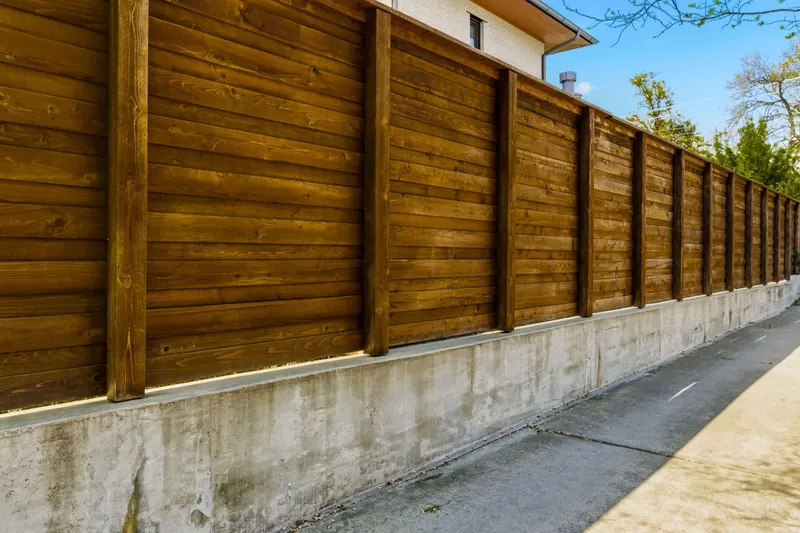
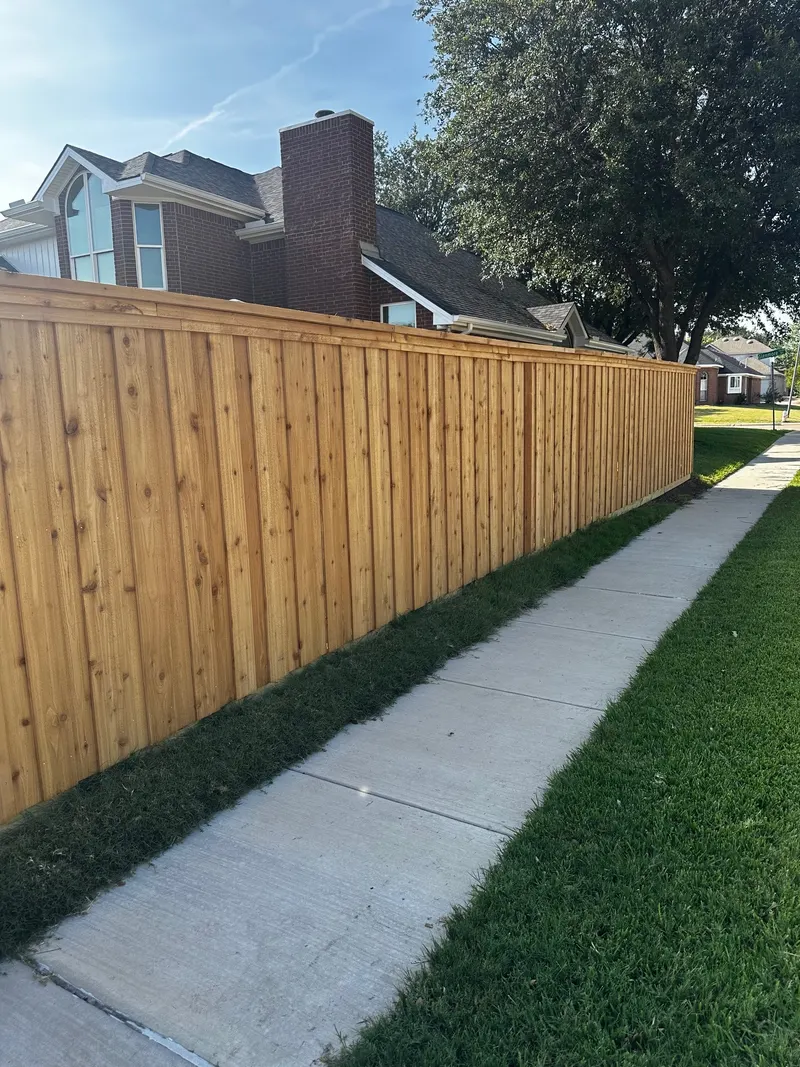
We do not publish prices, and this guide does not quote one. It explains how a fence budget is built for cedar, redwood and pine fences, for iron and for masonry, so the free written estimate you receive makes sense line by line. For cedar alone, see what drives the cost of a cedar fence in Dallas.
How much does a fence cost per linear foot in Texas?
There is no single per-foot price for a fence in Texas, because the per-foot rate is built from four choices: material, height, style and site. A rate quoted without those four attached tells you nothing about what you are buying.
One linear foot of fence includes its share of the posts, the concrete around them, the rails, the pickets or panels, the fasteners and the labor to set and trim it all. Change any one and the rate changes. Among woods, pressure-treated pine sits lowest, Western Red Cedar in the middle and redwood above it. Our guide to cedar, pine and redwood fence wood explains what the extra money buys.
Metal and masonry are priced on a different scale. Powder-coated iron, ornamental steel and aluminum cost more per foot than most wood, and brick and stone walls cost the most because every foot sits on an engineered footing and is laid by hand. Many Dallas yards mix them: cedar on the sides, iron or masonry where the street sees it.
How much does it cost to fence a typical backyard?
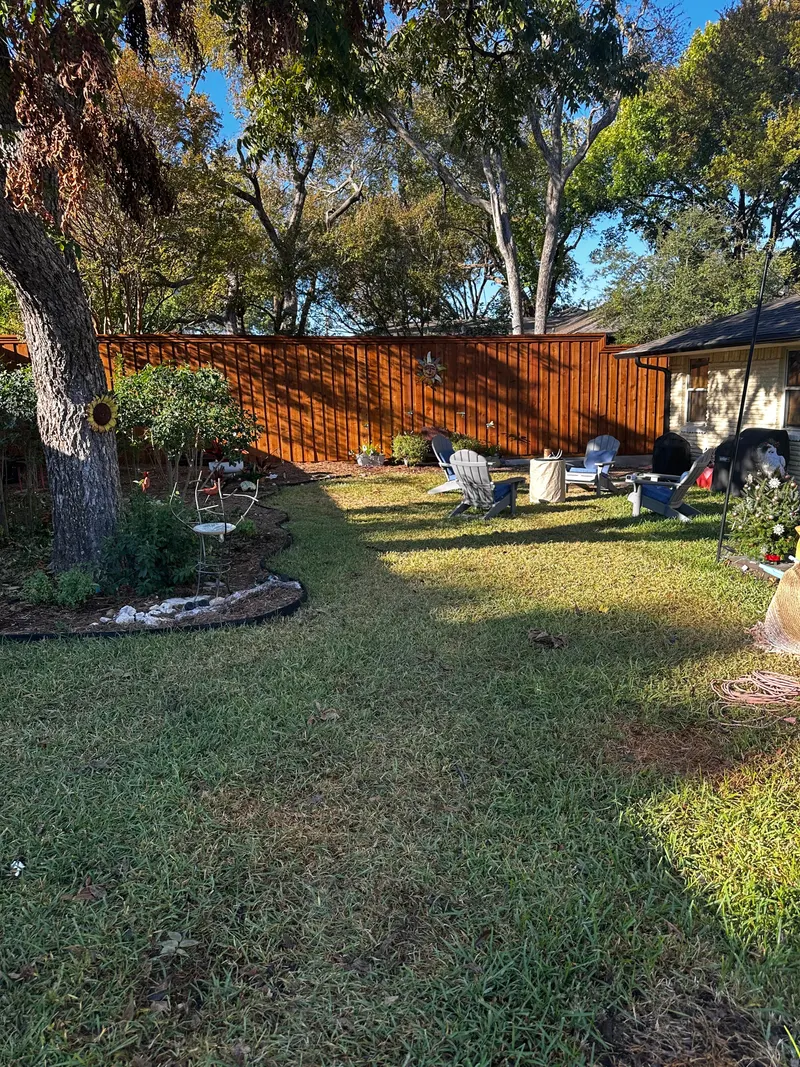
The cost of fencing a backyard is the footage multiplied by the per-foot rate, plus gates, tear-out and site work. Two yards of the same size can land far apart because one needs three gates, a slope stepped and an old fence hauled away, and the other needs none of that.
Start with the footage. Most backyards are fenced on three sides and tie into the house on the fourth. A line you share with a neighbor is sometimes split between two households, which we cover in shared fences in Texas. Then choose the style: a board-on-board fence uses more pickets than side-by-side, and a cap and trim add material and labor on every foot.
A written estimate for a backyard should itemize the lines below. If a bid is one number with no breakdown, ask for the breakdown before you compare it with anything.
- Footage and height: Total linear feet, measured on site, and the finished height of each run.
- Material and grade: Wood species and grade, or the metal and its finish.
- Posts: Wood or steel, how deep they are set and how far apart.
- Gates: How many, how wide, and the frame, hinges and latch on each.
- Tear-out and haul-off: Removal of the old fence and its concrete.
- Finish: Stain or sealer, and whether it is in this price or a later visit.
What hidden costs should I expect on a fence project besides the fence itself?
The costs that surprise people are the ones around the fence: paperwork, removal, site conditions and finish. None of them is truly hidden if the estimate is written properly, so the fix is to ask about each one before you sign.
Paperwork first. The City of Dallas fence permit checklist says a permit is required for a fence taller than 4 feet in a front yard or taller than 6 feet anywhere else, and the application needs a scaled site plan, a plat map and an elevation drawing of the fence. An older lot may need a survey to find the line, and many neighborhoods add an HOA review. We walk through the city process in the Dallas fence permit, step by step.
Then the ground. Sprinkler lines along the fence line get cut and need repair. Tree roots and shallow rock slow every post hole. A yard with no gate access means every board and bag of concrete is carried by hand. The 811 utility locate is free, and we request it before digging. Stain is the last line people forget: a new cedar fence should be stained, and it is either in the bid or it is a second bill.
Does removing and hauling away the old fence cost extra?
Yes. Tear-out and haul-off are real labor and a real disposal fee, so a complete bid lists them as their own line. A bid that leaves them out is not cheaper. It is incomplete.
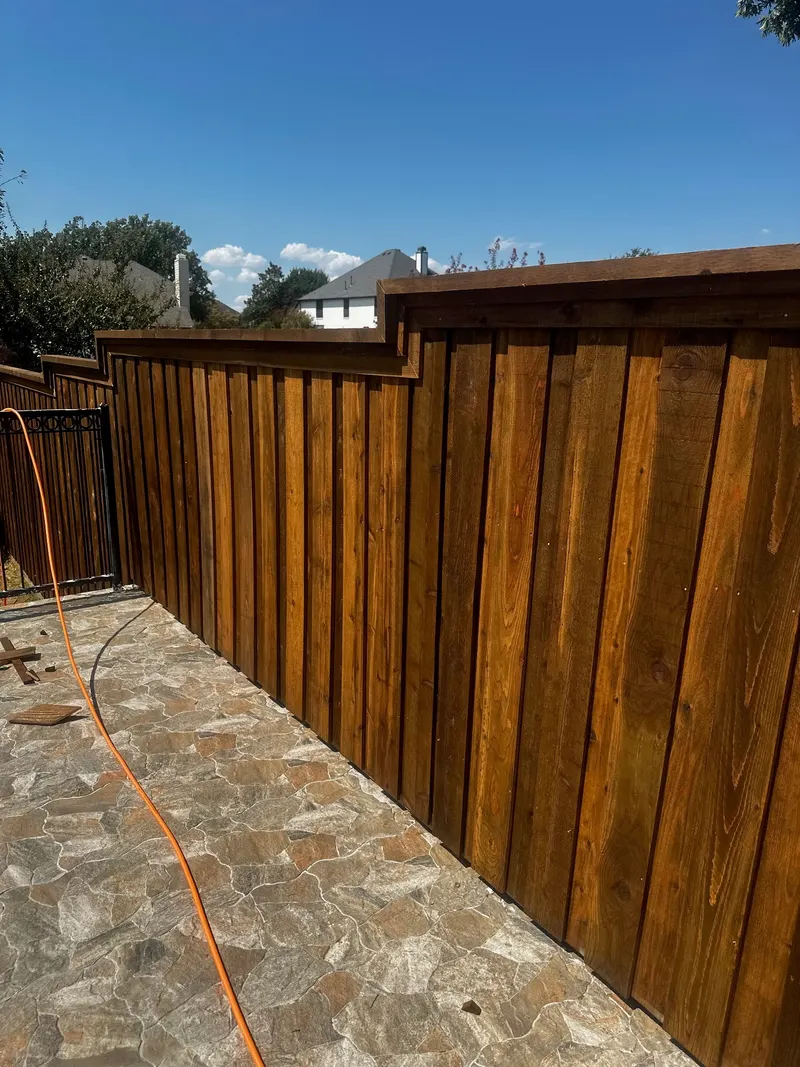
What sets the tear-out price is what is in the ground. Pickets and rails come down fast. Old posts set in concrete do not: each footing has to be dug or pulled, loaded and hauled. Ask every bidder whether the old concrete comes out or whether the new posts will be offset between the old footings. Both are legitimate methods, but they are different amounts of work and you should know which one you are paying for.
Access matters here too. An alley or a wide side yard lets a trailer sit close to the work. A fence behind a pool, a retaining wall or a tight gate means more carrying. If your old fence is failing in only one stretch, a fence repair may be the smaller project. Our repair or replace guide shows how to tell.
Is an 8-foot fence much more expensive than a 6-foot fence?
Yes, and by more than the extra two feet of picket suggests. An 8-foot fence needs longer pickets, an additional rail, longer and often heavier posts set deeper, and more concrete, because a taller fence catches far more wind.
In Dallas it also changes the paperwork. The city checklist requires a permit for any fence over 6 feet outside the front yard, sets the maximum allowable height at 9 feet, and sends anything taller to the Board of Adjustment with plans sealed by an engineer. So an 8-foot privacy fence in a Dallas backyard is a permitted job with drawings, while many 6-foot replacements are not. Rules differ in the Park Cities and the suburbs; see fence height rules in Dallas and the Park Cities.
The structure is where the money should go on a tall fence. Post depth and post type decide whether it is still straight after ten North Texas springs. We explain the reasoning in how deep fence posts should go in clay soil. If privacy is the goal and height is limited, there are other ways to add privacy.
How much do gates add to the price of a fence?
Each gate costs more than the same width of fence, because a gate is a moving structure. It needs a rigid frame, heavier posts on both sides, hinges and a latch, and more labor to hang it square and keep it that way.
A standard walk gate is the smallest step up. A wide double gate for a mower or a trailer is a larger one, since wide wood leaves need steel in the frame to stop sagging. We cover the build details in why wood gates sag and how a gate should be built. Count your gates early: adding one after the estimate changes the number more than people expect.
A driveway gate is its own project. Swing and slide driveway gates with a motor, keypad, safety photo-eyes and power run to the opening are estimated separately from the fence. The separate guide to automatic gate cost factors lists what moves that number.
How do I compare fence bids that are far apart?
Put the bids side by side on the same lines: footage, material grade, post type and depth, gates, tear-out, permit and stain. Most large gaps between bids come from a line that one company included and another left out or downgraded.
The table shows which choices move a fence budget in each direction. Use it as a checklist when you read an estimate, together with our fence quote and contract checklist.
What moves a Dallas fence budget up or down
| Cost driver | Keeps the number lower | Pushes the number higher |
|---|---|---|
| Material | Pressure-treated pine | Redwood, iron, steel, brick or stone |
| Height | Six feet or less | Eight feet, with deeper posts and a permit |
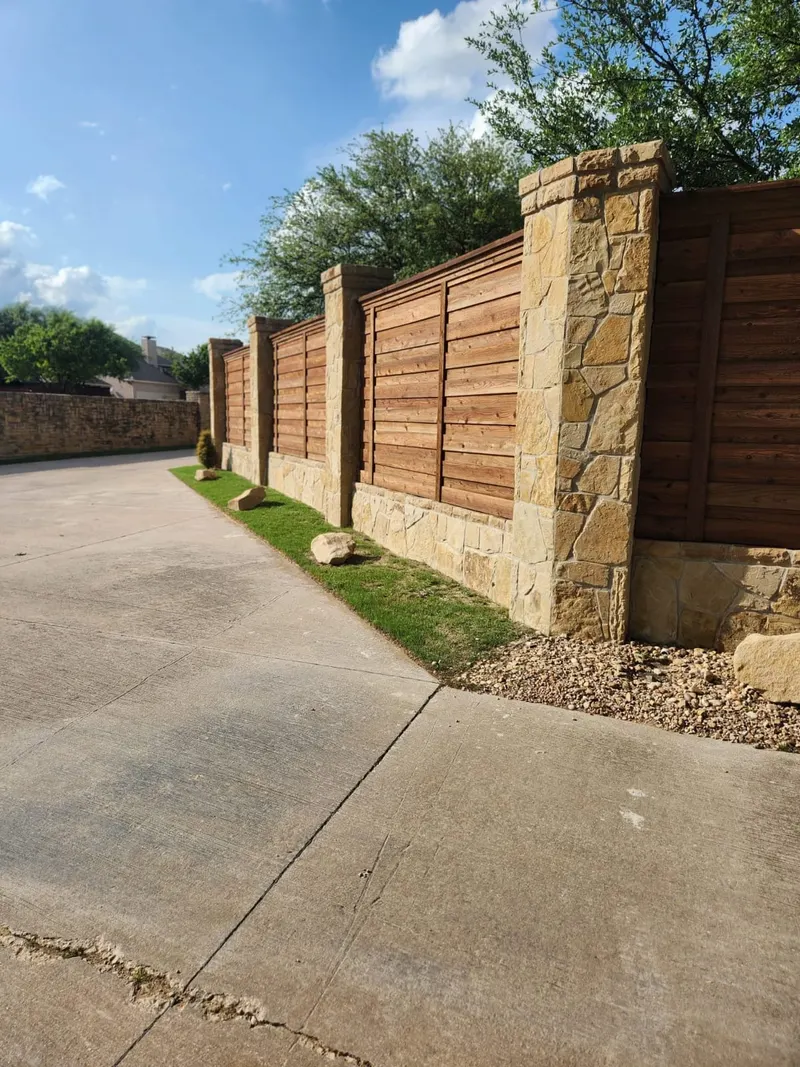
| Style | Side-by-side pickets, no trim | Board-on-board, cap, trim, horizontal boards |
| Gates | One standard walk gate | Several gates, wide leaves, a driveway gate |
| Site | Flat yard with alley access | Slope, rock, roots, pool or no access |
| Old fence | Open line, nothing to remove | Full tear-out with concrete footings |
What this means for you: The figure for your yard comes from a site visit and a written estimate, never from a per-foot guess.
How Park Cities Fence & Deck helps
Jack Johnson comes out himself, looks at your property and gives you a free written estimate with a timeline. Wood, iron and masonry are all built in-house, so the advice fits the property. Related services: wood fencing, iron / metal fencing. We work in Dallas and across Dallas.
Questions people ask next
How do I measure my yard to know how many feet of fence I need?
Walk each side you plan to fence with a long tape or a measuring wheel and add the runs together, including the short returns from the back corners of the house to the side lines. Note each gate and its width. This gives you a planning number. The company should measure again on site, because the estimate is built on its measurement, not yours.
Is it cheaper to build a fence in winter?
Sometimes the schedule is easier in winter, but do not count on a lower price. Lumber and steel cost what they cost in any month, and the labor is the same. What winter usually buys in North Texas is a shorter wait for a start date. Ask the company directly whether timing changes anything on your estimate.
Does a sloped yard make a fence more expensive?
Usually yes. A slope means the fence is either stepped panel by panel or racked to follow the grade, and both take more layout and cutting than a flat run. Steep sections may need longer posts, a rot board to close gaps at the bottom, or a small retaining edge. The estimate should say which method is planned.
Can I do the tear-out myself to save money?
You can, and some homeowners do. Pulling pickets and rails is simple work. The hard part is the old concrete footings and getting everything hauled to a disposal site. Ask the company first: your side yard must be clear and ready on the start date, and it should confirm in writing how the old footings will be handled.
Is a very low fence bid a warning sign?
It can be. The Texas Attorney General warns consumers about low-ball bidders, noting that most legitimate bids fall in a fairly close range. A much lower number usually means something is missing: thinner pickets, shallow posts, no tear-out, no permit or no insurance. Ask the low bidder to itemize the same lines as the others before deciding.
Sources and further reading
- City of Dallas Planning & Development: Fence Permit, Pool Barrier and Retaining Wall Checklist
- Texas Attorney General: How to Avoid Home Improvement Scams
General information, not legal advice. Rules change: we confirm the current requirements with your city or HOA before we build.