Local Rules · Dallas, Texas
How Do I Get a Fence Permit in Dallas, Step by Step?
The City of Dallas fence permit in order: height triggers, checklist documents, district approvals and exceptions.
 By Jack Johnson, owner of Park Cities Fence & Deck · 9 min read · 1,793 words
In short
In Dallas you need a fence permit when the fence is taller than 4 feet in a front yard or taller than 6 feet anywhere else. You apply online through DallasNow with a scaled site plan, a plat map, a fence elevation drawing and, where an easement is involved, written utility approval.
In this guide
- What are the steps to get a fence permit in Dallas?
- At what height does a fence in Dallas need a permit?
- What documents does the Dallas fence permit checklist ask for?
- How much does a fence permit cost in Dallas?
- How long does a Dallas fence permit take?
- Do Dallas conservation and historic districts like Lakewood or the M Streets need extra fence approval?
- How do I ask the Dallas Board of Adjustment for a fence height exception?
Need this done? See wood fencing.
Most Dallas fence projects cross the permit line, because a standard privacy fence is taller than 6 feet. The good news is that the city publishes a one-page checklist that says exactly what it wants. This guide walks through that checklist in the order you will use it, with the numbers taken from the city documents listed at the end.
We are Park Cities Fence & Deck, a Dallas fence company that prepares and files these applications for our own builds. The steps below work whether you hire us, hire someone else or apply yourself. Rules change, so treat this as general information and confirm the current requirement with the city before you build.
What are the steps to get a fence permit in Dallas?
There are six steps: confirm the height trigger, check your district, gather the documents, apply online, build to the approved drawing and keep the paperwork. The City of Dallas checklist says a fence permit is filed as a Commercial/Residential Accessory Structures application through DallasNow, with every checklist document uploaded.
Do the first three steps before you choose a design. A fence that is 6 feet tall in the back yard and 4 feet or less in front needs no permit at all, and knowing that early can change what you ask for. An easement or a district review, on the other hand, adds a letter or a certificate that has to be in hand before the city will take the application.
- Measure the plan against the trigger: Over 4 feet in a front yard or over 6 feet elsewhere means a permit.
- Check the district: Conservation and historic districts need a Certificate of Appropriateness first.
- Mark the easements: A fence inside an easement needs written approval before the city will accept it.
- Prepare the drawings: Scaled site plan, plat map and a typical fence panel elevation.
- Apply on DallasNow: Upload legible documents. The city states it cannot accept incomplete ones.
- Build what was approved: Height, material and location should match the drawing you submitted.
At what height does a fence in Dallas need a permit?
A permit is required for a fence taller than 4 feet within a front yard or taller than 6 feet in all other locations. The same checklist gives the ceiling: the maximum allowable fence height is 9 feet, and anything above that needs approval from the Dallas Board of Adjustment, a building permit and plans sealed by a licensed professional engineer.
The permit trigger and the height limit are two different numbers. In single-family districts the Dallas Development Code caps a fence in the required front yard at 4 feet above grade, and a panel that is less than 50 percent open may not sit closer than 5 feet to the front lot line. Our guide to fence height rules in Dallas covers the height side in full. Neighboring cities draw the line elsewhere, as the table shows.
When a residential fence permit is needed, as published by each city
| City | When a permit is needed | Tallest backyard fence | Front yard limit |
|---|---|---|---|
| Dallas | Over 4 feet in a front yard, over 6 feet elsewhere | 9 feet without a board exception | 4 feet in the required front yard |
| Plano | To construct or alter a fence; repairs within 25 percent of the fence area in 12 months are exempt | 8 feet | 40 inches and at least 50 percent open |
| Frisco | To construct, repair or replace; matching repairs up to 50 percent of the length in 12 months are exempt | 8 feet | 48 inches and no more than 50 percent opaque |
| Fort Worth | Solid fences over 7 feet and open fences over 8 feet | 8 feet behind the front setback | 4 feet, open design only |
What this means for you: Dallas is the only one of the four that lets a short fence go up without a permit and also allows 9 feet in back. Do not carry a rule from one city to the next.
What documents does the Dallas fence permit checklist ask for?
The checklist asks for four things, and all of them must be legible. Missing or unreadable documents are the usual reason an application stalls, because the city states plainly that staff cannot accept incomplete or illegible documents.
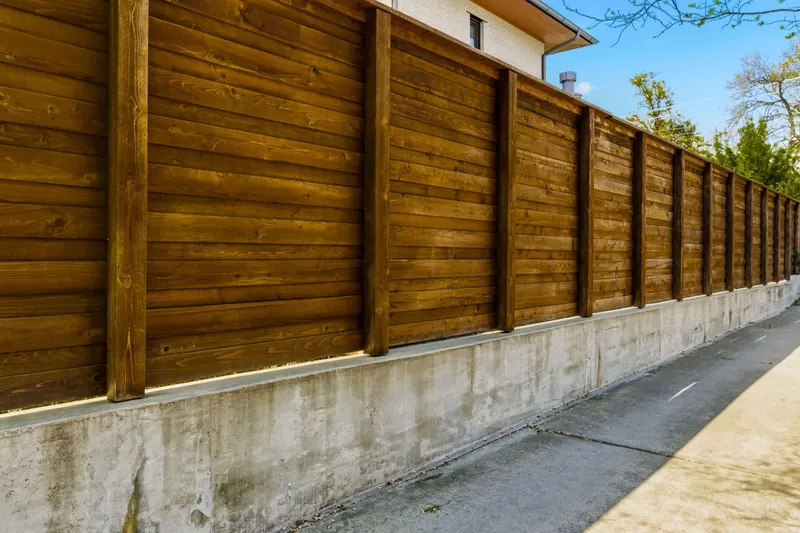
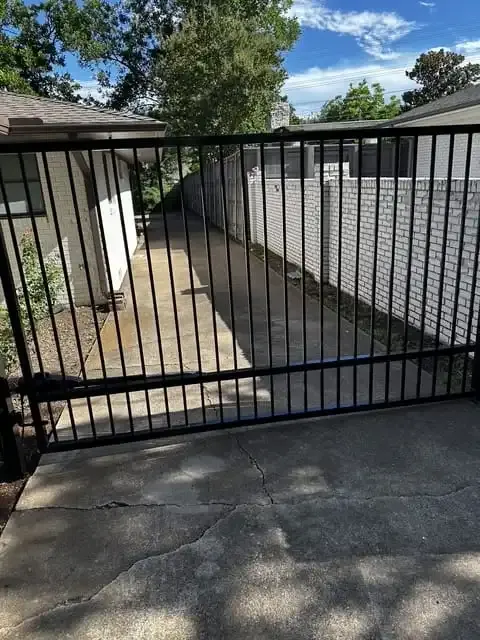
When we build a cedar privacy fence, an iron fence or a masonry wall, we measure for these drawings on the first visit. A retaining wall under the fence is a separate item on the same checklist and needs engineered plans sealed by a Texas-licensed professional engineer.
- Site plan drawn to scale: Shows the fence or wall, gates, easements, fire lanes, driveways, sidewalks, alleys, curbs and any visibility triangles.
- Plat map: Available from the City of Dallas Survey and Records Library at the Oak Cliff Municipal Center.
- Written authorization: From the utility company, when the fence is proposed within an easement.
- Typical elevation drawing: Shows fence height, grade levels, panel materials and how open the fence is.
How much does a fence permit cost in Dallas?
The fence permit checklist does not state a fee, so we will not quote one here. The amount is set by the city fee schedule and is shown to you in DallasNow when you apply. Confirm it with Planning & Development at the number printed on the checklist, (214) 948-4480.
What you can plan for is the work around the fee. A plat map, a scaled site plan and an elevation drawing take time to prepare, and a fence above 9 feet adds an engineer. On our jobs the permit is listed as its own line on the free written estimate, so you can see it apart from materials and labor. Our guide on what to budget for a Dallas fence explains the other lines.
How long does a Dallas fence permit take?
The city checklist does not publish a review time for fence permits, so confirm the current turnaround with the city when you apply. What you control is how complete the application is on the first try.
Three things add time. A fence in a conservation or historic district needs its certificate before the permit. A fence in an easement waits on the utility letter. A fence in a designated floodplain may need additional approvals, as the checklist notes. Plan the build date after approval, not before. Once materials arrive, most residential wood and iron fences take one to three days, and our guide on how far ahead to book shows how the pieces fit together.
Do Dallas conservation and historic districts like Lakewood or the M Streets need extra fence approval?
Yes, if your lot is inside one. The checklist says proposed fences within conservation districts and historic districts require an approved Certificate of Appropriateness, along with supporting documents. Parts of older neighborhoods such as Lakewood and the M Streets may sit inside a district, and the boundary can run down the middle of a block, so check your own address.
Each district writes its own standards for height, placement and materials, which is why a fence that is fine on one street is turned down two blocks over. The city conservation district page offers a work review application and posts its current estimated wait for plan review. We prepare the drawing and material description that review asks for. Private deed restrictions are a separate layer, covered in our guide to HOA and deed restrictions.
How do I ask the Dallas Board of Adjustment for a fence height exception?
You apply to the board for a special exception to the fence standards. The Dallas Development Code says the board may grant one when, in its opinion, the exception will not adversely affect neighboring property. That is the test your application has to meet.
This is the route for a front fence above 4 feet, which is a common request on large lots in Preston Hollow, and for any fence above 9 feet. A fence above 9 feet also needs a building permit and engineer-sealed plans. The filing steps, the fee and the hearing calendar are set by the city, so confirm them with board staff before you rely on a date. Our guide to front yard fence height in Preston Hollow and the Park Cities shows what a strong request looks like, and privacy options when height is limited covers the alternatives.
Jack Johnson, our owner, attends every consultation. If an exception is worth pursuing he will say so, and if a design inside the limits gets you the same result he will draw that instead. Ask for a free written estimate and we will check the rules for your address first.
How Park Cities Fence & Deck helps
Jack Johnson comes out himself, looks at your property and gives you a free written estimate with a timeline. Wood, iron and masonry are all built in-house, so the advice fits the property. Related services: wood fencing, iron / metal fencing, masonry fencing. We work in Dallas and Preston Hollow and across Dallas.
Questions people ask next
What fence materials are prohibited in Dallas?
The City of Dallas prohibits sheet metal, corrugated metal, fiberglass panels, plywood, and plastic other than preformed fence pickets and panels at least seven-eighths of an inch thick. Barbed wire and razor ribbon are prohibited in residential districts other than agricultural ones. Cedar, ornamental iron and steel, brick and stone are all accepted, and those are the materials we build with.
Can a homeowner pull their own fence permit in Texas?
It depends on the city, because fence permits in Texas are issued by each municipality. The Dallas checklist names the application and the documents but does not say who must file, so confirm with Planning & Development before you start. When we build your fence we prepare the drawings and file the application, and the permit shows as its own line on the estimate.
Are spikes, barbed wire or electric fences legal on a home in Dallas?
Barbed wire and razor ribbon are not allowed in Dallas residential districts, other than agricultural districts. The fence standards we read do not address spikes or electric fences, so confirm those with the city before you install either one. For security without them, a taller ornamental steel fence with a locking gate is the usual answer, and we cover it in our home security fence guide.
Can I get a variance for a taller fence?
In Dallas the route is a special exception from the Board of Adjustment. The code lets the board grant one when the exception will not adversely affect neighboring property. A fence taller than 9 feet also needs a building permit and plans sealed by a licensed professional engineer. Approval is never automatic, so we design a compliant option alongside the request.
Can I build a fence on a utility easement?
Not without permission. The Dallas Development Code says a fence may not be located within an easement without prior written approval from the agencies that have an interest in it, and the permit checklist asks for written authorization from the utility company. We mark easements on the site plan at the first visit and, where it makes sense, shift the line or add a gate.
Sources and further reading
- City of Dallas: Fence Permit, Pool Barrier and Retaining Wall Checklist
- City of Dallas Ordinance No. 30198, amending Development Code Section 51A-4.602 (fence standards)
- City of Dallas Planning & Development: Conservation Districts
- City of Plano: Residential Fence Permit Requirements (PDF)
- City of Frisco Code of Ordinances, Chapter 18, Article IX: Fences
- City of Fort Worth: Residential Permitting (fences and retaining walls)
General information, not legal advice. Rules change: we confirm the current requirements with your city or HOA before we build.