Local Rules · Dallas, Texas
How Tall Can a Fence Be in Fort Worth, and When Does It Need a Permit?
Fort Worth allows 8 feet behind the front setback and an open 4 foot fence in the front yard.
 By Jack Johnson, owner of Park Cities Fence & Deck · 9 min read · 1,820 words
In short
In Fort Worth a fence around residential property may be up to 8 feet tall behind the front building setback line. In the front yard, one-family and two-family homes may have an open-design fence up to 4 feet. The city's permitting page requires a building permit for solid fences above 7 feet and open fences above 8 feet.
In this guide
- When exactly does a Fort Worth fence need a permit?
- Can I build a front-yard fence in Fort Worth, and how open must it be?
- What fence materials are prohibited in Fort Worth?
- Do Fort Worth historic districts have their own fence rules?
- What are the corner lot and visibility rules for fences in Fort Worth?
- Can I get a fence height variance in Fort Worth?
- What else should a Fort Worth homeowner check before building?
Need this done? See wood fencing.
Fort Worth handles fences differently from its neighbors to the east. There is no general permit for an ordinary backyard fence. The zoning ordinance sets where a fence may go and how tall it may be, and the building permit applies only to taller fences. Historic districts add a review of their own.
We read Section 5.305 of the Zoning Ordinance, the city's residential permitting page and the historic preservation page again for this guide. Two of them do not line up neatly on the permit threshold, and we explain that below. This is general information, not legal advice. For how we work in the city, see our Fort Worth fence page.
When exactly does a Fort Worth fence need a permit?
According to the city's residential permitting page, building permits are required for solid fences with a height above 7 feet and for open fences with a height above 8 feet. A solid fence at 7 feet or under is not on that list, though every fence must still meet the zoning rules.
Here the two official pages need to be read together. The zoning ordinance says no fence over eight feet surrounding residential property is allowed behind the front building setback line. So the permitting page mentions a permit for open fences above 8 feet, while the zoning section does not allow a residential fence that tall without relief from the Board of Adjustment. We do not resolve that for you on paper. We confirm the threshold and the zoning limit with the city for your address before we build.
- Check zoning first: Front yard, projected front yard, corner triangle and the 8 foot limit apply with or without a permit.
- Check for a historic district: A Certificate of Appropriateness comes before any building permit.
- Apply online if a permit applies: The city says all permits may be applied for online. Applicants must be a registered building contractor or qualify for a homestead permit.
- Sign an easement release if needed: A fence in an easement with underground utilities requires a signed release indemnifying the city.
- Request the 811 locate: We request the free utility locate before any digging starts.
Can I build a front-yard fence in Fort Worth, and how open must it be?
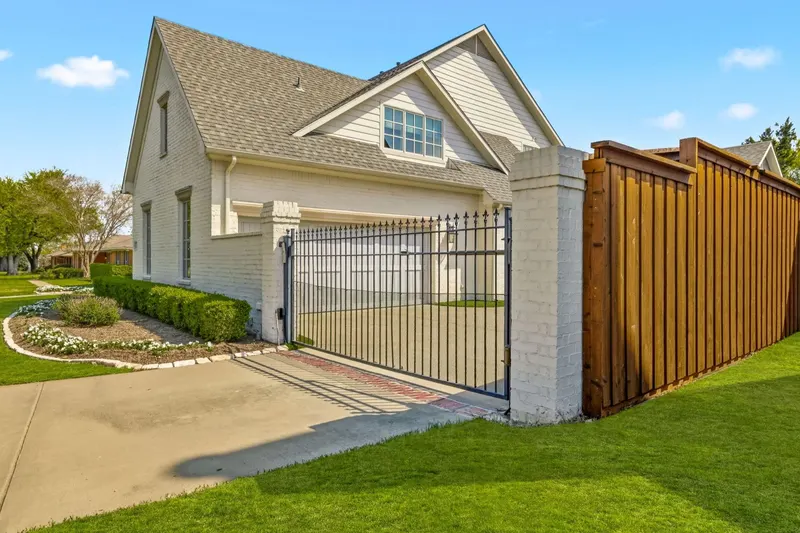
Yes, but only an open one. A one-family or two-family home may have an open-design fence up to four feet tall in the front yard, made of wrought iron, tubular steel, picket or a similar fencing material, and no greater than 50% in density.
Chain link is excluded, and solid fences and walls are not permitted in the required, platted or projected front yard. Fence designs may include columns up to five feet six inches, which suits brick or stone columns with ornamental iron between them. The table sets the front-yard rule beside the others. For design ideas within a four foot limit, see iron fence styles, heights and picket spacing.
Fort Worth residential fence limits, from Zoning Ordinance Section 5.305
| Location on the lot | Maximum height | Design allowed |
|---|---|---|
| Front yard or projected front yard | 4 feet | Open design, no more than 50% density, no chain link |
| Front-yard columns | 5 feet 6 inches | Part of an open fence design |
| Behind the front building setback | 8 feet | Solid or open |
| Corner triangle at a street intersection | 2 feet | Applies within 20 feet of the property corner |
| Front yard by special exception | 4 feet solid or 5 feet open | Granted by the Board of Adjustment |
What this means for you: Height is measured from the highest adjacent grade parallel to the fence to the highest point of the fence or its gates.
What fence materials are prohibited in Fort Worth?
The fence section of the zoning ordinance prohibits chain link and solid fencing in the front yard of a one-family or two-family home. It does not contain a general list of banned materials for a backyard fence, so we do not state one.
Material rules do apply beside major roads. Fences built next to a freeway or an arterial street on the master thoroughfare plan must be wood, brick, stone, reinforced concrete products, masonry, wrought iron, tubular steel or chain link, unless the development services director approves another material made for fencing. The finished side of those fences must face the right-of-way.
In subdivisions platted with lots backing to an arterial, the ordinance requires a wall or fence of durable material along the road, and it says that replacement of a portion of such a fence shall match the existing material and design. Barbed wire and electric fences are not addressed in the section we read, so we confirm them with the city. Our cedar fences and iron work both fall within the listed materials.
Do Fort Worth historic districts have their own fence rules?
Yes. The city's historic preservation page says a Certificate of Appropriateness must be obtained before applying for a building permit for exterior work, and fences are on its list of changes that need one.
The page lists fourteen districts: Fairmount, Historic Carver Heights, Morningside, Elizabeth Boulevard, Chase Court, Hillcrest, Linden Avenue, Terrell Heights, Stockyards, Mistletoe Heights, Central Handley, Garden of Eden, Kenwood Court and W. A. Powers. Individually designated properties are covered too. The city says most cases can be approved administratively by staff, and applications are submitted through its online permitting system.
Each district has design guidelines, and we read the ones for your district before proposing a fence. In practice that often means a low, open front fence and a privacy fence kept behind the house. Our guide to fence styles by house architecture helps match the design to the street.
What are the corner lot and visibility rules for fences in Fort Worth?
On a corner lot, no fence over two feet tall is permitted within or along a triangle formed by measuring 20 feet in each direction from the property corner at the street intersection. The ordinance calls this area a public open space easement.
Corner lots also meet the projected front yard. The front-yard fence rules apply in the minimum required front yard, the platted front yard and the projected front yard, so a side street can carry front-yard limits along part of the lot. Many owners learn this only when a tall side fence is questioned. We check the plat for it before drawing the fence line.
On a through lot, where the yard that functions as the rear faces an existing or proposed arterial street, screening walls or fences taller than four feet are allowed in that front yard. If the layout leaves you short on screening, see privacy when fence height is limited.
Can I get a fence height variance in Fort Worth?
The ordinance provides two special exceptions for front-yard fences, both decided by the Board of Adjustment. For anything taller than 8 feet behind the setback, the route is a variance request to the same board, and approval is not assured.
The board may allow a solid fence or wall up to four feet in the front yard. It may also allow an open-design fence up to five feet, provided the fence is compatible with the existing use and permitted development of adjacent properties, and the applicant obtains the consent of the adjacent property owners and of the owners directly across the street.
We prepare the drawing and the material description for the application, and you gather the neighbor consents. Start early, because board hearings run on the city's calendar and the fence cannot be built until the decision is in hand. Our permit and HOA guide explains how approvals are ordered.
What else should a Fort Worth homeowner check before building?
Check your deed restrictions and the ground. The city pages we read do not cover HOA rules, so communities with an association need a separate approval, and soil varies across the city in ways that change how posts are set.
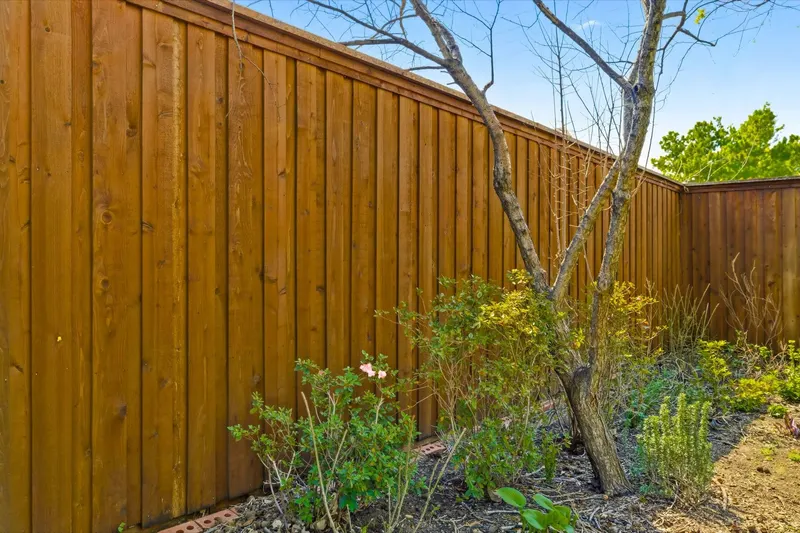
Fort Worth also sets a maintenance standard for fences next to a public right-of-way: they must be kept in good condition and may not be out of vertical alignment by more than 18 degrees, and rotted or broken slats and posts must be repaired or replaced. Posts set in concrete at the right depth are what keep a fence inside that standard. See fence post depth and concrete in clay soil, and after a storm our fence repair service can tell you what is worth saving. Jack Johnson attends every consultation, and estimates are free and in writing through the contact page.
How Park Cities Fence & Deck helps
Jack Johnson comes out himself, looks at your property and gives you a free written estimate with a timeline. Wood, iron and masonry are all built in-house, so the advice fits the property. Related services: wood fencing, iron / metal fencing. We work in Fort Worth and across Dallas.
Questions people ask next
Are fence rules in Southlake, Colleyville or Westlake different from Fort Worth?
Yes. Each is its own municipality with its own zoning ordinance, permit process and fee schedule, and none of them follows the Fort Worth code. We have not verified their current numbers for this guide, so we do not quote them. Check the city or town website for your address, and we confirm the height limit and permit requirement before we draw the fence.
What are the pool fence requirements in Fort Worth?
The city's permitting page lists swimming pools among the accessory structures that require a building permit, and its pool submittal document says pools must comply with the International Swimming Pool and Spa Code as amended by Fort Worth. We do not quote barrier dimensions here, because we confirm the adopted numbers with the city before building any pool fence or gate.
Is a fence on a hilltop or an open lot more likely to blow over?
Yes. A solid fence on high or open ground takes the full force of the wind with nothing to break it, and North Texas spring storms test every post. Deeper footings, steel posts, closer post spacing and a design that lets some air through all help. On exposed runs we often recommend iron or a spaced-picket style in place of a solid wall of cedar.
Is a split-rail or ranch-style fence a good fit for a large lot?
It can be, when the goal is to mark a boundary and keep the view. It will not give privacy or hold a small dog without added wire. In a Fort Worth front yard the fence must still be an open design no taller than four feet. Tell us what the fence has to do, and we will recommend wood or iron built for that purpose.
Do I need a permit for a pergola or patio cover in Plano, Frisco or Fort Worth?
Plan on one in all three. Fort Worth's permitting page says all accessory structures require a building permit and names gazebos among the examples, and decks more than 6 inches above grade need one as well. Frisco lists arbors and patio covers on its residential permit sheet, and Plano publishes patio cover permit requirements. We confirm the details for your structure first.
Sources and further reading
- City of Fort Worth: Residential Permitting (fences and retaining walls)
- City of Fort Worth Zoning Ordinance, Section 5.305: Fences
- City of Fort Worth: Historic Preservation (Certificate of Appropriateness)
- City of Fort Worth: Residential Accessory and Pool Submittal Requirements (PDF)
General information, not legal advice. Rules change: we confirm the current requirements with your city or HOA before we build.