Planning · Dallas, Texas
Shared Fences in Texas: Property Lines, Who Pays, and Good Neighbor Etiquette
Where the line really is, who pays, and how to replace a shared fence without a feud, the Texas general principles.
 By Jack Johnson, owner of Park Cities Fence & Deck · 8 min read · 1,635 words
In short
In Texas there is generally no state statute that forces a residential neighbor to share the cost of a boundary fence, cost-sharing happens by agreement, not by law. The fence belongs to whoever’s property it sits on, which is why a survey matters. HOAs can add their own rules. This is general information, not legal advice.
In this guide
- Who owns a fence on the property line?
- Who pays? What Texas law generally does, and does not, say
- Why a survey is worth it before you build
- Good-neighbor construction: a fence with no bad side
- The HOA overlay
- Etiquette that keeps the peace
- When the fence is shared and failing
Need this done? See wood fencing.
Almost every backyard fence in Dallas touches a neighbor, which makes fence replacement as much a diplomacy project as a construction project. The good news: the general principles are simple, and a fifteen-minute conversation before the quote solves most of the problems people worry about.
This article covers the Texas general principles, ownership, cost-sharing, surveys and etiquette, plus the HOA overlays common in DFW neighborhoods. One important note up front: this is general information about how shared fences typically work, not legal advice; for a genuine dispute, talk to a Texas real estate attorney.
Who owns a fence on the property line?
Ownership follows the ground under the fence. A fence built entirely on your side of the line is yours, your cost, your maintenance, your decision. A fence sitting squarely on the boundary is generally treated as shared by the adjoining owners. The complication is that in an established neighborhood, nobody actually knows where the fence sits until someone checks.
Decades of replacements, each crew following the old post holes, can walk a fence line a surprising distance off the true boundary. We regularly find fences a foot or more inside one yard or the other. That rarely matters for day-to-day life, but it matters a great deal the day one neighbor wants to replace the fence and the other does not.
Ownership drives everything downstream: who is entitled to demolish the old fence, who chooses the style and stain, whose HOA application it is, and who calls the contractor when a panel blows down in a spring storm. Settle the ownership question first, with a survey if there is any doubt, and every later conversation gets easier.
Who pays? What Texas law generally does, and does not, say
Here is the principle that surprises most homeowners: in Texas there is generally no statute that compels a residential neighbor to split the cost of a boundary fence. If your neighbor declines to contribute, you typically cannot force them to pay, and if you build anyway, the fence you paid for should sit on your own property. Agricultural fencing and open-range questions follow their own body of law, but that is a different world from a Dallas backyard.
In practice, cost-sharing happens by agreement all the time, because both households benefit. The common arrangements: a straight 50/50 split on a shared line, a proportional split when one owner wants upgrades, the neighbor pays toward a standard fence and you cover the difference for board-on-board and a stained finish, or one owner simply paying for the whole thing and keeping the decisions.
Whatever you agree, put it in writing before build day. It does not need to be formal, an email both households have confirmed covers the essentials: the scope, the split, who the contractor is and who is scheduling. Written expectations are what keep a fence project from becoming a fence feud. Again, for anything contested, this is a question for an attorney, not a fence company.
Why a survey is worth it before you build
The property survey you received at closing shows where your boundary actually runs, and it is the document that settles line questions before they become arguments. If the survey is lost, a new one is a modest line item next to the cost of moving a fence that landed on the wrong side.
When we quote a boundary fence, we work from the survey and existing pins wherever possible. If the old fence has drifted off the line, that is a conversation to have with your neighbor before demolition, not after, sometimes both parties prefer to keep the established line, and sometimes the replacement is the natural moment to put the fence back where it belongs.
- Find your survey: It usually came with your closing documents; your title company may have a copy.
- Look for pins: Iron pins at the corners of the lot mark the surveyed boundary and can often be located.
- Resolve drift early: If the old fence is off the line, agree on the new location before tear-out.
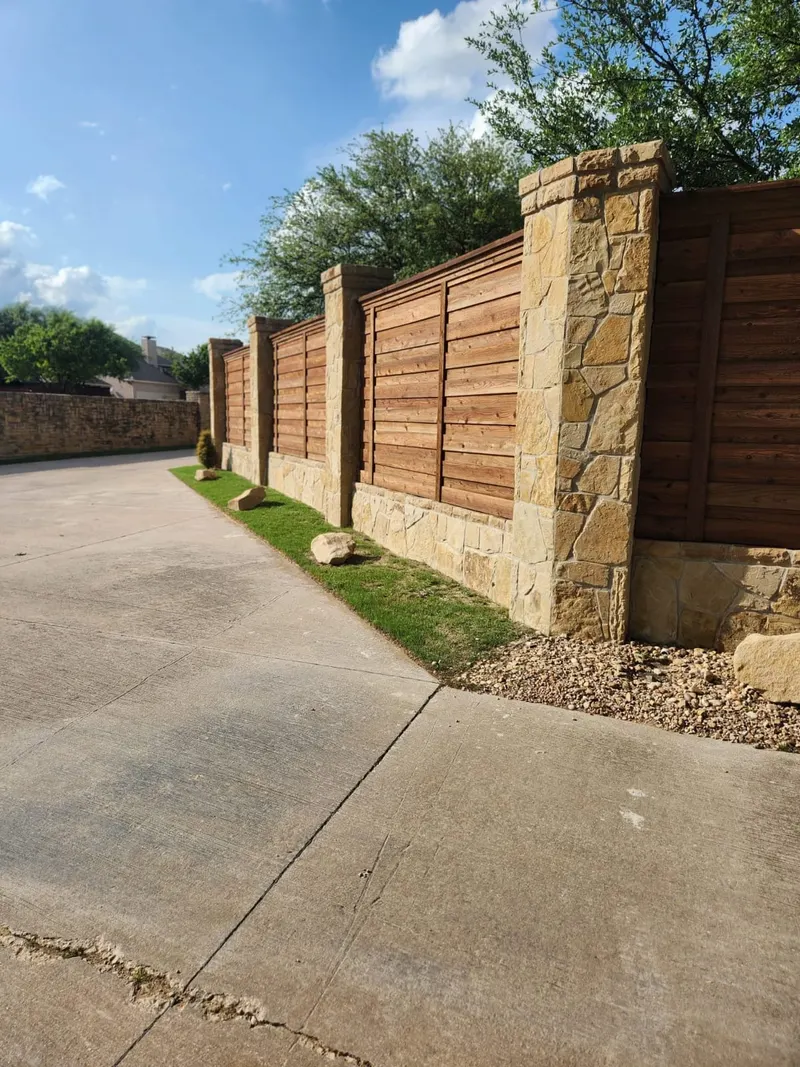
Good-neighbor construction: a fence with no bad side
Traditional side-by-side fencing has a finished face and a frame face, which raises the eternal question of who gets the good side. Many cities and most HOAs answer it for you: the finished side typically must face outward, toward the street or the neighbor. Good-neighbor construction dissolves the question entirely.
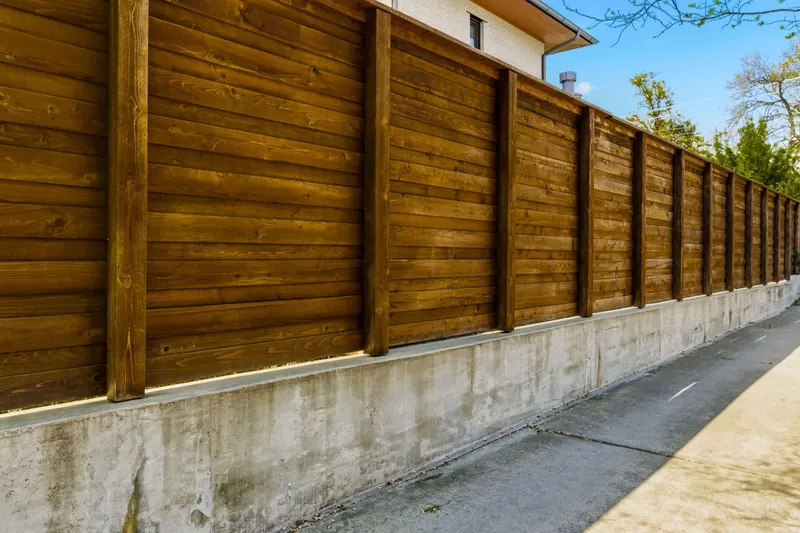
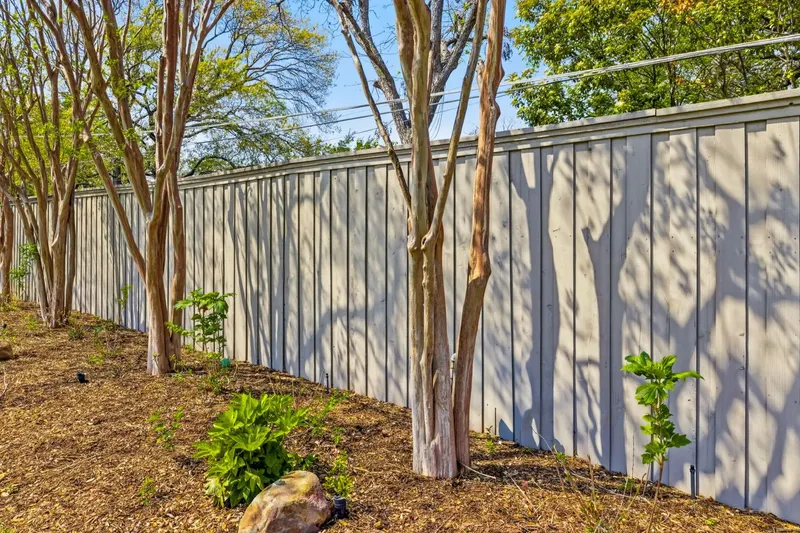
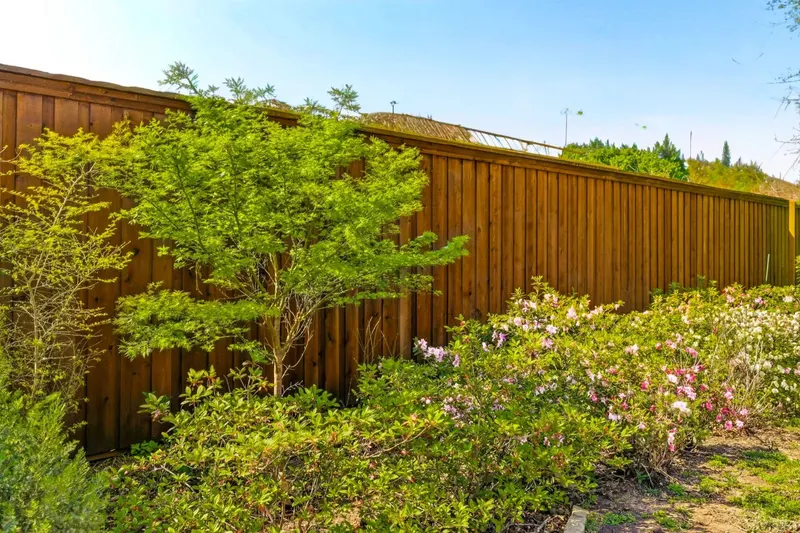
Board-on-board fencing with a cap and trim rail looks finished from both yards: overlapping pickets on both faces, no exposed rails, and a shadow line that reads as custom carpentry rather than a utility fence. It is the style we build most across the Park Cities and Preston Hollow, and on a shared line it is the diplomatic choice, both households look at a fence they are proud of. Our wood fencing page shows the construction details.
The HOA overlay
Everything above describes the general Texas backdrop, and then your HOA can write its own layer on top. HOA covenants commonly dictate fence style, height, stain color and which face points where, and some assign maintenance responsibility for specific fence lines, especially perimeter fences that back to greenbelts, streets or common areas.
Perimeter fences are the classic trap: in some communities the HOA maintains them, in others the individual homeowner does, and the answer lives in your covenants rather than in any general rule. Before splitting costs with a neighbor, or assuming the HOA will pay, read the documents or ask the management company in writing. We prepare HOA submissions as part of every permitted project.
Etiquette that keeps the peace
Talk before you quote. Nobody enjoys learning about a shared-line project from the sound of demolition, and a neighbor consulted early is far more likely to contribute than one presented with an invoice. Share the plan, the style and the timeline, and ask whether they want in.
During the build, small courtesies carry weight: warn about the day the old fence comes down, keep pets in mind while the line is open, and make sure the crew cleans both sides. Most wood fences go up in one to three days, so the disruption window is short. A fence built this way starts its fifteen-to-twenty-year life with two households happy about it.
- Open with the plan, not the invoice: Show the style and timeline before asking about money, it changes the tone of the whole conversation.
- Offer the choice, keep the default: Invite input on stain tone or gate placement, but arrive with a recommendation so decisions stay easy.
- Confirm in writing: A short email recapping what both households agreed prevents the classic he-said misremembering months later.
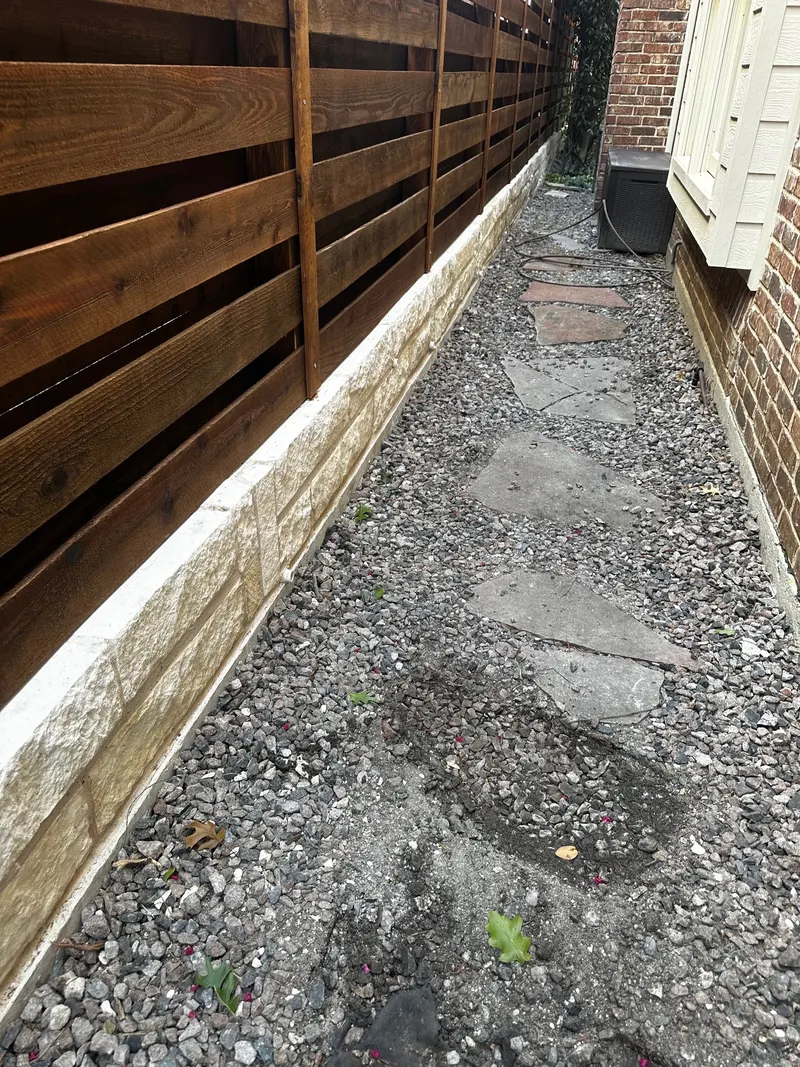
When the fence is shared and failing
Leaning posts and rotting rails on a shared line raise the same questions with more urgency. If the structure is sound, a repair, resetting posts, re-railing, replacing runs of pickets, is often the easy agreement, because it costs each household little and defers the bigger conversation. If the fence is at end of life, a joint replacement almost always beats two mismatched unilateral fences a few years apart.
Our free quote works well as neutral ground: we assess the fence, lay out repair versus replacement honestly, and price options both households can look at together. Usually within 24 hours of the visit, everyone is negotiating from the same facts. Request a quote and bring your neighbor into the conversation from day one.
How Park Cities Fence & Deck helps
Jack Johnson comes out himself, looks at your property and gives you a free written estimate with a timeline. Wood, iron and masonry are all built in-house, so the advice fits the property. Related services: wood fencing, fence rehab / repair. We work in Dallas and Plano and across Dallas.
Questions people ask next
Can I make my neighbor pay for half of our shared fence in Texas?
Generally no. Texas has no statute forcing residential neighbors to share boundary-fence costs, contribution happens by voluntary agreement. If a neighbor declines, you can build on your own property at your own cost. Put any cost-sharing agreement in writing. This is general information, not legal advice; consult an attorney for disputes.
Do I need my neighbor’s permission to replace a fence on the line?
If the fence sits on the shared boundary, it is generally considered jointly owned, so agreement is the safe and neighborly route. If you build entirely on your own side of the line, permission generally is not required, though HOA approval and city rules still apply. A survey settles where the line actually is.
How do I find out exactly where my property line is?
Start with the survey from your closing documents and look for iron pins at the lot corners. If the survey is missing or the pins cannot be found, a licensed surveyor can re-establish the line. Existing fences are not reliable evidence, replacement crews following old post holes drift lines over the decades.
What fence style is best for a shared property line?
Board-on-board cedar with a cap and trim rail is the classic good-neighbor choice: it looks fully finished from both yards, so there is no argument over who gets the good side. It also stays private as the wood dries, since the overlapping pickets never open gaps the way side-by-side construction does.
Our shared fence blew over — who handles it?
First check your HOA covenants, which sometimes assign responsibility for specific lines. Otherwise, a fence on the boundary is generally a joint problem best solved jointly, and storm damage is often repairable if posts survived. We assess honestly and quote repair and replacement options both households can review together.