Planning · Dallas, Texas
How Does a Fence Crew Protect Landscaping, Irrigation and Driveways During Installation?
Locate what is buried, plan the access path, dig by hand near roots and pipes, and leave the yard clean.
 By Jack Johnson, owner of Park Cities Fence & Deck · 8 min read · 1,719 words
In short
A careful crew plans before it digs. Utilities are located through 811, sprinkler lines and private wiring are flagged with the owner, one access path is chosen and protected, holes near roots and pipes are dug by hand, and concrete, spoil and old fencing are hauled away. Any damage is reported and repaired, not buried.
In this guide
- What gets located before anyone digs?
- What is at risk, and how is each thing protected?
- How do you set fence posts near mature trees?
- What happens to the plants along the fence line?
- How are lawns and driveways kept intact?
- What should the yard look like when the crew leaves?
- What should you ask a fence company before work starts?
Need this done? See wood fencing.
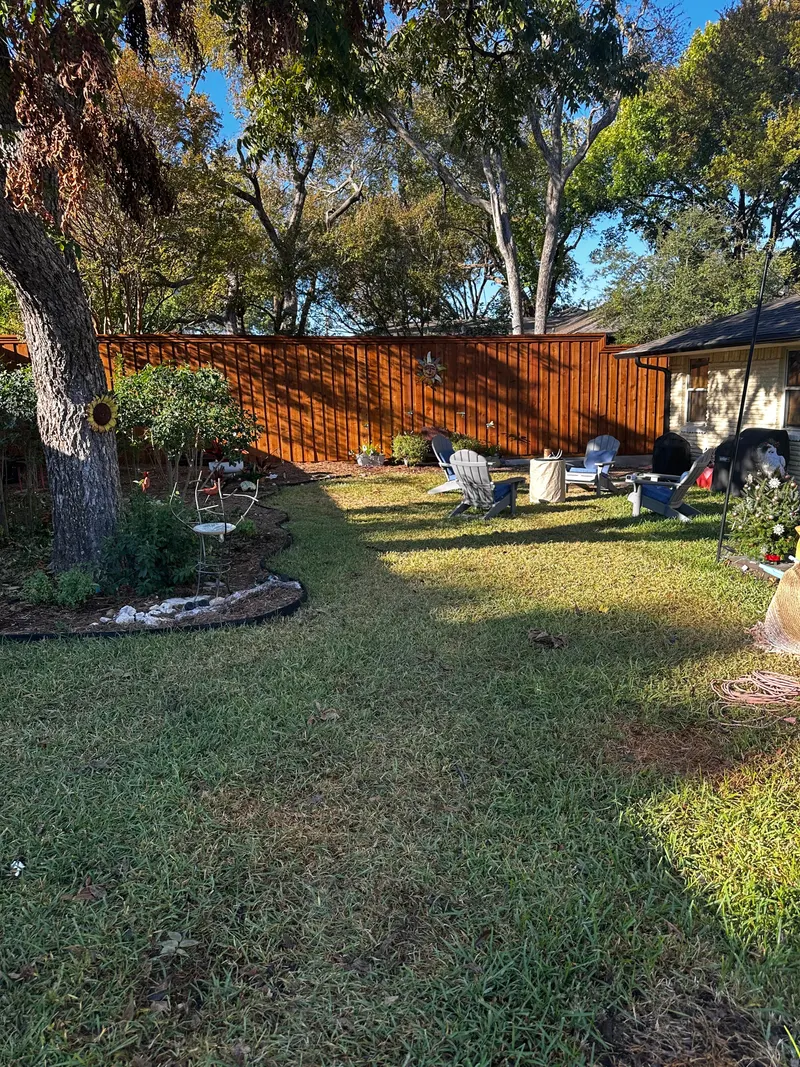
On an established property the fence line is usually the most heavily planted strip in the yard: hedges, beds, drip lines, lighting cable and the roots of trees that took forty years to grow. A new fence means holes, concrete and foot traffic through exactly that strip.
Damage is not inevitable. Most of it is prevented in the hour before the first hole is dug. This guide explains what a good crew does, what you should do to help, and which questions separate a careful installer from a fast one. It reflects how we approach builds across Highland Park, Preston Hollow and the rest of Dallas.
What gets located before anyone digs?
Public utilities come first. The Railroad Commission of Texas states that anyone planning to dig deeper than 16 inches is required by Texas law to call 811, and fence post holes go deeper than that. The locate marks gas, electric, water and communication lines owned by the utilities. We file the ticket on every job, as explained in our guide to permits, HOAs and 811 locates.
The 811 marks do not cover what you or a previous owner installed. Sprinkler mains and laterals, drip lines, low-voltage lighting cable, pool plumbing, a gas line to an outdoor kitchen and drainage pipes are all private. Nobody will paint them for you.
That is why the pre-build walk matters. Run each sprinkler zone and flag the heads and valve boxes near the fence line. Point out lighting transformers and where the cable runs. If you have an irrigation plan from the installer, share it. Ten minutes of flags saves a day of repairs.
What is at risk, and how is each thing protected?
Different parts of a yard get hurt in different ways. The table lists the common ones on a fence project and the protection that works for each.
What is at risk during a fence build and how it is protected
| At risk | How it gets damaged | How a careful crew protects it |
|---|---|---|
| Sprinkler and drip lines | Cut by an auger or post-hole digger | Zones run and flagged, hand digging near lines, repairs tested before leaving |
| Tree roots | Cut by holes or crushed by equipment and stored materials | Post locations shifted, hand digging, no staging under the canopy |
| Shrubs and beds | Trampled, broken or buried in spoil | Branches tied back, tarps over beds, soil removed from the site |
| Lawn | Rutted by wheelbarrows and equipment, burned by concrete | One access path on plywood or mats, concrete mixed off the grass |
| Driveway and paving | Stained, chipped or cracked by deliveries | Protected staging area, loads kept off the edges, washout kept away |
| Pets and pool security | Yard left open between old fence and new | Fence removed in sections, temporary panels where needed |
What this means for you: Ask your installer how each of these six will be handled on your property before you sign, not on build day.
How do you set fence posts near mature trees?
Carefully, and sometimes not where the string line says. University of California guidance on protecting trees during construction notes that most roots are near the soil surface and that many extend much farther than the canopy. It advises against cutting roots, especially those larger than about 2 inches in diameter, and recommends keeping equipment and stored materials away from the root zone.
On a fence line that translates into a few habits. Holes near a trunk are dug by hand so a large root can be seen before it is cut. When a hole lands on a major root, the post moves and the panel length adjusts. Nothing heavy is parked or stacked under the canopy, and wet soil gets extra care because it compacts most easily.
Sometimes the right answer is a design change: a fence that jogs around a trunk, or steel posts that allow longer spans between holes. Our guide to building a fence near mature trees covers these options. For a valuable tree, an arborist’s opinion before the build is money well spent.
What happens to the plants along the fence line?
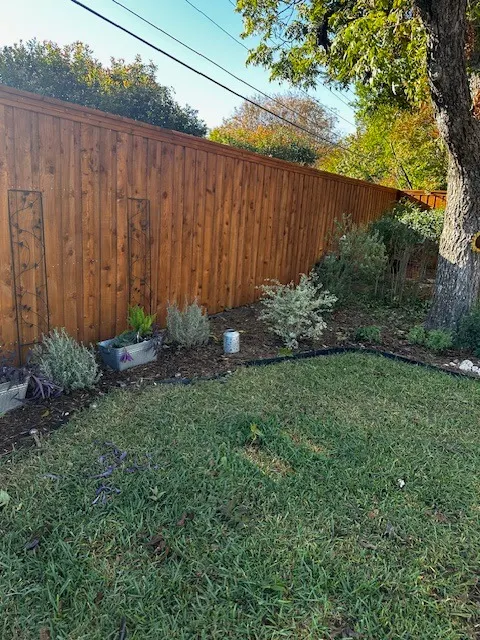
Shrubs and vines growing against the old fence are the hardest call. Branches can be tied back and beds tarped, and a good crew works from the side with less planting when it has the choice. But a hedge that has grown through the pickets will lose some growth when the old fence comes out. It is better to hear that at the estimate than to discover it afterward.
Trim back what you can a week or two ahead, or have your landscaper do it. Move pots, furniture and anything fragile away from the line. If a plant matters to you, say so and tag it. Crews protect what they know is important.
Soil from the post holes should leave the property, not get spread over beds or piled against trunks. The same University of California guidance warns against placing fill around tree trunks. Fresh stain is another reason for care: when we power wash and stain, plants next to the fence are covered first.
How are lawns and driveways kept intact?
By choosing one route and protecting it. Every trip with a wheelbarrow of concrete or a bundle of pickets follows the same path, laid with plywood or mats where it crosses lawn. One protected path recovers in days. Ten improvised ones leave ruts all season.
Materials are staged on a hard surface, usually the driveway or the alley, on a protected area and away from the edges of the slab where concrete is weakest. Heavy deliveries for masonry walls and columns deserve a conversation about where the truck will stop and what it will drive over.
Concrete is the quiet lawn killer. Mixing on the grass or rinsing tools into a bed leaves a hard, alkaline patch where nothing grows. Mixing happens on a board or in a tub, and washout goes into a container that leaves with the crew. On builds that include a deck or pergola, the same rules apply over a longer schedule.
What should the yard look like when the crew leaves?
Like a yard with a new fence, not like a job site. The old fence, concrete footings and spoil are hauled away. Nails and screws are picked up, which matters for tires, bare feet and paws. The access path is lifted and the lawn raked out.
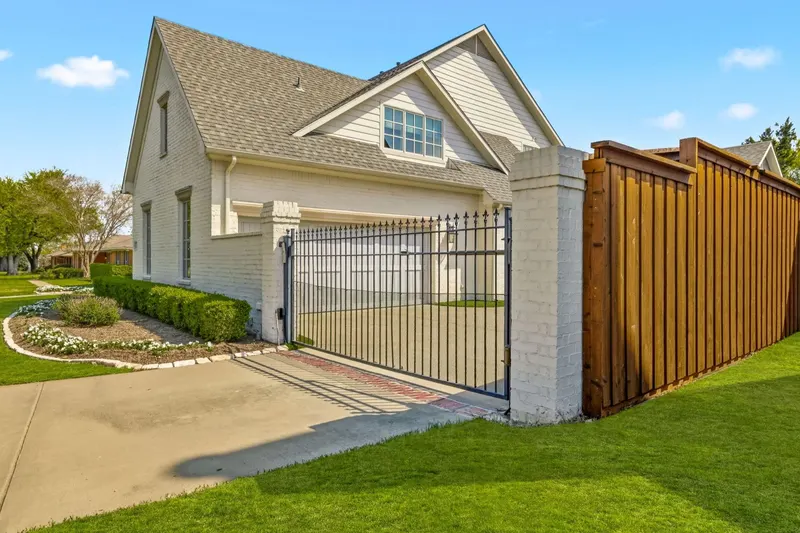
Gates are checked with the same care as the grounds. Each one should swing freely, latch without lifting and clear the lawn or paving underneath, so nobody has to drag it across a bed to get the mower through.
Every sprinkler zone near the line is run again. If a line was nicked, this is when it shows, and it gets repaired and retested before the job is closed. Honest reporting matters here. A cut pipe that is patched and disclosed is a small event. One that is buried turns into a dead hedge in August.
Owner Jack Johnson does the final walkthrough himself on every build. That is the time to look at the beds, the lawn and the driveway together, not only the fence. Our estate fence and gate timeline shows where the walkthrough falls on a larger project.

What should you ask a fence company before work starts?
A few direct questions reveal how a company treats a property. The answers should be specific and should appear in the written scope, as described in our fence quote and contract checklist.
If the answers are vague, expect the work to be too. Park Cities Fence & Deck is insured, and Jack attends every consultation and build. Request a free written estimate or call (214) 755-8100, and walk the fence line with him before a single post is set.
- Who files the 811 ticket?: It should be the contractor, before the build date, with the marks on the ground before digging.
- How will sprinkler lines be found?: Expect a walk with you, zones run, heads and valve boxes flagged.
- Where will the crew enter and stage materials?: One agreed path and one agreed staging area, both protected.
- What happens if something is damaged?: Reported the same day and repaired, with responsibility stated in writing.
- Is haul-off included?: Old fencing, footings, soil and debris should leave with the crew.
How Park Cities Fence & Deck helps
Jack Johnson comes out himself, looks at your property and gives you a free written estimate with a timeline. Wood, iron and masonry are all built in-house, so the advice fits the property. Related services: wood fencing, masonry fencing, fence rehab / repair. We work in Highland Park and Preston Hollow and across Dallas.
Questions people ask next
Will the fence crew repair sprinkler lines it cuts?
Ask before signing and get the answer in the written scope. A responsible company flags the system with you first, digs by hand near known lines, and repairs and retests anything it damages. Lines that were not disclosed or could not be located are worth discussing up front, since no one can see through soil.
Does the 811 locate mark my sprinkler system?
No. The 811 system marks lines that belong to the utilities, such as gas, electric, water service and communications. Sprinklers, drip irrigation, landscape lighting, pool plumbing and gas lines you added are private. Tell your installer where they run, and run the irrigation zones together before the build so heads and valves can be flagged.
Can a fence be built without hurting a large oak on the property line?
Usually, with planning. Holes near the tree are dug by hand, posts shift to avoid major roots, and nothing is staged under the canopy. In some cases the fence should jog around the trunk. For a significant tree we suggest an arborist’s input, and you should check whether your city has tree protection rules.
Should I remove plants along the old fence before the build?
Trim them back and move anything portable. Do not rip out established shrubs unless you planned to replace them. Tell the crew which plants matter most. Growth that has pushed through the old fence will be disturbed when the fence comes out, so it is better to prune it cleanly a week or two beforehand.
How long is the yard open to pets and the pool during a fence replacement?
It depends on the length and type of fence. Most wood fences are built in one to three days, and the old fence can come out in sections so the yard is not left open overnight. Tell us about dogs and pools at the estimate so temporary panels and the sequence are planned in advance.
Sources and further reading
- Railroad Commission of Texas: Pipeline Damage Prevention Program (811 before digging)
- University of California Agriculture and Natural Resources: Protecting Trees During Construction
General information, not legal advice. Rules change: we confirm the current requirements with your city or HOA before we build.