Planning · Dallas, Texas
What Is the Best Fence for Small Dogs, and Can a Fence Keep Coyotes Out in DFW?
Small dogs leave through gaps and under the bottom rail. Coyotes come over the top. Here is how to build for both.
 By Jack Johnson, owner of Park Cities Fence & Deck · 9 min read · 1,832 words
In short
The best fence for a small dog is a solid cedar privacy fence built tight to the ground with a rot board, or an iron fence with closely spaced pickets, plus gates that fit their openings. No ordinary residential fence is coyote-proof. Height, a sealed bottom edge and supervision together lower the risk.
In this guide
- What kind of fence keeps a small dog from squeezing through or digging under?
- How do I stop my dog from jumping or climbing the fence?
- How do I keep coyotes and bobcats out of my yard in DFW?
- Do coyote rollers work on a wood or iron fence?
- How do I keep rabbits, armadillos and snakes from getting under a fence?
- How do I stop my dog from fence fighting with the neighbor's dog?
- Is an invisible or electric dog fence a substitute for a real fence?
Need this done? See wood fencing.
Small dogs do not usually go over a fence. They go through it or under it: between iron pickets, under a gate, through the gap where the yard dips, or out a hole they dug last week.
Wildlife works the other way. Coyotes live in Texas cities as well as in the country, and they come over or under. This guide covers both problems, uses official wildlife guidance where facts about animals are involved, and is honest about the limits. No fence guarantees that a determined dog stays in or a determined coyote stays out.
What kind of fence keeps a small dog from squeezing through or digging under?
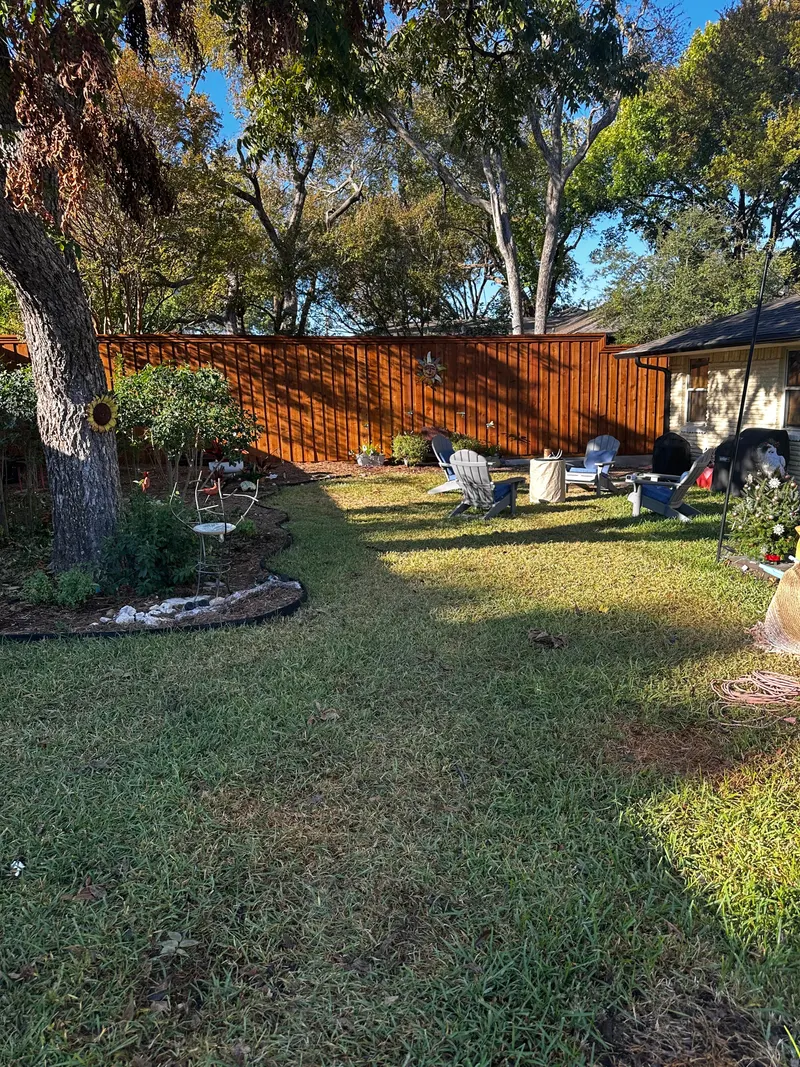
One with no opening wider than the dog and no daylight at the bottom. For most owners that means a solid cedar privacy fence that follows the grade, with a rot board along the base.
A rot board, also called a kickboard, is a horizontal board at the bottom of the fence. It closes the gap between pickets and soil, takes the ground contact so the pickets do not, and can be replaced on its own. Our guide to the rot board on a wood fence explains how it is built.
If you want to keep a view, iron or ornamental steel works when the picket spacing is specified for the dog. Standard spacing stops a retriever and passes a Yorkie. Closer spacing, or a lower section with extra pickets between the main ones, closes that gap. See iron fence styles, heights and picket spacing.
- Measure the dog: A small dog can pass where its head fits. Give us the breed and weight at the consultation.
- Follow the grade: On a slope, step or rack the fence so no triangle of daylight opens under a panel.
- Seal the corners: Where the fence meets the house, a column or a neighbor's fence is where gaps hide.
- Fit the gates: The gap under and beside a gate is usually the largest opening in the yard.
How do I stop my dog from jumping or climbing the fence?
Add height, remove footholds and clear the launch points. Most jumpers are helped more by the second and third steps than the first.
Dogs climb horizontal rails like a ladder. A fence built with the rails facing the outside of the yard, or a board-on-board design with a smooth inner face, gives paws nothing to grip. Horizontal-board fences look sharp but can offer toeholds, so think about that if your dog climbs.
Then look at the yard. Planters, benches, air conditioner units, firewood stacks and low retaining walls beside the fence all shorten the jump. A solid fence also helps, because a dog that cannot see the squirrel or the neighbor's dog has less reason to try. Height limits apply, so check fence height rules in Dallas. Our guide to the best fence for large dogs covers athletic breeds.
How do I keep coyotes and bobcats out of my yard in DFW?
Start by removing what attracts them, supervise small pets outdoors, and treat the fence as one layer of protection. Texas Parks and Wildlife advises keeping pets inside, in a secure kennel or covered exercise yard, or within the close presence of an adult.
Coyotes are smaller than most people expect. The City of Dallas plan puts most at roughly 25 to 40 pounds and says they mainly eat small mammals such as mice, rats and rabbits, which is why an unattended cat or small dog is at risk. The Texas Parks and Wildlife urban coyote guidance is mostly about food: do not feed coyotes, keep pet food and water inside, secure garbage, pick up fallen fruit, and thin dense cover near buildings that shelters the rodents coyotes hunt.
The City of Dallas Coyote Management Plan is direct about fences. It states that standard wooden or chain link residential fencing is not coyote proof. It describes a coyote-proof fence as at least eight feet tall and made of a material coyotes cannot climb, or at least six feet tall with a coyote roller along the top. Bobcats are a harder case: Texas Parks and Wildlife describes them as expert at climbing trees, found throughout Texas and highly adaptable. Assume a bobcat can cross a fence.
Timing matters as well. The Dallas plan lists coyote breeding season as January through March and warns that conflicts with dogs are more likely then. It advises against leaving dogs outside unattended then, and recommends a leash six feet long or shorter on walks. A fence buys time and removes easy opportunities. It does not replace being outside with a small dog at dawn and dusk.
Fence features and what they do for small dogs and wildlife
| Feature | Helps with | Limits |
|---|---|---|
| Solid cedar with rot board | Squeezing through, visual triggers, digging starts | Standard-height wood is not coyote proof |
| Close-spaced iron pickets | Small dogs slipping between bars | Open view; animals can still see each other |
| Taller fence, smooth inner face | Jumping and climbing by dogs | City and HOA height limits apply |
| Buried barrier or mesh apron | Digging in or out | Must be planned around utilities and roots |
| Tight, self-latching gates | The most common escape point | Needs adjustment as the ground moves |
What this means for you: No combination of features guarantees containment or exclusion. Supervision is part of the system.

Do coyote rollers work on a wood or iron fence?
They can help on a fence that is already tall enough. A coyote roller is a free-spinning bar mounted along the top of a fence so an animal cannot get a grip to pull itself over. The City of Dallas plan pairs rollers with a fence at least six feet tall.
Rollers are an aftermarket product, and they are only as good as what they sit on. They need a continuous, level top line and solid attachment points, which a capped cedar fence or a steel top rail provides. They do nothing about digging, gaps or an open gate, and they change how the fence looks. Some HOAs will have an opinion.
If coyotes are a known problem on your street, tell us at the consultation. Fence height, the top detail and the bottom edge are far easier to design in than to add later. Our guide to the best fence for home security covers related top-of-fence choices.
How do I keep rabbits, armadillos and snakes from getting under a fence?
Close the bottom edge and make the fence line less inviting. No fence stops every small animal, but a sealed base ends most casual traffic.
The Dallas plan describes two ways to stop digging under a fence: extend it underground at least twelve inches, or add an L-shaped mesh apron that runs outward at least 18 inches and is pinned down. Either one also discourages a dog digging out. Armadillos are a real test. Texas Parks and Wildlife calls them prolific diggers that dig for grubs and insects, so a lawn with fewer grubs is less interesting to them.
Snakes fit through openings no fence can practically close, so the fence line itself matters more: keep grass short, and keep woodpiles, debris and dense groundcover away from the boards. Any buried barrier has to be planned around sprinkler lines, tree roots and utilities, with the lines located before digging, as explained in fences, easements and 811.
How do I stop my dog from fence fighting with the neighbor's dog?
Block the view and add distance. Fence fighting is driven by sight, so a solid fence with no gaps usually calms it faster than training alone.
Side-by-side pickets open up as they dry, and dogs find those slots. Board-on-board cedar stays closed, which is one of the practical reasons to choose it. See board-on-board vs. side-by-side. A row of shrubs or a planting bed a few feet inside the fence keeps dogs off the boards and protects the pickets from claws and teeth.
Talk to the neighbor too. The fix is often shared, and so is the fence. Our shared fences in Texas guide covers how to raise it. If the boards are already chewed or pushed out, fence repair can replace the damaged section.
Is an invisible or electric dog fence a substitute for a real fence?
No. An invisible fence may keep a trained dog in, but it keeps nothing out. Coyotes, loose dogs and people walk straight across the line.
For a small dog that is the whole problem. The dog stays inside a boundary that offers no protection from anything coming in. A motivated dog may also run through the correction and then be unwilling to cross back. We do not install electronic containment systems. We build physical fences in wood, iron and masonry, and we will tell you plainly which one suits your dog and your lot. To talk it through, request a free written estimate or call (214) 755-8100.
How Park Cities Fence & Deck helps
Jack Johnson comes out himself, looks at your property and gives you a free written estimate with a timeline. Wood, iron and masonry are all built in-house, so the advice fits the property. Related services: wood fencing, iron / metal fencing.
Questions people ask next
Is a 4-foot fence tall enough for a dog?
For a small, calm dog that does not jump, often yes, provided the pickets are close and the bottom is sealed. It is not enough for most medium and large dogs, and it does nothing against coyotes. If a pool is involved, barrier rules set their own minimums. Tell us the breed and behavior, and we will recommend a height.
How do I dog-proof a gate?
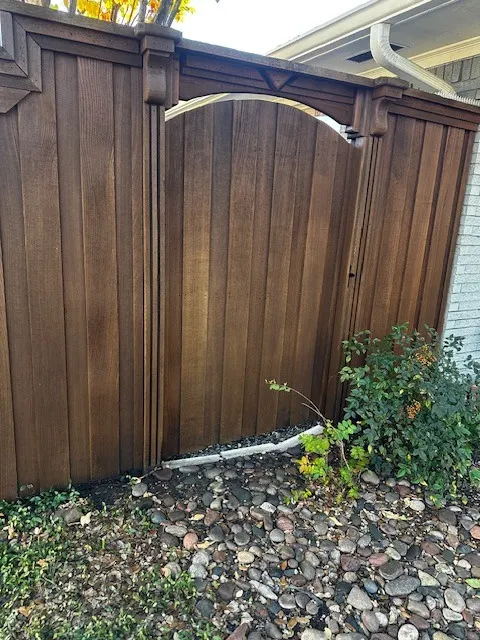
Close the gaps and make it latch itself. The space under and beside a gate is usually the largest opening in a fence. A well-built gate has a rigid frame that will not sag, a threshold or tight ground clearance, self-closing hinges and a latch a dog cannot nose open. See how to build a gate that does not sag.
Will a kickboard keep my dog from digging out?
It helps, and it stops casual scratching, but a committed digger goes under it. A kickboard closes the gap between pickets and ground and gives the dog a harder edge to work against. For a serious digger, combine it with a buried barrier or mesh apron along the problem stretch, and fill existing holes promptly.
My neighbor's dog is damaging my fence. Who is responsible?
That depends on who owns the fence, where it sits and the facts, and it can become a legal question. Start by photographing the damage and talking to your neighbor, since most cases are settled with a shared repair. If it is not resolved, speak with your insurer or an attorney. This is general information, not legal advice.
What should I do with my dogs while the fence is down?
Keep them indoors or on a leash until the last gate is hung and latched. A partly built fence has openings a small dog will find within minutes. Plan a day or two of leash walks or a stay elsewhere. Our guide to fence installation day explains the full sequence.
Sources and further reading
- Texas Parks and Wildlife Department: Urban Coyotes
- City of Dallas, Dallas Animal Services: Coyote Management Plan (June 2022)
- Texas Parks and Wildlife Department: Bobcat (Lynx rufus)
- Texas Parks and Wildlife Department: Nine-banded Armadillo
General information, not legal advice. Rules change: we confirm the current requirements with your city or HOA before we build.