Planning · Dallas, Texas
What Is the Difference Between a Fence Installer and a Full-Service Fence, Gate and Masonry Company?
One builds a fence. The other is responsible for the whole perimeter: wood, iron, masonry, gates and paperwork.
 By Jack Johnson, owner of Park Cities Fence & Deck · 8 min read · 1,669 words
In short
A fence installer puts up one type of fence, usually wood or chain link, from a standard design. A full-service fence, gate and masonry company designs the whole perimeter and builds wood, iron, brick or stone and automatic gates with its own crews, handles permits and utility locates, and stays responsible for all of it under one contract.
In this guide
- What does a fence installer do?
- What makes a company full-service?
- How do the two compare?
- Why does it matter that wood, iron and masonry are built in-house?
- Who handles permits, HOA approval and utility locates?
- When is an installer enough, and when do I need full service?
- How can I tell which kind of company I am talking to?
Need this done? See masonry fencing.
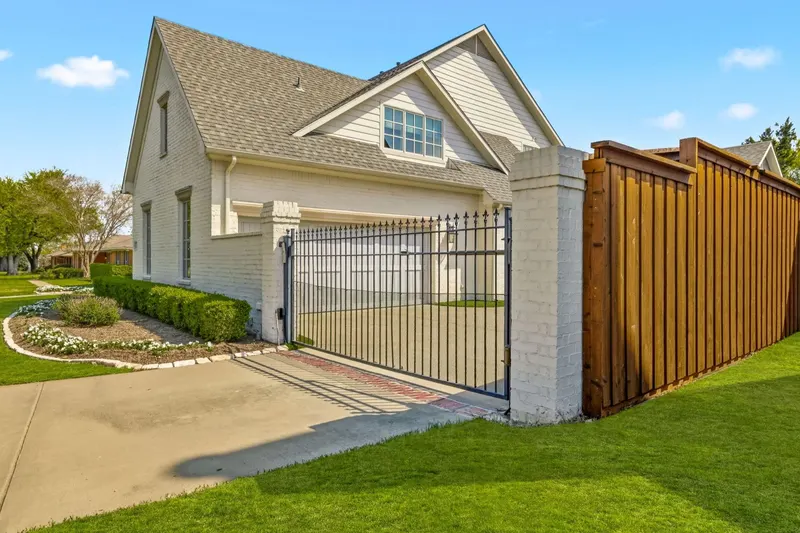
Both kinds of company are legitimate, and the right choice depends on the job. Replacing sixty feet of cedar between two back yards does not need a design meeting. A street-facing wall with stone columns, an iron section and a motorized gate does.
The trouble starts when a project that needs the second kind of company is given to the first. The work gets split among subcontractors who never meet, and nobody owns the places where their work joins. This guide explains the difference so you can match the company to the project.
What does a fence installer do?
An installer builds fences, and good ones do it quickly and well. The typical job is a standard privacy fence: remove the old one, set posts, hang rails and boards, build a walk gate, haul away the debris. Many installers are efficient small crews, and for a straightforward replacement that is exactly what you want.
The limits show at the edges of that job. An installer may not offer design help beyond a few standard styles. Ironwork, masonry and gate automation are usually outside what the crew does, so those parts are referred out or subcontracted. Permits, HOA drawings and utility locates may be left to the homeowner.
None of this is a criticism. It is a scope. The question is whether your project fits inside it.
What makes a company full-service?
Five things, and you can check each one before you sign.
The first is the one buyers notice soonest. A full-service consultation starts with the house, not the price list: the brick, the roofline, the view from the street, where the dogs run and where the pool equipment sits. The proposal that follows reads like a plan for the property. Our guide to fence styles for Park Cities and Preston Hollow estates shows what that kind of design thinking produces.
- Design: Someone senior visits the property, looks at the house and proposes a fence that suits it, with samples and drawings.
- All trades in-house: Wood, iron, masonry and gates are built by the company’s own people, not passed to whoever is available.
- Paperwork handled: Permit applications, HOA submissions and utility locate requests are part of the job.
- One point of responsibility: One contract, one schedule, one walkthrough and one phone number afterward.
- Service after the build: Repairs, gate service and washing and restaining are offered by the same company that built the fence.
How do the two compare?
The table shows the usual differences. Individual companies vary, so use it as a list of questions to ask rather than a verdict on anyone.
Fence installer versus full-service fence, gate and masonry company
| Part of the job | Fence installer | Full-service company |
|---|---|---|
| Design | Standard styles from a short list | Designed for the house, with samples and drawings |
| Materials built | Usually wood, sometimes chain link | Wood, iron, steel, aluminum, brick and stone |
| Automatic gates | Referred out or subcontracted | Gate, motor, keypad and safety sensors by one team |
| Permits, HOA and locates | Often left to the homeowner | Prepared and filed as part of the job |
| Responsibility | For the fence section they built | For the whole perimeter under one contract |
| After the build | May or may not return for service | Repair, gate service and restaining available |
What this means for you: If your project is one material in a back yard, an installer is enough; if it mixes materials or includes a gate, you want one company accountable for all of it.
Why does it matter that wood, iron and masonry are built in-house?
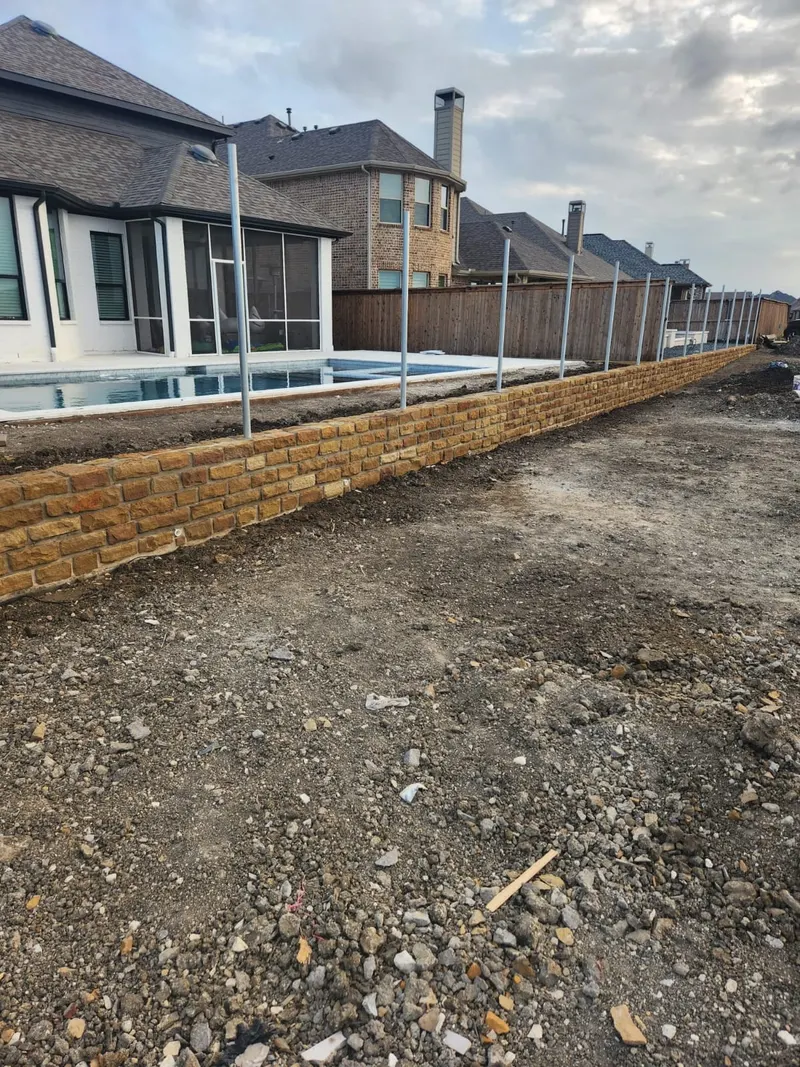
Because fences fail at the joints between trades. A stone column needs steel embedded in it at the right height for the iron panel that will bolt to it later. A cedar section has to meet that column with a clean trim detail and a gap that allows for movement. A gate post has to be sized for the gate that the automation crew will hang on it.
When three subcontractors do those three things on three different weeks, each builds to their own assumption. When one company builds all of it, the mason knows what the ironworker needs because they work from the same drawing and answer to the same person.
It also matters in North Texas clay. Soil here swells and shrinks with the seasons, and a masonry column, a steel post and a wood post each respond differently. Footings have to be designed as a system. Our guides to brick and stone fence walls and matching brick and limestone columns go deeper on this.
Who handles permits, HOA approval and utility locates?
Ask every bidder this question directly. The paperwork is not optional, and it is easy to get wrong.
The City of Dallas states on its fence permit checklist that a permit is required for a fence over four feet high in a front yard or over six feet high elsewhere, and for any swimming pool barrier fence. The application calls for a scaled site plan showing the fence, gates, easements, driveways and visibility triangles. Highland Park, University Park and the suburbs each have their own rules, so we confirm the current requirement with the city or town before the build.
Underground utilities come next. The Railroad Commission of Texas states that Texas law requires a call to 811 before digging deeper than 16 inches, and fence post holes go deeper than that. A full-service company files the locate request itself. For how these steps fit together, see fence permits, HOAs and utility locates in DFW and, for the Park Cities, Highland Park and University Park fence permits. This is general information; confirm the rules for your address with your city and HOA.
When is an installer enough, and when do I need full service?
An installer is usually enough for a like-for-like replacement of a back yard wood fence, on a flat lot, with no HOA review and no gate beyond a simple walk gate.
Look for a full-service company when any of these apply: the fence faces the street; the project mixes wood, iron or masonry; there is a driveway gate, especially an automatic one; the lot slopes or has drainage to manage; mature trees sit on the line; the property is in an HOA, a conservation district or one of the Park Cities; or an architect, pool builder or landscaper is working on the property at the same time.
Commercial and community work belongs in the second group as well. A property manager or HOA board replacing a perimeter fence needs consistent materials over a long run, a schedule that works around residents and one company to call afterward.
There is a middle case worth naming. Some projects start as a simple replacement and grow: the owner decides to add a driveway gate next year, or to replace the front section with iron and columns later. If that is likely, choose the company that can build the later phases now, so posts, footings and conduit are placed with them in mind. Retrofitting a gate onto posts that were never sized for one usually means starting that section again.
How can I tell which kind of company I am talking to?
A few questions settle it quickly. Who comes to the consultation, a salesperson or someone who builds? Who will be on site during the build? Which parts of my job are done by your own crews and which are subcontracted? Can I see finished projects that combine wood, iron and masonry? Who files the permit and the locate request?
Then read the estimate. A full-service estimate lists materials, post and footing details, gate hardware and the operator model, and states the warranty terms in writing. A one-line price for a fence is a sign of a one-line scope. Our quote and contract checklist and our guide to choosing a fence company in Highland Park and University Park cover what to compare.
Park Cities Fence & Deck is the second kind of company. Owner Jack Johnson, a former custom home builder and a Dallas resident for more than 35 years, attends every consultation and build and does the final walkthrough himself. Wood, iron and masonry are built in-house, the company is insured and estimates are free and written. See finished work in the gallery, or call (214) 755-8100 to schedule a visit.
How Park Cities Fence & Deck helps
Jack Johnson comes out himself, looks at your property and gives you a free written estimate with a timeline. Wood, iron and masonry are all built in-house, so the advice fits the property. Related services: masonry fencing, gates & gate motors, wood fencing. We work in Highland Park and University Park and across Dallas.
Questions people ask next
Is a full-service fence company more expensive than an installer?
For the same simple fence, the difference is usually in what is included rather than the fence itself: design time, permit handling, heavier posts and footings, and service afterward. For a mixed project, one company is often the more economical route, because coordination errors between separate subcontractors are costly to fix.
Can a fence installer build masonry columns?
Some can, but most subcontract masonry to a separate crew. Ask who builds the columns, how deep the footings go and how the fence panels attach to them. Columns on shallow footings lean in Dallas clay, and the repair usually means rebuilding the column.
Who should install the motor on a driveway gate?
Ideally the company that built the gate. The gate frame, hinges, posts and operator have to be sized together, and safety sensors have to be placed and tested as a system. When the gate and the automation come from different companies, each tends to point at the other when something goes wrong.
Does Park Cities Fence & Deck take small jobs?
Yes. We repair fences, replace sections, rehang gates and wash and restain existing cedar, as well as building complete perimeters. A small job gets the same written estimate and the same final walkthrough. Call (214) 755-8100 and describe what you need.
Do you handle commercial and HOA perimeter fencing?
Yes. We build and repair perimeter fencing for commercial properties, communities and property managers across Dallas and nearby cities, in wood, iron and masonry. We work to the community’s standards for material, height and color and schedule the work in phases so access is maintained.
Sources and further reading
- City of Dallas Planning & Development: Fence Permit Application Checklist
- Railroad Commission of Texas: Pipeline Damage Prevention Program
General information, not legal advice. Rules change: we confirm the current requirements with your city or HOA before we build.