Planning · Dallas, Texas
Does the Finished Side of a Fence Have to Face the Neighbor in Texas?
No Texas statute picks a side. Your city or HOA might, and the everyday neighbor questions have practical answers.
 By Jack Johnson, owner of Park Cities Fence & Deck · 9 min read · 1,828 words
In short
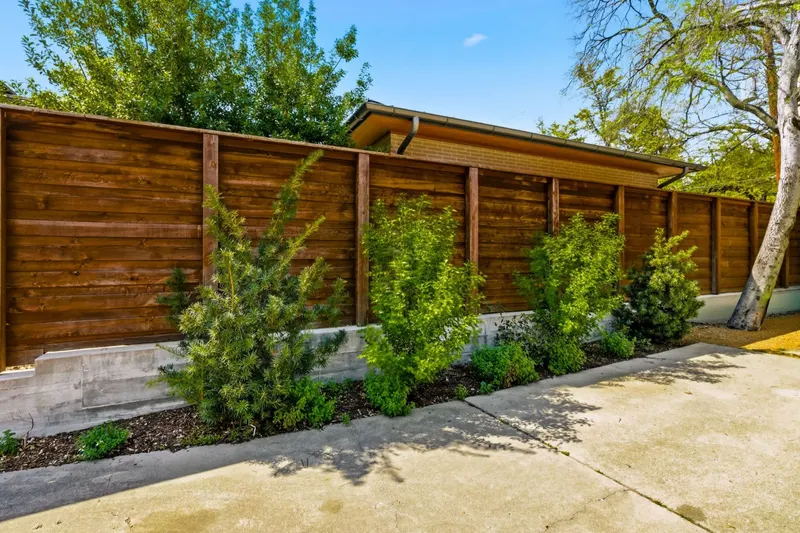
No Texas statute says which side of a fence must face the neighbor. Where a rule exists, it comes from your city or your HOA. Frisco, for example, requires the post-and-rail side of fence sections along a public street to face into the lot. Between two back yards, most cities leave the choice to the owners.
In this guide
- Which side of a fence faces the neighbor, and who decides?
- Can my neighbor attach things to my fence or paint their side of it?
- Can my neighbor tear down a fence between our yards?
- My neighbor's dog is damaging my fence. Who is responsible?
- Can I build a second fence right next to my neighbor's fence?
- Can I cut back my neighbor's tree or vines growing over the fence?
- What can I do about a neighbor's falling-down fence?
Need this done? See wood fencing.
Most fence arguments between neighbors start with an assumption that "the law" settles the question. In Texas it usually does not. The Texas State Law Library's neighbor-law guide says the state has no specific statute on fences between neighbors, and that court cases, city ordinances and property owners' association rules fill the gap.
That leaves three layers to check: state law, your city, and your HOA or deed restrictions. This guide answers the everyday questions our guide to shared fences in Texas does not cover. It is general information, not legal advice. For a dispute, talk to a Texas attorney.
Which side of a fence faces the neighbor, and who decides?
Your city or your HOA decides, if anyone does. Texas has no state statute that picks a side, so the answer changes from one city and one subdivision to the next.
Frisco is the clearest local example. Its fence ordinance says sections that run substantially parallel to a public street must have the back side, the one with exposed posts and rails, turned to the inside of the lot, unless the posts and rails are concealed within matching construction. The ordinance does not choose a side for a fence between two back yards. Our Frisco fence ordinance guide covers the rest.
Other city documents we read are silent on the point. The Plano residential fence permit handout sets heights, visibility clips and gate rules without naming a side, and it tells owners to contact their homeowners association for deed restrictions. Fort Worth treats fences along major roads separately, which we cover in our Fort Worth fence rules guide. Where the city says nothing, the HOA or deed restrictions often do.
Where a finished-side rule can come from in North Texas
| Source of the rule | What it usually covers | How to check it |
|---|---|---|
| Texas state law | No statute sets a side for a residential fence | Texas State Law Library neighbor-law guide |
| City ordinance | Often the side facing a public street | City fence ordinance or permit office |
| HOA or deed restrictions | Side, style, stain color and height | Recorded restrictions and the design committee |
| Agreement between neighbors | Anything the rules above leave open | Put it in writing before the build |
What this means for you: When two layers disagree, the stricter one normally controls. We confirm the city rule and read your HOA guidelines before we order materials.
Can my neighbor attach things to my fence or paint their side of it?
Not without your permission, if the fence belongs to you and stands on your land. A fence you paid for, inside your line, is your property on both faces. If it sits on the boundary and both owners use it, both have a say and neither should change it alone.
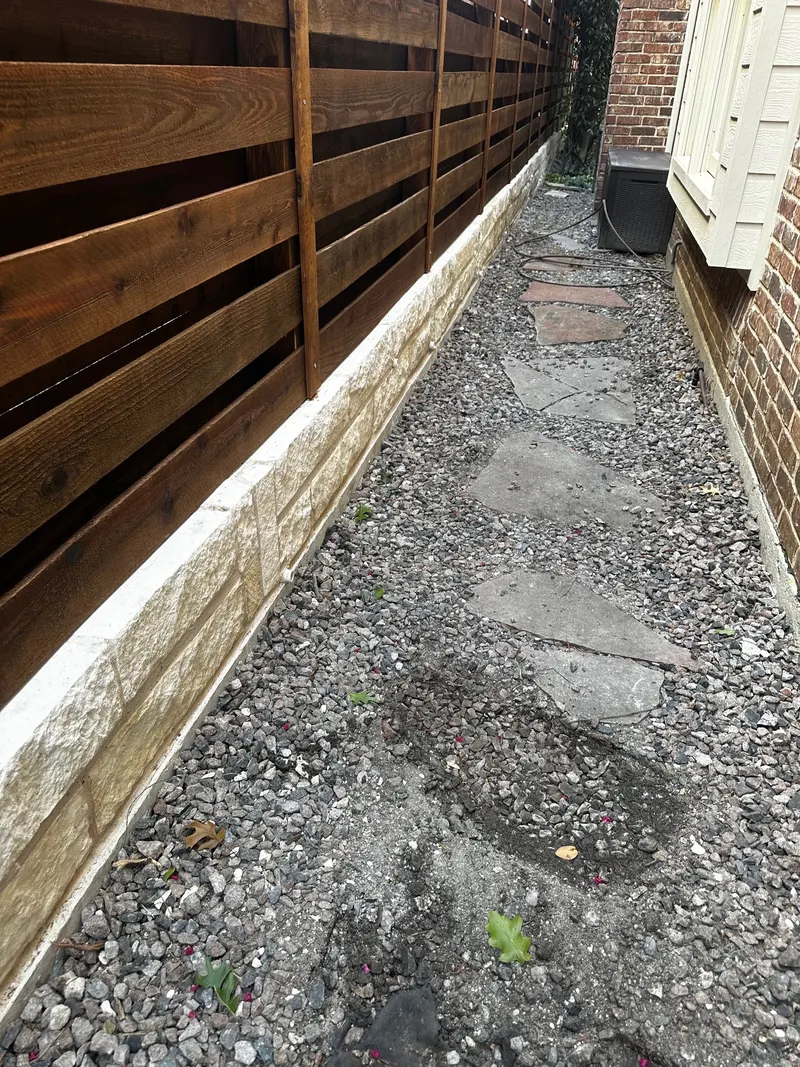
The practical problems are real ones. Planters, trellises and vines add weight and hold moisture against the pickets. A neighbor who screws a new fence run into your end post transfers their load to your structure. Paint or stain on the far side can bleed through the gaps and show on your side.
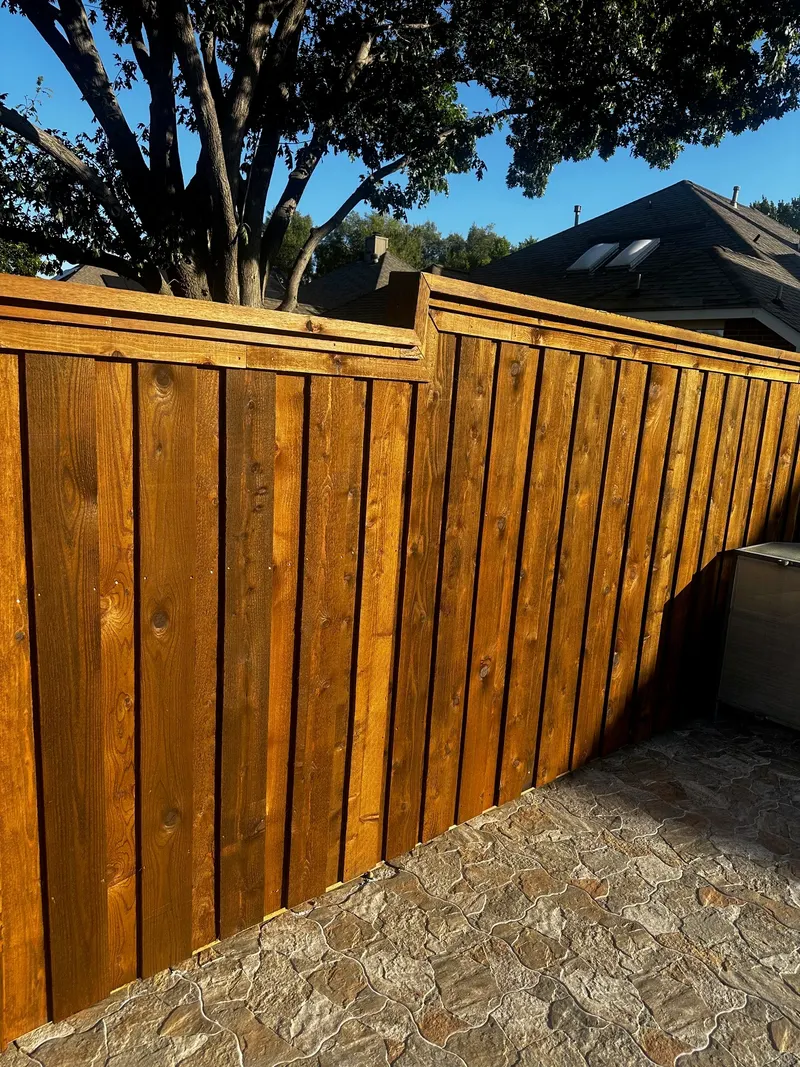
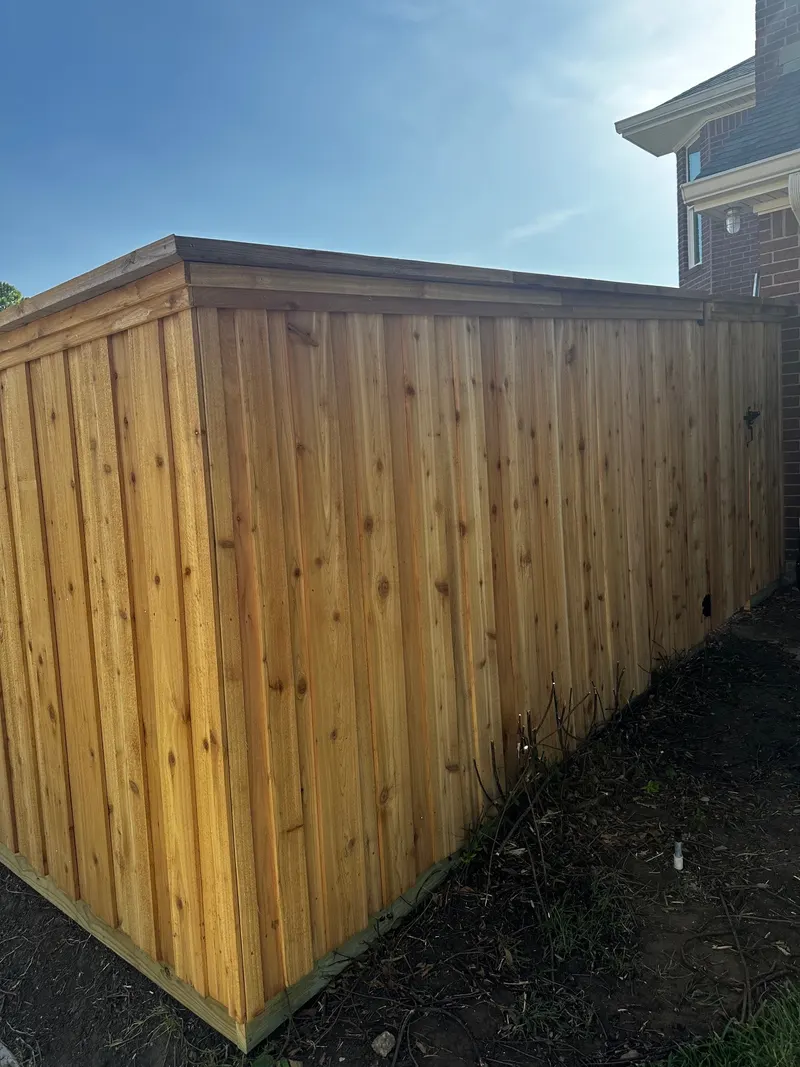
The easy fix is a short written note: what may be attached, who repairs damage, and which stain is used on both faces. A text thread or an email both of you can find later is enough. Our cedar stain guide explains why one product on both sides weathers evenly. If you want different looks on each face, a board-on-board fence hides the gaps that let color show through.
Can my neighbor tear down a fence between our yards?
A neighbor can generally remove a fence that belongs to them and stands entirely on their land. They should not remove yours, and a fence on the line that both yards rely on should not come down without agreement.
The State Law Library guide notes that state law sets requirements for a landowner who wants to remove certain fences, so this is a point to raise with an attorney before anyone starts pulling pickets. The first fact to settle is where the line is. A current survey answers that, and our guide to a fence over the property line explains how to read one.
Think about what the fence does for you before it disappears. If your neighbor's fence is part of the barrier around your pool, or the only thing holding your dog in, you need your own fence in place first. Our pool fence rules by city guide covers the barrier side of that.
My neighbor's dog is damaging my fence. Who is responsible?
Texas has no fence-specific statute for this, so responsibility follows general liability principles, and that is a question for your insurer or an attorney. In practice the fastest route is a calm conversation, photos of the damage and a repair plan both households can live with.
Most dog damage is predictable: digging under the bottom, chewing picket ends and pushing against one weak bay. A repair can be built to resist all three.
- Close the bottom: A pressure-treated kickboard along the base takes the digging and chewing instead of the cedar pickets.
- Stiffen the frame: Steel posts set in concrete and a third rail keep a bay from flexing when a large dog hits it.
- Remove the reason: Solid board-on-board panels block the sight line that sets off fence fighting between two dogs.
- Document it: Dated photos and a written estimate make the cost conversation with your neighbor short and factual.
Can I build a second fence right next to my neighbor's fence?
Usually yes, on your own land, but check the city first, because two parallel fences create a strip nobody can reach. Leaves, weeds and moisture collect there and both fences age faster.
Plano addresses this directly. The city's fence handout shows a three-foot separation between a shared fence that stays and a new fence built beside it, so the space can be maintained. It also says that when a new fence is built parallel to and within three feet of an existing fence on the same lot, the existing fence must be removed. See our Plano fence rules guide for the full list.
In most yards the better answer is one good fence. If the neighbor will not share the cost, you can still ask permission to remove the old one and build a new cedar privacy fence just inside your line. You own it, you control its care, and nobody inherits a dead strip. If the old fence must stay, leave enough room to walk between the two and keep that strip clear.
Can I cut back my neighbor's tree or vines growing over the fence?
Yes, up to the property line. The Texas State Law Library's guide on trees says a neighboring landowner has the right to trim limbs or branches back to the property line, and warns that they could be sued if they injure the tree or other property in the process.
That warning matters. Cutting on your side is one thing. Topping the tree, cutting the trunk or killing it with a careless cut is another. The same guide says the location of the trunk generally determines who owns the tree. For anything larger than light pruning, tell the neighbor first and hire an arborist.
Vines are harder on a fence than branches. They hold water against the wood, pry boards apart and hide rot until a bay fails. If a new fence is going in near a neighbor's mature tree, our guide to building a fence near mature trees explains how post locations are adjusted around roots.
What can I do about a neighbor's falling-down fence?
Start with the neighbor, then the city. Many cities have a maintenance standard for fences, and code enforcement can require the owner to repair or remove one that has become unsafe.
Frisco's ordinance is specific. A fence may not lean more than one inch out of vertical for each foot of height, it must be kept in sound structural condition or removed, and repairs to fences on common private property lines are the joint responsibility of the property owners on both sides. Plano's handout points to a maintenance section in its own fence ordinance. Other cities word it differently, so we confirm the local rule before advising you.
Before you file a complaint, get facts. We can look at the fence from your side and tell you whether it needs a few new posts or a full rebuild. Our repair or replace guide shows how that call is made, and our fence repair service covers both outcomes. A written estimate often does more to move a neighbor than a letter from the city.
How Park Cities Fence & Deck helps
Jack Johnson comes out himself, looks at your property and gives you a free written estimate with a timeline. Wood, iron and masonry are all built in-house, so the advice fits the property. Related services: wood fencing, fence rehab / repair.
Questions people ask next
How do I ask a neighbor to split the cost of a fence?
Ask early, in person, with a written estimate in hand. The Texas State Law Library notes that a landowner generally has no legal obligation to share the cost or upkeep of a dividing fence unless they agree to, so this is a request, not a demand. Offer two options at different prices and put the agreed split, style and stain in a short signed note.
My neighbor's tree fell on my fence. Who pays?
It depends on the facts, and the State Law Library guide does not give one rule for fallen trees. In practice the claim usually starts with your own homeowners insurer, who decides whether to pursue the neighbor. Photograph everything before cleanup and get a written repair estimate. Our fence insurance claim guide explains the steps, and we provide the documentation insurers ask for.
Can I stain my side of a neighbor's fence?
Ask first. If the fence belongs to your neighbor and stands on their land, the side facing you is still their property. Most neighbors agree when you offer to use the same product and color on both faces, because a fence sealed on one side only weathers unevenly. Get the yes in a text or email before any work starts.
Can I build my fence right on the property line, or should it sit inside it?
Either can work, but a fence just inside your line is clearly yours. A fence on the line tends to become shared in practice, with shared decisions. Cities also check location: the Town of Highland Park, for example, inspects a string line at the property pins before the fence is built. We work from a current survey either way.
Can my neighbor claim my land if their fence has been over the line for years?
It is possible but rare. The Texas State Law Library describes adverse possession as a way for a trespasser to gain title after holding property for a set time and meeting specific requirements, with the legal title holder presumed to be the owner. The rules are in the Civil Practice and Remedies Code, Chapter 16. If a fence is over your line, see an attorney soon.
Sources and further reading
- Texas State Law Library: Neighbor Law, Fences and Boundaries
- Texas State Law Library: Neighbor Law, Trees
- City of Frisco Code of Ordinances, Chapter 18, Article IX: Fences
- City of Plano: Residential Fence Permit Requirements (PDF)
General information, not legal advice. Rules change: we confirm the current requirements with your city or HOA before we build.