Planning · Dallas, Texas
Do You Need a Fence Permit in Highland Park or University Park, and How Long Does Approval Take?
Yes, both towns require a permit. What each one asks for, the inspections that follow and what controls the timeline.
 By Jack Johnson, owner of Park Cities Fence & Deck · 9 min read · 1,736 words
In short
Yes. The Town of Highland Park and the City of University Park both require a fence permit, and University Park requires one even when you replace more than 25 percent of one side of an existing fence. Neither town publishes a fixed approval time. A complete submittal is the single biggest factor in how quickly a permit is issued.
In this guide
- Does the Town of Highland Park require a fence permit?
- Does the City of University Park require a fence permit?
- How do the two towns compare, side by side?
- How long does fence permit approval take?
- What inspections happen after the permit is issued?
- What rules about height and location catch homeowners off guard?
- What changes if the fence encloses a pool or includes a driveway gate?
- Who should pull the permit, you or the fence company?
Need this done? See wood fencing.
The Park Cities are two independent municipalities surrounded by Dallas. Each has its own building department, its own forms and its own inspectors, and neither follows the City of Dallas fence rules. If you have built a fence in Dallas before, set that experience aside.
Below is what each town’s own published documents say, what the process looks like in practice, and where projects get delayed. This is general information, not legal advice. Requirements change, so we confirm the current rules with the town before every build and handle the permit as part of every fence installation. For the wider DFW picture, see fence permits, HOAs and utility locates in DFW.
Does the Town of Highland Park require a fence permit?
Yes. The Town’s Department of Building Inspection publishes a fence permit packet with a list of submittal requirements. It asks for a survey carrying a registered professional land surveyor’s stamp, or a builder’s site plan drawn to scale, with the fence location shown and the heights and gates identified.
The packet also sets location limits. A fence may not be located in the required front yard setback of the house, and it may not be located in an easement. Masonry walls require engineer-stamped plans, and the footing may not cross the property line or sit in a public way or easement. If your plan includes brick or stone columns or a wall, the engineering is part of the permit, not an optional extra. The permit fee is calculated by the Town from the construction cost of the project.
Does the City of University Park require a fence permit?
Yes. University Park’s published fence regulations state that a fence permit must be obtained before proceeding with any fence, wall, screen or retaining wall in the city. The permit is also required for repair or replacement of more than 25 percent of any one side of a fence. That catches many homeowners who assume a like-for-like replacement needs nothing.
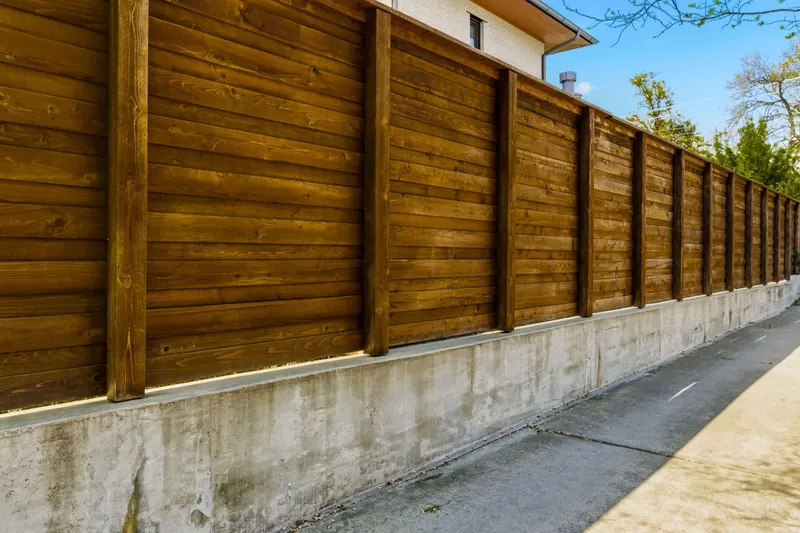
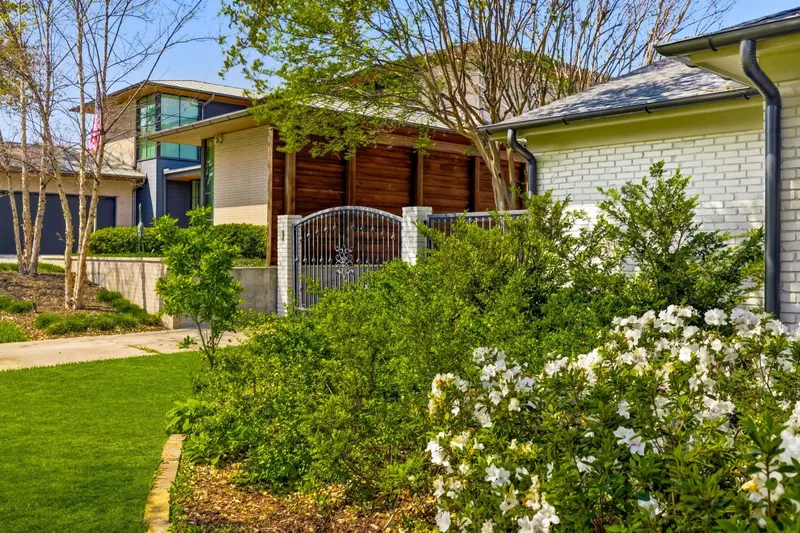
Plans and specifications go to the Community Development Department with the permit application. A retaining wall taller than three feet needs a detailed drawing signed and sealed by a professional engineer. Permitted materials are wood, masonry, concrete, wrought iron and chain link. In practice, most University Park homes get cedar along the alley and sides and iron or ornamental steel where the yard meets the street.
How do the two towns compare, side by side?
The two processes are similar in spirit and different in detail. The table summarizes what each town’s published documents say. It does not replace the documents, and it does not cover deed restrictions, which are private rules outside the permit process.
Fence permit requirements published by the Town of Highland Park and the City of University Park
| Topic | Town of Highland Park | City of University Park |
|---|---|---|
| When a permit is needed | Fence permit with a plan submittal | Any fence, wall or screen, and work on more than 25 percent of one side |
| Drawings | Stamped survey or scaled site plan with heights and gates | Plans and specifications with the application |
| Front yard | Not in the required front yard setback | Not in the front yard past the front wall of the house |
| Height checked | Final inspection verifies no more than eight feet from the non-owner’s side | Side and alley fences may not exceed eight feet |
| Masonry and retaining | Engineer-stamped plans for masonry walls | Engineer seal for retaining walls over three feet |
| Inspections | Location inspection with string line, then final | Inspection on completion, requested within three days |
What this means for you: The two towns ask for different paperwork and inspect at different points, so a submittal prepared for one will not pass in the other.
How long does fence permit approval take?
Neither town publishes a guaranteed turnaround for a fence permit, and we will not invent one. University Park’s building permits page says plainly that permit issuance periods vary. Some projects can be permitted over the counter, and others need plans left for further review.
What you can control is completeness. A submittal with a current survey, a clear site plan, heights at every run and gate locations marked moves through review. One that is missing the survey or shows a fence in an easement comes back, and the clock restarts. Masonry adds engineering time before the application is even filed. We give you a realistic schedule at the estimate, after we have seen your lot and your survey, and we build the review period into it. Our custom fence and gate timeline shows how design, permitting, fabrication and installation fit together.
What inspections happen after the permit is issued?
Highland Park lists two required inspections. The first is a location inspection with a string line set at the property pins, done before the fence is built, so the inspector can see exactly where the fence will stand in relation to the lot line. The second is a final inspection that verifies the height.
This is why a survey matters. If the property pins cannot be found, a surveyor has to reset them before the location inspection can happen. University Park requires that the Community Development Department inspect every fence, wall or screen on completion, and the permit holder must request that inspection within three days after the work is finished. We schedule and attend these inspections ourselves.
Inspections are also the reason the drawing and the build have to match. If the approved plan shows a fence of one height and the crew builds another, or a gate moves a few feet during construction, the final inspection is where it surfaces. When a change makes sense mid-project, the right move is to revise the permit first and build second. That takes a little patience and saves a rebuilt section.
What rules about height and location catch homeowners off guard?
Four of them come up again and again. Most are about where the fence sits, not how it looks.
- Front yards: Both towns keep fences out of the front yard as defined in their documents. A fence forward of the house is generally not available.
- Alleys in University Park: A fence must sit at least two feet from the edge of the alley or on the rear property line, whichever is farther from the pavement.
- Trash inset in University Park: New fences abutting an alley need an unobstructed inset three feet deep by five feet wide for trash receptacles.
- Easements: Neither town allows a fence in an easement or over a public right-of-way.
- Sight lines: University Park prohibits fences that interfere with the sight line standards in its code, which matters on corner lots.
What changes if the fence encloses a pool or includes a driveway gate?
Pool barriers carry their own requirements, and the two towns differ. Highland Park’s packet calls for a pool fence at least 48 inches high with self-closing, self-latching gates and openings no larger than four inches. University Park’s regulations call for a minimum six-foot fence or wall around a pool, spa or hot tub, built so children cannot climb it and so a four-inch sphere cannot pass between pickets.
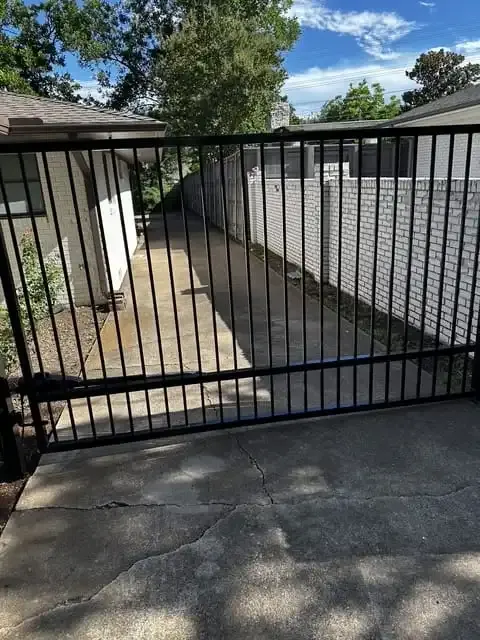
University Park also states that automated driveway gates with access to a swimming pool are not allowed, and that double, sliding or automated gates across driveways do not count as pool gates. If you are planning an automatic driveway gate and a pool on the same lot, the layout has to separate them. We sort this out on paper before anything is fabricated. See also our guide to pool fence code in Dallas and the comparison of glass and iron pool fences.
Who should pull the permit, you or the fence company?
The company building the fence should. The permit holder is responsible for the inspections, and the builder is the one who knows the post layout, the heights and the footing details the town asks about. A contractor who asks you to pull your own permit is handing you his liability.
We prepare the site plan from your survey, submit the application, coordinate utility locates before any digging, meet the inspector and close out the permit. In Highland Park that includes setting the string line for the location inspection. If your lot also carries deed restrictions, read HOA and deed restrictions on fence and gate design before you settle on a style. Then request a free written estimate and we will tell you what your specific lot requires.
How Park Cities Fence & Deck helps
Jack Johnson comes out himself, looks at your property and gives you a free written estimate with a timeline. Wood, iron and masonry are all built in-house, so the advice fits the property. Related services: wood fencing, masonry fencing, gates & gate motors. We work in Highland Park and University Park and across Dallas.
Questions people ask next
Do I need a permit to replace my existing fence in University Park?
According to the City’s published fence regulations, a permit is required whenever repair, replacement or construction covers more than 25 percent of any one side of a fence. A full replacement of a side line or alley line therefore needs a permit. Confirm current rules with the Community Development Department, or let your fence company do it.
How tall can a fence be in Highland Park?
The Town’s fence permit packet states that the final inspection verifies the fence does not exceed eight feet, measured above the non-owner’s side. That measurement point matters on sloped lots, where the neighbor’s grade may be lower than yours. Confirm the limit for your lot with the Building Inspection Department before you finalize a design.
Do I need a survey to get a fence permit?
Highland Park asks for a survey with a registered professional land surveyor’s stamp or a builder’s site plan drawn to scale. The survey you received at closing often works if nothing on the lot has changed. If the property pins are missing, a surveyor may need to reset them before the location inspection.
Can I build a front-yard fence in the Park Cities?
Highland Park’s packet says a fence may not be located in the required front yard setback. University Park’s regulations say fences and walls may not be built in the front yard past the front wall of the main structure. In both towns, plan on the fence starting at or behind the front of the house.
What happens if a fence is built without a permit?
The consequences are set by each town, and we cannot speak for them. In general, unpermitted work risks a stop-work notice, a requirement to permit after the fact, or changes to a finished fence that does not meet the rules. It can also surface when you sell. Permitting first is the cheaper path.
Sources and further reading
- Town of Highland Park, Department of Building Inspection: Fence Permit Packet
- City of University Park: Fence Regulations
- City of University Park: Building Permits
General information, not legal advice. Rules change: we confirm the current requirements with your city or HOA before we build.