Planning · Dallas, Texas
How Much Wind Can a Privacy Fence Take, and How Do You Build One for Texas Storms?
There is no single wind number for a wood fence. Posts, footings and spacing decide what survives a storm.
 By Jack Johnson, owner of Park Cities Fence & Deck · 9 min read · 1,927 words
In short
There is no single wind speed a wood privacy fence is rated for, and we do not give one. What it survives depends on post depth, post spacing, steel or wood posts, and the condition of the wood. A well-built fence rides out most North Texas thunderstorms. Rotted posts and shallow footings fail first.
In this guide
- What actually fails when a fence blows over?
- Does a fence with gaps or a shadowbox design handle wind better than a solid one?
- How do you build an 8-foot fence so it does not blow over?
- Does hail damage wood, iron or aluminum fences?
- Can I reinforce my existing fence before storm season?
- Can a Texas freeze or ice storm damage a fence?
- Does extreme summer heat shorten the life of a fence?
Need this done? See wood fencing.
A solid six-foot fence is a sail that runs the length of your yard. The National Weather Service defines a severe thunderstorm as one with winds of at least 58 mph or hail at least one inch in diameter, and North Texas sees those every spring. NOAA's storm laboratory notes that winds in a microburst can exceed 100 mph.
No residential fence is built for the worst of that, and no honest builder promises it. What a builder can control is where the fence is weak. This guide covers the details that decide which fences are standing the next morning, and what hail, ice and heat do to each material.
What actually fails when a fence blows over?
Almost always the posts, at or just below the ground. Pickets and rails rarely let go first. The wind pushes on the whole face, the load collects at the posts, and the weakest post tips or snaps.
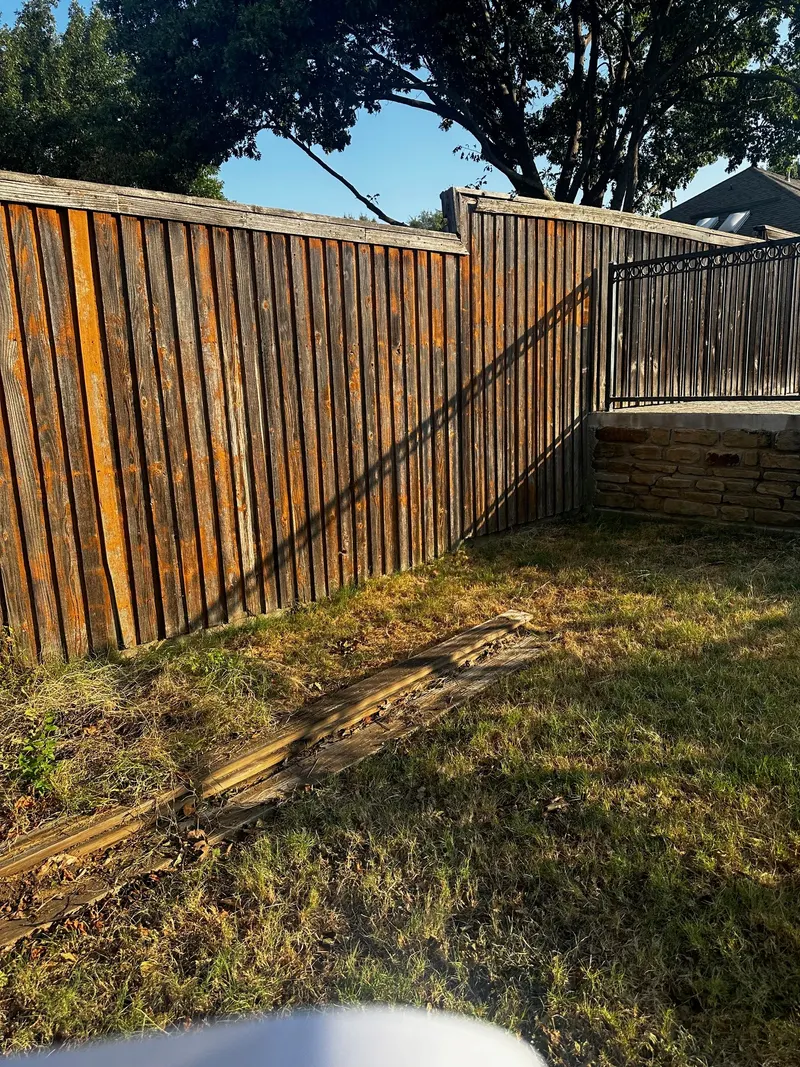
Three things make a post weak: a wood post rotted at the ground line, a footing too shallow for the fence height, and clay that has shrunk away from the concrete after a dry spell. Once one post goes, its neighbors carry more load and the run falls like a row of dominoes.
Gates are the second weak point. A gate that does not latch swings freely in gusts and hammers its hinge post until something gives. Our guide to building a wood gate that does not sag covers the frame, the hinges and the latch. Fasteners matter as well: galvanized nails and screws hold when plain steel has rusted thin.
Cities look at this the same way. Frisco's ordinance requires fences to be kept able to withstand the wind pressure they were designed for and treats a lean of more than one inch per foot of height as a maintenance violation. Our storm damage checklist explains how to check your own posts after a storm.
Does a fence with gaps or a shadowbox design handle wind better than a solid one?
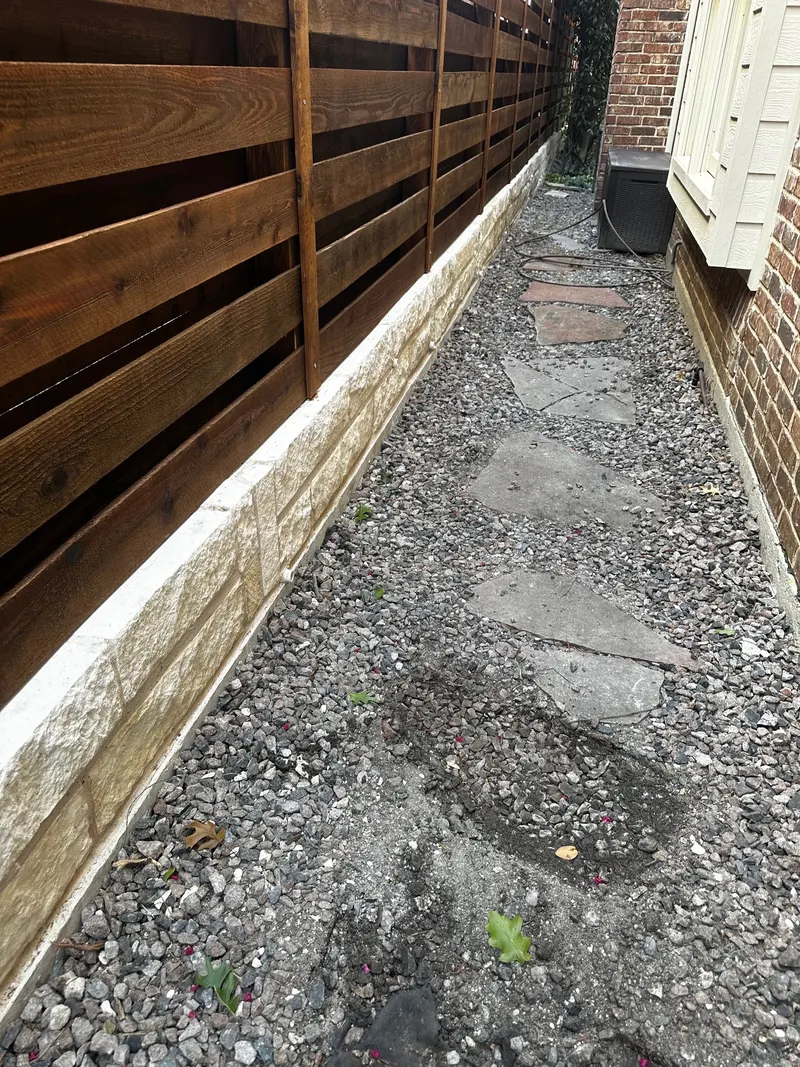
Yes, to a degree. Any opening that lets air through lowers the push on the posts, so an open iron fence sees far less wind load than solid cedar. A shadowbox, with pickets alternating on both sides of the rail, lets some air pass while still blocking most views.
The trade is privacy. Seen at an angle, a shadowbox shows gaps, and it uses more lumber than a standard fence. Most owners who want full privacy choose board-on-board and put the strength into the posts instead. Our wood fence styles guide shows how each style is built.
Do not count on gaps alone. A shadowbox on rotted wood posts still goes over, and a solid fence on sound steel posts usually does not. If you like the open look for other reasons, an ornamental iron or steel fence is the lowest-wind option we build, and privacy can be added later with planting.
How common fence types behave in strong wind
| Fence type | Air passes through | Privacy | Where the strength must be |
|---|---|---|---|
| Board-on-board cedar | Almost none | Full | Deep footings, steel posts, close spacing |
| Side-by-side cedar | A little, as boards shrink | High | Deep footings and steel posts |
| Shadowbox | Some | Partial at an angle | Standard posts carry less load |
| Ornamental iron or steel | Nearly all | Low | Welds, brackets and gate posts |
| Masonry columns with panels | Depends on the panels | Depends on the panels | Engineered column footings |
What this means for you: A comparison of behavior, not a wind rating. No fence type here carries a guaranteed wind speed.
How do you build an 8-foot fence so it does not blow over?
With deeper footings, closer posts and steel. An eight-foot fence catches far more wind than a six-foot one, and the extra height gives that wind a longer lever on the post.
Frisco's ordinance shows how a city scales the build with height. Wood fences seven feet or taller need posts no more than six feet on center, against eight feet for shorter fences, and concrete footings at least 36 inches deep, against 24 inches. Posts on fences over four feet must be galvanized steel.
Those figures are one city's minimums, not a universal standard, and exposed sites call for more. In Fort Worth and the open subdivisions north and west of it, long back lines often face a road or a field with nothing to break the wind. Our guide to post spacing, size and steel gauge explains why a heavier-wall post matters on those runs. The details that carry a tall fence are these.
- Galvanized steel posts: Steel does not rot at the ground line, which is where wood posts fail in a storm.
- Deeper, wider footings: Our post depth guide explains how depth scales with height in clay.
- Closer post spacing: Shorter bays put less wind on each post.
- A third or fourth rail: More rails keep tall pickets from bowing and spread the load.
- A permit check: Taller fences often need a permit. See fence height rules for your city.
Does hail damage wood, iron or aluminum fences?
Large hail marks all three, and rarely destroys any of them. The damage is mostly to the surface, and the surface is what protects the material underneath.
On cedar, hail leaves pale dents and chips through the stain, and it can split thin or dry pickets and crack cap boards. The fence still stands, but the bare spots take on water. A power wash and restain after a hail season reseals it.
On powder-coated iron and steel, hail can chip the coating at edges and welds, and rust starts at each chip. Touching those up early is cheap insurance, as our guide to keeping iron rust-free explains. Hollow aluminum pickets are lighter and can dent, though they do not rust.
If hail was large enough to damage the roof, photograph the fence at the same time. Stain chips and split pickets are easy to miss from the patio and hard to prove months later. Our fence insurance claim guide explains what an adjuster looks for.
Can I reinforce my existing fence before storm season?
Often yes, if the pickets and rails are still sound. The useful work is at the posts.
Push on each post near the top. One that rocks in its footing or flexes at the ground is a candidate for replacement with a steel post in new concrete. Loose rails can be refastened with galvanized screws or brackets, and a sagging gate rehung so it latches tightly and does not slam in gusts. Trim limbs that hang over the fence line.
Check the wood where it meets the ground. Soil and mulch piled against the pickets hold water, and a soft bottom edge tears loose from the rail in a gust. Pull the soil back, and consider a treated kickboard along the base. A fresh coat of stain will not make a fence stronger this season, but sealed wood stays sound longer.
Know when to stop. If most posts are rotted, new bracing only delays the day the run goes over. Our fence repair visit sorts posts into keep and replace, and our guide to repair versus replacement shows where the line usually falls.
Can a Texas freeze or ice storm damage a fence?
Yes, mostly through weight and water. The fence itself tolerates cold well. Ice-loaded tree limbs falling across it do the visible damage.
Water does the quiet damage. It freezes in hairline cracks in masonry caps and mortar joints and widens them. It can collect inside hollow steel posts that lack caps or drain holes. Wet clay that freezes at the surface can also shift shallow footings slightly.
None of this is dramatic in a single winter. It shows up a year or two later as a cracked cap, a rust streak at the base of a post or a gate that no longer lines up. A walk along the fence after the thaw catches most of it while the repair is still small.
Automated gates need a look after any hard freeze. Ice on a slide gate track or packed around a swing gate arm makes the motor work against a jam, and safety sensors can be blocked. Our gate maintenance schedule lists the seasonal checks.
Does extreme summer heat shorten the life of a fence?
Heat and sun together do, more than storms in most years. Sun breaks down the stain, dries the surface of the wood and opens small cracks that take in the next rain.
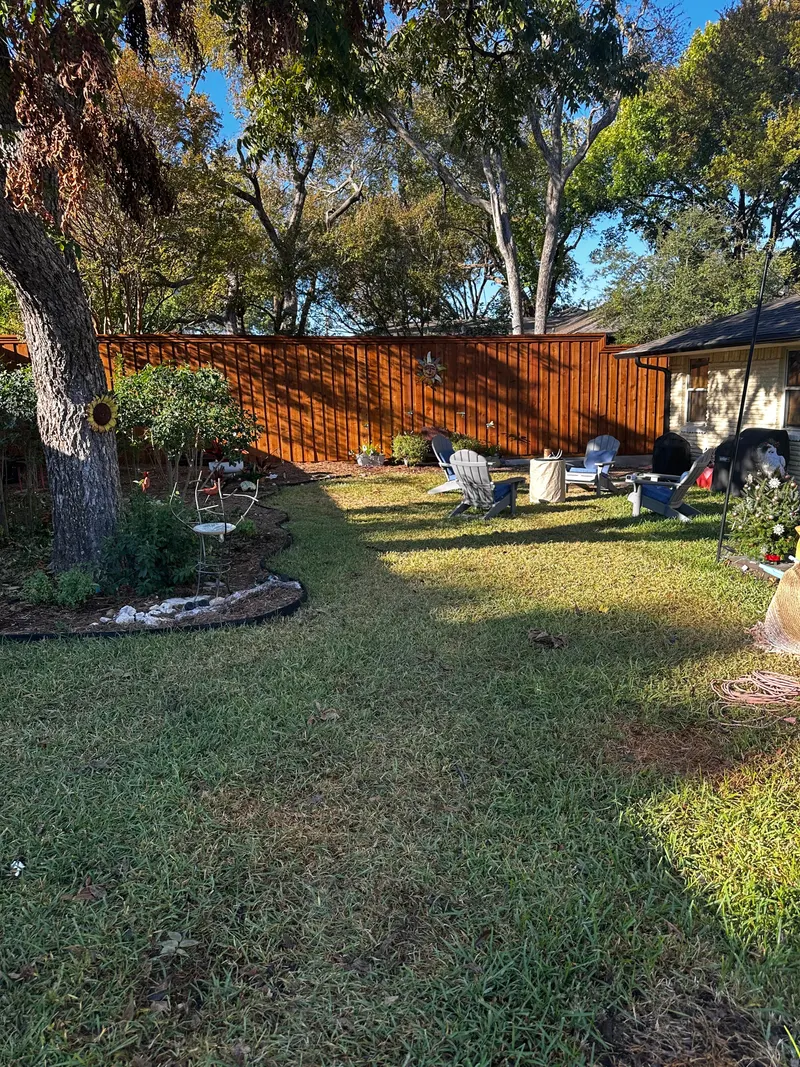
That is the reason for the stain cycle. Cedar here lasts 15 to 20 years when it is kept sealed, typically with a new coat every two to four years. South and west faces wear first. Dark stains absorb more heat and usually need attention sooner than lighter tones.
Heat also works on the soil. A long dry summer shrinks the clay away from the footings and loosens posts just in time for fall storms. Our wood fence maintenance checklist puts those seasonal checks in order.
Iron and steel handle heat well when the coating is intact. Powder coat holds up in the sun far better than old brushed paint, though any chip left open will still rust. Cedar decks and pergolas take the same sun, so the same sealing habits apply across the yard.
How Park Cities Fence & Deck helps
Jack Johnson comes out himself, looks at your property and gives you a free written estimate with a timeline. Wood, iron and masonry are all built in-house, so the advice fits the property. Related services: wood fencing, fence rehab / repair. We work in Fort Worth and across Dallas.
Questions people ask next
Is a fence on a hilltop or an open lot more likely to blow over?
Yes. A fence on a ridge, beside a greenbelt, a golf course or an open field takes the wind with nothing to slow it, while a fence between close-set houses is sheltered. On exposed runs we recommend steel posts, closer spacing and deeper footings. Corners and long straight stretches without a return are the first places to strengthen.
Are masonry columns stronger in wind than steel posts?
A properly engineered column is heavier and stiffer than any steel post, but it only helps if its footing is designed for the load. A column on a shallow pad can lean as a unit. Columns also shorten the wood or iron spans between them. For most privacy fences, steel posts in deep concrete are the practical choice, and columns are added for looks.
Can a wood fence be straightened with new steel posts or post braces?
Often, when the lean comes from failed posts and the pickets and rails are still sound. The usual repair sets new galvanized steel posts in fresh concrete and reattaches the existing panels. Surface-mounted braces are a short-term fix for one loose post. If the wood itself is soft or split along the run, replacement is the honest answer.
Can a driveway gate be solid for full privacy?
Yes, and it has to be designed for wind. A solid gate leaf catches wind like a fence panel, and on a swing gate that load goes straight to the hinges, the posts and the motor. We size the frame, posts and operator for a solid face, and often suggest a slide gate on windy sites because it stays supported along its length.
Does insurance cover a fence that fell from rot or old age?
Usually not. The Texas Department of Insurance says most home policies cover windstorm and hail damage and that other structures coverage includes fences, but most policies do not cover wear and tear. An adjuster who finds rotted posts may reduce or deny a claim. Read your policy, and see our fence insurance claim guide for the steps.
Sources and further reading
- National Weather Service: Severe Thunderstorm Definitions
- NOAA National Severe Storms Laboratory: Types of Damaging Winds
- City of Frisco Code of Ordinances, Chapter 18, Article IX: Fences
- Texas Department of Insurance: Home Insurance Guide
General information, not legal advice. Rules change: we confirm the current requirements with your city or HOA before we build.