Planning · Dallas, Texas
Does a New Fence Add Value to a Home in Dallas?
A fence rarely adds its cost to an appraisal, but a bad one can cost you buyers. Here is how to decide before you list.
 By Jack Johnson, owner of Park Cities Fence & Deck · 9 min read · 1,819 words
In short
A new fence helps a Dallas home sell more than it raises the appraised value. A sound, good-looking fence removes an objection, supports the asking price and matters a great deal to buyers with dogs, children or a pool. Do not expect to recover the full cost at closing, and be wary of anyone who promises a percentage.
In this guide
- Does a fence raise the appraised value or just help the sale?
- Should I replace my fence before selling my house?
- Will a bad fence come up in a home inspection or hurt an appraisal?
- Do buyers pay more for a fenced backyard?
- Which fence type adds the most resale value?
- What fence upgrades give the most curb appeal for the money?
- Is it worth staining an old fence before listing a house?
Need this done? See wood fencing.
You will find confident return-on-investment percentages for fences all over the internet. We are not going to repeat them. We could not find a published study we can stand behind that isolates what a residential fence returns in Dallas, and a number without a source is a sales line.
What can be said honestly is how fences show up in a sale: in the listing photos, in the showing, in the inspection report and in the negotiation that follows. This guide walks through each and helps you decide between replacing, repairing and restaining.
Does a fence raise the appraised value or just help the sale?
Mostly it helps the sale. Appraisers work largely from comparable sales, and in a neighborhood where every house has a fenced backyard, a fence is expected rather than a premium feature.
The effect runs the other way more strongly. A leaning, gray, patched fence reads as deferred maintenance, and buyers who see one neglected item start looking for others. A sound fence takes that question off the table. That is a real benefit even when it never appears as a line on an appraisal.
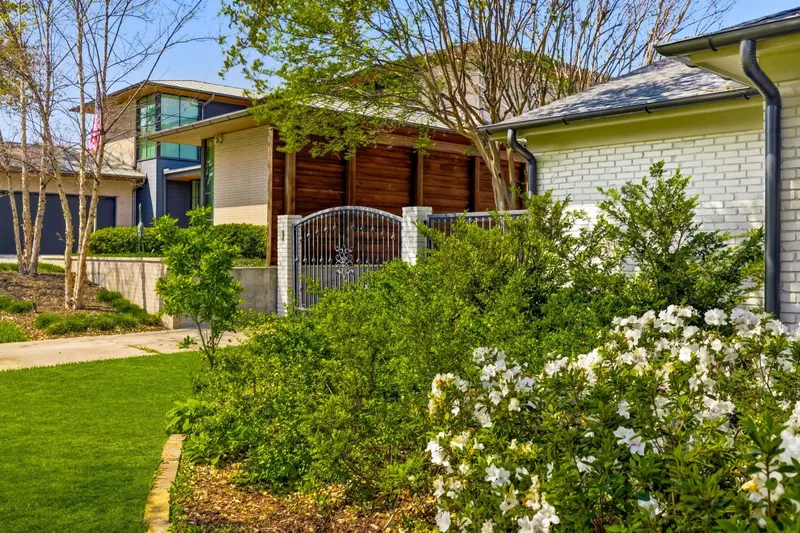
Premium work is a partial exception. Masonry columns, an iron front elevation or an automated entry can lift how a property is perceived in the right neighborhood. We look at that case in driveway gates and home value in Preston Hollow and why masonry columns matter.
Should I replace my fence before selling my house?
Replace it if it is failing, repair it if it is basically sound, and leave it alone if it is simply not new. The test is whether a buyer or an inspector will see a problem.
A fence that leans, has rotted posts, is missing sections or will not hold a gate closed is a problem. It will come up in the showing or the negotiation, and buyers tend to ask for more than the work costs. Replacing it first lets you control the scope and the price.
A fence with a few bad boards, one loose post or a sagging gate is a repair. Fence repair on a sound run often does everything a sale needs. Our guide to repair or replace gives the decision rules, starting with the condition of the posts. Talk to your listing agent as well, since they know what buyers in your price range expect.
- Replace: Posts rotted or loose along the run, widespread lean, sections down, wood too far gone to hold a fastener.
- Repair: Isolated broken pickets, one or two failed posts, a sagging or dragging gate, a damaged section after a storm.
- Restore: Structure is solid but the wood is gray, stained by sprinklers or uneven in color.
- Leave: Fence is straight, closed and weathered evenly, and matches the neighborhood.
Will a bad fence come up in a home inspection or hurt an appraisal?
It may be noted, but a Texas inspector is not required to inspect it. The Texas Real Estate Commission's Standards of Practice list fences among the items an inspector is not required to inspect.
Many inspectors comment on an obviously failing fence anyway, and buyers have eyes. A fence that is down or leaning will be raised whether or not it appears in the report. The exception to the rule is a pool. When an inspector agrees to inspect a pool, the same standards require reporting the absence of, or deficiencies in, safety barriers.
On the appraisal side, condition matters more than the feature. A fence in poor repair can contribute to an overall impression of deferred maintenance. A fence in good repair is simply part of a well-kept property.
Paperwork can matter as much as condition. A fence built over the height limit, inside an easement or across a boundary can surface when the buyer orders a survey or the title company reviews the file. If you are replacing a fence before selling, build it on the right line and with the right permit. Our guides to a fence over the property line and fence permits and HOAs in DFW explain both.
Do buyers pay more for a fenced backyard?
Some buyers will not consider a house without one, which matters more than a premium. Families with dogs, small children or a pool often treat a secure, private yard as a requirement.
For those buyers a missing or failing fence means a project before they can move in, with a cost they will estimate high. A fenced yard widens the pool of people who can say yes on the first visit. That is the honest way to describe the value: more qualified buyers and fewer reasons to negotiate down, not a guaranteed sum.
Privacy sells in the same way. A yard screened from the neighbors and the alley photographs and shows better. Our guide to backyard privacy when fence height is limited covers the options.
Which fence type adds the most resale value?
The one that fits the house and the street. A fence that matches the neighborhood standard and the architecture supports value. One that fights them does not, however much it cost.
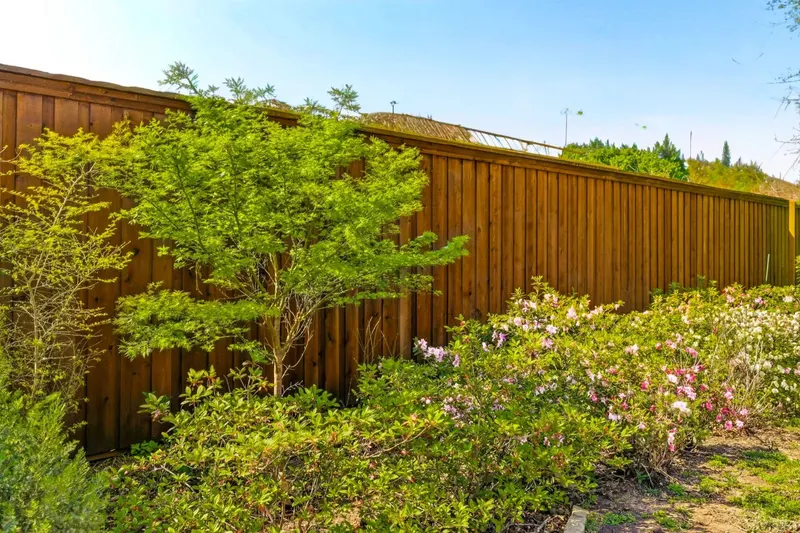
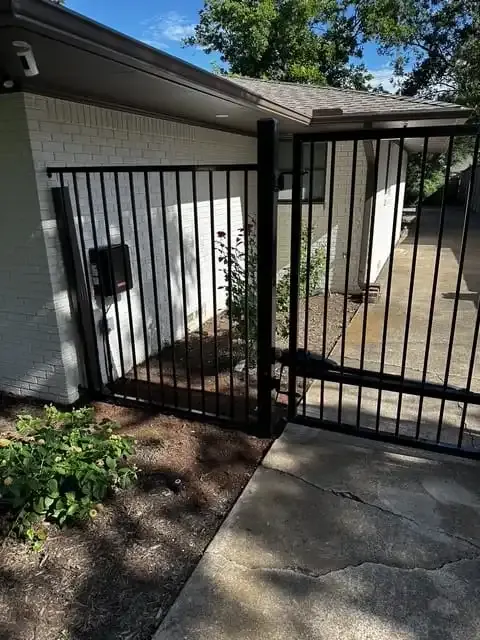
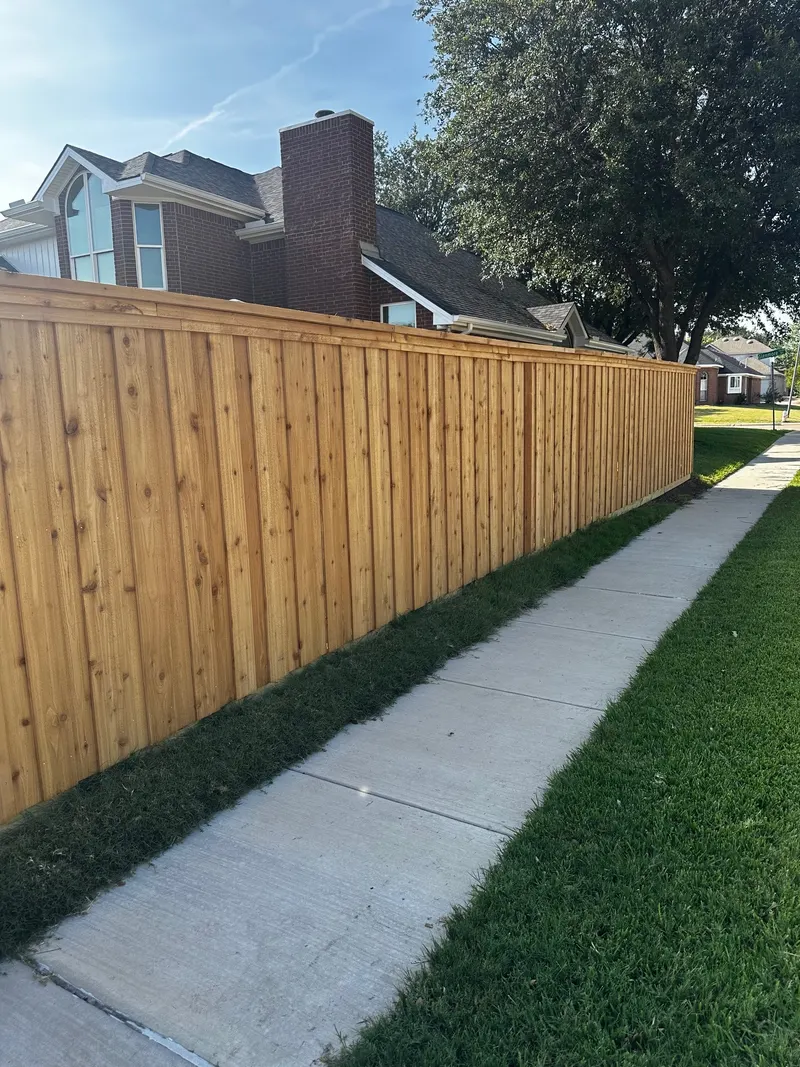
In most Dallas neighborhoods that means a well-built cedar privacy fence around the back yard: board-on-board with a cap and trim reads as quality from the alley and from the patio. On a visible front or side elevation, powder-coated iron or ornamental steel keeps the house and landscaping in view. On larger properties, stone or brick columns tie the fence to the home. See the best fences for Park Cities and Preston Hollow homes.
Check HOA and deed restrictions before choosing. A fence that violates them is a liability at closing, not an asset.
How fence work shows up when you sell
| Fence work | What a buyer sees | When it makes sense before listing |
|---|---|---|
| Full replacement in cedar | A new, straight, private yard | The old fence is failing or unsafe |
| Targeted repair | Nothing to object to | Structure is sound with isolated damage |
| Power wash and restain | Even color and a cared-for look | Wood is solid but gray or blotchy |
| New or rebuilt gates | Gates that swing, latch and lock | Gates sag, drag or will not close |
| Iron or masonry on the front | Stronger curb appeal | Higher-end homes where the street view matters |
What this means for you: No fence project carries a guaranteed return. Decide with your listing agent and a written estimate in hand.
What fence upgrades give the most curb appeal for the money?
Fix what is seen first: the gates, the section visible from the street and the color. Those three carry most of the first impression.
A gate is the one part of a fence every buyer touches. It should swing freely, latch on its own and sit square. Next is the stretch that faces the street or sits beside the driveway, where a cap, trim and a consistent top line make an ordinary fence look finished. Color is third, covered in the next section.
Beyond that, spend carefully. Lighting on columns and a matched walk gate photograph well, as our guide to fence, gate and column lighting shows. Elaborate custom work rarely pays back on a house you are about to leave.
Keep the whole property consistent. One new section beside three old ones draws the eye to the old ones, so plan how a repair will blend. Matching the picket style, the cap and the stain color across the run makes repaired and original sections read as one fence. If the house also has a tired deck or pergola in the same yard, clean and seal those at the same time so the back yard photographs as a single finished space.
Is it worth staining an old fence before listing a house?
Usually yes, if the wood is still sound. A power wash and restain changes how a fence looks for a fraction of the effort of replacing it, and it is the fence work most likely to be worth doing just before a sale.
The condition is that the structure deserves it. Stain does not straighten a lean or stiffen a rotted post, and fresh color on a failing fence fools nobody for long. Have the posts checked first. The wood also needs time to dry after washing before stain goes on, so schedule this ahead of the photographer, not the day before. Our guides to when to powerwash and restain and the cedar fence stain guide explain timing and color.
For a straight answer on your fence, ask for a free written estimate. Jack Johnson, a former custom home builder, will tell you whether it needs replacing, repairing or only cleaning. Contact us or call (214) 755-8100. We serve Dallas and nearby cities.
How Park Cities Fence & Deck helps
Jack Johnson comes out himself, looks at your property and gives you a free written estimate with a timeline. Wood, iron and masonry are all built in-house, so the advice fits the property. Related services: wood fencing, iron / metal fencing, powerwash & restain. We work in Dallas and across Dallas.
Questions people ask next
Does a deck add value to a home in Texas?
A well-built deck adds usable living space and tends to help a home show and sell, but we will not quote a return percentage for it. Results depend on the house, the neighborhood and the condition of the deck. A deck that is soft, wobbly or built without a permit works against a sale. See planning a deck in Dallas.
Do I have to disclose fence or property line problems when I sell in Texas?
Sellers of most previously occupied single-family homes must give the Seller's Disclosure Notice required by Section 5.008 of the Texas Property Code. The Texas Real Estate Commission's version lists fences among the items on the property and asks about known defects in walls and fences. Boundary questions are for your agent, title company or attorney. This is general information, not legal advice.
Does a wood fence or an iron fence look better from the street?
It depends on what the street should see. Iron keeps the house, lawn and landscaping visible and suits a front or side elevation. Wood gives privacy and suits the back yard and alley. Many of the best-looking properties use both: iron where the house is on display and cedar where the family lives.
Will a pool fence be checked when I sell my house?
Often, yes. If the buyer's inspector inspects the pool, the Texas Real Estate Commission's standards require reporting missing or deficient safety barriers. Lenders, insurers and buyers with children pay attention to that finding. Have the barrier and gate latches checked before listing. Our guide to Dallas pool fence code covers what a compliant barrier looks like.
Is a brick fence worth the money compared with a wood fence?
For resale alone, rarely. Masonry costs far more than cedar and takes longer to build. It earns its place through a very long service life, low maintenance, sound reduction and a look that suits certain homes and streets. If you plan to stay for many years it can be the better investment. See brick and stone fence cost factors.
Sources and further reading
- Texas Real Estate Commission: Real Estate Inspector Standards of Practice (22 TAC 535.227 to 535.233)
- Texas Real Estate Commission: Seller's Disclosure Notice (Form 55-1)
General information, not legal advice. Rules change: we confirm the current requirements with your city or HOA before we build.