Cost & Hiring · Dallas, Texas
Should I Build My Own Fence or Hire a Fence Company?
When building your own fence makes sense, where DIY fences fail, and what Dallas requires either way.
 By Jack Johnson, owner of Park Cities Fence & Deck · 9 min read · 1,760 words
In short
Build it yourself if the run is short, the ground is flat and soft, you own or can rent the tools and you have several free weekends. Hire a fence company when the fence is long, tall, on a slope or in rock, includes gates, or needs a permit. The posts decide whether either choice lasts.
In this guide
- How hard is it to build a wood privacy fence yourself?
- How much money do you really save by building a fence yourself?
- What tools and equipment does it take to set fence posts?
- What are the most common DIY fence mistakes?
- Are fence panels from a home improvement store as good as a fence built on site?
- Can a homeowner pull their own fence permit in Texas?
- When does hiring a fence company make more sense?
Need this done? See wood fencing.
A wood fence looks like simple carpentry, and above the ground it mostly is. Pickets, rails, a level and a nail gun. The part that decides whether the fence stands straight for fifteen years is below the ground, in Dallas clay, and that is where most home-built fences fail.
We build fences for a living, so weigh our view accordingly. But we would rather you build a good one yourself than hire a bad one. This guide says plainly when DIY is reasonable, what it saves, what it takes, and where a professionally built wood fence earns its price.
How hard is it to build a wood privacy fence yourself?
The carpentry is moderate. The digging is hard. A capable person can hang rails and pickets neatly, but setting a long, straight, plumb line of posts in North Texas clay is heavy work that punishes small errors.
Each post needs a deep hole, and clay is either sticky and heavy when wet or close to brick when dry. A typical backyard needs dozens of holes. Every post has to be on the string line, plumb in two directions and at the right height before the concrete sets, and you get one try. A crew does this daily with a powered auger and three people. One person with a manual digger will spend most of the project on this step alone.
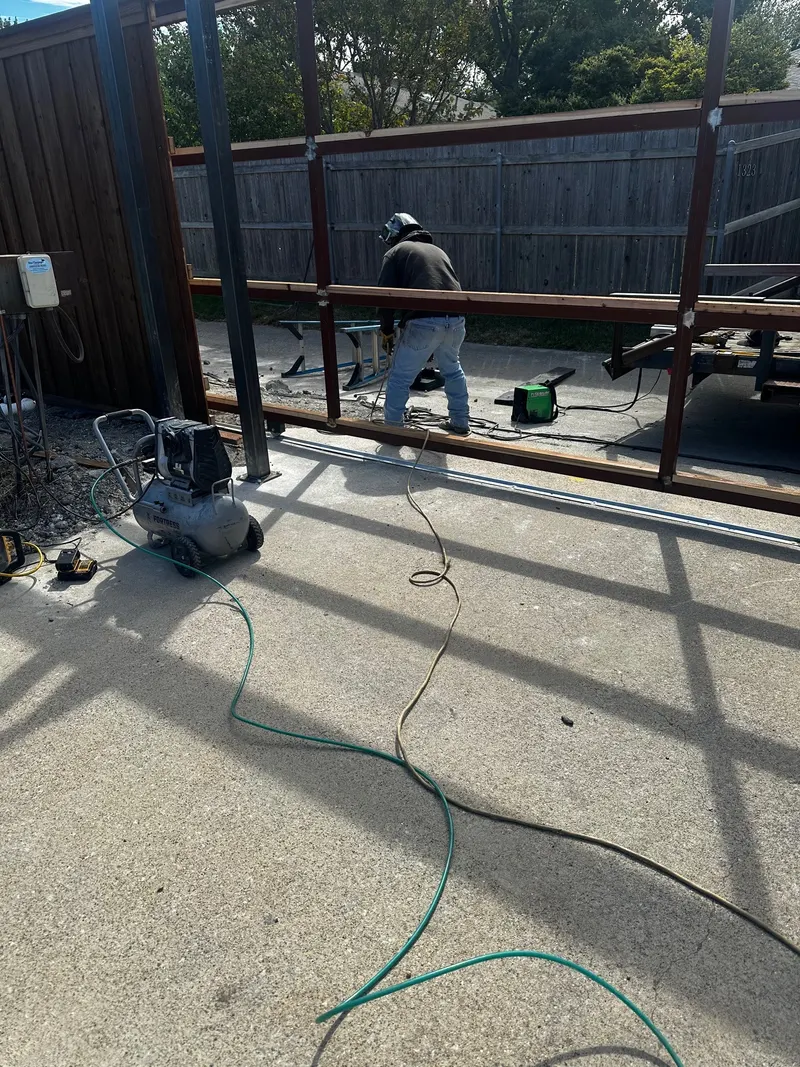
Time is the other cost. Most residential wood fences take our crew one to three days once materials arrive. For a homeowner working weekends, the same fence commonly stretches across several, with the yard open in between. That matters if you have a dog or a pool. See what a professional installation day looks like for comparison.
How much money do you really save by building a fence yourself?
You save the labor, which is a real share of any fence price, but less than the gap between a retail lumber receipt and a contractor’s bid suggests. Several costs move onto your side of the ledger.
You buy materials at retail, in the grades a store stocks. You rent or buy an auger, a saw and a nailer. You pay to deliver lumber and bagged concrete and to haul off the old fence and its footings. You absorb the waste from miscut boards and the cost of redoing any post that set out of line. And you carry the risk: a cut sprinkler line or a utility strike is your repair.
The honest comparison is your total outlay and your weekends against a written bid for the same specification: same wood, same post type and depth, same gates. To see what belongs in that bid, read what to budget for a new fence in Dallas and what drives cedar fence cost. Our estimates are free, so getting the number costs you nothing.
What tools and equipment does it take to set fence posts?
Setting posts takes digging equipment, layout tools and a way to mix and place concrete. The layout tools are cheap. The digging equipment is what people underestimate.
- Digging: A powered auger for most holes, a manual post hole digger to clean them out and a heavy digging bar for roots and rock.
- Layout: String line, stakes, a long tape, a post level and marking paint.
- Concrete: Bagged mix, a wheelbarrow or mixing tub, a hoe and a water source that reaches the line.
- Cutting and fastening: A circular or miter saw, a drill and driver, and a framing nailer with galvanized fasteners.
- Hauling: A truck or trailer for lumber in and the old fence out.
- Safety: Gloves, eye and hearing protection, and a second person for the auger.
What are the most common DIY fence mistakes?
The most common mistakes are shallow posts, a line set in the wrong place, digging without a utility locate and gates built without enough structure. The table shows how each one shows up later and what prevents it.
Two of these are not about craftsmanship at all. Texas Utilities Code chapter 251 requires a person who intends to excavate to notify the notification center at least 48 hours before starting, not counting weekends and legal holidays, and no more than 14 days ahead. The statute defines excavation around powered equipment that disturbs soil 16 inches or deeper, which describes an auger in a post hole. The 811 request is free. Make it even if you plan to dig by hand. Fences on easements have their own rules; see fences, utility easements and 811 in Texas.
Common DIY fence mistakes and how to prevent them
| Mistake | What happens later | Prevention |
|---|---|---|
| Posts too shallow | Fence leans after wet and dry cycles | Dig deeper than feels necessary; follow clay-soil guidance |
| Fence off the property line | Dispute with a neighbor, possible removal | Find the pins or get a survey first |
| No 811 locate | Cut gas, electric, cable or water line | Request the free locate before any digging |
| Weak gate frame and posts | Gate sags and stops latching | Steel frame and heavier hinge posts |
| Wrong fasteners | Rust streaks and loose pickets | Galvanized nails or screws rated for the wood |
| Pickets touching soil | Rot at the bottom edge | Leave a gap or add a rot board |
What this means for you: Most of these are set in the first two days of the build and cannot be corrected without starting over.
Are fence panels from a home improvement store as good as a fence built on site?
Usually not. Pre-built panels are made to a price and to a fixed width, with thinner pickets, lighter rails and staples in place of nails. They install quickly on flat ground and are a fair choice for a short, low-budget run.
Their limits show in three places. Panels force your post spacing to match the panel, so a post cannot shift to miss a root or a sprinkler head. On a slope they must be stepped, which leaves triangular gaps underneath. And when one picket fails you are often repairing a stapled assembly, not swapping a board.
A stick-built fence is assembled on your line: posts set first, rails cut to fit, then each picket fastened individually. That lets the builder follow grade, choose the lumber and space posts for strength. It is how we build every board-on-board and side-by-side cedar fence. For the wood itself, compare species in cedar vs. pine vs. redwood and structure in post spacing and steel post sizes.
Can a homeowner pull their own fence permit in Texas?
In Dallas, yes, with conditions. Permits are issued by cities, not the state, and the City of Dallas publishes a homeowner’s exemption that lets an owner act as their own contractor on their homestead for fence construction and repair without registering as a contractor.
The condition is in the affidavit the homeowner signs: you live in the home, it is your homestead, you will do the work described on the permit yourself, and nobody will be paid to help with any part of it. All the other rules still apply. The Dallas fence checklist requires a permit for a fence over 4 feet in a front yard or over 6 feet elsewhere, caps height at 9 feet, bans materials such as sheet metal and plywood, and asks for a scaled site plan, a plat map and an elevation drawing.
Other cities write their own rules, and HOAs add another layer. Check before you buy lumber: the Dallas fence permit, step by step and fence permits, HOAs and 811 across DFW cover the process. When we build, the permit, HOA details and the 811 locate are coordinated for you.
When does hiring a fence company make more sense?
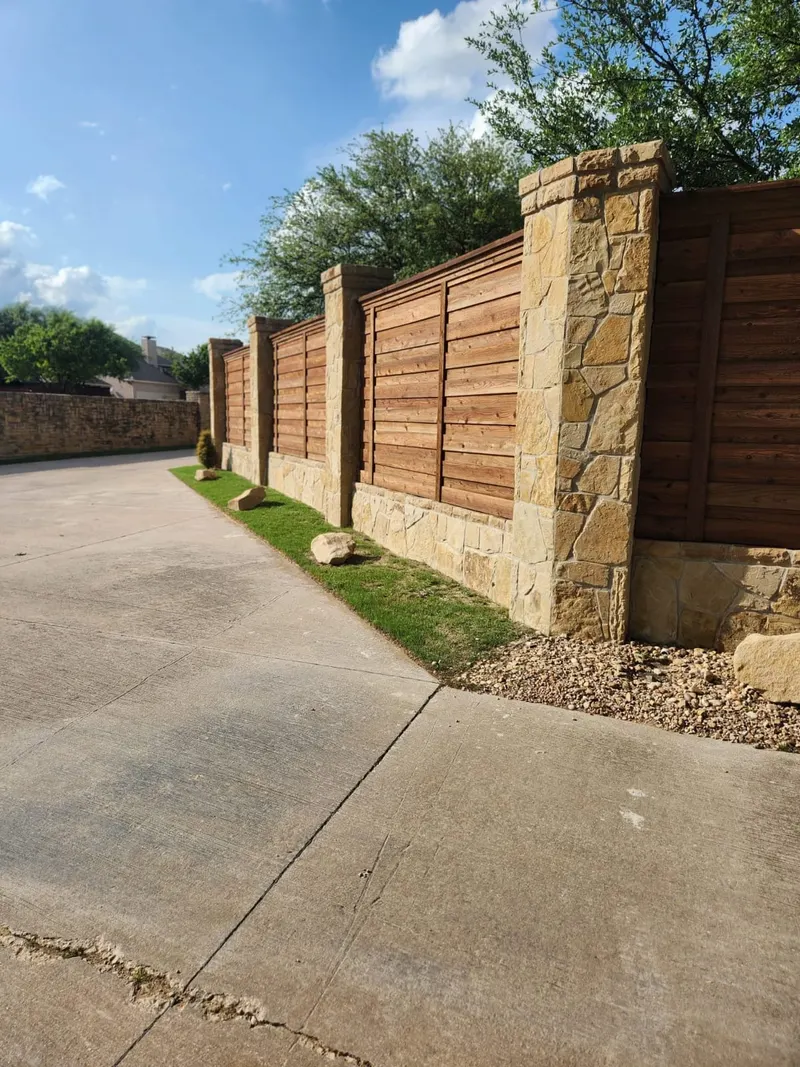
Hire a company when the fence is long or tall, when the yard has slope, rock, trees or a pool, when there is a gate wider than a walk gate, or when a permit and drawings are involved. Those are the jobs where experience and equipment change the result, not just the speed.
A middle path exists. Some homeowners handle the tear-out or the staining and leave the structure to a crew. Others hire out the posts and gates and hang pickets themselves. If your current fence is mostly sound, a repair may be all you need. Whatever you choose, use how to choose a fence company to check any bidder, including us, or request a free written estimate and compare it with your own numbers.
How Park Cities Fence & Deck helps
Jack Johnson comes out himself, looks at your property and gives you a free written estimate with a timeline. Wood, iron and masonry are all built in-house, so the advice fits the property. Related services: wood fencing.
Questions people ask next
Is it cheaper to hire a handyman than a fence company?
The hourly rate is usually lower, and for a small repair that can be the right call. For a whole fence, compare the specification and not only the price: post depth, concrete, lumber grade, gate framing, insurance and whether the person can pull a permit in your city. A fence built to a lower standard costs less for a reason.
Can I do the tear-out myself to save money?
Yes, many homeowners do. Removing pickets and rails is light work with a pry bar. The old concrete footings are the hard part, and you need a way to haul and dispose of everything. Agree with the company in writing what will be cleared and by when, and who deals with the old footings.
How much concrete does each fence post need?
It depends on the diameter and depth of the hole, so there is no single figure. A taller fence needs a deeper, wider hole and more concrete than a short one. Fill the hole fully around the post and shape the top so water runs away from it. The bag’s yield chart lets you calculate from your hole size.
What do you do when you hit rock while digging post holes?
Do not simply stop and set a short post. Small rock can be broken out with a heavy digging bar. A solid limestone layer needs a rotary hammer, a rock auger or a core drill, which is contractor equipment. Sometimes the post location can shift slightly along the line. Hitting rock is a common reason DIY projects call a company.
What should I expect on fence installation day?
Expect the crew to confirm the line and utility marks, remove the old fence, dig and set posts in concrete, then build rails, pickets and gates. Most residential wood fences take one to three days once materials arrive. Keep pets inside, clear the fence line and unlock gates. Our owner walks the finished job with you.
Sources and further reading
- City of Dallas Planning & Development: Fence Permit, Pool Barrier and Retaining Wall Checklist
- City of Dallas: Homeowner’s Exemption from Registration as a Contractor
- Texas Utilities Code, Chapter 251: Underground Facility Damage Prevention and Safety
General information, not legal advice. Rules change: we confirm the current requirements with your city or HOA before we build.