Gates · Dallas, Texas
Gate Motors 101: Keypads, Remotes and Safety Sensors
What is actually inside a modern gate automation package, and which pieces are worth paying for.
 By Jack Johnson, owner of Park Cities Fence & Deck · 8 min read · 1,662 words
In short
A quality gate automation package has four parts: an operator sized to the gate’s weight with margin to spare, safety photo-eyes that stop the gate if anything is in its path, battery backup for outages, and the access controls, keypad, remotes, phone app, your household actually uses. Installation quality decides how long it all lasts.
In this guide
- The operator: the muscle behind the gate
- Sizing margin: why we spec above the gate’s weight
- Safety devices are not optional
- Power and battery backup
- Access control: from remotes to phone apps
- Installation quality is the real product
- What to ask for in a quote
Need this done? See gates & gate motors.
The gate itself is the part everyone sees. The motor package is the part you live with, every school run, every delivery, every late arrival in a February ice storm. And it is where the widest quality gap in the whole gate industry hides, because two systems that look identical from the street can be worlds apart in sizing, safety equipment and wiring.
This guide explains what is actually inside a modern automatic gate installation: the operator, the safety devices, the power supply and the growing menu of ways to open the thing. Read it before you compare quotes and you will know exactly which questions separate a gate that runs quietly for fifteen years from one that strands you in the driveway.
The operator: the muscle behind the gate
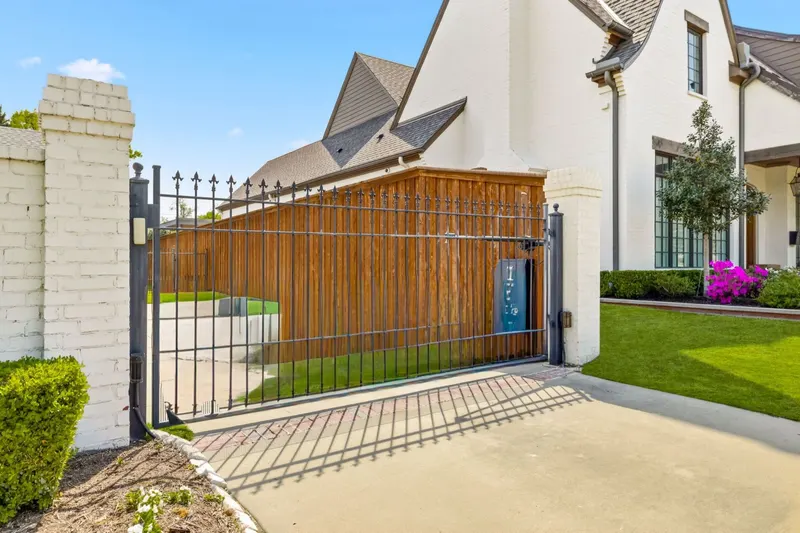
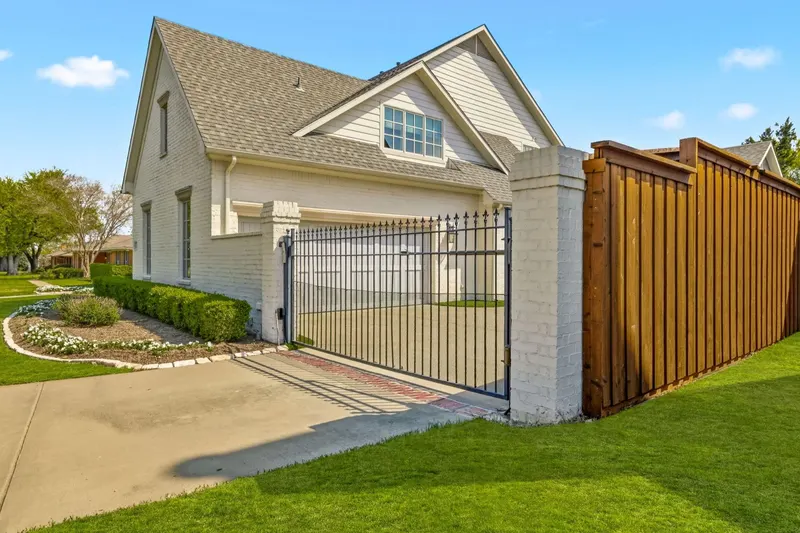
The operator is the motor-and-drive unit that moves the gate. Swing gates use arm-style operators, a linear or articulated arm bolted between the post and the leaf, or, on high-end installations, underground operators hidden in a foundation box at the hinge so nothing mechanical shows. Slide gates use a drive unit that moves the panel by chain or gear rack along its run.
Every operator carries two ratings that matter: the maximum gate weight and length it can move, and its duty cycle, how many open-close cycles per hour it can sustain without overheating. A single-family gate that cycles a dozen times a day is an easy life. A gate shared by a busy household, a home office with client traffic and daily deliveries is not, and it deserves hardware rated accordingly.
The failure we see most often on service calls across Dallas is an undersized operator dragging a heavy iron gate at the top of its rating. It works in April. Then July arrives, the motor runs hot, the thermal cutout starts tripping, and within a couple of summers the unit is done. Motor sizing is the single most important line on a gate quote.
Sizing margin: why we spec above the gate’s weight
Our rule is simple: the operator’s rating should comfortably exceed the gate’s actual weight and length, never merely meet it. Margin is what absorbs the things a spec sheet ignores, a north wind loading a solid-panel gate like a sail, hinge friction creeping up between services, and the extra effort of a hundred-degree afternoon when the motor’s cooling is already working hardest.
Margin also buys quietness and speed consistency. An operator loafing at half its capacity moves the gate smoothly and settles gently into its stops. One straining at its limit slams, hunts and telegraphs every imperfection in the hardware. If you have ever watched an estate gate glide open in near silence, you were watching sizing margin at work.
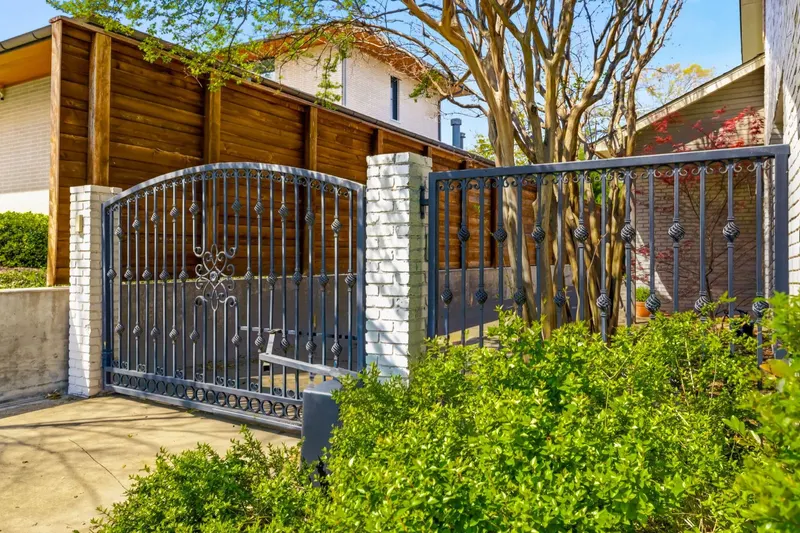
This is also why gate material matters to the motor conversation. A powder-coated ornamental steel gate is dramatically lighter than a solid wood-clad or plate-steel design of the same size, which changes which operators are appropriate. We settle gate design and motor selection together, never separately.
Safety devices are not optional
A driveway gate is a large machine that moves through space where children, pets and cars pass. Modern operators are built to a safety standard that requires layered protection, and we treat those layers as non-negotiable on every installation.
Photo-eyes are the first layer: an infrared beam across the gate’s path that stops and reverses the gate the instant anything breaks it. The second layer is inherent obstruction sensing, the operator monitors its own force and reverses if the gate meets resistance it should not. On slide gates we add physical guarding so the moving panel cannot create pinch points along the fence.
When we inspect older gates around DFW, missing or disconnected photo-eyes are the most common, and most dangerous, thing we find, usually unplugged years ago because a misaligned eye kept halting the gate. The fix is alignment, not amputation. If a company quotes you an automatic gate without safety devices itemized, keep shopping.
Power and battery backup
Operators need power at the gate, which usually means trenching a line from the house or garage, through lawn, beds and sometimes hardscape, and that route is a real part of every installation plan. Low-voltage systems fed by a transformer have become our standard for residential work, because they pair naturally with the most important resilience feature of all: battery backup.
With battery backup, a power outage does not turn your entrance into a wall. The gate keeps cycling on stored power through the kind of spring storms that take North Texas neighborhoods offline for an evening. Every operator we install includes it, along with a manual release so the gate can always be opened by hand in an emergency.
Solar power deserves an honest word. It works for light-duty gates with generous sun exposure, and it saves the trench. But under the tree canopy typical of University Park lots, panels starve in winter and the gate slows or stalls. We recommend solar only where the site genuinely supports it.
Access control: from remotes to phone apps
Opening the gate is where the options multiply, and where it pays to think about your actual household rather than the catalog.
Most families land on a keypad plus phone-app control: codes for family and regulars, app buttons for everyone else, and temporary codes for a cleaning crew or a weekend of guests. Vehicle exit sensors, a buried loop or probe that detects a car leaving, are the upgrade everyone thanks us for, because nobody wants to fish for a remote while backing out.
- Remotes and in-car buttons: Instant and simple. Their weakness is that they multiply, and a remote in a valet-parked car is a key to your property.
- Keypads: Codes for family, trades and deliveries. Look for backlit weather-rated units and change shared codes at least yearly.
- Phone apps: Open from anywhere, see open/closed status, share time-limited access. The modern default for new installations.
- Vehicle exit sensors: A loop or probe opens the gate automatically for departing cars, the convenience feature with the highest satisfaction per dollar of complexity.
- Intercoms and video: Screen visitors from your phone before the gate moves. Standard on estate entrances, increasingly popular everywhere.
Installation quality is the real product
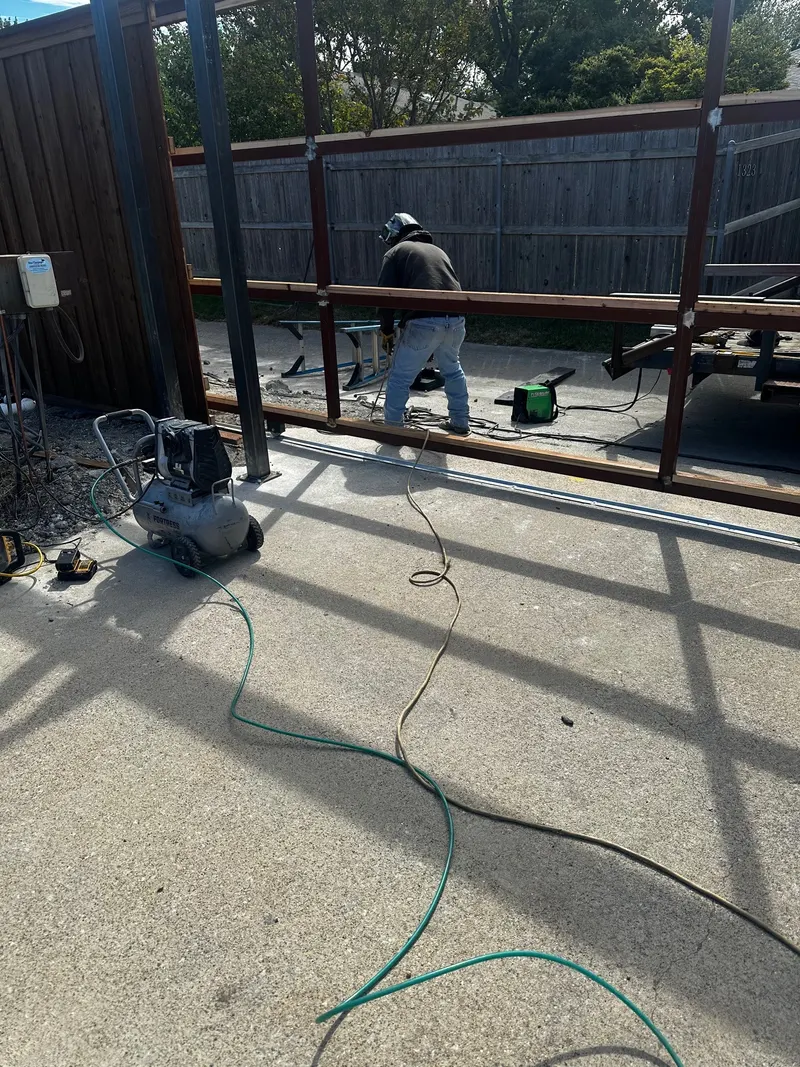
Here is the part the brochures skip: the same operator can last three years or fifteen depending on who installs it. The biggest reliability factors are boring ones, a gate that swings true on posts set in concrete, hinges aligned so the motor never fights geometry, clean weather-tight wiring, photo-eyes mounted where they cannot be knocked out of alignment, and limits set so the gate settles into its stops instead of slamming.
Foundation work matters more here than anywhere else on your fence line. North Texas clay moves with the seasons, and a gate post that shifts half an inch turns a perfectly good operator into a machine at war with its own gate. That is why our gate posts and columns get engineered footings below the clay movement zone, the motor’s lifespan is decided in the dirt.
A yearly service visit, lubricate, check alignment, test photo-eyes and force reversal, exercise the battery, keeps the whole system honest. It is a small habit that routinely doubles the working life of an operator.
What to ask for in a quote
When you compare gate automation quotes, look past the brand names and check five things: the operator’s weight and length rating against your gate design (with margin), the duty cycle, itemized photo-eyes and obstruction protection, battery backup, and exactly which access controls are included versus optional.
If any of those are missing or vague, the low number on that quote is not the number you will end up paying. Ours are itemized, free, and usually in your hands within 24 hours, and if you already have a gate that needs a better brain, we retrofit modern operators onto existing gates every week.
How Park Cities Fence & Deck helps
Jack Johnson comes out himself, looks at your property and gives you a free written estimate with a timeline. Wood, iron and masonry are all built in-house, so the advice fits the property. Related services: gates & gate motors. We work in Dallas and University Park and across Dallas.
Questions people ask next
What are photo-eyes on a gate?
Photo-eyes are paired infrared sensors that project a beam across the gate’s path. If a car, child or pet breaks the beam while the gate is moving, the operator stops and reverses immediately. They are a required safety layer on modern installations and included on every gate we automate.
Will my gate work in a power outage?
With battery backup, yes, the gate keeps cycling on stored power through a typical outage, and a manual release lets you open it by hand if the outage outlasts the battery. We include battery backup on every operator we install.
Can you automate my existing driveway gate?
Usually. If the gate is sound, hangs true and its posts have not shifted, we can add a properly sized operator, safety devices and access controls. If posts have moved or the gate has sagged, we correct that first, automating a misaligned gate just transfers the problem to the motor.
Why do gate motors fail early in Texas?
Nearly always undersizing or misalignment. A motor rated barely above the gate’s weight runs hot in summer, trips its thermal protection and wears out years early. A shifting post makes the motor fight the gate’s geometry on every cycle. Sizing margin and solid footings prevent both.
Which access control setup do most families choose?
A keypad at the entrance plus phone-app control, with a vehicle exit sensor so departing cars open the gate automatically. Households that screen visitors add a video intercom. Remotes still have their place, but apps have largely replaced them on new installations.